
Wrist pain after giving birth: causes, warning signs and gentle care in Ho Chi Minh City
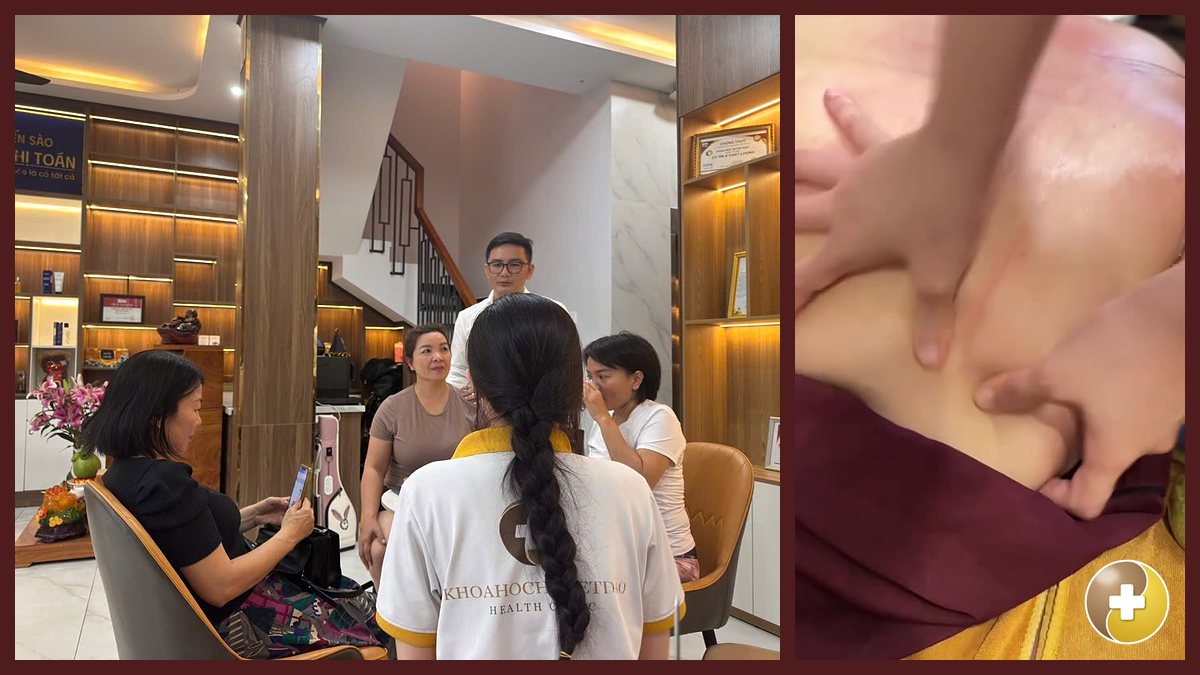
Quick answer: Wrist pain after giving birth usually comes from irritated thumb-side tendons when lifting the baby, a narrowed carpal tunnel from fluid retention, and a stiff neck from feeding. Changing how you carry, using a feeding pillow and resting the hand help a lot; heat, swelling, numbness or weakness need a check. Tong Gia Acupoint Wellness in Ho Chi Minh City works gently from neck to wrist.
Want Lương Y Tống Văn Huynh’s team to read your spine and posture in person?
What is wrist pain after giving birth?
Many new mothers notice an aching, sharp or tired wrist a few weeks to a few months after the baby arrives. It is usually worst on the thumb side of the wrist and shows up when lifting the baby, supporting the head during feeds, wringing a cloth, opening a bottle or pushing up from bed. Some describe the wrist as feeling "sprained", stiff on waking, sore even when holding a glass. In Western medicine this is a very common postpartum complaint, not a sign of weakness or of "not resting properly", as older relatives sometimes say.
Two things happen at once. First, the body has just been through pregnancy: hormonal changes make tissues hold fluid and ligaments softer, and tendons and their sheaths are easily irritated; during breastfeeding hormones have not fully settled. Second, a mother's hands suddenly do a new job dozens of times a day: lifting a baby who gets heavier every week, with the thumb spread wide and the wrist bent. The thumb tendons slide back and forth in a narrow tunnel on the outer wrist and become swollen and painful.
In Ho Chi Minh City many young mothers care for their baby largely alone while partners work long hours, whether in a Vinhomes Grand Park apartment or a shophouse in District 12. Wrist pain often comes together with neck and shoulder pain while breastfeeding and postpartum back pain; this guide focuses on the wrist and hand.
Common causes
- Thumb-side tendon sheath irritation (often called De Quervain's): the most common. Pain just below the base of the thumb, sometimes mild swelling, worse when gripping, lifting the baby under the arms with thumbs spread, or twisting a bottle cap.
- Carpal tunnel syndrome: fluid retention narrows the carpal tunnel and squeezes the median nerve, causing tingling in the thumb, index and middle fingers, worse at night. It often eases as fluid settles but can linger. See thumb and index finger numbness.
- Forearm overload: carrying, rocking, washing, wringing; the forearm muscles tighten into bands and ache down to the wrist.
- Feeding and carrying posture: one hand cradling the head with the wrist bent, shoulders raised, neck bent to look at the baby. A stiff neck and upper back irritate the C6–C8 nerve roots and add to the ache.
- Broken sleep and fatigue: muscles never get time to recover.
- Things to rule out: postpartum anaemia, postpartum thyroid changes and inflammatory arthritis need a medical check, not guessing.
Many mothers always carry on the same side. That side gets the sore wrist, the raised shoulder and the ache between the shoulder blades. Switching sides and changing the hold is one of the most useful free changes.
Signs worth noting
- Exactly where it hurts: thumb side, middle of the palm side, back of the wrist, or all over.
- Numbness: thumb to middle finger at night suggests the carpal tunnel; the little finger suggests the ulnar nerve or C8–D1.
- Swelling or creaking on the thumb side when moving the thumb.
- One side or both, morning stiffness (a few minutes suggests tendons; many small joints for over 30 minutes needs a check), neck and upper back ache, and whole-body signs such as pale skin, dizziness, palpitations, heavy hair loss or persistent low mood.
When to see a doctor
Please see a doctor before any massage if you have:
- A hot, red, very swollen wrist, or fever.
- Pain after a fall onto your hand.
- Lasting numbness, weakness, dropping things, or fear of dropping the baby.
- Pain that worsens after two to three weeks despite changing how you carry, or pain that keeps you awake when the baby sleeps.
- Stiff, swollen small joints in both hands every morning.
- Pale skin, dizziness, palpitations, a racing heart, weight loss or trembling hands: get checked for anaemia and thyroid problems.
- Chest pain, shortness of breath or sweating: call 115 immediately.
- Persistent sadness, loss of interest or dark thoughts: tell your family and a health worker early.
After a caesarean birth or complications, ask the health team who looked after you when massage is suitable. If you have already been checked and given a splint, keep following that advice and bring your results. This is a wellness service, not medical care.
The Y Tướng Học view: blood nourishes the sinews
In the general view of traditional wellness, childbirth uses up a great deal of qi and blood, and breastfeeding plus broken sleep leave little to nourish the tendons. The Tong Gia curriculum explains why this shows in the wrist. The Liver stores blood and governs the sinews: at rest blood returns to the Liver to be replenished, and during activity it is sent to the tendons; when Liver blood is short, nails become brittle, cramps appear and tendons stiffen. The Spleen governs muscles and the four limbs and produces qi and blood; skipped meals and worry leave the arms weak and tired. The Kidney stores essence, the foundation of growth and reproduction, and governs the bones, which is why many mothers feel tired knees and creaky joints.
"What is inside shows outside." Before touching, the practitioner looks at the complexion (the curriculum links a very pale or sallow face with insufficient blood production, often with dizziness, palpitations and poor sleep; such mothers are advised to check for anaemia), the lips (pale), the nails (thin, ridged), the forearm and shoulder on the carrying side (tight bands, raised shoulder, rounded upper back) and the hand (slight puffiness, or very bony knuckles). These signs guide where to work and how gently; they are not a medical conclusion.
Spine segments and nerve-reflex zones involved
In the Tong Gia curriculum, the cervical segments C1–C7 govern the head, face, neck and arms, and the thoracic segments govern circulation, breathing and digestion. For the muscle, bone and joint group the curriculum works on C5–C7, L1–L5 and S1–S5. For a new mother the wrist is the end of a chain: bent neck, raised shoulders, rounded upper back, gripping forearm. The finger-to-segment map is general anatomy from Western medicine:
| Segment / area | Nerves and function | What new mothers notice | Related organ |
|---|---|---|---|
| C5–C6 | Outer forearm, thumb | Thumb-side wrist pain when lifting the baby | Liver (sinews) |
| C7 | Middle finger, wrist and finger extensors | Ache on the back of the wrist when wringing or washing | Liver, Kidney |
| C8–D1 | Ring and little fingers, small hand muscles | Weak grip, little-finger tingling during long feeds | Spleen (limbs) |
| D1–D3 | Upper back between the shoulder blades | Ache between the shoulder blades while feeding, cold hands | Lung, Heart |
| L1–L5, S1–S5 | Lower back, pelvis, legs | Low back pain when carrying, tired knees | Kidney |
The table shows what is "related", not a medical conclusion. With the curriculum's paired adjustment, the practitioner works a key point on the spine and a matching point on the arm at the same time.
The Tong Gia method: spinal nerve-reflex balancing massage
This Vietnamese traditional wellness method was built by Lương Y Tống Văn Huynh, founder of Huyệt Đạo Tống Gia and a master of traditional Vietnamese wellness with over 13 years in the field. It uses only the hands: no chemicals or herbs taken by mouth or injection, no needles, no rough force, which suits breastfeeding mothers. A typical session:
- Questions and screening: vaginal or caesarean birth, how long ago, breastfeeding, falls, medical checks, numbness, possible new pregnancy.
- Observation: complexion, lips, nails, shoulders, forearm on the carrying side.
- Reading the spine by hand from the neck to the upper back, comparing left and right and working only "excited" zones (warmer skin, tight muscle, more tenderness).
- Releasing the neck, shoulders and upper back lying on the side or front depending on the stage after birth.
- Down the arm to the wrist: softening the forearm; around the base of the thumb only light strokes along the tendon, no cracking, no pulling the thumb, nothing directly on a hot swollen area.
- Gentle acupoints recorded in the curriculum: Liệt khuyết (LU7), Nội quan (PC6), Thần môn (HT7, calming, supports sleep). Hợp cốc (LI4) and Tam Âm Giao (SP6) are not used in pregnancy, so only when the mother is sure she is not pregnant.
- Stopping on time when the skin turns from dry to slightly moist, then advice on carrying, feeding pillows and stretches.
Suitable services: Vietnamese traditional massage 60 min 450,000 VND (about US$17); add-on area massage 30 min 199,000 VND (about US$7.70) for arms and wrists; neck and shoulder care 60 min 550,000 VND (about US$21), first visit 399,000 VND (about US$15). See prices.
A typical session (a composite, not one real guest): a mother in her late twenties, about five months after a vaginal birth, living in Vinhomes Grand Park, comes to the District 9 branch while a relative minds the baby. Her right wrist has hurt on the thumb side for over a month, sharp when lifting the baby, sore after night feeds; a medical check found mild tendon sheath irritation. She looks a little pale, her right shoulder is raised and her right forearm is tight. The skin around C6 on the right and between the shoulder blades is warmer. The session begins with the neck, shoulders and upper back lying on her side, then the arm and forearm, very light strokes along the thumb tendons, and Liệt khuyết, Nội quan and Thần môn. Her shoulders relax first, then her hand warms; she dozes for a few minutes. She is advised to carry with the whole forearm, use a pillow under her arm when feeding and switch sides.
What mothers feel: tight spots in the shoulder and forearm feel sore but pleasant, then ease; around the wrist the pressure is very light. Many say it is the first hour of real rest since the birth. Afterwards the wrist usually feels less tense; the forearm may feel slightly worked the next day. Tendon irritation needs time and less load, so a few sessions 5–7 days apart plus a new way of carrying usually work together. Tong Gia supports and helps rebalance; it does not promise the pain will go after one visit.
Want Lương Y Tống Văn Huynh’s team to read your spine and posture in person?
Self-care at home and prevention
- Change the hold: carry with the whole forearm, baby against your body, palm up under the bottom; avoid lifting under the arms with thumbs spread; switch sides often.
- Use a pillow when feeding so the wrist does not have to hold the baby's head; sit back and bring the baby up to you.
- Keep the wrist straight and let others wring and wash when possible; wear a splint only as advised.
- Warmth and gentle strokes: a warm compress on the forearm for 10–15 minutes in the evening and light strokes from elbow to wrist; never press hard on a swollen area.
- Sleep and eat: nap when the baby naps, ask for help with one night feed, and do not skip meals.
Booking
- District 12: 225 Dương Thị Mười, Phường Tân Chánh Hiệp (Tan Chanh Hiep Ward, District 12). Open 8:00–19:00 daily.
- District 9 – Vinhomes Grand Park: Căn T16-21 khu Manhattan, Phường Long Bình, TP. Thủ Đức (unit T16-21, Manhattan zone, Long Binh Ward, Thu Duc City). Open 9:00–20:00 daily.
Call, Zalo or WhatsApp +84 888 264 559, or book online. Let us know the type of birth, how long ago, which wrist hurts and any medical advice you have received, so we can prepare a comfortable position and the right pressure. Expat mothers in Ho Chi Minh City are welcome to try this Vietnamese traditional wellness method built by Lương Y Tống Văn Huynh; read also wrist pain when putting weight on your hands.
Visit us
- Đông Y Huyệt Đạo Tống Gia Quận 12 (District 12)
225 Dương Thị Mười, Phường Tân Chánh Hiệp, Quận 12, HCMC · 8:00–19:00 daily · 0888 264 559 · Directions on Google Maps - Đông Y Huyệt Đạo Tống Gia Quận 9 (Vinhomes Grand Park, District 9)
Căn T16-21 khu Manhattan, Vinhomes Grand Park, Phường Long Bình, TP. Thủ Đức, HCMC · 9:00–20:00 daily · 0888 264 559 · Directions on Google Maps
Want Lương Y Tống Văn Huynh’s team to read your spine and posture in person?
FAQ
Does wrist pain after giving birth go away on its own? Often it eases as fluid settles, the baby grows stronger and the mother changes how she carries. If the thumb keeps being spread to lift the baby, the tendon stays irritated and pain can last months. Worsening pain, swelling or lasting numbness should be checked.
What causes postpartum wrist pain? Most often thumb-side tendon sheath irritation from lifting the baby, then carpal tunnel syndrome from fluid retention, forearm overload and a stiff neck from feeding. Anaemia and postpartum thyroid changes should be checked if you are tired, pale or have palpitations.
Is numbness in the hands after birth dangerous? Usually it comes from a narrowed carpal tunnel or a stiff neck and is not dangerous. Get checked if it comes with weakness, dropping things, numbness in both hands and legs, or chest pain and breathlessness.
Can I have a wrist massage while breastfeeding? Yes. The Tong Gia method uses only the hands, with no chemicals or herbs taken by mouth. After a caesarean or complications, ask your health team about timing first. Hợp cốc is used only when you are sure you are not pregnant.
Which Tong Gia service suits a new mother? For overall tiredness, Vietnamese traditional massage 60 min (450,000 VND, about US$17) plus a 30-minute add-on for the arms (199,000 VND). With a stiff neck and shoulders, neck and shoulder care 60 min (550,000 VND, first visit 399,000 VND).
Author: Lương Y Tống Văn Huynh – founder of Huyệt Đạo Tống Gia, a master of traditional Vietnamese wellness with over 13 years in Eastern wellness care, Y Tướng Học (face reading) and spinal nerve-reflex balancing massage.
Updated: 2026-11-17
Related guides
- Lump on the back of the neck: muscle knot, lymph node or cyst, and when to get it checked
- What causes a stiff neck? Seven common groups, one side or both, and when to get help
- Common health issues for IT workers: what developers often feel and how to look after it
- Pain in both shoulder blades: six common causes, the warning signs, and how Tong Gia can help
- Wrist pain after giving birth: causes, warning signs and gentle care in Ho Chi Minh City
- Shoulder pain from carrying heavy loads: six common causes, the warning signs, and how Tong Gia can help
This is a wellness service, not medical care.