
Quick stress relief: seven things to do in 5–10 minutes, why the body calms down, and when to seek support
Quick answer: For quick stress relief, breathe slowly in a 4–6 rhythm for five minutes, press the Nội quan point on the inner wrist, drop your shoulders and unclench your jaw, then walk for a few minutes. These steps help the nervous system switch to rest. A racing heart with chest tightness needs a medical check. Tong Gia in Ho Chi Minh City offers hands-on support.
Want Lương Y Tống Văn Huynh’s team to read your spine and posture in person?
What quick stress relief means, and what your body does under stress
Quick stress relief means small actions, done in five to ten minutes, that take your body out of "alarm mode": slower breathing, softer muscles, a steadier heart, a cooler head. It does not remove the source of pressure, whether that is a deadline, a visa renewal or a difficult conversation at home, but it gives you enough calm to deal with it and stops the tension piling up into poor sleep, a stiff neck or an upset stomach.
In Western terms, pressure switches on the sympathetic nervous system: the heart speeds up, breathing becomes shallow, muscles brace, blood moves towards the muscles and digestion slows. It is the "fight or flight" response, useful in real danger. The trouble with city life is that the switch stays on all day: work messages at 10 p.m., traffic, horns, rent. The parasympathetic system is the brake that lets the body rest, digest and sleep. Quick stress relief is really about pressing that brake on purpose. A long exhale, slow touch and light movement all tell the brain "you are safe now".
Among expats in Ho Chi Minh City, the people who ask Tong Gia about quick ways to de-stress are usually:
- Managers and remote workers juggling time zones, back-to-back calls and rushed lunches.
- People about to present, interview or sit an exam, with a pounding heart, cold hands and a dry mouth.
- Newcomers dealing with heat, noise, paperwork and a new language all at once.
- Small business owners worrying about cash flow and sleeping lightly.
- Parents looking for ways to help children unwind after school.
If stress has lasted for weeks, read our guide on acupressure for sleep as well; this page focuses on what you can do right now, in minutes.
Common triggers that make stress rise fast
- Work piling up: several deadlines at once, an unexpected call from the boss, meetings with no gap. The body has no time to recover before bracing again.
- Short sleep: after a poor night the brain reacts more strongly to small things; many people notice they "snap" more easily. Jet lag does the same, see jet lag massage in Saigon.
- Coffee, energy drinks, skipped meals: caffeine on an empty stomach and low blood sugar bring a racing heart, shaky hands and restlessness that feel just like stress.
- Braced posture: hunched shoulders, a lowered head, clenched teeth. Muscles held tight for hours send "tense" signals back to the brain.
- The Saigon environment: heat, humidity, noise, traffic, small living spaces and little greenery.
- Constant information: news and social media before bed, phone notifications through the night.
The Tong Gia curriculum notes that in Eastern thinking the Liver "overacts" on the Spleen: tension and frustration easily bring bloating, stomach pain and irregular bowels, and Western medicine also recognises the clear effect of stress on digestion. That is why so many people get a stomach ache when stressed.
Signs to notice when stress rises
- Heart and breath: racing heart, palpitations, shallow breathing, frequent sighing, mild chest tightness.
- Muscles: raised shoulders, a stiff neck, a clenched jaw, tight temples.
- Digestion: bloating, burping, nausea, poor appetite or comfort eating.
- Hands and feet: cold or sweaty hands, slight trembling.
- Sleep: trouble falling asleep, waking at night, tired on waking.
- Mood: irritability, poor focus, forgetfulness, wanting to avoid people.
Keep a simple note for a few days: when stress rises, which signs come with it, and what helped. It helps you choose the quick methods that suit you, and it helps a doctor if you need one.
When to see a doctor, not just de-stress at home
Not every tense feeling is stress. Please see a doctor if:
- Palpitations or a fast heartbeat happen at rest, with dizziness, near-fainting or an irregular rhythm.
- You have trembling hands, weight loss, heavy sweating or bulging eyes: get your thyroid checked.
- You feel tired, look pale, get dizzy on standing or lose weight without reason: get checked in parallel.
- Poor sleep, low mood or loss of interest lasts more than two weeks, or panic attacks keep returning.
- You have thoughts of harming yourself: tell someone close to you now and seek professional help.
- You are already followed for blood pressure or heart conditions: keep to your doctor's advice and do not change your plan on your own.
Call emergency services (115 in Vietnam) for crushing chest pain, shortness of breath, cold sweats, pain spreading to the left arm or jaw, a drooping face, slurred speech or weakness on one side. Do not wait thinking "it is probably stress".
This is a wellness service, not medical care. The quick techniques on this page are relaxation support.
Eastern face reading: the Heart houses the spirit, the Liver keeps things flowing
According to the Tong Gia curriculum, the Heart (Tâm) in Eastern medicine is not only the physical heart; it includes the blood vessels and the "spirit": mind, sleep and emotions. Poor sleep linked to the Heart in traditional terms does not mean heart disease. The Liver (Can) keeps energy flowing; when it is out of balance people become irritable, quick to anger, tense, unable to relax and sleep lightly. Long-term stress often shows Heart signs (palpitations, poor sleep), Liver signs (irritability, stiff shoulders, headache) and sometimes Spleen signs (bloating).
What the outer signs look like. Face reading follows the idea "the outer form reflects the inner organs". The curriculum describes:
- A deep, narrow area between the brows with vertical lines and tight muscle: chest feels pressed, frequent sighing, palpitations, anxiety; deep stress tightens the face, neck and shoulders.
- Eyebrows joined at the centre: deep Liver tension, facial muscles always tight.
- A prominent forehead: a tendency to put pressure on oneself, the autonomic nervous system often on edge.
- A face wide at the cheekbones: stress goes straight to the stomach and rib sides.
This is reference knowledge from the tradition, used to choose where to check first, never to judge anyone. More in Eastern face reading for wellness.
Spine segments and reflex areas linked to stress
According to the Tong Gia curriculum, the neck vertebrae C1–C7 relate to the head, face, neck and arms, and the thoracic vertebrae to circulation, breathing and digestion. For the nervous-system group (long-term poor sleep, nervous exhaustion), the curriculum combines C1–C7, T1–T3 and the sacral area. The Heart's back point (Tâm du) lies beside T5 and the Pericardium's (Quyết âm du) beside T4; they are traditionally used for palpitations and chest tightness.
| Spine level | Nerves and function | Signs when stress rises | Related organ (Eastern view) |
|---|---|---|---|
| C1–C2 | Head, back of the skull, sleep | Warm neck, tight head, trouble falling asleep | Heart, Liver |
| C3–C7 | Neck, shoulders, arms | Raised shoulders, stiff neck, clenched jaw | Liver |
| T1–T3 | Chest, heart, lungs, breathing | Shallow breath, mild chest tightness | Heart, Lung |
| T4–T5 | Heart and Pericardium back points | Palpitations, heavy feeling between the shoulder blades | Heart, Pericardium |
| T7–T9 | Liver, gallbladder, stomach | Bloating and burping under stress | Liver, Spleen |
| Sacral area | Pelvic nerves | Light sleep, cold hands and feet | Kidney |
The table shows links to guide care, not a medical conclusion.
The Tong Gia method: spinal reflex balancing massage
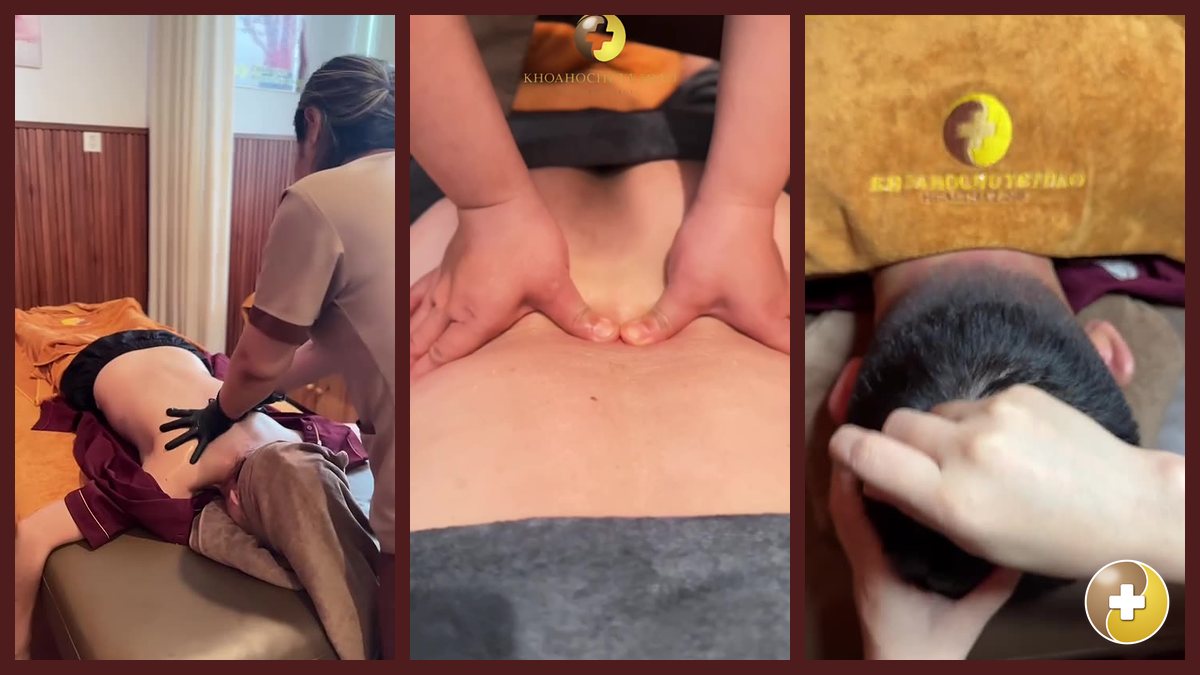
This Vietnamese traditional wellness method was developed by Lương Y Tống Văn Huynh, a master of traditional Vietnamese wellness with over 13 years in Eastern wellness, face reading and spinal reflex balancing. Quick techniques at home press the brake for a few minutes; a session at Tong Gia helps the body rest more deeply, segment by segment along the spine.
- Observation: complexion, the space between the brows, eyes, breathing, raised shoulders; questions about sleep, coffee and when palpitations come.
- Reading the spine by hand: skin temperature, stroking along the spine, pressing each segment from C1 to the sacrum, comparing left and right. Stressed guests often feel warm at C1–C2 with thick muscle at T1–T5.
- Muscle release: neck, shoulders, between the shoulder blades and the mid back, light to medium pressure in an even rhythm; gentle vibration is used in the curriculum to create a relaxing wave for nervous exhaustion.
- Precise acupressure: Nội quan on the inner wrist for tension and palpitations, Thần môn at the wrist crease for sleep, Thái Xung on the foot for frustration, finishing at Bách hội on the crown to clear the head, as used in the tradition.
- Home care coaching: 4–6 breathing, self-pressing the wrist points, sensible coffee timing.
A typical session
A typical heart-care session for a sales manager at month end: the practitioner sees raised shoulders, short breaths and vertical lines between the brows. Reading the spine, the neck is warm and the muscles beside T3–T5 are thick, with pressure spreading to the front of the chest. Work begins gently at the feet and arms, then moves to the neck, shoulders and upper back. Halfway through, breathing slows; some guests fall asleep. It ends at the crown and wrists, with a short routine of 4–6 breathing and Nội quan before important calls.
Services and prices
- Heart nourishing care, 75 min: 750,000 VND (about 29 USD), when palpitations, chest tightness or poor sleep come with stress.
- Traditional Eastern massage, 60 min: 450,000 VND (about 17 USD), to release the whole body after a tense week.
- Herbal hair wash with neck and shoulder massage, 60 min: 250,000 VND (about 10 USD), for light stress relief after work.
See all prices, or read about sleep acupressure and our Vietnamese head spa questions.
What guests feel
During the session most people feel a pleasant soreness in the neck and between the shoulder blades, then warmth, deeper breathing and a lighter head. Afterwards many say they sleep more deeply that night and feel clearer and calmer the next morning. Some feel sleepy, a common response as the body shifts into rest. Responses vary; Tong Gia supports the body's balance and does not promise to end stress, because the sources of pressure still need sorting out.
Want Lương Y Tống Văn Huynh’s team to read your spine and posture in person?
Seven quick stress relief techniques for home, work and prevention
- 4–6 breathing for five minutes: as taught in the Tong Gia curriculum, breathe in through the nose for 4 seconds and out slowly for 6, for 5–10 minutes a day. A longer exhale is the fastest way to press the brake. Use it before a presentation or a difficult call.
- Press Nội quan for 1–2 minutes each side: on the inner forearm, about three finger-widths above the wrist crease, between the two tendons; press lightly when tense or mildly anxious.
- Release shoulders and jaw in one minute: lift the shoulders high as you breathe in, let them drop as you breathe out, five times; part the teeth slightly and rest the tongue on the palate.
- Press Thái Xung on the foot: in the hollow between the big toe and second toe, moving up towards the ankle; one minute each side when frustrated or angry.
- Walk for 5–10 minutes: leave your desk, take the stairs, find some trees; movement helps the body "burn off" stress hormones. The curriculum suggests moderate movement for about 30 minutes a day.
- A short nap of 15–30 minutes: in traditional thinking, 11:00–13:00 is the Heart's hour; a brief rest makes the afternoon less tense.
- Press Thần môn before bed and switch off after 10 p.m.: one to two minutes each side with slow breathing; no coffee on an empty stomach or after 2 p.m.
For children after school: a walk or active play, water, a light snack, then five minutes of 4–6 breathing together before homework. Avoid "relaxing" with alcohol, vaping or late-night scrolling, which make sleep lighter.
Book a session
- District 12: 225 Dương Thị Mười, Tân Chánh Hiệp Ward (225 Duong Thi Muoi Street). Open 8:00–19:00 daily.
- Vinhomes Grand Park, District 9: Căn T16-21 khu Manhattan, Phường Long Bình, TP. Thủ Đức (unit T16-21, Manhattan zone, Long Binh Ward, Thu Duc City). Open 9:00–20:00 daily.
Book online, or call, Zalo or WhatsApp +84 888 264 559. Mention your main concern (palpitations, poor sleep, stiff shoulders, bloating) so the practitioner can prepare. Read real Google Maps reviews on each branch page. This is the method of Lương Y Tống Văn Huynh, founder of Huyệt Đạo Tống Gia; we invite you to experience it while you are in Ho Chi Minh City.
Visit us
- Đông Y Huyệt Đạo Tống Gia Quận 12 (District 12)
225 Dương Thị Mười, Phường Tân Chánh Hiệp, Quận 12, HCMC · 8:00–19:00 daily · 0888 264 559 · Directions on Google Maps - Đông Y Huyệt Đạo Tống Gia Quận 9 (Vinhomes Grand Park, District 9)
Căn T16-21 khu Manhattan, Vinhomes Grand Park, Phường Long Bình, TP. Thủ Đức, HCMC · 9:00–20:00 daily · 0888 264 559 · Directions on Google Maps
Want Lương Y Tống Văn Huynh’s team to read your spine and posture in person?
FAQ
What is the fastest way to relieve stress in five minutes? Sit upright and breathe in a 4–6 rhythm (in for 4 seconds, out for 6) for three minutes, then press Nội quan on each inner wrist for a minute and lift and drop your shoulders a few times. The long exhale helps your nervous system switch to rest.
How can I calm down before a presentation? Ten minutes before: sip water, do 4–6 breathing, press Nội quan, drop your shoulders and feel both feet on the floor. Avoid coffee on an empty stomach right before speaking, as it can bring a racing heart and shaky hands.
Is long-term stress harmful? Prolonged stress often leads to poor sleep, neck and shoulder pain, stomach trouble, palpitations and poor focus. If it lasts more than two weeks with low mood, loss of interest or palpitations at rest, see a doctor and seek professional support.
Which acupressure points help with stress at work? In the Tong Gia curriculum: Nội quan on the inner wrist for tension and palpitations, Thái Xung on the foot for frustration, and Bách hội on the crown to clear the head. Press each lightly for 1–2 minutes, pleasantly sore.
Does massage help with stress, and how soon will I feel it? Massage softens the muscles and slows the breath; many people feel a lighter head during the session and sleep more deeply that night. Responses vary, so keep up slow breathing, movement and enough sleep if the pressure continues.
Author: Lương Y Tống Văn Huynh – founder of Huyệt Đạo Tống Gia, a master of traditional Vietnamese wellness with over 13 years in Eastern wellness care, Y Tướng Học (face reading) and spinal nerve-reflex balancing massage.
Updated: 2026-11-16
Related guides
- Quick stress relief: seven things to do in 5–10 minutes, why the body calms down, and when to seek support
- Chronic stress that lasts for months: stiff neck, headaches, poor sleep and bloating, seen through the spine
- Heart palpitations: six groups of causes, warning signs and the Eastern view of the Heart and spine
This is a wellness service, not medical care.