
Stress acne: why it happens, when to see a doctor, and what Y Tướng Học face reading notices
Quick answer: Stress acne happens because tension raises cortisol and related hormones, so oil glands produce more sebum, skin inflames more and heals slower; poor sleep, sugary snacks and touching or squeezing spots add to it. Large painful cysts, scarring or irregular periods need a doctor. Tong Gia in Ho Chi Minh City supports sleep and calm.
Want Lương Y Tống Văn Huynh’s team to read your spine and posture in person?
Stress acne: what it is and who gets it
Stress acne is the kind of breakout that arrives in waves when pressure builds: deadline weeks, year-end closing, exams, a few late nights, family worries. People say "my skin was fine, then every stressful week my chin and jaw break out" or "my forehead flares exactly in report week". Spots are usually red inflamed bumps, small cysts or bumps under the skin, often on the chin, jawline, cheeks, forehead and hairline.
In Western terms, long-term stress makes the body release more cortisol and some adrenal hormones. These stimulate oil glands to produce more sebum, strengthen inflammation in the skin and slow skin repair. Stress does not create acne from nothing, but it worsens existing acne and makes new flares easier. Add what comes with stress: little sleep, sweet snacks, coffee instead of water, touching your face, leaning on your chin, picking spots when anxious, skipping your evening cleanse, and the skin breaks out more easily.
Among guests of Tong Gia Acupoint Wellness (Huyệt Đạo Tống Gia) in Ho Chi Minh City, stress acne is common in:
- Office workers, accountants and sales staff chasing targets, sleeping late, in air-conditioning all day;
- Students in exam season, new hires and people who have just changed jobs;
- Night-shift and online-sales workers who sleep by day;
- Motorbike riders wearing a mask all day in heat, sweat and dust;
- Women whose breakouts get worse before their period, especially in stressful months.
New to reading the face for wellness? Start with our Eastern face reading Q&A.
Common causes: seven groups behind stress breakouts
This table helps you describe your skin to a doctor and to our practitioners; it is not for judging it yourself.
| Cause group (Western view) | Typical breakout | Often comes with |
|---|---|---|
| Stress hormones (cortisol and others) | Waves on chin, jaw, forehead under pressure | Oily skin, spots slow to fade |
| Poor sleep, late nights, shift work | Inflamed spots, dull skin, dark circles | Fatigue, poor focus, sugar cravings |
| Stress eating | Flares after weeks of snacks and milk tea | Bloating, constipation, feeling "heated" |
| Touching, picking, chin resting | Spots grouped on one cheek or the chin | Marks and scars |
| Masks, sweat, hot humid air | Small spots in the mask area and hairline | Itching, congestion |
| Cycle hormones, hormonal disorders | Jaw and chin worse before periods | Irregular periods, extra hair, hair loss |
| Over-treating skin, cosmetics, some prescriptions | Tiny bumps, stinging, redness | Peeling, burning with new products |
Stress hormones. Under stress the nerve–hormone axis raises cortisol; oil glands respond to these hormones, so they produce more sebum, pores clog more easily, bacteria thrive and inflammation is stronger. That is why spots appear exactly in high-pressure weeks.
Sleep. Sleep is when skin repairs. Several nights under six hours or awake until 1–2 am slow skin repair: old spots have not faded before new ones arrive, skin looks dull, dark circles show, and sugar cravings rise.
Stress eating. Many people snack more under pressure: sweets, milk tea, fried food, instant noodles, sweet coffee, and notice more spots afterwards. The Tong Gia curriculum also notes that very rich, greasy meals overload the Spleen and Stomach and create "dampness" in traditional terms.
Touching and picking. When anxious we touch our face, pick, rest the chin on a hand while staring at a screen, press a phone to the cheek, each time adding oil and bacteria, spreading inflammation and leaving marks.
Masks and humidity. In Saigon, a mask all day in heat, sweat and traffic fumes keeps cheeks and chin damp and congested; mask-area and hairline spots are very common in riders.
Hormones. Many women see jaw and chin spots before their period, and stress can shift the cycle. Acne with irregular periods, extra facial hair, hair loss or weight gain needs a hormonal check.
Over-treating and medication. Worried about spots, people pile on products and exfoliate constantly, weakening the skin barrier so it stings and breaks out more. Some prescriptions cause acne as a side effect; ask the prescriber and do not stop on your own.
Signs worth noting
- Type: blackheads, whiteheads, red inflamed spots, large painful cysts, pus.
- Location: chin, jaw, cheeks, forehead, hairline, back, chest.
- Timing: with stressful weeks, with your cycle, after weeks of irregular eating.
- Sleep and mood: trouble sleeping, vivid dreams, irritability, worry, restlessness.
- Digestion: bloating, constipation, bitter mouth, bad breath.
- Whole body: irregular periods, extra hair, hair loss, weight gain or loss, long fatigue.
A few weeks of notes — breakout days, hours slept, food, stress level, cycle day — help a doctor and our practitioners see the pattern quickly.
When to see a doctor
- Large, painful cysts or nodules, many spots, pitted scars or long-lasting dark marks: see a skin specialist early to limit scarring.
- Acne with irregular periods, extra hair, hair loss or quick weight gain: get a hormonal check.
- A sudden strong flare in an older adult, or after starting a new prescription.
- A hot, red, spreading swollen area, with fever or strong pain.
- Weeks of over-the-counter acne products without improvement, or stinging and peeling.
- Long fatigue, weight loss or pallor: get checked at a medical facility in parallel.
- Lasting stress, anxiety, poor sleep, low mood, loss of interest, or feeling too self-conscious to meet people: see a mental health professional.
If you follow a skin plan from your doctor, keep following it. This is a wellness service, not medical care; Tong Gia does not extract spots or work on inflamed areas.
The Y Tướng Học view: skin mirrors the organs, but do not blame it all on the liver
Y Tướng Học (face reading for wellness) has roots over 2,000 years old in the idea that what is inside shows outside. Lương Y Tống Văn Huynh (master of traditional Vietnamese wellness) puts it as "the signs show outside, the organs lie inside". Skin and complexion are what Tong Gia looks at before touching you.
First, the Tong Gia curriculum is direct in its section on liver myths: "acne means a weak liver?" is a misunderstanding; acne can come from hormones, oily skin, diet, stress or allergy, and the liver is only one factor among many. So Tong Gia will not tell you "your acne is liver heat" and sell you a "detox" product.
According to the curriculum, the Lung governs the skin and body hair, the Heart governs blood and shows on the face, the Liver keeps qi, blood and emotions flowing, and the Spleen and Stomach make qi and blood. In its section on flesh, the curriculum describes "fragrant flesh": clean, smooth skin, fine pores, no clogging or widespread cysts, when the Liver and Kidneys clear well and strong Lung qi spreads to the skin. When that picture breaks down, the curriculum names these traditional patterns:
| Sign on the skin | Pattern in the Tong Gia curriculum | Wellness suggestion |
|---|---|---|
| Oily sweat, itching, boils, dull skin | Damp-heat in Liver and Gallbladder / heat in Spleen and Stomach | Less fatty, sweet, spicy food and alcohol; earlier sleep |
| Uneven enlarged pores, frequent colds and allergies | Weak Lung qi | Deep breathing, warmth, regular movement |
| Corners of the forehead suddenly dull, localised cysts | Stagnant heat in Liver and Gallbladder; poor sleep, bad dreams, dry eyes | Less pressure, soothe the Liver, regular bedtime |
| Mouth ulcers, constipation, spots after rich spicy meals | Spleen–Stomach heat from rich, spicy food and alcohol | Lighter food, vegetables, water |
| Dry skin, pale face, sweating easily | Weak Lung qi (curriculum's signs of weaker lung function) | Moisturise, belly breathing, keep warm |
These are traditional concepts, not Western disease names. You may have seen "acne face maps" online (chin = kidneys, cheeks = lungs); such detailed maps are not in the Tong Gia curriculum, so we do not use them. The curriculum does describe people with high cheekbones and strong Liver traits, often managers who decide for everyone, as prone to heat rising to the head when overloaded, and, in women, to hormonal and cycle disturbance from pent-up Liver qi; people with a Thân face whose digestion reacts instantly to stress; and those with full lips and a wide mouth (strong digestion) who can build Spleen–Stomach heat from rich eating. This is reference knowledge for choosing where to care, never for judging anyone.
Spine and nerve-reflex areas involved
In the Tong Gia curriculum, C1–C7 govern the head, face, neck and arms; for the nerve and mind group (long poor sleep, nervous exhaustion) the curriculum works on C1–C7, D1–D3 and the sacral area; D1–D12 relate to circulation, breathing and digestion. People whose skin breaks out under stress often have a stiff neck, raised shoulders, a clenched jaw and a heavy mid-back.
| Vertebrae | Nerve area, function | Common signs | Organ (Eastern view) |
|---|---|---|---|
| C1–C7, D1–D3 | Nerve and mind group; neck governs head and face | Poor sleep, tense head, teeth grinding, stiff neck | Heart – Liver |
| D3 (Lung shu) | Back point of the Lung; often tight in the Đồng face type | Shallow breathing, dry or reactive skin | Lung (skin) |
| D4–D5 | Jueyin shu and Heart shu area | Palpitations, light sleep, dull complexion | Heart |
| D7–D9 | Often tight in stressed people (face reading) | Irritability, side tension, upset digestion under pressure | Liver – Spleen |
| D11–D12 (Spleen and Stomach shu) | Back points of Spleen and Stomach | Bloating, irregular eating, bitter mouth | Spleen – Stomach |
"Linked" means a direction for care, not a conclusion about disease.
The Tong Gia method: spinal nerve-reflex balancing massage
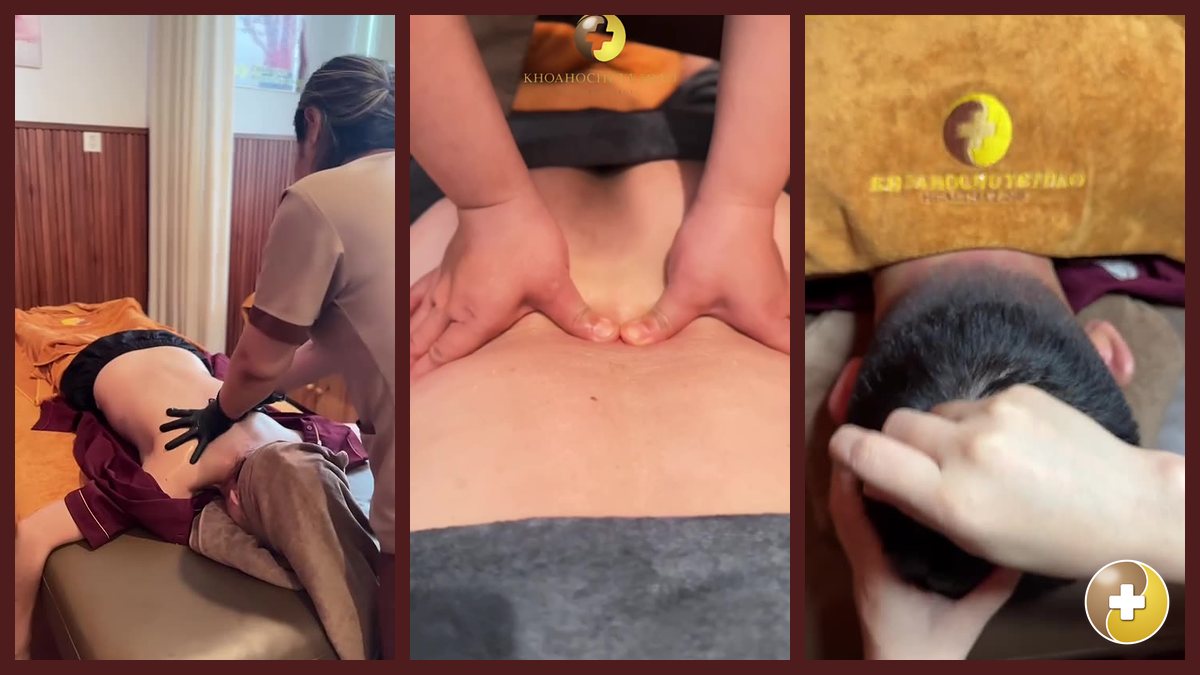
Built by Lương Y Tống Văn Huynh over more than 13 years of Eastern wellness, face reading and spinal nerve-reflex balancing. For stress acne, Tong Gia does no facials, no extractions and makes no promise of clear skin; the aim is to bring the nervous system off alert, deepen sleep, ease Liver qi and rest digestion, so your changes in sleep, food and doctor-guided skin care can work.
- Screening: hot spreading swelling, fever, pregnancy, current prescriptions, cycle problems; warning signs mean seeing a doctor first.
- Observation: spot type and location, skin tone, pores, forehead, cheekbones, lips, tongue, eyes; questions on sleep, food, cycle and pressure.
- Reading the spine by hand: skin temperature, muscle layer, vertebral shape, sensation; warm tight areas first, cool areas not worked directly.
- Muscle release: neck, shoulders, jaw muscles near the ear (avoiding any spots), between the shoulder blades and mid-back.
- Acupressure: Liver shu, Spleen shu, Stomach shu on the back; Taichong (soothes the Liver) and Xingjian (clears Liver heat in traditional terms) and Zusanli on the legs; Hegu on the hand (the curriculum's "face and mouth point", not in pregnancy), Neiguan, Shenmen; Baihui to finish.
- Self-care coaching: bedtime, hands-off habits, food, slow breathing, Taichong.
A typical session. A marketing executive using a skin plan from her doctor said that "every campaign week my chin and jaw break out; I sleep five hours and grind my teeth". The practitioner saw inflamed spots on chin and jaw, slightly dull forehead corners, an oily T-zone, a tongue a little red at the sides; she admitted irritability and a bitter morning taste. Her neck was stiff, the jaw tense, both sides of D7–D9 warm and tight, the mid-back heavy. Slow release of neck, shoulders, the jaw near the ear (well away from spots) and mid-back made her yawn repeatedly and stop clenching; then Liver shu, Spleen shu, Taichong, Xingjian, Neiguan and Baihui. Her plan: screens off before 11 pm, water instead of afternoon milk tea, no chin resting at the desk, and a follow-up in two weeks to see how sleep and skin change.
Services and prices: Liver wellness 75 min 750,000 VND (about 29 USD); Spleen–Stomach wellness 75 min 750,000 VND (about 29 USD); Eastern massage 60 min 450,000 VND (about 17 USD). See our prices page and face reading for wellness; for the massage itself read traditional Vietnamese massage Q&A.
How it feels. Neck and jaw ache a little, then soften; the head feels less tight, breathing slows, some fall asleep. Afterwards guests report a lighter body, easier sleep and less irritability. Skin changes slowly, over cycles of several weeks; Tong Gia supports balance and does not promise clear skin.
Want Lương Y Tống Văn Huynh’s team to read your spine and posture in person?
Self-care at home and prevention
- Sleep enough, at regular times: screens off before 11 pm, a fixed wake-up time; a week of good sleep often calms skin and mood together. Our acupressure for sleep Q&A has simple routines.
- Hands off: clean hands, wipe your phone, change pillowcases 2–3 times a week, change damp masks.
- Gentle, simple skin care: cleanse twice a day and after heavy sweating; do not pile on products; follow your doctor if you use acne products.
- Eating under pressure: keep water and fruit at hand instead of sweets and milk tea; less fried, spicy food and alcohol; regular meals so digestion is not overloaded.
- Slow breathing, Taichong, light movement: breathe in for 4 and out for 6 for 2–3 minutes when tense; press Taichong 1–2 minutes each side; walk 20–30 minutes after work. A relaxing scalp session also helps some people; see our Vietnamese head spa Q&A.
Book a session
- District 12: 225 Dương Thị Mười, Phường Tân Chánh Hiệp (Tan Chanh Hiep Ward, District 12). Open 8:00–19:00 daily.
- Vinhomes Grand Park, District 9: Căn T16-21 khu Manhattan, Phường Long Bình, TP. Thủ Đức (Unit T16-21, Manhattan zone, Long Binh Ward, Thu Duc City). Open 9:00–20:00 daily.
Book online or call, Zalo or WhatsApp +84 888 264 559. Tell us when your skin breaks out, how you sleep, your cycle, and any skin plan you follow. Real reviews are on each branch's Google Maps page. Living in or visiting Ho Chi Minh City? Come and try a Vietnamese Eastern wellness method built by Lương Y Tống Văn Huynh.
Visit us
- Đông Y Huyệt Đạo Tống Gia Quận 12 (District 12)
225 Dương Thị Mười, Phường Tân Chánh Hiệp, Quận 12, HCMC · 8:00–19:00 daily · 0888 264 559 · Directions on Google Maps - Đông Y Huyệt Đạo Tống Gia Quận 9 (Vinhomes Grand Park, District 9)
Căn T16-21 khu Manhattan, Vinhomes Grand Park, Phường Long Bình, TP. Thủ Đức, HCMC · 9:00–20:00 daily · 0888 264 559 · Directions on Google Maps
Want Lương Y Tống Văn Huynh’s team to read your spine and posture in person?
FAQ
What causes stress acne? Stress raises cortisol and related hormones, so oil glands produce more sebum, skin inflames more and heals slower; poor sleep, snacking and picking add to it. Large cysts, scarring, irregular periods or extra hair need a doctor.
Where does stress acne usually appear? Often on the chin, jawline, cheeks, forehead and hairline, in waves with stressful weeks. Location is only a hint; online "acne face maps" linking each area to an organ are not part of the Tong Gia curriculum.
Is acne a sign of liver heat? Do not conclude that yourself. The Tong Gia curriculum says acne can come from hormones, oily skin, diet, stress or allergy, and the liver is only one factor. Eastern wellness describes Liver–Gallbladder damp-heat and Spleen–Stomach heat, but these are wellness hints.
What should I do about stress acne? Sleep enough at regular times, keep your hands off your face, cleanse gently and keep skin care simple, cut sugar, fried food and alcohol, breathe slowly and move every day. Severe or scarring acne needs a skin specialist.
Can massage or acupressure help stress acne? A session helps you relax, sleep deeper, loosen the neck and ease Liver qi, so many guests feel less wound-up. Tong Gia does not work on spots and does not promise clear skin; skin needs time and the right care.
How long until stress acne settles? It depends on severity and cause. Skin renews over several weeks, so it usually takes at least 4–8 weeks of steady sleep, food and skin care to see a clear change; if it is still severe after that, see a doctor.
Author: Lương Y Tống Văn Huynh – founder of Huyệt Đạo Tống Gia, a master of traditional Vietnamese wellness with over 13 years in Eastern wellness care, Y Tướng Học (face reading) and spinal nerve-reflex balancing massage.
Updated: 2026-11-17
Related guides
- Driving stress in Saigon traffic: why jams lock up the body and shorten the temper, and how to unwind after the wheel
- Student stress: why your body goes into alarm mode in exam season and how to ease it
- Nervous tension explained: what stress does in the body, how Eastern medicine sees it, and how to return to rest
- Exam stress before tests: what your child's body is doing and how to help them walk in calmer
- Trouble sleeping after giving birth: why you are exhausted yet wide awake
- Insomnia and "weak kidneys": what Eastern and Western medicine say, why you wake at night, and how to care for it
This is a wellness service, not medical care.