
Teen insomnia: why your teenager can't sleep and what parents can do
Quick answer: Teen insomnia usually comes from a body clock that shifts later in puberty, plus screens, homework, caffeine and exam stress. Insomnia beyond a month or lasting low mood needs a doctor. Tong Gia Acupoint Wellness in Districts 12 and 9, Ho Chi Minh City offers gentle care; under-16s come with a parent.
Want Lương Y Tống Văn Huynh’s team to read your spine and posture in person?
What is teen insomnia?
Many parents in Ho Chi Minh City tell Tong Gia the same story: their 14- or 15-year-old turns off the light at 11 pm, yet at 1 am a phone screen still glows under the blanket. At 6 am the child will not wake up, yawns through class, comes home irritable and sleeps until noon at weekends. Asked why, the teen says "I just lie there and can't sleep". That is teen insomnia: trouble falling asleep, going to sleep late and not sleeping enough, followed by tiredness, poor concentration and mood swings.
The Western medical view: in puberty the body clock naturally shifts later. The brain releases melatonin, the hormone that signals sleepiness, later than in childhood, so many teens simply are not sleepy before 11 pm, while school still starts early. A common Western recommendation is 8 to 10 hours of sleep a night for ages 13 to 18; many teens get six. Screens, social media, games, piled-up homework and exam pressure push bedtime later still, and weekend catch-up sleep makes Monday mornings even harder.
Long-term sleep loss at this age affects memory, school results, mood, immunity and weight, and raises the risk of accidents on the road. This guide explains why teens struggle to sleep, when to see a doctor and how gentle wellness care can help.
For children under 16: Tong Gia Acupoint Wellness requires a parent or guardian for the whole session. If the child has an underlying condition or is followed at a medical facility (asthma, a heart condition, epilepsy, anxiety, or sleep advice from medical staff), please ask those medical staff before booking.
Common causes: why teenagers can't sleep
- A later body clock: a natural feature of puberty in Western medicine, not laziness.
- Screens before bed: phones, tablets and games in the bedroom keep the brain alert with light and stimulating content.
- Homework and evening tutoring: a brain that has just been working hard cannot switch straight to sleep.
- Coffee, milk tea and energy drinks: often drunk in the afternoon or evening to stay up studying.
- Exam and friendship worries: entrance exams, grades, drama on social media; thoughts start the moment they lie down.
- Irregular weekends: late nights and noon wake-ups on Saturday and Sunday leave Sunday night wide awake.
- Little exercise and sunlight: all day indoors in air-conditioned rooms blurs the day–night signal.
- Late dinners and night snacks: the Tong Gia curriculum notes that late eating makes the stomach work when the body should rest.
Other signs to watch
- Taking more than 30 minutes to fall asleep, or rarely sleeping before midnight despite going to bed early.
- Very hard to wake, dozing in class, a long nap after school and then wide awake at night.
- Tiredness, afternoon headaches, irritability or unexplained sadness.
- Vivid dreams, dreams about exams, waking with a start.
- Hot palms and soles at night, sweating in sleep.
- Loud snoring, wheezing or pauses in breathing that family members notice.
- Irregular eating, sugar cravings, more breakouts when short of sleep.
When to see a doctor
Please take your teen to see a doctor at a medical facility (paediatrics, neurology or mental health) if:
- Insomnia happens almost every night for more than a month despite better routines and fewer screens.
- Your child seems sad, loses interest, withdraws or stops eating for more than two weeks.
- Your child talks about or shows signs of wanting to self-harm: stay with them and contact medical staff today; this is urgent.
- Loud snoring, pauses in breathing, morning headaches, falling asleep during the day.
- Sudden, irresistible sleep attacks during the day; restless legs that must move when lying down.
- A racing heart, unexplained weight loss or shaking hands: get checked at a medical facility alongside any wellness care.
- Crushing chest pain, shortness of breath or cold sweats (rare at this age): call 115 (Vietnam's ambulance line) immediately.
This is a wellness service, not medical care. Please do not give your child any sleep aid without asking medical staff first.
The Y Tướng Học view: Heart, Kidney and the late-night Gallbladder hours
In the Tong Gia curriculum, the Heart houses the spirit and governs mood, thinking and sleep; when it weakens there is insomnia, vivid dreaming and forgetfulness. Heart and Kidney are like fire and water: when they fail to meet, there is poor sleep, palpitations and tired lower back and knees. The curriculum describes Kidney yin deficiency as "not enough cooling water": hot palms and soles, night sweats, insomnia and dreaming, with the advice to sleep early and avoid late nights and spicy food. For teens who stay up night after night, this is the pattern the curriculum often points to.
The curriculum also says heavy worry drains the Heart and Spleen, and that people who "think day and night" carry stagnant heat in the Gallbladder channel, making sleep hard between 11 pm and 1 am, exactly when many teens are still on their phones.
| Pattern (traditional view) | Typical teen | Sleep | Other signs |
|---|---|---|---|
| Heart–Kidney disharmony, Kidney yin deficiency | Months of late nights | Hard to fall asleep, dreams | Hot palms and soles, night sweats |
| Heart and Spleen depleted by worry | Exam prep, irregular meals | Light sleep, startles easily | Forgetful, poor appetite, pale face |
| Liver–Gallbladder heat | Easily frustrated, screens late | Wide awake 11 pm–1 am, nightmares | Dry eyes, irritability |
What can be seen on the outside? Tong Gia's face reading follows "the outer form reflects the inner organs":
- Tongue: the tongue is the "sprout" of the Heart; a red tip or sores suggest Heart fire, a pale tongue suggests Heart blood is not yet sufficient.
- Upper corners of the forehead: sudden dullness or clustered spots are read as Liver–Gallbladder heat. Note that in Western terms teenage acne is mainly hormonal, so this is only an observation cue.
- Ears set high: a quick learner who tends to think day and night and may sleep poorly in the Gallbladder hours.
These are traditional concepts, not Western medical terms, used only to guide the session and never to judge a child's character.
Spine segments and nerve-reflex areas involved
For nervous-system complaints such as long-term insomnia, the Tong Gia curriculum combines C1–C7, T1–T3 and the sacral area. Teens who look down at phones and desks for hours often have a warm nape and tight neck and upper back.
| Segment | Nerves and function | When a teen sleeps badly | Related organ |
|---|---|---|---|
| C1–C2 | Head, back of the skull | Hot nape, heavy head, cannot drift off | Heart, Liver |
| C3–C7 | Neck, shoulders, arms | Neck strain from phones and desks | Liver |
| T1–T3 | Chest, heart, lungs | Shallow breathing, racing heart in bed | Heart, Lung |
| T4–T5 | Area behind the heart | Dreams, waking with a start | Heart |
| Sacral area | Pelvic nerves | Light sleep, tired lower back | Kidney |
How Tong Gia works: spinal nerve-reflex balancing massage
The method was built by Lương Y Tống Văn Huynh, a master of traditional Vietnamese wellness with over 13 years in Eastern wellness, face reading and spinal nerve-reflex balancing. For teens who sleep badly, the aim is to help the head, nape, neck and upper back relax and breathing slow down, so the body "remembers" how to let go before bed, while agreeing on evening habits with the parents.
- Questions and observation with the parent: bedtime, actual sleep time, wake time, screen time, afternoon drinks and health history; complexion, eyes, tongue and posture. Warning signs mean seeing a doctor first.
- Reading the spine by hand: skin temperature, muscles and each vertebra from C1 to the sacrum, left against right.
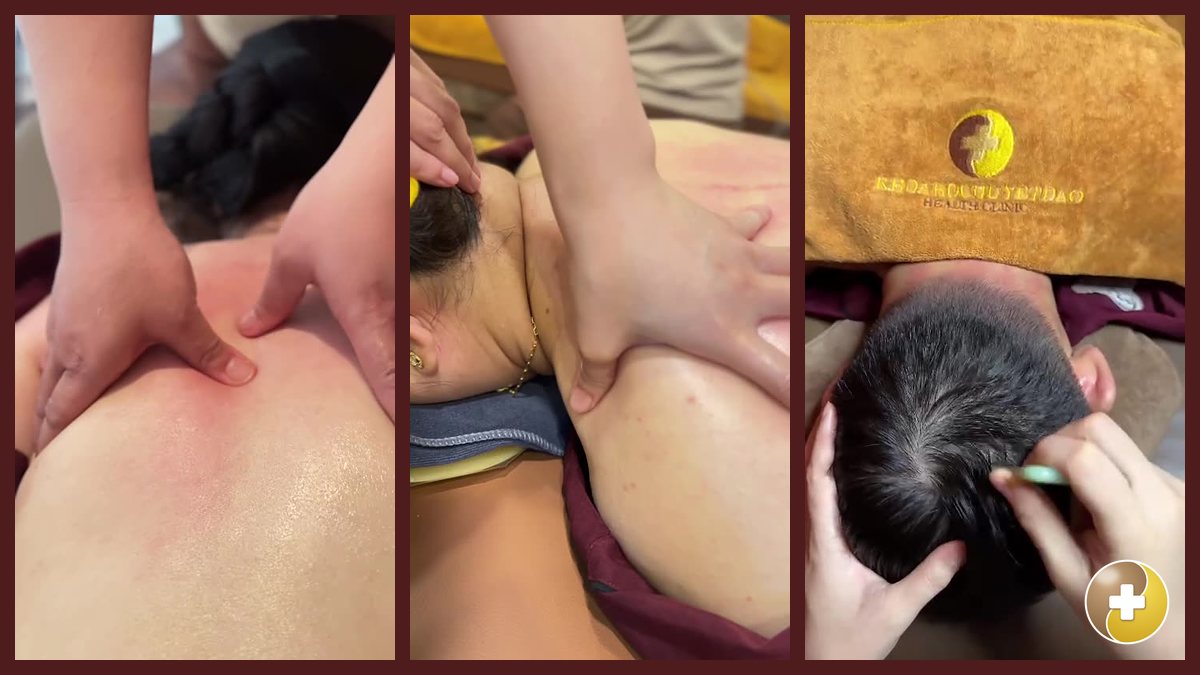
- Releasing muscles: base of the skull, nape, shoulders and between the shoulder blades, with light, slow, even pressure for teenagers.
- Acupressure: Shenmen (HT7) to calm the mind and support sleep, Baihui (GV20) at the crown to clear the head, Yongquan (KI1) on the sole to draw heat downward and ease sleep in the traditional view.
- Coaching for teen and parent: a screen curfew, pressing Shenmen, rubbing the soles, a warm foot soak.
A typical session
A typical session with a Grade 9 student preparing for the Grade 10 entrance exam, who comes with his mother and usually falls asleep after 1 am: the practitioner confirms no snoring, no lasting low mood and no underlying condition. Dark circles, a slightly red tongue tip and raised shoulders are visible. The nape feels warm and the neck and upper back are tight. The practitioner starts lightly at the feet, then works the neck and upper back, finishing at the head and Baihui while the mother sits nearby. Midway the student dozes off. Before leaving, mother and son learn to rub Yongquan and agree on a "phone parking time" outside the bedroom.
Services and prices
- Herbal hair wash with neck and shoulder massage, 60 minutes: 250,000 VND (about 10 USD), gentle and well suited to teens with neck strain.
- Head care, 60 minutes: 750,000 VND (about 29 USD), when a heavy head and trouble falling asleep stand out.
Full prices are on the price list. Read more: acupressure for sleep in Saigon, Vietnamese head spa, herbal hair wash in Ho Chi Minh City and booking for family members.
What teens feel during and after
Most teens feel mild tenderness at the nape and between the shoulder blades, then warmth, and many doze off. Afterwards many families say their child fell asleep earlier that night and woke with a lighter head. Responses differ; Tong Gia supports the body to rebalance and does not promise insomnia will stop, because routines, screens and school pressure remain the key things for the family to work on together.
Want Lương Y Tống Văn Huynh’s team to read your spine and posture in person?
Home care and prevention
- A screen curfew: phones and laptops off 60 minutes before bed and charged outside the bedroom; parents doing the same makes it easier.
- The same bedtime and wake time all week: no more than 1–2 hours' lie-in at weekends; 15–20 minutes of morning sunlight.
- Shenmen and Yongquan: press Shenmen gently for 1–2 minutes per side with slow breathing; rub each sole for 3–5 minutes in the evening.
- A warm foot soak: 15–20 minutes at about 38–42°C before bed; parents can check the water temperature.
- No coffee, milk tea or energy drinks after 2 pm; dinner 2–3 hours before bed: plus 30–60 minutes of activity a day, ideally outdoors.
Book a session
- District 12: 225 Dương Thị Mười, Phường Tân Chánh Hiệp (Tan Chanh Hiep Ward, District 12). Open 8:00–19:00 daily.
- Vinhomes Grand Park, District 9: Căn T16-21 khu Manhattan, Phường Long Bình, TP. Thủ Đức (Unit T16-21, Manhattan zone, Long Binh Ward, Thu Duc City). Open 9:00–20:00 daily.
Book online or call, Zalo or WhatsApp +84 888 264 559. When booking for your child, share age, usual bedtime, main signs and any underlying condition. Children under 16 must come with a parent or guardian. An early-evening slot lets your teen go home, shower and sleep early. Real reviews are on each branch's Google Maps page. Raising a family in Ho Chi Minh City? Come and try a Vietnamese Eastern wellness method built by Lương Y Tống Văn Huynh.
Visit us
- Đông Y Huyệt Đạo Tống Gia Quận 12 (District 12)
225 Dương Thị Mười, Phường Tân Chánh Hiệp, Quận 12, HCMC · 8:00–19:00 daily · 0888 264 559 · Directions on Google Maps - Đông Y Huyệt Đạo Tống Gia Quận 9 (Vinhomes Grand Park, District 9)
Căn T16-21 khu Manhattan, Vinhomes Grand Park, Phường Long Bình, TP. Thủ Đức, HCMC · 9:00–20:00 daily · 0888 264 559 · Directions on Google Maps
Want Lương Y Tống Văn Huynh’s team to read your spine and posture in person?
FAQ
Is teen insomnia serious? A few bad nights before exams are common. Weeks of poor sleep affect memory, school, mood and immunity. Insomnia for over a month, lasting low mood, or loud snoring with pauses in breathing are reasons to see a doctor.
Why can't teenagers fall asleep? In Western terms the body clock shifts later in puberty, and screens, homework, coffee, milk tea and exam stress add to it. In the Tong Gia curriculum, the Eastern view looks at the Heart housing the spirit, Heart–Kidney disharmony and worry draining the Heart and Spleen.
How many hours of sleep does a teenager need? A common Western recommendation is about 8 to 10 hours a night for ages 13 to 18. If your teen gets up at 6 am, aim for sleep by about 10 to 11 pm.
What can a 15-year-old do to sleep better? Screens off an hour before bed, the same bedtime all week, morning sunlight, no coffee or milk tea after 2 pm and a warm foot soak before bed. Do not use any sleep aid without asking medical staff.
Can a 14-year-old have acupressure massage for sleep? Yes, at Tong Gia children under 16 come with a parent for the whole session, and the practitioner checks health history and keeps pressure light. With an underlying condition, ask medical staff before booking.
Is constant tiredness in puberty just lack of sleep? Short sleep is a common cause, but lasting tiredness with pale skin, weight loss or dizziness should be checked at a medical facility for anaemia or other causes.
Author: Lương Y Tống Văn Huynh – founder of Huyệt Đạo Tống Gia, a master of traditional Vietnamese wellness with over 13 years in Eastern wellness care, Y Tướng Học (face reading) and spinal nerve-reflex balancing massage.
Updated: 2026-11-17
Related guides
- Driving stress in Saigon traffic: why jams lock up the body and shorten the temper, and how to unwind after the wheel
- Student stress: why your body goes into alarm mode in exam season and how to ease it
- Nervous tension explained: what stress does in the body, how Eastern medicine sees it, and how to return to rest
- Exam stress before tests: what your child's body is doing and how to help them walk in calmer
- Trouble sleeping after giving birth: why you are exhausted yet wide awake
- Insomnia and "weak kidneys": what Eastern and Western medicine say, why you wake at night, and how to care for it
This is a wellness service, not medical care.