
Tired after the flu: why the fatigue lingers after the fever, and how Tong Gia helps the Lung and Spleen rebalance in Ho Chi Minh City
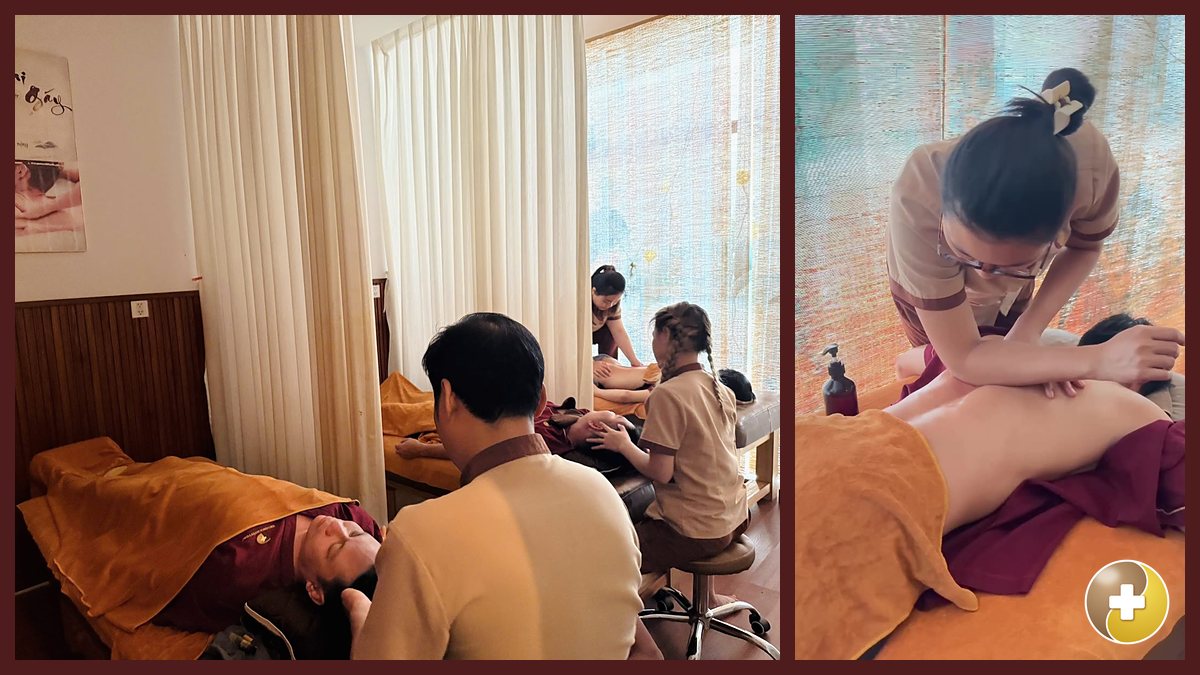
Quick answer: Tiredness after the flu comes from the energy your body spent fighting the virus plus days of poor eating and sleep. Vietnamese tradition calls it weak Lung qi with a Spleen that has not caught up. Returning fever, breathlessness or chest pain need a medical check. Tong Gia Acupoint Wellness (Huyệt Đạo Tống Gia), Ho Chi Minh City, works by hand on C7, D3 and D11–D12 once the fever is gone.
Want Lương Y Tống Văn Huynh’s team to read your spine and posture in person?
Tired after the flu: why does the fatigue linger after the fever?
Tiredness after the flu is when the fever, sore throat and runny nose have gone but your energy has not come back. You wake up drained, a few flights of stairs leave you out of breath, talking for a while is tiring, food tastes of nothing and by late afternoon all you want is to lie down. Some people still have a lingering cough, sweat at the slightest effort and dislike drafts and air conditioning. This often lasts from a few days to a few weeks after a cold, a viral fever or influenza A.
From a Western point of view, fighting a virus mobilises the immune system and uses up energy, protein and fluids; during the fever days you eat less, sleep badly and lie down a lot, so muscles weaken. The end of the fever only marks the end of the acute phase; the body still needs time to rebuild what it used and to repair the airways. The Tong Gia training curriculum notes that acute bronchitis brings a cough, sometimes with phlegm, "often after a cold or flu; mostly viral", which is why many people still cough and feel tired after the fever is gone.
In Ho Chi Minh City, Tong Gia Acupoint Wellness (Huyệt Đạo Tống Gia) often sees post-flu fatigue in:
- Office workers who return to full days in air conditioning as soon as the fever breaks.
- Parents who nursed a sick child for several nights and then fell ill themselves.
- Expats who caught something on a long flight and are still adjusting to the climate.
- Older adults after a bout of flu, eating little and moving much more slowly.
- People who catch colds easily and sniffle every time the weather turns.
Common causes: why does energy come back slowly?
- Going back to work too soon: full days straight after the fever, no buffer days of rest.
- Eating and drinking too little: not enough protein or fluids, plain rice porridge for days.
- Not enough sleep: night coughing, a blocked nose, late screens.
- Air conditioning, drafts, iced drinks: a chilled neck, chest and upper back, an irritated throat, a cough that hangs on.
- Lying down a lot, shallow breathing: slumped posture means the diaphragm moves less and the lungs do not fully expand, so you tire and get breathless easily.
- Smoke and dust: they slow the tiny hairs that clear the airways, so phlegm stays.
The Eastern view: weak Lung qi, a Spleen that has not caught up
In the Tong Gia curriculum, the Lung is the organ that "governs qi": it runs breathing, regulates water and maintains the body's resistance. It governs the skin and body hair and holds the protective "wei qi" against outside influences. The Lung is a "delicate organ", easily affected by cold and heat. After a cold, Lung qi is often depleted. Lung qi deficiency, described as "not enough force to move qi", brings a weak cough, breathlessness on effort, a quiet voice, reluctance to talk, spontaneous sweating, dislike of wind, catching colds often and slowly, a pale face and tiredness. Others lean towards Lung yin deficiency, "not enough fluid to moisten": a dry cough with little or sticky phlegm, dry throat, hoarseness, a low afternoon fever, night sweats.
The Lung does not work alone. Together with the Spleen it forms the "gathering qi"; in five-element terms, Earth (Spleen) feeds Metal (Lung). The curriculum says "the Spleen produces phlegm, the Lung stores it": a weak Spleen means more phlegm and breathlessness. The Kidney "grasps qi" for deep inhalation. So, the curriculum reminds us, caring for the Lung also means eating well for the Spleen–Stomach and protecting Kidney qi. These are traditional concepts, not Western medical labels.
Signs that often come with it
| Accompanying sign | Leans towards | Why (per the source) |
|---|---|---|
| Breathless on effort, quiet voice, sweating easily, dislike of wind | Lung qi deficiency | The Lung governs qi, skin and protective qi |
| Dry cough, dry throat, hoarse voice, low afternoon fever, night sweats | Lung yin deficiency | Not enough fluid to moisten |
| Poor appetite, bland taste, phlegmy cough, heavy body | Spleen–Lung | The Spleen produces phlegm; Earth feeds Metal |
| Short breath on stairs, tired lower back and knees | Kidney–Lung | The Kidney grasps qi |
| Palpitations, light sleep, very pale skin, dizziness | Heart–Spleen | Heart–Spleen deficiency |
| Feeling low, sighing, shallow breathing | Lung | Grief is the emotion of the Lung |
When to see a doctor
Post-flu tiredness usually fades day by day. But please see a doctor, rather than resting at home or booking a massage, if you notice any of the following (mostly from the curriculum's warning list):
- The fever comes back, or a high fever with cough and cloudy, yellow-green phlegm.
- Breathlessness at rest, needing to sit up to breathe; blue lips or fingertips.
- Chest pain, especially when breathing in; a racing or irregular heart with light activity.
- Coughing blood or blood-streaked phlegm; a cough lasting more than two weeks.
- Wheezing or noisy breathing for the first time.
- An older person who becomes drowsy, confused or stops eating; pneumonia in the elderly can show only as drowsiness.
- After a fever: red spots under the skin, bleeding gums, belly pain, repeated vomiting.
- Worsening fatigue, weight loss, night sweats or a low afternoon fever that persists.
Chest pain or tightness, shortness of breath, sweating: call 115 (Vietnam emergency) immediately. People with asthma, COPD, heart disease or who are pregnant should seek medical advice early when they have the flu.
This is a wellness service, not medical care. We do not work on guests who still have a fever, we do not replace test results or X-rays, and we never advise stopping prescribed medication or inhalers.
The face-reading view: what post-illness fatigue looks like
Y Tướng Học (face reading for wellness) teaches that "the appearance is outside, the organs are inside". The Lung shows in the nose, skin and breath: smooth skin, deep breathing and a clear voice when strong; dry skin, a blocked nose, shallow breathing and sighing when weak. Part 3 of the curriculum adds:
- The "Đồng" (同) face: long and square with firm bone and flesh, a Metal constitution led by the Lung and Large Intestine. Strong by nature, but when unwell it is usually from wind-cold or dryness: sinus trouble, dry cough, constipation, dry skin. On the back, stiffness or a raised vertebra around D3, the Lung point area.
- Skin and pores: clear, glowing skin reflects strong Lung qi; when Lung qi is low, pores are uneven and wind and cold get in easily, bringing colds and allergic rhinitis.
- Complexion: very pale or sallow skin belongs to Heart–Spleen deficiency, with dizziness, breathlessness and palpitations; Lung qi deficiency shows as a pale white face.
- The "Mục" (目) face: long, narrow and thin, a pattern of weak qi and blood, slow to recover after each illness.
This is reference knowledge of the school, not a medical finding. More in Eastern face reading for wellness: Q&A.
Spine segments and nerve-reflex zones involved
According to the curriculum, the neck C1–C7 relates to the head, face, neck and arms; the thoracic spine D1–D12 to circulation, breathing and digestion; the lumbar spine L1–L5 to digestion, kidneys and urinary function. The internal organ group, including asthma and bronchitis, is worked through D1–D12 with L1–L3. For post-flu fatigue, technicians pay attention to:
| Segment | Nerve / function | Common signs | Organ (Eastern view) |
|---|---|---|---|
| C7 (base of neck) | C1–C7; Dingchuan beside C7, Dazhui used for colds | Stiff nape, dislike of wind, cough | Lung |
| D3 (upper back) | D1–D12: breathing; Lung point under T3 | Breathlessness, shallow breath, weak cough | Lung governs qi |
| D4–D5 | D1–D12: circulation; Heart points | Palpitations, light sleep | Heart |
| D11–D12 | Spleen point under T11, Stomach point under T12 | Poor appetite, phlegm, heaviness | Spleen–Stomach |
| L2 | L1–L5: kidneys; Kidney point under L2 | Short breath, tired back and knees | Kidney grasps qi |
These are "related" zones for orientation only. After an illness, the upper back and shoulders are often tight from lying down and coughing, while the mid and lower back muscles feel soft and hollow. For a depleted body the curriculum uses gentle tonifying techniques, works on excited zones and never presses hard on cool, inhibited ones.
The Tong Gia method: spinal nerve-reflex balancing massage
The method was built by Lương Y Tống Văn Huynh, a master of traditional Vietnamese wellness and founder of Tong Gia, with over 13 years in Eastern wellness care, face reading and spinal nerve-reflex balancing. For the Lung, the curriculum aims to strengthen Lung qi, open and settle the breath, and free the chest, shoulders and back so breathing feels deep and easy. A session has five steps:
- Ask and screen: how long since the fever ended, cough and phlegm, asthma, heart or lung conditions, pregnancy, prescribed medication. With a fever or any warning sign, we do not work and advise a medical check first.
- Observe and read the spine: resting breath, chest or belly breathing, voice, complexion, posture; then skin temperature, muscle layer and vertebra shape from C7 to the lower back.
- Relax the shoulders, upper back and chest: so the diaphragm and rib cage move freely; light pressure, slow rhythm, a gentle wave of sensation.
- Press the right points: Lung point, Dingchuan, Spleen and Kidney points on the back; Zhongfu and Danzhong on the chest, lightly; Chize, Lieque and Taiyuan on the arm; Zusanli on the leg. Hegu only when pregnancy is ruled out. Work stops once the skin over a key point turns from dry to slightly moist.
- Self-care guidance: a few minutes of belly breathing or pursed-lip breathing during the session, plus advice on food, sleep and keeping the neck and chest warm.
A typical session
A guest arrives a few days after the fever ended, voice still a little hoarse, slightly out of breath from the car park. Over warm water the technician asks about the illness, food and sleep, and notices shallow chest breathing. Face down, the base of the neck and upper back are tight, while the lower back is soft and cool. The technician slowly opens the shoulders and upper back, vibrates lightly along the spine, presses the Lung point and Dingchuan, then warms the Spleen and Kidney points. Many people feel the chest expand and take their first deep breath in days; some cough up phlegm more easily. Face up, the technician works lightly on the chest and wrist points, then teaches belly breathing. Afterwards guests usually feel lighter, warmer and ready for an early night. We do not promise full energy after one visit; recovery needs food, sleep and rest.
Suitable services and prices
- Lung wellness care, 90 minutes: 900,000 VND (about 35 USD). For breathlessness, shallow breathing, a weak cough and dislike of wind after the flu.
- Spleen–Stomach wellness care, 75 minutes: 750,000 VND (about 29 USD). For poor appetite, bland taste, phlegm and heaviness after illness.
- Herbal steam add-on: 120,000 VND (about 5 USD). Once the fever has gone, for a warm, open-nose feeling; see gua sha and herbal steam: Q&A.
See all prices. If you would rather have the whole body done slowly, read about the 120-minute full body session. Older guests, pregnant guests and those with asthma or heart conditions, please tell us beforehand.
Want Lương Y Tống Văn Huynh’s team to read your spine and posture in person?
Self-care at home and prevention
- Belly breathing and pursed-lip breathing: in through the nose for about 4 seconds, belly rising, out slowly for about 6, 5–10 minutes a day; when breathless, in for 2 seconds, out through pursed lips for 4.
- Eat enough, eat warm, small frequent meals: porridge with meat, fish or egg, vegetable soups, warm water. Moistening foods such as pear, lotus root and honey are suggested in the curriculum (no honey for babies under one).
- Keep the neck, chest and upper back warm: avoid cold drafts, moderate the air conditioning, skip iced drinks for the first weeks.
- Sleep early, build up slowly: bed before 11 pm; gentle 10–20 minute walks in the first week, increasing only when you feel ready.
- "Drawing the bow": a Baduanjin movement that opens the chest, slow and deep, 6–8 times each side.
Book a session
- District 12: 225 Dương Thị Mười, Phường Tân Chánh Hiệp (Tan Chanh Hiep Ward). Open daily 8:00–19:00.
- Vinhomes Grand Park: Căn T16-21 khu Manhattan, Phường Long Bình, TP. Thủ Đức (Unit T16-21, The Manhattan, Long Binh Ward, Thu Duc City, formerly District 9). Open daily 9:00–20:00.
Call, Zalo or WhatsApp +84 888 264 559, or book online. Please let us know when your fever ended. While you are in Ho Chi Minh City, it is an easy way to experience a Vietnamese traditional method in person. Real ratings and reviews are on each branch's Google Maps profile.
Visit us
- Đông Y Huyệt Đạo Tống Gia Quận 12 (District 12)
225 Dương Thị Mười, Phường Tân Chánh Hiệp, Quận 12, HCMC · 8:00–19:00 daily · 0888 264 559 · Directions on Google Maps - Đông Y Huyệt Đạo Tống Gia Quận 9 (Vinhomes Grand Park, District 9)
Căn T16-21 khu Manhattan, Vinhomes Grand Park, Phường Long Bình, TP. Thủ Đức, HCMC · 9:00–20:00 daily · 0888 264 559 · Directions on Google Maps
Want Lương Y Tống Văn Huynh’s team to read your spine and posture in person?
FAQ
How long does tiredness last after the flu? Usually a few days to about two weeks, depending on your baseline health, age and rest. Eating and sleeping well and building up slowly helps. If you are still very tired after 2–3 weeks, or the fever returns, or you have breathlessness, chest pain or a cough beyond two weeks, get checked at a medical facility.
Is post-flu fatigue a concern? Mostly not; it is the body rebuilding after fighting the virus. The Eastern view calls it Lung qi deficiency: breathlessness, a quiet voice, sweating, dislike of wind. Get checked if you are breathless at rest, have blue lips, chest pain, a racing heart, or an older relative becomes drowsy and stops eating.
What should I do after a viral fever? Take a few extra days before full workload, eat enough protein in small meals, drink warm fluids and sleep before 11 pm. Practise slow belly breathing and walk gently, then build up. After a fever, red spots under the skin, bleeding gums or belly pain need an urgent medical check.
Can I get a massage after the flu? Not while you have a fever. Once the fever is gone and you are eating, light massage and acupressure help relax the shoulders and back, deepen your breathing and improve sleep. At Tong Gia we screen carefully, use light pressure and focus on the Lung, Dingchuan and Spleen points.
What should I eat to recover faster? Warm, cooked, easy food: porridge with meat, fish or egg, vegetable soups, fruit, in small frequent meals with enough water. The curriculum links Lung care with Spleen–Stomach care; pear, lotus root and honey are traditional choices (no honey for babies under one).
Author: Lương Y Tống Văn Huynh – founder of Huyệt Đạo Tống Gia, a master of traditional Vietnamese wellness with over 13 years in Eastern wellness care, Y Tướng Học (face reading) and spinal nerve-reflex balancing massage.
Updated: 2026-11-16
Related guides
- Sore throat and chest tightness: common causes, the signs that mean call 115, and how Tong Gia supports the Lung after a medical check
- Sneezing and a runny nose: allergy or a cold, the warning signs, and how Tong Gia supports the Lung in Ho Chi Minh City
- Hoarse voice: six common causes, when it needs an ENT check, and how Tong Gia supports the Lung in Ho Chi Minh City
- Yellow runny nose: what mucus colour tells you, the 10-day rule, and how Tong Gia supports the nose and sinuses in Ho Chi Minh City
- Acupressure for a stuffy nose: which points help you breathe easier, how to press them, and when to see a doctor
- Tired after the flu: why the fatigue lingers after the fever, and how Tong Gia helps the Lung and Spleen rebalance in Ho Chi Minh City
This is a wellness service, not medical care.