
Sore throat and chest tightness: common causes, the signs that mean call 115, and how Tong Gia supports the Lung after a medical check
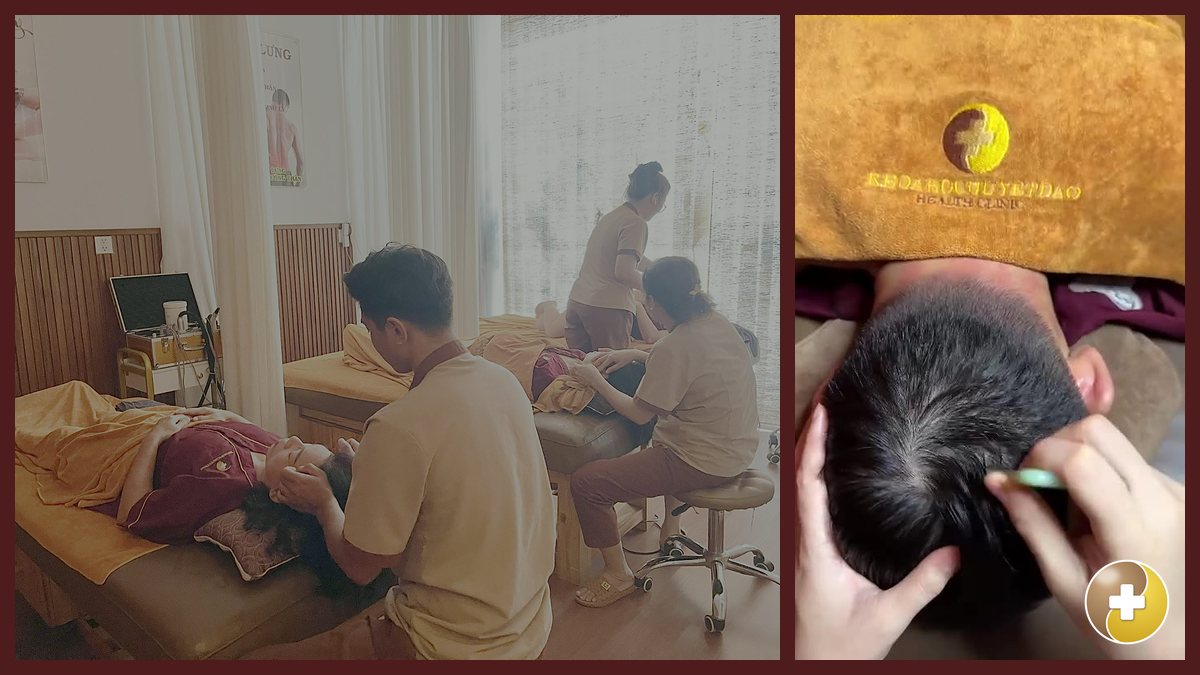
Quick answer: A sore throat with chest tightness often comes from a throat infection spreading to the bronchi after a cold, chest muscles strained by coughing, acid reflux or asthma; but chest tightness can also come from the heart or lungs. Crushing chest pain, breathlessness or cold sweat mean call 115 now. Tong Gia in District 12 and District 9, Ho Chi Minh City supports neck and upper-back care only after a medical check.
Want Lương Y Tống Văn Huynh’s team to read your spine and posture in person?
Sore throat and chest tightness: what it means in Western terms, and who gets it
This is a raw, painful or scratchy throat together with a heavy, tight or pressed feeling in the chest; some describe a "choking feeling in the chest when I breathe" or "every cough burns down behind the breastbone". These are two symptoms at once, not one disease. In Western physiology, the throat, larynx, trachea and bronchi form one continuous tube; an infection that starts in the throat after a cold can spread down, so coughing burns behind the breastbone. Days of coughing also tire and strain the muscles between the ribs and the diaphragm, so the chest feels tight and deep breaths hurt.
But chest tightness always deserves caution. The Tong Gia curriculum states that chest pain can come from the lungs, the heart or the muscles, bones and ribs, and needs a medical check to find the cause; heart and lungs are closely linked. So this article sets the rule first: a sore throat with chest tightness that has no clear explanation is checked first, and wellness care comes after.
In Ho Chi Minh City, the people who mention a sore throat with a tight chest are often:
- People just over a cold or sore throat, now coughing a lot with burning behind the breastbone.
- Motorbike commuters and people working in dust or smoke, smokers and those around them.
- People who eat late, like spicy food, coffee or alcohol, with both a raw throat and burning mid-chest.
- People with asthma or sensitive airways whose chest feels heavy with every cold.
- People under long-term stress who breathe shallowly and feel a lump in the throat and pressure on the chest.
Common causes: six groups
Based on general Western knowledge, to help you describe things clearly; not for self-labelling. The last group is an emergency.
| Group | Typical clues | Urgency |
|---|---|---|
| Throat infection spreading to the bronchi after a cold | Sore throat first, then lots of coughing, burning behind the breastbone, maybe phlegm | Get checked with high fever, breathlessness or a cough over 2 weeks |
| Chest muscles strained by coughing | Aching on both sides of the chest or ribs when coughing, sneezing or twisting; tender to press | Watch; get checked if not improving or with breathlessness |
| Acid reflux | Burning behind the breastbone, sour burps, raw throat, hoarseness; worse after meals and lying down | Get checked if lasting, with trouble swallowing or weight loss |
| Asthma, sensitive airways | Chest tightness, wheeze, cough at night or early morning, with cold air or effort | Get checked; severe attacks are emergencies |
| Stress and anxiety | Lump in the throat, chest pressure, shallow breathing, sighing, palpitations | Heart and lung causes must be ruled out first |
| Emergency group | Crushing chest pain spreading to the left arm, jaw or back; sudden breathlessness; one-sided chest pain on breathing in; high fever with breathlessness; severe throat pain with drooling and noisy breathing | Call 115 now |
Bronchitis after a cold. The curriculum describes acute bronchitis as a cough, sometimes with phlegm, usually after a cold, mostly viral. People often describe a sore throat and runny nose first, then more coughing with burning down the middle of the chest. Antibiotics do not work on viruses and are used only when a medical professional prescribes them.
Strained chest muscles. Each cough contracts the rib, belly and diaphragm muscles hard. Days of coughing leave them sore, sometimes with one tender spot when pressed, twisting or sneezing. This pain is usually tied to movement, but breathlessness or fever still means a check.
Reflux. The curriculum lists sour burps, burning behind the breastbone, dry cough and hoarseness as reflux signs. Acid reaching the throat makes it raw, so many people have a sore throat plus burning mid-chest after big or late meals or when lying down.
Asthma. The curriculum describes asthma as episodes of breathlessness, wheeze, chest tightness, and cough at night or early morning; colds make it worse. It is long-term and kept under control with medical guidance and by avoiding triggers; never stop preventive inhalers on your own.
Stress. Long stress brings shallow chest breathing and tense neck and chest muscles, with a lump in the throat and pressure on the chest. It is common, but only considered after heart and lung causes have been checked. See our acupressure Q&A for how sessions handle this.
The emergency group. Several dangerous conditions can begin with chest tightness: heart problems (crushing pain spreading to the left arm or jaw, cold sweat, breathlessness), pneumonia (fever, phlegm, chest pain, breathlessness; older people may only seem drowsy or confused), a clot in the lungs (sudden breathlessness), a collapsed lung (sudden one-sided chest pain and breathlessness), and epiglottitis (severe throat pain, unable to swallow, drooling, noisy breathing). These are not for waiting or massage; call 115.
Signs worth noting
- Type of tightness: burning with coughs; one tender spot when pressed or twisting; or squeezing, heavy pressure mid-chest spreading to the jaw, left arm or back.
- Breathing: pain on deep breaths, over 20 breaths a minute at rest, unable to finish sentences, needing to sit up to breathe.
- Effort: tightness walking or climbing stairs that eases with rest needs an early heart check.
- Fever and phlegm: high fever, yellow-green or rusty phlegm, blood.
- Whole body: cold sweat, faintness, palpitations, bluish lips or fingertips, exhaustion.
- Meals: burning after eating or lying down, sour burps.
- Background: over 40, high blood pressure, diabetes, high cholesterol, smoking, asthma, a recent long flight, recent childbirth or surgery.
When to see a doctor
Call 115 immediately, do not wait and do not massage it if a sore throat with chest tightness comes with:
- Crushing or heavy central chest pain spreading to the jaw, shoulder, left arm or back.
- Breathlessness, cold sweat, nausea, faintness or collapse.
- Sudden breathlessness, or one-sided chest pain that worsens on breathing in.
- Bluish lips or fingertips, stridor, breathlessness at rest or needing to sit up to breathe.
- Severe throat pain, unable to swallow saliva, drooling, a muffled voice, noisy breathing.
- Sudden swelling of the lips, tongue or throat.
See a doctor the same day if:
- Chest tightness comes on with effort and eases with rest, even if the throat seems to explain it.
- There is high fever with cough and cloudy phlegm, or chest pain on deep breaths.
- A cough lasts over 2 weeks, or you cough up blood.
- Wheeze or stridor appears for the first time, or an asthma attack is worse than usual.
- Throat pain, difficulty or pain swallowing, or hoarseness keep getting worse.
- There is unexplained weight loss, night sweats or a lasting low evening fever.
- You also feel tired and look pale: get checked in parallel, as this may relate to anaemia or another issue.
The Tong Gia curriculum is clear that with warning signs our practitioners will not work and will ask you to see a doctor first. This is a wellness service, not medical care; for unexplained chest tightness we only offer care after you have been checked.
The Y Tướng Học view: the Lung governs qi and the chest
Y Tướng Học (face reading for wellness) in the Tong Gia curriculum holds that outer signs reflect the inner organs. In Eastern theory the Lung governs qi and sends qi and fluids outward and downward; when this weakens, cough, breathlessness and a full, tight chest follow. "All vessels meet in the Lung", helping the Heart move blood, so the chest is where Lung and Heart meet. The Lung pairs with the Large Intestine: the curriculum notes that long constipation can make the chest feel full and breathing uncomfortable. The Lung's emotion is grief, so long sadness and worry often bring sighing and a heavy chest.
The curriculum describes Lung qi weakness (weak cough, breathless on effort, quiet voice, dislike of wind, frequent colds, pale face) and Lung yin weakness (dry cough, dry throat, hoarseness, afternoon flush, night sweats; any blood in phlegm needs a check straight away). A narrow, sunken area between the brows with vertical lines is linked to stuck Lung qi with shallow breathing, and to Heart blood stagnation with a pressed chest, sighing, palpitations and anxiety. The 同-shaped face belongs to Metal and the Lung, prone to asthma and dry cough, with tightness around the third thoracic vertebra (Phế Du). These are traditional concepts for choosing where to work; they never replace a heart and lung check. See our face reading Q&A.
Spine and nerve-reflex areas involved
In the Tong Gia spinal nerve-reflex curriculum, C1–C7 relates to head, face, neck and arms, and D1–D12 to circulation, breathing and digestion. Asthma, bronchitis and stomach pain sit in the "internal organs" group, worked at D1–D12 and L1–L3, as support only.
| Area | Nerve / function | What often comes with it | Organ / points |
|---|---|---|---|
| Neck C3–C7, front and sides | Neck, throat area | Raw throat, neck tight from coughing | Lung; Định Suyễn below C7, 0.5 cun to the side |
| D1–D3 (upper back) | Breathing | Stiff upper back, shallow breathing, hacking cough | Phế Du, below the 3rd thoracic vertebra, 1.5 cun to the side |
| D5–D9 (mid back) | Upper digestion | Burning behind the breastbone after meals | Spleen–Stomach, Liver |
| Chest | Rib cage, breathing and rib muscles | Tight chest after days of coughing | Trung Phủ (eases chest fullness), Đản Trung (meeting point of qi, opens the chest) |
| Forearm and hand | Lung meridian | Acute sore throat, cough, hoarseness | Khổng Tối (acute cough and sore throat), Xích Trạch, Ngư Tế |
Points do not act directly on lung tissue; in traditional theory they help regulate qi and blood. In Western terms, when the neck, shoulders, upper back and chest muscles let go after days of coughing and the breath drops into the belly, the chest feels lighter. This applies only to muscle- and breathing-related tightness that has already been checked.
The Tong Gia method
This Vietnamese Eastern wellness method was built by Lương Y Tống Văn Huynh, master of traditional Vietnamese wellness and founder of Huyệt Đạo Tống Gia, with over 13 years in Eastern wellness, Y Tướng Học and spinal nerve-reflex balancing. For a sore throat with chest tightness, screening is the most important step: what the tightness feels like, whether it comes with effort, fever, breathlessness or bloody phlegm; heart conditions, blood pressure, diabetes, asthma, pregnancy; whether you have been checked and what you were told. Unexplained tightness or any warning sign means no session and a referral to medical care. Then: observation of breathing rate (normal is 12–20 a minute at rest), chest or belly breathing, whether you speak in full sentences, face and lips; reading the neck, D1–D3 and mid-back by hand; gently releasing the shoulders, upper back and chest; working Phế Du, Định Suyễn, Trung Phủ, Đản Trung and the arm points Xích Trạch, Khổng Tối, Ngư Tế (Hợp Cốc only if we are sure you are not pregnant), stopping at any unusual response; and a few minutes of belly or pursed-lip breathing.
A typical session: a delivery rider says that a week after a sore throat he started coughing a lot, each cough burning down the middle of his chest, both sides of his ribs tight; he was checked and told his heart and lungs were fine, and advised rest and fluids. He breathes fast and shallow into his chest, shoulders braced, neck tight from coughing. The upper back around D3 is warm and thick, the spaces between the ribs at the back tight. The practitioner releases shoulders and upper back very slowly, works Phế Du and Định Suyễn, then presses Trung Phủ and Đản Trung gently and Khổng Tối and Ngư Tế on both arms. He practises pursed-lip breathing: in through the nose for 2 seconds, out slowly through pursed lips for 4. He says his chest "lightened" and his throat no longer felt pulled with every cough.
Suitable services, only after a medical check (see prices):
- Throat-area care, 60 min: 350,000 VND (about 13.5 USD) – neck, shoulders, upper back and Lung points on the arms.
- Lung wellness session, 90 min: 900,000 VND (about 35 USD) – full upper back, chest and breathing work following the curriculum's Lung-care steps.
You may feel a tender but pleasant ache on the upper back, warmth and openness when Đản Trung is pressed, and longer breaths. Afterwards many people say their shoulders and neck feel loose and breathing is easier. We do not promise an end to throat pain or chest tightness; if tightness gets worse, the practitioner stops and asks you to get checked. For warm steam options, see our herbal steam Q&A.
Want Lương Y Tống Văn Huynh’s team to read your spine and posture in person?
Self-care at home and prevention
- Rest and warm fluids: sip warm water, gargle warm salt water; keep neck and chest warm; air-con around 26–27°C.
- Belly and pursed-lip breathing: in through the nose about 4 seconds, out slowly about 6, for 5–10 minutes daily; pursed-lip breathing helps breathlessness on effort.
- Reflux-friendly eating: dinner about 3 hours before bed, not too full, less spice, coffee and alcohol, head of the bed slightly raised.
- Avoid smoke and dust: no smoking, avoid cooking smoke, mask on the motorbike; get checked for a long cough, breathlessness or blood in phlegm.
- Keep a simple log: fever, breathing rate, when tightness appears; if things get worse, get checked rather than waiting. See also our cupping Q&A before adding extras.
Booking
- District 12: 225 Dương Thị Mười, Phường Tân Chánh Hiệp, Quận 12 (District 12), daily 8:00–19:00.
- Vinhomes Grand Park: Căn T16-21 khu Manhattan, Phường Long Bình, TP. Thủ Đức (Thu Duc City, former District 9), daily 9:00–20:00.
WhatsApp or Zalo +84 888 264 559 (0888 264 559 in Vietnam), or book online; genuine Google Maps reviews are linked from each branch page. Tell us whether you have been checked and what you were told, what the tightness feels like, and whether you have fever or breathlessness. If you live in or visit Ho Chi Minh City, come and try this Vietnamese method.
Visit us
- Đông Y Huyệt Đạo Tống Gia Quận 12 (District 12)
225 Dương Thị Mười, Phường Tân Chánh Hiệp, Quận 12, HCMC · 8:00–19:00 daily · 0888 264 559 · Directions on Google Maps - Đông Y Huyệt Đạo Tống Gia Quận 9 (Vinhomes Grand Park, District 9)
Căn T16-21 khu Manhattan, Vinhomes Grand Park, Phường Long Bình, TP. Thủ Đức, HCMC · 9:00–20:00 daily · 0888 264 559 · Directions on Google Maps
Want Lương Y Tống Văn Huynh’s team to read your spine and posture in person?
FAQ
What causes a sore throat with chest tightness? Common causes are a throat infection spreading to the bronchi after a cold, chest muscles strained by coughing, acid reflux or asthma. But chest tightness can also come from the heart or lungs; crushing chest pain, breathlessness, cold sweat or sudden breathlessness mean call 115 now.
Is a choking feeling in the chest when breathing serious? It can come from bronchitis, cough-strained muscles, reflux or stress, but chest pain on deep breaths is also a warning sign in the Tong Gia curriculum. Get checked the same day; severe breathlessness, sudden one-sided pain or blue lips mean call 115.
Is a sore throat with cough and a tight chest dangerous? After a cold it is usually a viral throat infection or bronchitis that settles. It is a concern with high fever, cloudy or bloody phlegm, breathlessness, a cough over 2 weeks or tightness on effort; those need a check.
Sore throat, body aches and cough: what is it? Often a viral cold or flu. A high fever that lasts, breathlessness, chest pain, or an older person who becomes drowsy or confused can point to pneumonia and needs a check straight away. Rest, drink enough and watch your temperature and breathing.
Which specialist should I see for a lasting sore throat? A lasting sore throat, trouble swallowing or hoarseness: an ENT specialist. Burning behind the breastbone and sour burps: possibly a digestive specialist. Chest tightness on effort: a heart check. Describe all your symptoms so you are directed correctly.
Can I get a massage for a sore throat with chest tightness? Only after a medical check has ruled out heart and lung causes. Then neck, upper-back and chest work plus breathing practice can support relaxation and easier breathing in traditional terms. With unexplained chest tightness, Tong Gia practitioners will ask you to get checked first.
Author: Lương Y Tống Văn Huynh – founder of Huyệt Đạo Tống Gia, a master of traditional Vietnamese wellness with over 13 years in Eastern wellness care, Y Tướng Học (face reading) and spinal nerve-reflex balancing massage.
Updated: 2026-11-17
Related guides
- Sore throat and chest tightness: common causes, the signs that mean call 115, and how Tong Gia supports the Lung after a medical check
- Sneezing and a runny nose: allergy or a cold, the warning signs, and how Tong Gia supports the Lung in Ho Chi Minh City
- Hoarse voice: six common causes, when it needs an ENT check, and how Tong Gia supports the Lung in Ho Chi Minh City
- Yellow runny nose: what mucus colour tells you, the 10-day rule, and how Tong Gia supports the nose and sinuses in Ho Chi Minh City
- Acupressure for a stuffy nose: which points help you breathe easier, how to press them, and when to see a doctor
- Tired after the flu: why the fatigue lingers after the fever, and how Tong Gia helps the Lung and Spleen rebalance in Ho Chi Minh City
This is a wellness service, not medical care.