
Waking up at 3am every night: why it happens, when to get checked, and how Tong Gia helps the body settle
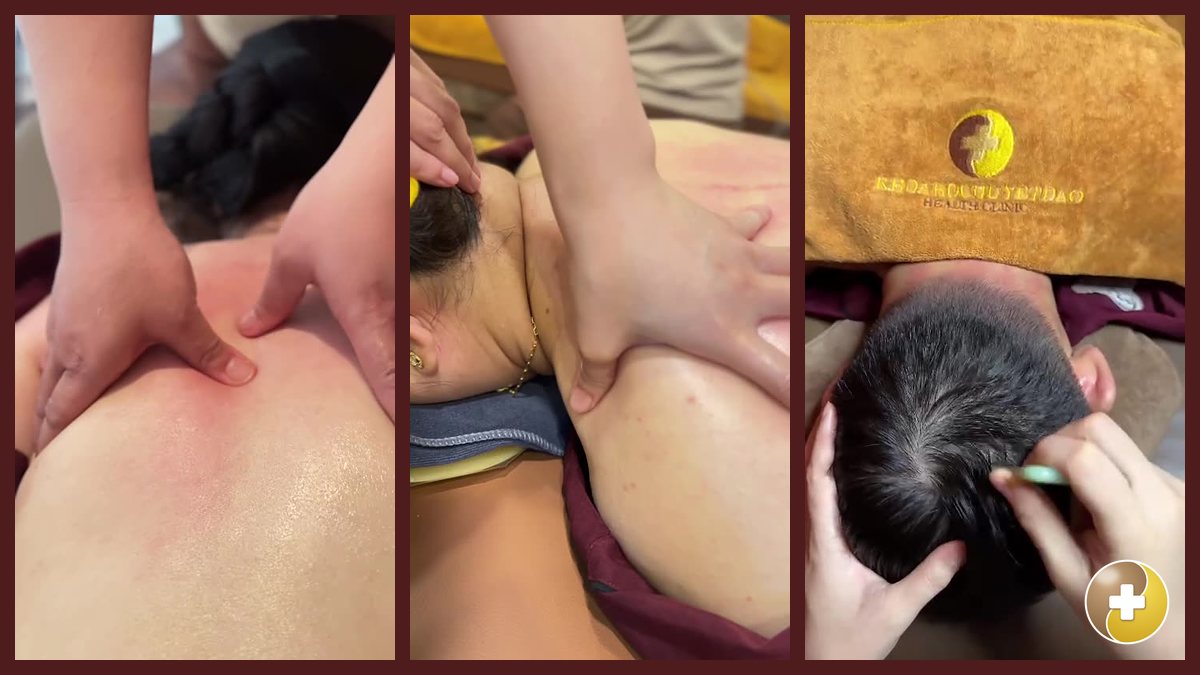
Quick answer: Waking up at 3am usually means second-half sleep has turned fragile: deep sleep is over, so stress, alcohol, a full bladder or heat wake you. If it lasts weeks or comes with low mood or snoring pauses, see a doctor. Tong Gia Acupoint Wellness (Huyệt Đạo Tống Gia) in Ho Chi Minh City works on neck, back and calming points.
Want Lương Y Tống Văn Huynh’s team to read your spine and posture in person?
Waking up at 3am: what is going on?
You fall asleep around eleven, sleep fine, and then your eyes open. The clock says 3:00, sometimes 3:15. Your mind is suddenly wide awake: tomorrow's meeting, a payment, the message you did not answer. You toss until nearly five, doze off, and the alarm goes. Many expats and visitors in Ho Chi Minh City tell Tong Gia Acupoint Wellness (Huyệt Đạo Tống Gia) that this happens at almost the same time, week after week.
The Western view: sleep runs in cycles of about 90 minutes, four to six per night. The first half of the night holds most of the deep sleep, when you are hard to wake. The second half is lighter, with more dreaming sleep. By around 3am, someone who went to bed at eleven has used up most of their deep sleep, and the "sleep pressure" built during the day has eased. At the same time, according to Western physiology, the stress hormone cortisol starts rising towards morning to prepare you to get up. So at the end of each cycle you pass through a very thin layer of near-waking. A relaxed sleeper turns over and never remembers it. A stressed, overheated, slightly dehydrated person, or someone who had a few beers, wakes up fully.
So waking at 3am is a pattern, a sign that second-half sleep has become fragile, not a disease name. It differs from trouble falling asleep and from broken sleep all night. In Saigon we see it in office workers under targets, small business owners doing accounts in their head, new mothers used to night feeds, people in their forties starting to wake to urinate, women around menopause with night heat, and anyone with a weekend drinking habit. Jet lag can create the same pattern; see our jet lag massage Q&A.
Common causes, group by group
Use this table to check your habits and to explain things clearly to a doctor. It is not meant for drawing your own conclusions.
| Cause group | Examples | Typical clue |
|---|---|---|
| Stress, worry | Work pressure, money, family issues | Mind starts racing the moment you wake |
| Evening alcohol | Beers with dinner, a nightcap | Deep sleep early, then wide awake, thirsty, warm |
| Night urination | Lots of water late, age, prostate | Wake needing the toilet, then cannot drift off |
| Heat, night sweats | Air-con timer switches off, menopause | Damp neck or back, restless |
| Stomach | Late meals, reflux, skipped dinner | Sour taste, burning behind the breastbone, hunger |
| Breathing in sleep | Loud snoring, pauses, blocked nose | Morning headache, dry mouth, unrefreshing sleep |
| Body aches | Neck, shoulder or back pain, numb arm | Pain when turning over |
| Body clock shift | Shift work, very early bedtime, long naps, flights | You simply finish your sleep early |
| Low mood | Sadness, loss of interest for weeks | Early waking with heaviness about the day |
Two causes are often underestimated. Alcohol makes it easier to fall asleep, but once the body has processed it, second-half sleep breaks up, the heart speeds and you feel hot. Night urination wakes you by itself. The Tong Gia curriculum also notes that late eating makes the stomach work when the body should rest, which can bring reflux and poor sleep.
The "fear of 3am" loop
After a few weeks, many people start expecting it. They lie down thinking "I'll probably wake at three again", and that expectation alone makes sleep lighter. On waking, the first move is checking the phone for the time; the screen light and notifications finish the job. Breaking this loop matters as much as finding the root cause.
Signs that often come with it
The Tong Gia curriculum lists sleep signs under three organ systems. Under the Liver: difficulty sleeping, light sleep, frequent waking, many dreams. Under the Heart: the Heart "houses the spirit" and governs consciousness and sleep; when weak there is insomnia, much dreaming, forgetfulness. Under the Kidney: poor sleep, dreams, waking to urinate. One sign alone proves nothing.
- Racing thoughts, irritability, tension under the ribs: common with long-term stress.
- Night sweats, dry mouth, hot palms and soles: look at hormones, room temperature, sleep habits.
- Waking to urinate, tired lower back and knees: check evening fluids, prostate or pelvic floor.
- Waking with a pounding heart: keep a record and get it checked if it repeats.
- Snoring with pauses noticed by a partner: a sleep assessment is worth doing.
A simple, useful tool: a two-week sleep diary. Note bedtime, waking time, what woke you (toilet, heat, dream, heartbeat, nothing obvious), and whether you had alcohol, coffee or a late meal.
When to see a doctor
- Early waking lasting more than three weeks, with daytime tiredness affecting work or driving.
- Early waking with low mood, loss of interest, feeling worthless, weight loss or dark thoughts: speak to a mental health professional soon.
- Loud snoring, breathing pauses, waking breathless or needing to sit up to breathe.
- Crushing chest pain, shortness of breath, sweating on waking: call 115.
- Frequent night urination, burning, blood in urine, strong thirst or weight loss.
- Heavy night sweats with low fever, a lingering cough or unexplained weight loss.
- Palpitations, tremor and weight loss: a thyroid check is sensible.
- If you use prescribed sleep aids, do not stop them on your own; ask the doctor who prescribed them.
With signs such as anaemia, weight loss or ongoing fatigue, get checked alongside any wellness care. This is a wellness service, not medical care.
The Eastern and face-reading view
In the Tong Gia curriculum, the Liver (Can) is a functional system linked to qi, blood, tendons, eyes, emotions and sleep. "The Liver stores blood": at rest, blood returns to the Liver to be nourished. "The Liver governs free flow": when that flow is blocked there is tightness in the chest, irritability and insomnia. Taking work into bed, in this view, is qi that cannot flow. The curriculum also mentions that people who think day and night can sleep badly during the Gallbladder hours (11pm–1am). Popular Eastern medicine books add that 1–3am belongs to the Liver channel and 3–5am to the Lung channel; the Tong Gia curriculum does not use this "organ clock" to draw conclusions, so take it as background only.
| Eastern pattern | With 3am waking | Direction in the curriculum |
|---|---|---|
| Liver qi stagnation | Non-stop thinking, irritability, tight shoulders | Ease the Liver; Thái xung (LR3, 太冲) |
| Liver fire | Inner heat, red eyes, bitter mouth | Cool the Liver; Hành gian (LR2, 行间) |
| Heart yin deficiency | Palpitations, night sweats, hot palms and soles | Nourish yin, calm the spirit, sleep early |
| Heart and Kidney not communicating | Insomnia, palpitations, weak lower back and knees | Draw heat downwards; Dũng tuyền (KI1, 涌泉) |
| Kidney weakness | Waking to urinate, tired knees, ringing ears | Support the Kidney; sleep before 11pm |
These are traditional concepts, not Western disease names; the curriculum states clearly that "insomnia from the Heart" does not mean heart disease. Y Tướng Học (Vietnamese face reading) says "the signs show outside, the organs lie inside". Practitioners look at the two upper corners of the forehead (the curriculum links a sudden dull, grey tone or local pimples there with Liver and Gallbladder heat, poor sleep and nightmares), a face that is wide at the top and narrow at the chin (heat above, weakness below: insomnia above, night urination below), and a red tongue with little coating. Read more in our face-reading wellness Q&A. This is reference knowledge to choose where to check first, never a judgement of anyone.
Spine segments and nerve-reflex zones involved
According to the curriculum, the neck C1–C7 relates to head, face, neck and arms; the thoracic spine D1–D12 to circulation, breathing and digestion; the lumbar spine to digestion, kidneys, urinary and reproductive function and legs. For nervous and emotional complaints such as long-term insomnia, the curriculum works on C1–C7, D1–D3 and the sacral zone.
| Segment / zone | Function | Typical sign | Eastern organ |
|---|---|---|---|
| C1–C2 (base of skull) | Head, sleep | Warm nape, mind will not switch off | Liver, Heart |
| C3–C7 | Neck, shoulders, arms | Shoulders braced even in sleep, numb hand | Liver (tendons) |
| D1–D3 | Upper back, breathing | Shallow breathing on waking | Heart, Lung |
| D4–D5 (BL14, BL15) | Circulation | Palpitations, restless sleep | Pericardium, Heart |
| Mid-back (Liver, Gallbladder, Spleen points) | Digestion, bile | Bitter mouth, rib tension | Liver, Spleen |
| L2 (BL23), sacrum | Kidney, bladder, pelvis | Night urination, cold lower back | Kidney |
"Related" means a zone to check, not a conclusion about disease. Following the curriculum's 8 principles, the practitioner compares left and right, works only on "excited" zones (warmer skin, tight muscle, more tenderness) and does not press directly on "inhibited" zones.
The Tong Gia method: spinal nerve-reflex balancing massage
This is a traditional Vietnamese method built by Lương Y Tống Văn Huynh, a master of traditional Vietnamese wellness and founder of Tong Gia, with over 13 years in Eastern wellness, Y Tướng Học and spinal nerve-reflex balancing. For 3am waking, the aim is to ease the Liver, calm the Heart, help Heart and Kidney communicate, cool the head and neck and warm the lower back.
- Screening and observation: what time you wake, why, how long it has lasted, snoring, night urination, sweats, mood, current prescriptions, pregnancy. Warning signs mean we ask you to see a doctor first.
- Reading the spine by hand: skin temperature, muscle layer, vertebra shape and tenderness from C1 to the sacrum, left against right.
- Muscle release: base of the skull, neck and shoulders, between the shoulder blades, mid and lower back, with steady rhythm and gradually increasing pressure through the 5 pressure levels.
- Acupressure on the right zone: back points for Heart, Liver and Kidney; Thần môn (HT7, 神门) and Nội quan (PC6, 内关) at the wrist; Thái xung on the foot; warming the sole at Dũng tuyền; finishing at Bách hội (GV20, 百会) on the crown.
- Home guidance: what to do at 3am, evening points, timing of water, coffee and alcohol.
A typical session
A typical session with an office worker in their forties who has woken near 3am for two months, already checked by a doctor with nothing worrying found: they work on a laptop in bed and drink beer two or three evenings a week. The forehead corners look slightly dull, the tongue is red, the shoulders are raised. The base of the skull is warm, the upper and mid-back muscles thick and tender, while the lower back feels cool. The practitioner releases neck and back first, presses the back points in order, works the foot, then warms the soles and finishes with the head. Most guests fall asleep halfway through.
Services and prices
- Liver wellness session, 75 min: 750,000₫ (about US$29), for waking with stress, irritability, bitter mouth.
- Head care, 60 min: 750,000₫ (about US$29), when the mind will not switch off and the nape feels hot.
- Eastern massage, 90 min: 550,000₫ (about US$21), a gentle first visit.
Full list on our prices page, and more on sleep in acupressure for sleep in Saigon and Vietnamese head spa Q&A.
What you may feel
During the session most guests feel tenderness at the nape and mid-back at first, then warmth and slower breathing. Afterwards many say they sleep a longer stretch that night and fall back asleep more easily if they wake. Responses vary; Tong Gia supports the body in rebalancing and does not promise an end to night waking, since stress, alcohol and sleep timing still need your attention. See also acupressure massage in Saigon.
Want Lương Y Tống Văn Huynh’s team to read your spine and posture in person?
Self-care at home and prevention
- At 3am, do not check the clock or the phone. Lie still and breathe 4–6: in through the nose for 4 seconds, out slowly for 6. If you are still awake after about 20 minutes, sit somewhere dim, read a few pages of a paper book, return to bed when sleepy.
- Press Thần môn before bed: on the wrist crease, little-finger side, in the hollow beside the tendon, gently for 1–2 minutes each side. Rub Dũng tuyền, the hollow in the front third of the sole, 3–5 minutes each foot; the curriculum says it draws heat downwards and calms the mind.
- Warm foot soak for 15–20 minutes at about 38–42°C before bed; people with diabetes should test the temperature carefully.
- Time your drinks: plenty of water by day, less after 8pm; no alcohol close to bedtime; coffee in the morning only; a light dinner 2–3 hours before sleep.
- Keep fixed sleep and wake times, ideally asleep before 11pm, naps of 15–30 minutes, a cool, dark, quiet bedroom.
Book a session
- District 12: 225 Dương Thị Mười, Tân Chánh Hiệp Ward (address in Vietnamese for taxis). Open 8:00–19:00 daily.
- Vinhomes Grand Park, District 9: Unit T16-21, Manhattan zone, Long Bình Ward, Thủ Đức City. Open 9:00–20:00 daily.
Call, Zalo or WhatsApp +84 888 264 559, or book online. Tell us what time you wake, what wakes you, how long it has gone on and any check-up results. Real ratings and reviews are on each branch's Google Maps profile.
Visit us
- Đông Y Huyệt Đạo Tống Gia Quận 12 (District 12)
225 Dương Thị Mười, Phường Tân Chánh Hiệp, Quận 12, HCMC · 8:00–19:00 daily · 0888 264 559 · Directions on Google Maps - Đông Y Huyệt Đạo Tống Gia Quận 9 (Vinhomes Grand Park, District 9)
Căn T16-21 khu Manhattan, Vinhomes Grand Park, Phường Long Bình, TP. Thủ Đức, HCMC · 9:00–20:00 daily · 0888 264 559 · Directions on Google Maps
Want Lương Y Tống Văn Huynh’s team to read your spine and posture in person?
FAQ
Why do I keep waking up at 3am? Usually because second-half sleep has become fragile: after 3–4 hours most deep sleep is over, so stress, alcohol, a full bladder, heat or aches can wake you fully. If it lasts over three weeks or comes with low mood, snoring pauses or weight loss, see a doctor.
Is waking at 3 or 4am every night a problem? An occasional night is common. Waking early most nights with daytime tiredness, poor focus or ongoing sadness deserves a proper check to find the cause.
Does Eastern medicine link 3am waking to the liver? In the Tong Gia curriculum the Liver, as a functional system, is linked to sleep and the free flow of qi, and imbalance shows as frequent waking and dreams. It does not mean your liver organ is diseased; liver tests belong to a medical check.
What can I do the moment I wake at 3am? Leave the phone alone, do not check the time, and breathe slowly in for 4 seconds and out for 6. If you are still awake after about 20 minutes, sit in dim light and read until you feel sleepy again.
Can acupressure massage help with early morning waking? Once warning signs are ruled out, gentle acupressure on the neck, back and calming points can help you relax and sleep more deeply. At Tong Gia, the Liver wellness session (75 min, 750,000₫) or head care (60 min, 750,000₫) suit this. It does not replace a medical check.
Author: Lương Y Tống Văn Huynh – founder of Huyệt Đạo Tống Gia, a master of traditional Vietnamese wellness with over 13 years in Eastern wellness care, Y Tướng Học (face reading) and spinal nerve-reflex balancing massage.
Updated: 2026-11-17
Related guides
- Driving stress in Saigon traffic: why jams lock up the body and shorten the temper, and how to unwind after the wheel
- Student stress: why your body goes into alarm mode in exam season and how to ease it
- Nervous tension explained: what stress does in the body, how Eastern medicine sees it, and how to return to rest
- Exam stress before tests: what your child's body is doing and how to help them walk in calmer
- Trouble sleeping after giving birth: why you are exhausted yet wide awake
- Insomnia and "weak kidneys": what Eastern and Western medicine say, why you wake at night, and how to care for it
This is a wellness service, not medical care.