
What are meridians? A plain-language guide to the 12 main channels, acupoints and why Tong Gia practitioners in Ho Chi Minh City work where it does not hurt
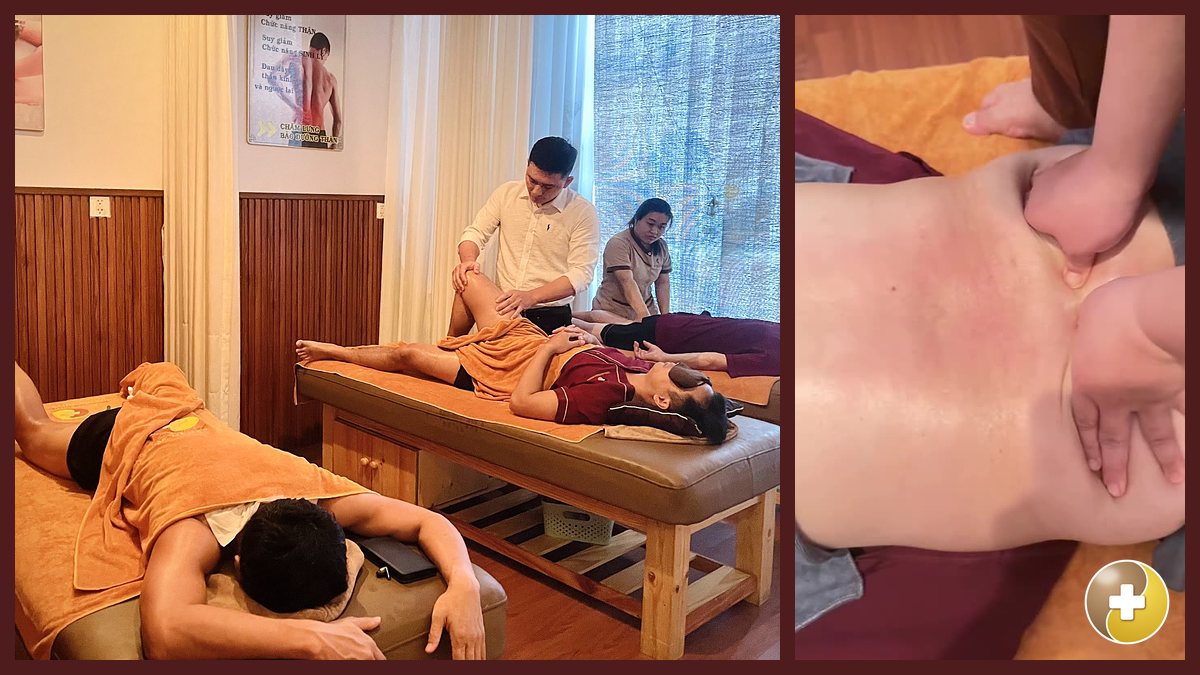
Quick answer: Meridians (kinh lạc) are the channels of qi and blood in Eastern wellness, linking the inner organs with skin, muscles and limbs; acupoints sit along them. They are a traditional map, not anatomy. At Tong Gia in District 12 and Vinhomes Grand Park, Ho Chi Minh City, practitioners use meridians to choose where to release muscles and press.
Want Lương Y Tống Văn Huynh’s team to read your spine and posture in person?
What are meridians?
In Eastern wellness, meridians (kinh lạc in Vietnamese) are a network of channels through which qi and blood move. The main channels run along the trunk and limbs; the collaterals branch off, linking channels with each other and with the skin. Through this network the inner organs connect to the surface, so pain along one stretch of a channel can reflect an organ far away.
- 12 main meridians, each linked to an organ: Lung, Large Intestine, Stomach, Spleen, Heart, Small Intestine, Bladder, Kidney, Pericardium, Triple Burner, Gallbladder, Liver.
- Paired channels: Lung with Large Intestine, Heart with Small Intestine, Kidney with Bladder, Liver with Gallbladder, Spleen with Stomach, Pericardium with Triple Burner.
- Governor and Conception vessels: one runs up the middle of the back along the spine, the other down the middle of the front; the Tong Gia curriculum uses Dazhui and Zhongwan from them in several organ routines.
- Acupoints are points on the channels where the hands work to balance qi and blood.
The Western view: no surgery or scan shows a meridian "tube". Meridians are not nerves or blood vessels but a map drawn from centuries of observation: which pain tends to pull on which area, which point eases which region. Western science explains many similar patterns through nerve roots, connected muscle chains and fascia, and referred pain. The two views complement each other: Tong Gia uses meridians as a map for where to work and anatomy of the spine and nerves to work safely.
A few channels from the Tong Gia curriculum
- Lung: 11 points, from the chest along the inner arm to the corner of the thumbnail.
- Large Intestine: 20 points, from the index finger up the arm, shoulder and neck to Yingxiang beside the nose.
- Heart: 9 points, from the armpit along the inner arm to the little finger.
- Spleen: 21 points, from the big toe up the inner leg to the abdomen and chest.
- Stomach: 45 points, from below the eye down the face, neck, chest, abdomen and front of the leg to the second toe.
- Bladder: runs down both sides of the spine, home to the back Shu points of the organs.
Why do meridians get out of balance?
Eastern wellness calls blocked channels "stagnant qi and blood". In Ho Chi Minh City life the usual causes are:
- Long static postures: office and Hi-Tech Park workers bent over screens for 8–10 hours; in Western terms, muscles held in contraction with poor circulation and tender knots.
- Cold from air-con and rain: "cold" slows qi and blood; the neck, upper back and lower back are hit first.
- Ongoing stress: the curriculum describes constrained Liver qi with tight muscles, rib-side discomfort and irritability; Western science would say an overworked sympathetic nervous system.
- Irregular meals: skipped breakfasts, late greasy dinners strain the Spleen and Stomach, the source of qi and blood.
- Late nights: per the curriculum, blood returns to the Liver to be nourished during rest; staying up late takes that time away.
Common signs of meridian imbalance
- Neck and shoulder ache with headaches at the sides: the curriculum links the Gallbladder channel with the head and neck; imbalance often brings headaches, shoulder pain, a bitter taste and trouble digesting fatty food.
- Back pain running down to the back of the knee: along the Bladder channel. The saying "for back pain, look to Weizhong" points to the crease behind the knee.
- Tight tendons, cramps, irritability, rib-side discomfort: linked to the Liver channel, since the Liver governs the sinews.
- Nasal discomfort with tired arms: the Large Intestine channel runs from the index finger to the nose.
- Palpitations, poor sleep, tightness on the inner arm: Heart and Pericardium channels.
- A colder area, a clearly tender point, mild tingling along a line: what practitioners feel when reading by hand.
These signs suggest where to work, not what illness you have. Marked numbness or weak limbs need a check-up, not just "unblocking".
When to see a doctor
Call 115 immediately for chest tightness, shortness of breath, cold sweats, a drooping mouth, slurred speech or weakness on one side.
Please see a doctor at a medical facility before wellness care if you have:
- Persistent pain without a clear cause, or pain getting worse day by day.
- Numbness or weakness in the arms or legs, dropping things, unsteady walking.
- Strong night pain that rest does not ease.
- Constant fatigue, pale skin, dizziness (signs that may point to anaemia) or unexplained weight loss; get checked in parallel.
- Fever, especially with back pain or a severe headache.
The Tong Gia curriculum is clear that acupoints do not act directly on liver, kidney or lung tissue; in Eastern theory, stimulating them helps balance qi and blood and supports comfort. Anyone under follow-up keeps following their health professional.
This is a wellness service, not medical care.
The Y Tướng Học view: which facial bones link to which channels
Y Tướng Học (face reading for wellness) follows "the signs show outside, the organs lie inside". The curriculum's chapter on bone signs maps facial and skull areas to meridians, so reading the face is also reading the meridian map:
- Forehead, temple corners and the back of the skull: Bladder channel, Governor vessel and Kidney; when out of balance, nervous exhaustion, headaches, ringing ears, shallow sleep and tight muscles at the base of the skull.
- Between the eyebrows: reflects the Heart and Lung; a deep hollow or vertical crease often comes with shallow breathing, sighing and palpitations.
- Bridge of the nose: Stomach channel, reflecting the Spleen and the lower spine; the curriculum calls the nose a miniature of the spine, and a crooked bridge often accompanies a shifted spinal axis.
- Cheekbones: Gallbladder channel and Liver, which govern the sinews; very high, bony cheekbones often come with deep tendon tightness.
- Ear rims and the bone behind the ear: Shaoyang channel and the Kidney root; thin, soft ears with tight muscles around them are linked to a sore back, tired knees and feeling cold.
The ten face shapes also point to which back segment to read first: "Điền" D11–D12, "Đồng" D3, "Thân" D7–D9, "Giáp" C1–C2 and the lower back. These are school-based references, never a substitute for a check-up or a judgment of character.
Vertebrae and nerve-reflex zones: where the Bladder channel meets the spine
This is where the two views meet most clearly. The curriculum notes that the spinal cord runs inside the spinal canal and nerve roots exit on both sides between the vertebrae; C1–C7 governs the head, face, neck and arms, D1–D12 circulation, breathing and digestion, L1–L5 digestion, kidneys, urinary and reproductive function and the legs. The back Shu points of the Bladder channel sit below each spinous process, 1.5 cun to the side, right on the muscle beside where the nerve roots emerge.
| Segment | Point | Nerve / function link | Common signs | Organ |
|---|---|---|---|---|
| C7 | Dazhui (Governor), Dingchuan | Neck-back junction; neck, shoulders, arms | Stiff neck, colds after wind | Lung |
| D3 | Lung Shu (BL13) | Breathing | Tight upper back, shallow breath | Lung |
| D4–D5 | Pericardium Shu, Heart Shu (BL15) | Circulation | Palpitations, mild chest tightness, poor sleep | Pericardium, Heart |
| D7–D10 | Liver Shu (BL18), Gallbladder Shu (BL19) | Digestion, liver and bile | Stress, rib-side tightness, poor tolerance of fatty food | Liver, Gallbladder |
| D11–D12 | Spleen Shu (BL20), Stomach Shu (BL21) | Digestion | Poor appetite, bloating, slack muscles | Spleen, Stomach |
| L2 | Kidney Shu (BL23) | Kidneys, urinary, legs | Tired back and knees, feeling cold | Kidney |
The table shows links only, never a conclusion about disease. When a practitioner "opens the back channels", the hands soften the muscle beside the spine and press the organ Shu points at the same time: in Western terms, easing tension near the nerve roots; in Eastern terms, balancing the qi and blood of the matching organ.
The Tong Gia method: meridians inside spinal nerve-reflex balancing
- Observation of complexion, bone signs and neck posture to choose the back segment to read first.
- Reading the spine by hand: each vertebra against the ones above, below and on both sides, noting bulges, hollows, heat, cold and tight muscle along the Bladder channel, narrowing from survey area to key zone to key point.
- Muscle release along the channels using the 5 pressure levels, light to strong.
- Acupressure in the right places: the Shu points of the segment found, plus distant points on the same channel such as Weizhong for a tired back or Zusanli for poor appetite. Work stops at the threshold; no joint cracking.
- Self-care guidance for the organ identified.
- Traditional Vietnamese massage, 60 min: 450,000 VND (about 17 USD), good for a first visit.
- Traditional Vietnamese massage, 90 min: 550,000 VND (about 21 USD), back, neck, arms and legs along the channels.
- Full-body care, 120 min: 950,000 VND (about 37 USD), head and back to the soles of the feet.
A typical session
A common case: a sales manager with headaches at both temples, a stiff neck and bloating after greasy dinners. The practitioner notices high cheekbones and a tight jaw, and finds C1–C3 and the mid-back tight and clearly tender. The 90-minute session runs from the neck along the Gallbladder channel at the sides of the head, releases the mid-back, presses Liver Shu and Gallbladder Shu, then points on the leg along the same channel. He leaves with advice to stand up every hour and cut down on late meals.
What you feel
During: tenderness at sore points, then warmth spreading along the area; sometimes relief appears somewhere other than where the pressure is, just as meridian maps describe. After: lighter body, clearer head, some sleepiness; mild soreness may last a day or two. Tong Gia does not promise the pain will be gone after one session.
Read more: acupressure massage in Saigon Q&A, an acupressure visit, traditional Vietnamese massage Q&A, 120-minute full-body massage Q&A and prices.
Want Lương Y Tống Văn Huynh’s team to read your spine and posture in person?
Self-care at home and prevention
- Press Zusanli: 3 cun below the outer knee hollow, one finger-width from the shinbone; 1–2 minutes each side, mild ache is enough.
- Kidney Shu rub: warm your palms, place them on both sides of the lower back and rub up and down 50–100 times.
- Rub Yingxiang beside the nostrils with your index fingers for 1–2 minutes when the nose feels blocked.
- Keep the neck and back covered in air-con; stand, walk and roll your shoulders every 45–60 minutes.
- Sleep before 11 p.m. so, in Eastern terms, blood returns to the Liver to be nourished.
If you are or may be pregnant, do not press Hegu or Sanyinjiao yourself. Never crack your own neck or press until it hurts.
Booking
The method was built by the founder, Lương Y (master of traditional Vietnamese wellness) Tống Văn Huynh, with over 13 years in Eastern wellness, Y Tướng Học (face reading for wellness) and spinal nerve-reflex balancing. It is a Vietnamese approach you can experience while you live in or visit Ho Chi Minh City. Both branches open every day:
- District 12: 225 Dương Thị Mười, Phường Tân Chánh Hiệp (Tan Chanh Hiep Ward, District 12). Daily 8:00–19:00.
- Vinhomes Grand Park: Căn T16-21 khu Manhattan, Phường Long Bình, TP. Thủ Đức (Unit T16-21, The Manhattan, Long Binh Ward, Thu Duc City, formerly District 9). Daily 9:00–20:00.
Real customer reviews are on Google Maps, linked from each branch page. WhatsApp or Zalo +84 888 264 559, or book online. Feel free to ask the practitioner to explain the channels during your session.
Visit us
- Đông Y Huyệt Đạo Tống Gia Quận 12 (District 12)
225 Dương Thị Mười, Phường Tân Chánh Hiệp, Quận 12, HCMC · 8:00–19:00 daily · 0888 264 559 · Directions on Google Maps - Đông Y Huyệt Đạo Tống Gia Quận 9 (Vinhomes Grand Park, District 9)
Căn T16-21 khu Manhattan, Vinhomes Grand Park, Phường Long Bình, TP. Thủ Đức, HCMC · 9:00–20:00 daily · 0888 264 559 · Directions on Google Maps
Want Lương Y Tống Văn Huynh’s team to read your spine and posture in person?
FAQ
What are meridians? In Eastern wellness, meridians are channels of qi and blood: main channels and smaller branches linking the inner organs with skin, muscles and limbs. There are 12 main meridians, each linked to an organ, and acupoints sit along them. They are a traditional concept, not an anatomical structure.
Can meridians be seen on a scan? No. Meridians are not nerves or blood vessels but a map drawn from observation: pain here tends to relate to that area. Western science explains many similar patterns through nerve roots, muscle chains and referred pain.
Which meridian is linked to neck and shoulder pain? The Tong Gia curriculum links the Gallbladder channel with the head and neck, and tight muscles along the Bladder channel in the upper back easily bring headaches and a stiff neck. That is why neck pain is usually worked together with the upper back.
Does acupressure help qi and blood flow? In Eastern theory, stimulating acupoints helps balance qi and blood along the channels; in Western terms, muscle release and point pressure ease contraction and improve local circulation. It supports comfort and does not replace a check-up when something is wrong.
What are the signs of blocked meridians? Eastern wellness calls it stagnant qi and blood, often showing along a line: neck ache with headaches at the sides, back pain down to the knee crease, a colder area, a clearly tender point. Marked numbness, weak limbs or worsening pain need a medical check.
Do I need to believe in meridians for the massage to feel good? No. The practitioner uses the meridian map to choose where to work, and the effects you feel, softer muscles, warmth, deeper breathing, come from the hands on your body. You can simply enjoy the session and ask questions along the way.
Author: Lương Y Tống Văn Huynh – founder of Huyệt Đạo Tống Gia, a master of traditional Vietnamese wellness with over 13 years in Eastern wellness care, Y Tướng Học (face reading) and spinal nerve-reflex balancing massage.
Updated: 2026-11-15
Related guides
- How often should you get acupressure? Rhythm by goal, the rest gap between sessions and when to space them out
- Is acupressure safe? Where the real risks come from, who should be careful and what Tong Gia asks before every session in Ho Chi Minh City
- Can you shower after cupping? How long to wait, how to shower and what the marks mean
- What are meridians? A plain-language guide to the 12 main channels, acupoints and why Tong Gia practitioners in Ho Chi Minh City work where it does not hurt
- Who should not do cupping? Groups who must ask first, areas never cupped and how Tong Gia checks your health in Ho Chi Minh City
- What does herbal steam do? Benefits, how long to steam and who should skip it in Ho Chi Minh City
This is a wellness service, not medical care.