
Aching wrist: common causes, warning signs and gentle care in Ho Chi Minh City
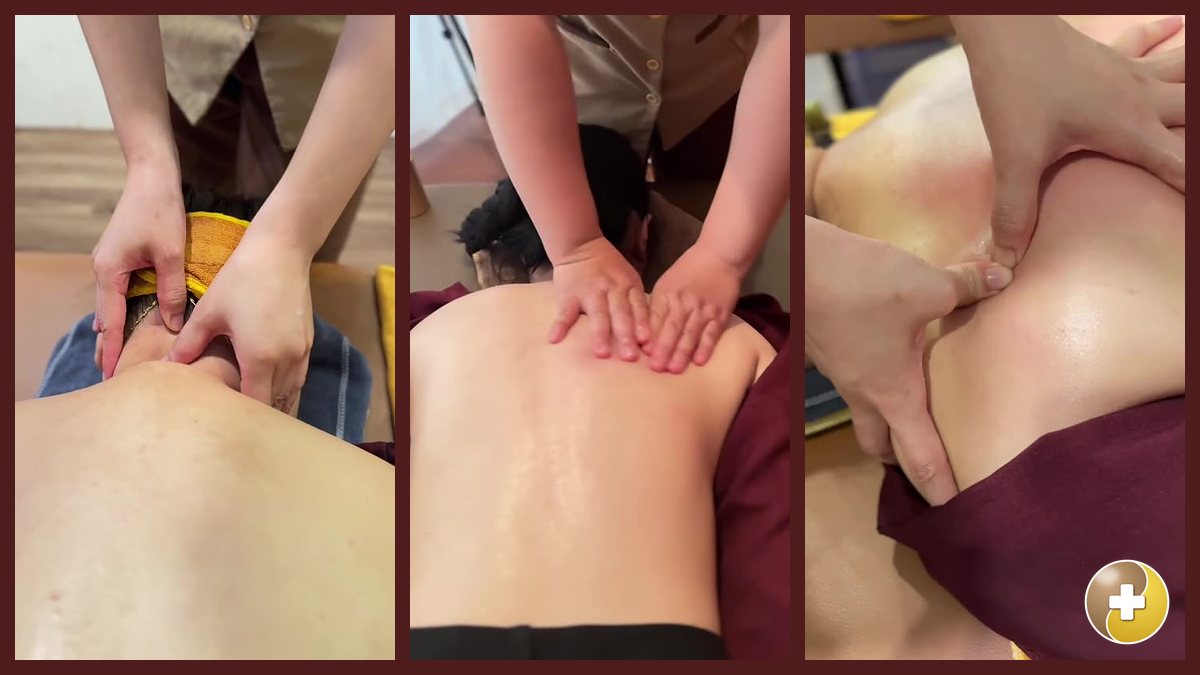
Quick answer: An aching wrist usually comes from overloaded tendons and forearm muscles after typing, mouse work or lifting a baby; less often from tendon sheath irritation, carpal tunnel syndrome, the joint itself or the neck (C6–C8). Pain after a fall, a hot swollen wrist or weakness needs a check. Tong Gia Acupoint Wellness in Ho Chi Minh City works from the neck down to the wrist.
Want Lương Y Tống Văn Huynh’s team to read your spine and posture in person?
What does an aching wrist usually mean?
An aching, tired or sore wrist is one of the most common complaints among people who work with their hands, and in Ho Chi Minh City that means a lot of us: office staff typing for eight to ten hours, programmers, accountants, tailors, nail technicians, assembly workers in the Saigon Hi-Tech Park, ride-hailing drivers gripping the throttle all day, cooks, new mothers lifting a baby, and weekend badminton, tennis or gym players. In Western medicine, wrist ache is a symptom, not the name of a disease. The wrist is a crowded place: eight small carpal bones, more than twenty tendons sliding in their sheaths, the median nerve passing through the carpal tunnel, the ulnar nerve along the little-finger side, and many ligaments. When any one of them is overloaded, irritated or squeezed, the whole area feels tired and sore.
This guide explains the main groups of causes, the signs that mean you should get checked first, and how Tong Gia Acupoint Wellness (Huyệt Đạo Tống Gia) looks at the wrist through the organs, outward signs and the spine. If your wrist has ached for many months, see our article on wrist pain when putting weight on your hands as well.
Common causes: six groups in Western medicine
- Tendon and forearm muscle overload from repetitive work: typing with the wrist bent upward, using a mouse all day, texting with the thumb, sewing, cutting. The wrist extensor muscles on the back of the forearm hold the wrist up for hours and become tight and sore. This is the most frequent group and often improves when posture changes.
- Tendon sheath irritation on the thumb side (often called De Quervain's): pain at the outer edge of the wrist just below the thumb, worse when gripping, opening a jar or lifting a baby. Common after childbirth and in heavy phone users.
- Carpal tunnel syndrome: the median nerve is compressed in the wrist, causing an aching wrist with tingling in the thumb, index and middle fingers, worse at night and better after shaking the hand. See thumb and index finger numbness.
- The wrist joint itself: wear-and-tear in middle age, inflammatory arthritis (morning stiffness in many small joints on both sides), an old sprain or fracture that never fully settled, or a ganglion cyst on the back of the wrist.
- Pain referred from the neck, shoulder or elbow: irritated nerve roots C6–C8, a tight trapezius and scalene muscles, or "tennis elbow" can make the whole forearm and wrist ache. Rubbing the wrist alone does little because the source is elsewhere.
- Whole-body factors: hormonal change in pregnancy, after birth or around menopause; diabetes and thyroid conditions that make nerves more sensitive; poor sleep and stress that keep muscles from relaxing.
Small habits add up too: a desk that is too high, sleeping with your head on your arm, holding the phone above your face in bed, sitting under the air-conditioner, carrying heavy bags with your fingers.
Signs worth noting
- Where it hurts: thumb side (thumb tendons), middle of the palm side (carpal tunnel), little-finger side (tendons, cartilage), back of the wrist (extensor tendons, cyst).
- Numbness: thumb to middle finger points toward the carpal tunnel or C6–C7; ring and little finger toward the ulnar nerve or C8–D1.
- Timing: end-of-day ache suggests overload; morning stiffness over 30 minutes in several small joints needs a check for arthritis; night tingling suggests the carpal tunnel.
- Swelling, warmth, redness, a clicking or catching feeling, a stiff neck or sore shoulder blades, and weaker grip.
When to see a doctor
Please see a doctor first, before any massage on the wrist, if you have:
- Pain after a fall on an outstretched hand, especially in the hollow at the base of the thumb, or bruising and swelling: a small wrist bone may be cracked.
- A hot, red, swollen wrist, fever, or a sudden severe joint pain at night.
- Stiffness in many small joints of both hands every morning for more than 30 minutes, with tiredness or weight loss.
- Lasting numbness, weakness, wasting at the base of the thumb, or dropping things.
- Pain that keeps getting worse over two to three weeks despite rest, or pain that wakes you at night.
- Left arm pain with chest tightness, shortness of breath or sweating: call 115 immediately.
- Diabetes, thyroid disease, pregnancy, or pale skin and dizziness: get checked at a medical facility alongside any wellness care.
If a doctor has already found a mild tendon sheath problem or mild carpal tunnel syndrome, keep following their advice and bring your results. This is a wellness service, not medical care.
The Y Tướng Học view: Liver, Spleen and Kidney
Traditional Vietnamese and Chinese wellness does not see the wrist in isolation. The Tong Gia curriculum links aching limbs with three organ systems. The Liver governs the sinews: it nourishes tendons and ligaments, and when Liver blood is short, muscles tighten, cramp and lose flexibility. At rest blood returns to the Liver; during activity the Liver sends it to the tendons, so long hours without rest and poor sleep leave the wrist tendons "dry". The Spleen governs muscles and the four limbs: irregular meals and worry weaken it, and the arms feel heavy and tire quickly. The Kidney governs the bones: in middle age, after childbirth or with chronic late nights, joints may feel tired, creak and react to cold.
Y Tướng Học, the Tong Gia study of outward signs, rests on one idea: what is inside shows outside. Before touching, the practitioner looks at the nails (thin, ridged, brittle nails suggest Liver blood is not nourishing the sinews), the finger joints (the curriculum describes very bony hands with prominent knuckles as "more bone than flesh", linked with dryness of the joints), the forearm muscles (tight cords or soft, cool flesh), the lips (pale lips with tired limbs) and posture (head forward, one shoulder high). These signs guide where to work and how firmly; they are not a medical conclusion and never a judgement of the person.
Spine segments and nerve-reflex zones involved
In the Tong Gia curriculum, the cervical segments C1–C7 govern the head, face, neck and arms, and the nerve roots leave through the gaps between vertebrae, exactly where the practitioner's fingertips read the spine. For the muscle, bone and joint group the curriculum works on C5–C7, L1–L5 and S1–S5. The finger-to-segment map below is general anatomy from Western medicine:
| Segment / area | Nerves and function | Signs at the wrist and hand | Related organ |
|---|---|---|---|
| C5–C6 | Outer forearm, thumb, radial wrist extensors | Ache on the thumb side, hard to hold the wrist up while typing | Liver (sinews) |
| C7 | Middle finger, wrist and finger extensors, triceps | Ache on the back of the wrist, tight forearm after work | Liver, Kidney (bones) |
| C8–D1 | Inner forearm, ring and little fingers, small hand muscles | Ache on the little-finger side, weak grip | Spleen (limbs), Liver |
| D1–D3 | Upper back between the shoulder blades | Cold hands, ache spreading from the shoulder blade | Lung, Heart |
| Periphery: elbow, forearm, wrist | Median, ulnar and radial nerve paths; tendon sheaths | Local tenderness, tight bands | Liver, Spleen |
The table shows what is "related", to choose areas and pressure, not to label any condition. The curriculum's "paired adjustment" works on a key point on the spine and a matching point on the limb at the same time, so a wrist session runs from the neck down to the hand.
The Tong Gia method: spinal nerve-reflex balancing massage
This Vietnamese traditional wellness method was built by Lương Y Tống Văn Huynh, founder of Huyệt Đạo Tống Gia and a master of traditional Vietnamese wellness with over 13 years in the field. It follows three "no" rules: no chemicals or herbs taken by mouth or injection, no needles, no rough force. A typical session for an aching wrist:
- Questions and screening: which side, any numbness, any fall, any medical check, any pregnancy. Warning signs mean no session and advice to get checked.
- Observation: posture, shoulders, nails, knuckles, forearm muscles, lips.
- Reading the spine by hand: skin temperature, the muscle layer, and the shape of each vertebra from C4 to D3, comparing left and right. Only "excited" zones (warmer skin, tight muscle, more tenderness) are worked directly.
- Releasing the neck, shoulder and arm: pushing and rotating thick muscle, plucking across tight bands, slow gliding along the shoulder blade, then down the arm, elbow and forearm.
- Forearm and wrist: softening the extensor and flexor muscles with pressure that rises step by step; around the wrist itself only light pressure, no cracking or twisting.
- Acupoints around the wrist recorded in the curriculum, such as Liệt khuyết (LU7), Thái uyên (LU9), Nội quan (PC6) and Hợp cốc (LI4, never during pregnancy), chosen after reading the spine.
- Stopping at the right moment (when the skin at the key point turns from dry to slightly moist), then home advice on keyboard height, mouse grip and simple stretches.
Suitable services: Neck and shoulder care 60 min 550,000 VND (about US$21), first visit 399,000 VND (about US$15), 90 min 750,000 VND (about US$29); add-on area massage 30 min 199,000 VND (about US$7.70); Vietnamese traditional massage 60 min 450,000 VND (about US$17). Full list on our prices page.
A typical session (a composite, not one real guest): an accountant in her thirties from District 12 comes after work with a right wrist that has ached for a month, heavy at the end of each typing day, sore when wringing a towel, no fall, no numbness. She sits with her head forward and her right shoulder raised; her nails are thin and a tight band runs along the back of the right forearm. Reading the spine, the skin around C6–C7 on the right is warmer and the muscle layer thicker. The practitioner releases the neck and shoulder first, then works down the arm, softens the forearm, and finishes lightly around the wrist, Liệt khuyết and Hợp cốc. At first the forearm feels sore, then warmth spreads into the hand; by the end the wrist turns more freely. She is advised to lower her keyboard, rest her forearms and stretch every hour.
What guests feel: tight spots feel sore but pleasant, what the curriculum calls "a wave of sensation", then ease off; many feel warmth run down the arm. Sharp pain should not happen; just say so and the pressure is reduced. The next day the forearm may feel slightly worked. Long-standing ache usually needs a few sessions 5–7 days apart, plus better posture. Tong Gia supports and helps rebalance; it does not promise the pain will go after one visit. Another guest's story: a neck and shoulder massage in Saigon.
Want Lương Y Tống Văn Huynh’s team to read your spine and posture in person?
Self-care at home and prevention
- Keep the wrist straight when typing: keyboard level with or slightly below the elbow, forearms supported, mouse close to the keyboard.
- Short breaks every 45–60 minutes: arm straight, palm down, gently pull the fingers down for 15–20 seconds, then palm up and pull back; three rounds each side.
- Rub the forearm: use the other thumb to glide from elbow to wrist for one to two minutes, pausing on tight bands.
- Share the load: switch arms when carrying a baby or bags; text with both hands.
- Keep warm: avoid air-conditioning blowing on the arms and neck; a warm compress on the forearm or neck for 10–15 minutes in the evening. If your fingers are also stiff, read stiff fingers in the morning.
Stop and get checked if the wrist becomes hot and swollen or pain increases with these exercises.
Booking
- District 12: 225 Dương Thị Mười, Phường Tân Chánh Hiệp (Tan Chanh Hiep Ward, District 12). Open 8:00–19:00 daily.
- District 9 – Vinhomes Grand Park: Căn T16-21 khu Manhattan, Phường Long Bình, TP. Thủ Đức (unit T16-21, Manhattan zone, Long Binh Ward, Thu Duc City). Open 9:00–20:00 daily.
Call, Zalo or WhatsApp +84 888 264 559, or book online. Tell us which wrist, which side of it, whether you have numbness and whether you have had a medical check. If you are living in or visiting Ho Chi Minh City, this is a chance to try a Vietnamese traditional wellness method built by Lương Y Tống Văn Huynh.
Visit us
- Đông Y Huyệt Đạo Tống Gia Quận 12 (District 12)
225 Dương Thị Mười, Phường Tân Chánh Hiệp, Quận 12, HCMC · 8:00–19:00 daily · 0888 264 559 · Directions on Google Maps - Đông Y Huyệt Đạo Tống Gia Quận 9 (Vinhomes Grand Park, District 9)
Căn T16-21 khu Manhattan, Vinhomes Grand Park, Phường Long Bình, TP. Thủ Đức, HCMC · 9:00–20:00 daily · 0888 264 559 · Directions on Google Maps
Want Lương Y Tống Văn Huynh’s team to read your spine and posture in person?
FAQ
What causes an aching wrist? Most often overloaded tendons and forearm muscles from typing, mouse use or lifting a baby; then thumb-side tendon sheath irritation, carpal tunnel syndrome, wear or inflammation of the joint, and pain referred from the neck (C6–C8). Pain after a fall, a hot swollen wrist or weakness needs a medical check.
Why does my wrist ache after office work? Usually because the wrist is bent upward on the keyboard, the mouse is far away, the forearms are unsupported and the neck is pushed forward. Lowering the keyboard, supporting the forearms, taking hourly breaks and caring for the neck and shoulders helps a lot.
When should wrist pain get a medical check? After a fall on the hand, with a hot red swollen wrist, morning stiffness in many small joints over 30 minutes, numbness with weakness, thumb muscle wasting, or pain that worsens over two to three weeks despite rest.
Can massage help a stiff, aching wrist? It can support relaxation when there are no warning signs. At Tong Gia the neck, shoulder, arm and forearm are released first, and only light pressure is used around the wrist itself, without cracking or twisting the joint.
My wrist hurts at the gym. What should I do? Reduce the weight, keep the wrist straight when pressing, use a well-fitting wrist wrap and warm up the forearms. Sharp pain, swelling or pain after one hard landing means stop training and get checked first.
Author: Lương Y Tống Văn Huynh – founder of Huyệt Đạo Tống Gia, a master of traditional Vietnamese wellness with over 13 years in Eastern wellness care, Y Tướng Học (face reading) and spinal nerve-reflex balancing massage.
Updated: 2026-11-17
Related guides
- Acupressure for finger joint pain: which points, how it works and when to get checked first
- Finger joint pain at night: causes by pain hour, warning signs and gentle care in Ho Chi Minh City
- Aching wrist: common causes, warning signs and gentle care in Ho Chi Minh City
- Numb hands and feet in older adults: six common causes, danger signs and safe care
- Numb heel: six common causes, the warning signs, and how Tong Gia can help
- Numb hands from neck and shoulder pain: the path from your neck to your fingers
This is a wellness service, not medical care.