
Numb hands and feet in older adults: six common causes, danger signs and safe care
Quick answer: Numb hands and feet in older adults usually come from high blood sugar, low vitamin B12, a worn neck or lower spine, or poor circulation. Sudden one-sided numbness with a drooping mouth means calling 115. Tong Gia Acupoint Wellness (Huyệt Đạo Tống Gia), Ho Chi Minh City, gently cares for mild, already-checked numbness.
Want Lương Y Tống Văn Huynh’s team to read your spine and posture in person?
What is numbness in the hands and feet of older adults?
Numbness in older adults is a tingling, pins-and-needles, burning or "wearing gloves and socks" feeling in the hands and feet, sometimes spreading up the forearms or shins. In Western medicine, sensation in the limbs travels along peripheral nerves to the spinal cord and brain. With age these nerves are more easily affected by blood sugar, vitamin shortage, worn spinal discs pressing on nerve roots, or reduced blood flow. That is why numbness is so common after sixty, and why it should not be brushed off as "just old age".
Families in Ho Chi Minh City describe it this way: mother says both feet feel numb at night and her sandals slip off without her noticing; father fumbles with chopsticks and shirt buttons; grandmother stands up after a long television drama and has to hold the wall before she can walk. The real danger of numb feet in older people is falling: when the soles cannot feel the floor well, a missed step, a rug edge or a wet bathroom tile becomes risky.
This guide helps families sort common causes, recognise warning signs that need urgent care, and choose gentle, safe wellness care. Tong Gia only works with mild numbness that has already been checked, by hand and with light pressure.
Common causes: health conditions, nutrition, spine and habits
In Western medicine, numbness in older adults usually falls into these groups. They help you picture the situation; only a medical check can confirm the cause.
1. Long-term high blood sugar
Years of diabetes gradually damage small nerves at the ends of the limbs, usually both feet first, then both hands, worse at night. Numb feet may not notice a scrape, which can then become infected.
2. Low vitamin B12 and poor nutrition
Older people absorb B12 less well, and long-term vegetarians, light eaters and heavy drinkers are more at risk. Some long-term prescriptions may also reduce B12 absorption, so ask medical staff whether a blood test is needed. Anaemia, thyroid and kidney problems can also cause numbness.
3. Worn neck and lower back
Bone spurs, worn discs and a narrowed spinal canal can irritate nerve roots. Numbness from the neck down the arm often comes with stiff shoulders; numbness from the lower back down the leg often comes with back ache. Some older people must stop and sit after a short walk because their legs go numb and heavy.
4. Poor circulation
Stiffer arteries, years of smoking and high cholesterol reduce blood flow to the legs: cold, pale feet and calves that ache when walking.
5. Pressure from posture
Sleeping on one arm, sitting cross-legged or squatting for a long time. It passes within minutes of moving.
6. Cold and inactivity
Air conditioning on the feet, hands in cold water, little walking. Eastern medicine says qi and blood are not reaching the ends of the limbs. See also numb hands: common causes and numb feet: common causes.
Other signs to watch
- Where exactly: which fingers, feet only or the whole lower leg; one side or both.
- Since when; constant or on and off; worse at night or when walking.
- Weakness, dropping things, tripping.
- Cramps, back ache, stiff neck and shoulders, calf pain on walking.
- Cold feet, skin colour changes, scrapes that are slow to close up.
- Diabetes, blood pressure, cholesterol, kidney problems, diet, current prescriptions.
- Recent weight loss, tiredness or memory changes.
| Pattern | Often related to | What to do |
|---|---|---|
| Both feet then both hands, worse at night | High blood sugar, low B12 | Blood tests; check feet daily |
| From the neck and shoulder down the arm | Neck spine, tight shoulder muscles | Medical check; gentle shoulder care |
| From the lower back down the leg, must rest after walking | Lumbar spine, narrowed canal | Spine check |
| Cold pale feet, calf pain on walking | Poor circulation | Check the blood vessels |
| Sudden numbness of one side of face, arm or leg | Possible stroke | Call 115 at once |
When to see a doctor
- Sudden numbness or weakness on one side of the face, arm or leg, a drooping mouth, slurred speech, blurred vision or loss of balance: call 115 (Vietnam emergency) immediately. The Tong Gia curriculum also notes that in older people a tongue that deviates to one side is a danger sign of possible stroke and needs urgent care.
- Numbness with weakness, dropping things, unsteady walking or falls.
- Numbness around the buttocks or groin with bladder or bowel problems.
- Numbness that spreads over weeks.
- In diabetes, a sore or scrape on the foot that does not close up, or toes turning dark.
- Cold, pale feet with pain on walking that eases with rest.
- Weight loss, long fatigue or pale skin, which need a medical check in parallel.
Please see a doctor or go to a hospital for these signs. This is a wellness service, not medical care. Parents with chronic conditions should keep following their medical team; massage only supports comfort and cannot replace checking blood sugar, B12 or the spine.
The Y Tướng Học view: qi and blood, Liver and Spleen
Eastern medicine sees numbness as qi and blood not reaching the ends of the limbs. According to the Tong Gia curriculum, the Spleen and Stomach are the root of post-natal energy and produce qi and blood; the Spleen governs muscles and limbs, and when weak, muscles go slack and limbs feel tired. The Liver stores blood and governs the tendons: Liver blood shortage brings dizziness, brittle nails and cramps, and a weak Liver brings stiffness, cramps and muscle tremor. The Kidney governs bones; Kidney yang weakness brings cold hands and feet. Many older people with numbness show all three: poor appetite, cold limbs and night cramps.
Y Tướng Học (face reading for wellness) follows the idea that "the outer form reflects the inner organs". The curriculum describes a long, narrow, thin face with little flesh as a pattern of weak qi and blood with a weak Liver and Spleen, prone to anaemia, dizziness and slack muscles; on the back, the muscles along the spine are thin and the vertebrae feel sunken. Very pale or sallow skin suggests weak Heart and Spleen. Thin, ridged, brittle nails suggest Liver blood shortage.
These signs are not for naming a disease but for knowing a person's constitution: a thin person with weak qi and blood needs slow, light, warm work, while someone with thick, tight muscles needs more release.
Spine segments and nerve-reflex areas involved
The Tong Gia curriculum links the neck vertebrae C1 to C7 with the head, face, neck and arms, and the lumbar vertebrae L1 to L5 with the kidneys and legs. It places numbness of the hands and feet in the muscle, bone and joint group, working on C5 to C7, L1 to L5 and S1 to S5 together.
| Segment | Nerves and function | Typical signs | Related organ (Eastern view) |
|---|---|---|---|
| C5 – C7 | Roots to the shoulder, arm and hand | Numb fingers, weak grip, tired shoulders | Liver, Spleen |
| T1 – T3 | Upper back, chest | Cold hands, palpitations, poor sleep | Heart, Lung |
| L1 – L3 | Kidney area; roots to the front thigh | Back ache, heavy numb thighs, cold legs | Kidney |
| L4 – S1 | Sciatic roots to the back of the leg and foot | Numb feet and calves, cramps | Kidney, Liver |
| S1 – S5 | Sacrum, hips | Numb buttocks or heels, uneven gait | Kidney |
How Tong Gia works: spinal nerve-reflex balancing massage
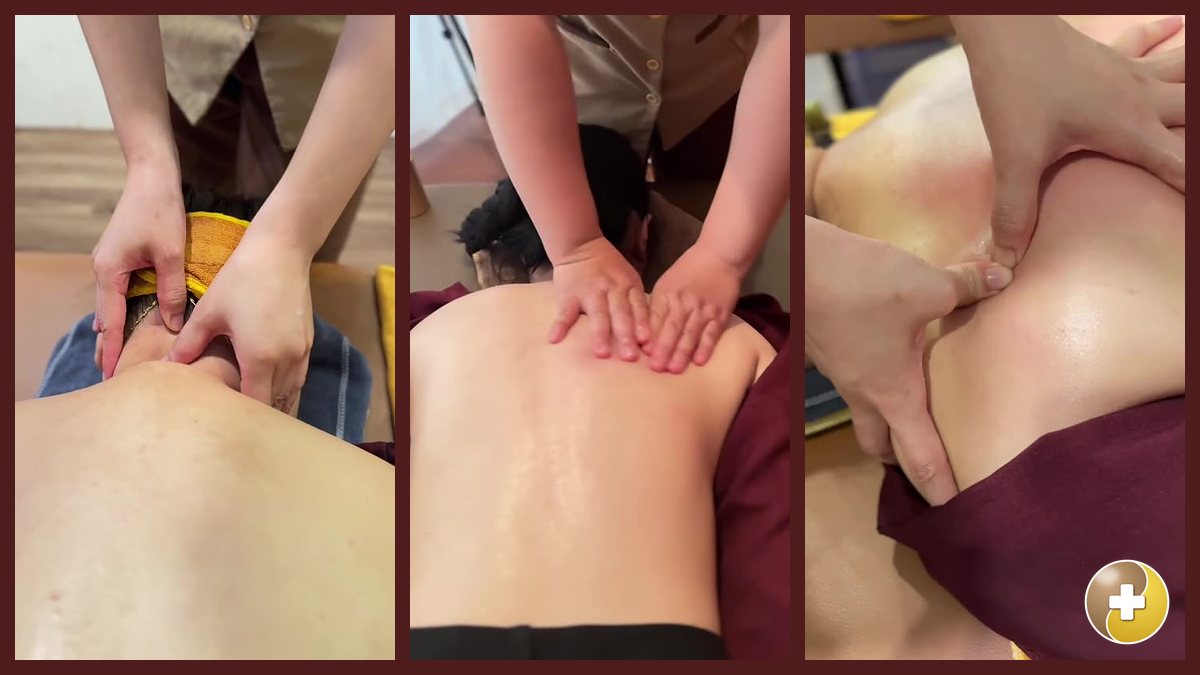
Tong Gia Acupoint Wellness (Huyệt Đạo Tống Gia) was founded by Lương Y Tống Văn Huynh, a master of traditional Vietnamese wellness with over 13 years in Eastern wellness care, Y Tướng Học and spinal nerve-reflex balancing. For older guests with numbness, the work moves from the spine outward: find tight or cool, sunken areas in the neck, back and lower back, release them gently, then stroke along the arms and legs to support circulation.
- Observe: gait, hands, nails, skin colour, face; review medical results and conditions.
- Read the spine by hand: skin temperature, muscle layer, vertebra shape, left-right comparison.
- Release muscles: neck, shoulders, back, lower back, buttocks, always at light pressure; for thin, weak constitutions the curriculum uses gentle vibration techniques to stimulate blood flow.
- Press points chosen by area and constitution, just enough for a mild ache.
- Home care: show family how to stroke the limbs and check the feet.
A typical session: a son brings his father in his seventies, diabetic for years, with numb feet and fingertips, already checked medically. The practitioner asks about today's blood sugar, checks the feet for scrapes and lets him rest seated first. The reading finds tight shoulders, a cool lower back and thin back muscles. Most of the time goes to the neck, shoulders, lower back and hips at light pressure; the limbs are only stroked. At the end the son learns how to stroke his father's legs in the evening. Many older guests say their hands and feet feel warmer and sleep comes more easily; changes in numbness differ from person to person.
Suitable services: Eastern massage 60 minutes, 450,000 VND (about 17 USD), or 90 minutes, 550,000 VND (about 21 USD); Heavy tired legs care 60 minutes, 500,000 VND (about 19 USD); Neck and shoulder care 60 minutes, 550,000 VND (about 21 USD), first visit 399,000 VND (about 15 USD). Full price list. Planning with family? Read booking a massage for parents in Vietnam and acupressure massage in Saigon.
Want Lương Y Tống Văn Huynh’s team to read your spine and posture in person?
Home care and prevention
- Check the feet every evening: between toes, heels and soles for scrapes or blisters, especially with diabetes.
- Safe foot soak: 15 to 20 minutes at about 38 to 42°C before bed. A family member should test the water by hand or thermometer, because numb feet cannot feel water that is too hot.
- Gentle daily movement: slow walks, ankle and wrist circles, toe curls while seated; avoid sitting still too long.
- Warmth and nutrition: thin socks under air conditioning, enough protein and greens; ask about a B12 test for long-term vegetarians.
- Fall prevention: non-slip sandals that fit, bathroom mats, night lights, standing up slowly.
Book a session
- District 12: 225 Dương Thị Mười, Phường Tân Chánh Hiệp (Tan Chanh Hiep Ward, District 12). Open 8:00–19:00 daily.
- Vinhomes Grand Park, District 9: Căn T16-21 khu Manhattan, Phường Long Bình, TP. Thủ Đức (Unit T16-21, Manhattan zone, Long Binh Ward, Thu Duc City). Open 9:00–20:00 daily.
Book online or call, Zalo or WhatsApp +84 888 264 559. Tell us your parent's age, whether the hands or feet are numb, since when, any diabetes or other conditions, and whether they have been checked. Real guest reviews are on each branch's Google Maps page. Visiting Ho Chi Minh City with family? Come and try a Vietnamese Eastern wellness method built by Lương Y Tống Văn Huynh.
Visit us
- Đông Y Huyệt Đạo Tống Gia Quận 12 (District 12)
225 Dương Thị Mười, Phường Tân Chánh Hiệp, Quận 12, HCMC · 8:00–19:00 daily · 0888 264 559 · Directions on Google Maps - Đông Y Huyệt Đạo Tống Gia Quận 9 (Vinhomes Grand Park, District 9)
Căn T16-21 khu Manhattan, Vinhomes Grand Park, Phường Long Bình, TP. Thủ Đức, HCMC · 9:00–20:00 daily · 0888 264 559 · Directions on Google Maps
Want Lương Y Tống Văn Huynh’s team to read your spine and posture in person?
FAQ
Is numbness in an elderly parent's hands and feet dangerous? Brief numbness from lying on an arm is usually harmless. In older people, lasting numbness may point to diabetes, low B12, a worn spine or poor circulation, so get it checked. Sudden numbness or weakness on one side with a drooping mouth or slurred speech means calling 115 at once.
Why do older people get numb hands? Common reasons in Western medicine are a worn neck spine, tight shoulder muscles, nerve pressure at the wrist or elbow, high blood sugar, low B12 and sleeping on the arm. Numb hands with weakness or dropping things need a medical check soon.
What should I do about my parent's numb feet? Have blood sugar, B12, the lower back and leg circulation checked. At home, check the feet every evening, keep moving gently, keep warm, and test foot-soak water for them, because numb feet can be burned without feeling it.
Is massage safe for numbness in older adults? Gentle massage can be fine once a medical check has ruled out danger signs. Pressure must be light, avoiding varicose veins, bruises and thin skin. At Tong Gia the practitioner works from the neck and lower back out to the limbs and always starts light.
How long does numbness in older adults take to ease? It depends on the cause. Pressure numbness passes in minutes; numbness from diabetes or low B12 needs long-term control of the condition. Regular gentle care helps hands and feet feel warmer and more comfortable, to a different degree for each person.
Author: Lương Y Tống Văn Huynh – founder of Huyệt Đạo Tống Gia, a master of traditional Vietnamese wellness with over 13 years in Eastern wellness care, Y Tướng Học (face reading) and spinal nerve-reflex balancing massage.
Updated: 2026-11-17
Related guides
- Acupressure for finger joint pain: which points, how it works and when to get checked first
- Finger joint pain at night: causes by pain hour, warning signs and gentle care in Ho Chi Minh City
- Aching wrist: common causes, warning signs and gentle care in Ho Chi Minh City
- Numb hands and feet in older adults: six common causes, danger signs and safe care
- Numb heel: six common causes, the warning signs, and how Tong Gia can help
- Numb hands from neck and shoulder pain: the path from your neck to your fingers
This is a wellness service, not medical care.