
Numb heel: six common causes, the warning signs, and how Tong Gia can help
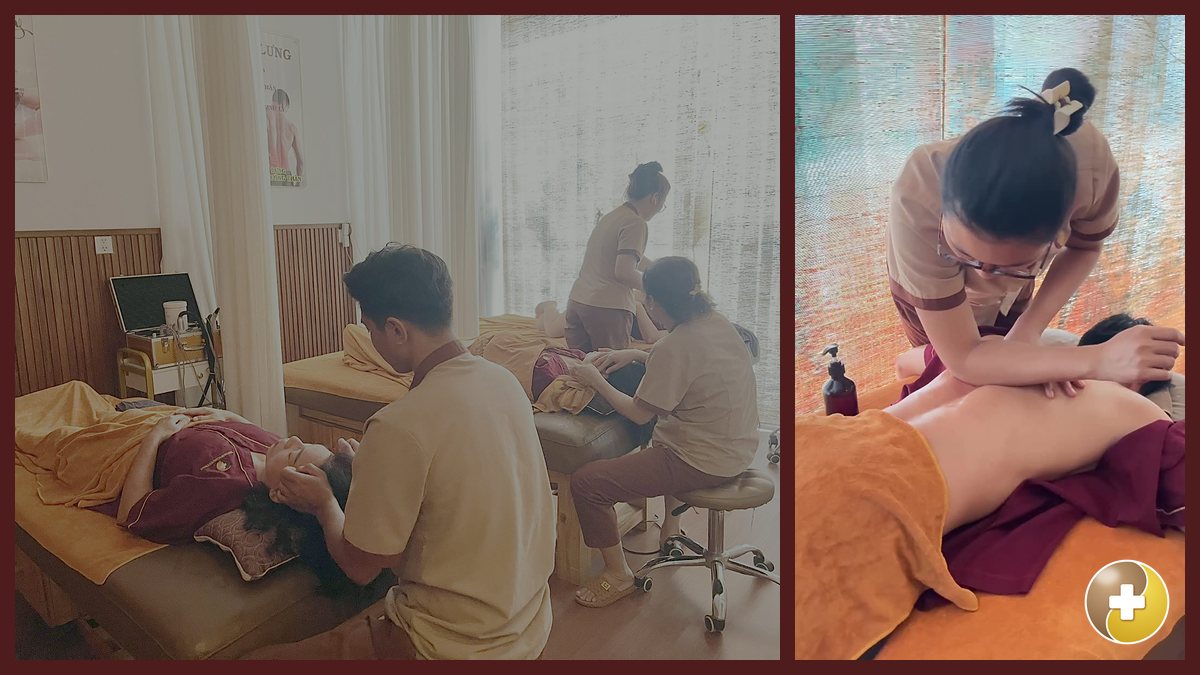
Quick answer: A numb heel usually comes from sitting on or crossing the legs, tight shoes, an irritated S1 nerve root in the lower back, a pinched tibial nerve at the inner ankle, plantar fascia irritation, or nerve damage from diabetes or low vitamin B12. Numbness with leg weakness needs a medical check. Tong Gia Acupoint Wellness (Huyệt Đạo Tống Gia) in District 12 and Vinhomes Grand Park, Ho Chi Minh City, cares for milder cases by hand.
Want Lương Y Tống Văn Huynh’s team to read your spine and posture in person?
What does a numb heel mean?
A "numb heel" can feel like wearing a thick sock, pins and needles, crawling ants, or simply reduced feeling when you touch it. Some people notice it after sitting cross-legged, some after a shift standing on hard tiles, some at night in bed, and some together with a lower-back ache that runs into the buttock and calf.
In Western medical terms, feeling in the heel comes from branches of the tibial nerve. It is part of the sciatic nerve, which starts from nerve roots around L4 to S3, runs down the back of the thigh, knee and calf, then passes through a narrow channel behind and below the inner ankle (the tarsal tunnel) before branching into the sole and heel. The back of the heel and outer edge of the foot belong mainly to the S1 root. So the heel can go numb because of a problem anywhere along that path, from the lumbar spine to the buttock, calf, ankle or the tissue under the heel. Conditions that damage peripheral nerves, such as diabetes or low vitamin B12, also often begin with numbness in the feet.
So there is no single answer. A numb heel is a symptom, not the name of a condition. Brief tingling after sitting on your foot is different from lasting one-sided numbness with back pain, and different again from both feet slowly going numb in someone with high blood sugar.
In Ho Chi Minh City, Tong Gia sees this in office workers who sit long and cross their legs; ride-hailing and delivery drivers on the road for hours; factory and retail staff standing on hard floors; people with past lower-back or disc problems; middle-aged and older adults, people with diabetes; and women late in pregnancy.
Common causes: habits, work, posture and environment
These groups follow Western medicine and are here to help you describe what you feel, not to label it yourself; only a medical facility can confirm a cause with a nerve exam, nerve conduction tests, imaging or blood tests.
- Temporary pressure. Crossed legs, squatting, kneeling on folded legs, resting a leg on a chair edge, tight shoes or a hard heel counter. Tingling fades within minutes of moving; common and mild, but worth changing if it happens every day.
- From the lower back: the S1 root. Disc bulges, narrowing or wear at L5–S1 can irritate S1. Numbness is usually one-sided, at the heel, outer edge and sole, with lower-back and buttock pain running down the back of the thigh; long sitting, bending or coughing may make it worse.
- Tibial nerve pinched at the ankle. Flat feet, an inward-rolling heel, ankle swelling after a sprain, or very long standing and walking can compress the nerve in the tarsal tunnel, giving burning or tingling in the sole and heel, worse on standing and sometimes at night.
- Irritated tissue under the heel. Plantar fascia strain, a heel spur, a thinning fat pad with age or long hours on hard floors can irritate a small nerve on the inner heel.
- Metabolism and nutrition. Diabetes is a common cause of peripheral nerve damage: numbness, burning or pins and needles starting in both feet and creeping upward like a sock, sometimes with reduced feeling so scrapes go unnoticed. Low B12 (long-term vegetarians, older adults), heavy drinking, thyroid and kidney problems can also cause it. These need blood tests, not guesswork.
- Circulation and environment. Cold air-conditioning on the legs, cold feet and little movement reduce blood flow. Peripheral artery disease makes feet cold and pale with calf pain that forces you to stop walking. Late pregnancy and swollen ankles can also press on the nerve.
| Type of numbness | Often linked to | Typical situation |
|---|---|---|
| Tingling that fades when you move | Temporary pressure | Crossed legs, squatting, tight shoes |
| One side, with back and buttock pain | S1 root, L5–S1 | Long sitting, lifting, disc problems |
| Sole and heel, worse standing | Tibial nerve at the ankle | Flat feet, swollen ankle, long shifts |
| Inner heel pain with numbness | Plantar fascia, heel fat pad | Extra weight, hard floors, running |
| Both feet, creeping upward | Diabetes, low B12, alcohol | Middle age, long-term vegetarian diet |
| Cold, pale feet, calf pain walking | Poor circulation | Older adults, cold rooms |
For more on numbness, see our Vietnamese pages on numb toe tips and numb feet from long sitting.
Other signs to watch
- Lower-back and buttock pain running into the thigh and calf on the same side.
- Weakness: trouble rising on tiptoe or walking on your heels, a dragging foot, tripping.
- Numbness spreading from the toes up both feet.
- Burning soles at night.
- Cold, pale or bluish feet, thick toenails, calf pain on walking.
- Scrapes or sores on the heel that take a long time to close, without pain.
- Thirst, frequent urination, weight loss or lasting tiredness.
- Numbness in the buttocks or groin with bladder or bowel changes.
When to see a doctor
Please see a doctor first, and hold off on massage, if any of these apply:
- Sudden numbness on one side of the body with weakness, a drooping face, slurred speech, blurred vision or severe dizziness: this may be a stroke, call 115 (Vietnam's emergency number) at once. Chest pain, breathlessness or cold sweats also mean calling 115 straight away.
- Numbness in the buttocks, groin or inner thighs with bladder or bowel changes or weakness in both legs: go to emergency care immediately.
- Numbness with foot weakness, foot drop, frequent tripping or a shrinking calf.
- Numbness spreading in both legs, or with thirst, frequent urination, unexplained weight loss or tiredness: get blood sugar and B12 checked.
- Anyone with diabetes who has a scrape, sore or colour change on the heel.
- Feet that are cold, pale or blue, or calf pain that forces you to stop walking.
- Numbness after a fall or ankle sprain with a swollen ankle.
- Numbness lasting more than two weeks despite changing posture and shoes.
If a doctor is already following you for diabetes, disc problems or a nerve condition, keep to that advice and tell the practitioner so pressure can be adjusted. This is a wellness service, not medical care.
The Y Tướng Học view: Kidney, Liver and blood reaching the feet
Y Tướng Học (face reading for wellness) rests on one idea: what is inside shows outside. According to the Tong Gia curriculum, numbness in Eastern medicine reflects qi and blood not reaching an area, and for the heel three organ systems matter most:
- Kidney governs the bones. Its channel starts at Yong Quan on the sole and runs up the inner leg; Tai Xi lies between the inner ankle and the Achilles tendon, with Fu Liu two units higher. Kidney yang deficiency brings cold hands and feet and a cold, tired back; Kidney yin deficiency brings hot palms and soles, afternoon flushes and night sweats.
- Liver stores blood and governs the sinews. Liver blood deficiency shows as dry eyes, brittle nails and cramps; when blood does not reach the feet, heels go numb and cramp easily.
- Spleen governs the muscles and limbs and makes qi and blood; when weak, limbs feel heavy and blood cannot nourish the extremities.
Outside signs: thin, soft ear rims (Kidney); cold, cracked or burning heels; ridged, brittle nails (Liver); pale skin and lips (qi and blood); a cold or one-sided tight lower back. These are cues for tailored care, never judgements. More on face reading for wellness.
Spine segments and nerve-reflex areas involved
The curriculum maps 33 vertebrae: neck C1–C7, thoracic D1–D12, lumbar L1–L5 (kidneys, pelvis and legs) and sacrum S1–S5. Its muscle, bone and joint group, which includes numbness in the limbs, works C5–C7, L1–L5 and S1–S5 together. For a numb heel the focus is L5–S1 and the sacrum.
| Segment | Nerve / function | Typical signs | Organ system |
|---|---|---|---|
| L1–L2 | Kidney area, lower back | Cold back, cold feet, night urination | Kidney |
| L4–L5 | Top of foot, big toe, foot lifters | Numb top of foot, hard to heel-walk | Liver |
| L5–S1 | S1 root, sciatic and tibial nerve: heel, outer foot, calf | Numb heel and outer foot, weak tiptoe | Kidney, Liver |
| S1–S3 | Sole, back of thigh, sacrum | Numb sole, buttock pain | Kidney |
| D11–D12 | Digestion, qi and blood | Heavy limbs, pale skin | Spleen |
How Tong Gia works: spinal nerve-reflex balancing massage
This is a Vietnamese Eastern wellness method built by Lương Y Tống Văn Huynh, a master of traditional Vietnamese wellness with over 13 years in Eastern wellness care, Y Tướng Học and spinal nerve-reflex balancing. A session for a numb heel:
- Observe and ask: which side, where, when sitting, standing or lying, back pain, weakness, diabetes, pregnancy, medical checks; the heel skin is checked for scrapes; ears, nails, skin colour and gait.
- Read the spine by hand: skin temperature, muscle padding, vertebra shape and your sensations, left against right.
- Find the key zone: usually L5–S1, the sacrum and the buttock on the numb side, working only overactive areas, never pressing cold, sunken, underactive zones.
- Muscle release: lower back, buttocks, back thigh, knee crease, calf, behind the inner ankle and the sole, in a "wave" rhythm built from one finger; lighter on the feet for people with diabetes or thin skin.
- Acupressure: Kidney back point and Ming Men, Wei Zhong, San Yin Jiao (not during pregnancy), Tai Xi, Fu Liu and Yong Quan.
- Stop at the right moment when the skin at the key point turns from dry to slightly moist.
- Home advice: sitting habits, shoes, buttock and calf stretches, sole massage and keeping feet warm.
Suitable services (same at both branches, see prices):
- Lower back care, 60 min: 550,000 VND (about 21 USD); first visit 399,000 VND (about 15 USD).
- Tired, heavy legs care, 60 min: 500,000 VND (about 19 USD).
- Herbal compress add-on: 130,000 VND (about 5 USD); temperature is checked carefully for anyone with reduced feeling.
See also foot massage and acupressure massage.
A typical session
This is a composite of many sessions, not one guest's story. A ride-hailing driver in his mid-forties near District 12, on the road for many hours a day, had weeks of tingling in his right heel and outer foot with lower-back ache, worse after long rides; he could still rise on tiptoe and had no bladder changes, and a medical check had advised breaks and stretching. The practitioner noticed thin ear rims, a cold heel and a hip tilted to the left. Around L5–S1 on the right the muscles were tight and warm, the right buttock hard, the upper lumbar area cool. The session released the lower back with the Kidney point and Ming Men, then the buttock and back thigh with Wei Zhong, then the calf and inner ankle with San Yin Jiao, Tai Xi, Fu Liu and Yong Quan, finishing with a warm herbal compress on the lower back. At first the buttock was very tender and tingling ran down the leg, then eased; by the end his heel felt less numb and his back lighter. He left with advice to stop and walk every hour, use a small back cushion and stretch his buttock each night.
What guests feel
The tender spots are usually the lower back, buttock and calf; when the right point is found, many guests feel tingling run down the leg and then settle. Afterwards the legs often feel warmer and lighter; some have mild soreness for a day. Everyone is different, and Tong Gia does not promise the numbness will be gone after one visit.
Want Lương Y Tống Văn Huynh’s team to read your spine and posture in person?
Home care and prevention
- Fix your sitting: no crossed legs or sitting on your heels; at a desk or behind the wheel, stand and walk every 45–60 minutes with 10 slow heel raises.
- Choose shoes well: roomy, cushioned, no pressure on the heel; ask a medical professional about insoles for flat feet; use a soft mat for long standing.
- Stretch the buttocks and calves morning and evening, 20–30 seconds each, never into sharp pain.
- Keep feet warm and massage the soles: avoid cold air on the legs, soak the feet in warm water for 15–20 minutes (people with diabetes should test the water by hand or thermometer, not with their feet) and rub Yong Quan for 3–5 minutes per side.
- Eat well and get checked: enough protein and greens, less alcohol; adults over 40, long-term vegetarians and people with diabetes should have blood sugar and B12 checked as advised. More ideas in our traditional Vietnamese massage Q&A, massage for parents Q&A and herbal steam Q&A.
Book a session
- District 12: 225 Dương Thị Mười, Phường Tân Chánh Hiệp (Tan Chanh Hiep Ward, District 12). Open 8:00–19:00 daily.
- Vinhomes Grand Park, District 9: Căn T16-21 khu Manhattan, Phường Long Bình, TP. Thủ Đức (Unit T16-21, Manhattan zone, Long Binh Ward, Thu Duc City). Open 9:00–20:00 daily.
Book online or call, Zalo or WhatsApp +84 888 264 559. Tell us which heel, since when, any back pain or weakness, diabetes or pregnancy, and whether you have had a check. Real guest reviews are on each branch's Google Maps page. Living in or visiting Ho Chi Minh City? Come and try a Vietnamese Eastern wellness method built by Lương Y Tống Văn Huynh.
Visit us
- Đông Y Huyệt Đạo Tống Gia Quận 12 (District 12)
225 Dương Thị Mười, Phường Tân Chánh Hiệp, Quận 12, HCMC · 8:00–19:00 daily · 0888 264 559 · Directions on Google Maps - Đông Y Huyệt Đạo Tống Gia Quận 9 (Vinhomes Grand Park, District 9)
Căn T16-21 khu Manhattan, Vinhomes Grand Park, Phường Long Bình, TP. Thủ Đức, HCMC · 9:00–20:00 daily · 0888 264 559 · Directions on Google Maps
Want Lương Y Tống Văn Huynh’s team to read your spine and posture in person?
FAQ
What causes a numb heel? Most often pressure from sitting or tight shoes, an irritated S1 nerve root from the lower back, a pinched tibial nerve at the ankle, plantar fascia irritation, or nerve damage from diabetes, low vitamin B12 or alcohol. Numbness with weakness, bladder changes or lasting more than two weeks needs a medical check.
Why are both of my feet numb? Numbness in both feet, especially creeping up from the toes, is often peripheral nerve damage from diabetes, low B12, alcohol or thyroid problems, and sometimes lumbar spinal narrowing. With leg weakness, groin numbness or bladder changes it is an emergency.
Which vitamin deficiency causes numb feet? Low B12, B1 or B6 can cause numbness, but pressure on nerves, diabetes and poor circulation are also common. Only a blood test can tell; avoid long-term self-supplementing on a guess.
How do I get rid of numbness in my legs? It depends on the cause: move and change position for pressure, reduce sitting and stretch for back-related numbness, and get diabetes or deficiencies managed medically. Lasting or worsening numbness should be checked.
Is frequent numbness in hands and feet serious? It can relate to neck or lower-back disc problems, nerve compression at the wrist or ankle, diabetes, low B12, thyroid or circulation problems. Frequent numbness is a reason to get tested.
Should I get a massage for a numb heel? When tight lower-back, buttock and calf muscles or long sitting are involved, muscle release and acupressure help them soften and many guests feel less numb afterwards. Tell us about diabetes so pressure is lighter; with weakness or bladder changes get a medical check first. Tong Gia does not promise the numbness will go.
Author: Lương Y Tống Văn Huynh – founder of Huyệt Đạo Tống Gia, a master of traditional Vietnamese wellness with over 13 years in Eastern wellness care, Y Tướng Học (face reading) and spinal nerve-reflex balancing massage.
Updated: 2026-11-16
Related guides
- Acupressure for finger joint pain: which points, how it works and when to get checked first
- Finger joint pain at night: causes by pain hour, warning signs and gentle care in Ho Chi Minh City
- Aching wrist: common causes, warning signs and gentle care in Ho Chi Minh City
- Numb hands and feet in older adults: six common causes, danger signs and safe care
- Numb heel: six common causes, the warning signs, and how Tong Gia can help
- Numb hands from neck and shoulder pain: the path from your neck to your fingers
This is a wellness service, not medical care.