
Headache self-massage: seven simple steps at home, when to skip it, and a hands-on session at Tong Gia in Ho Chi Minh City
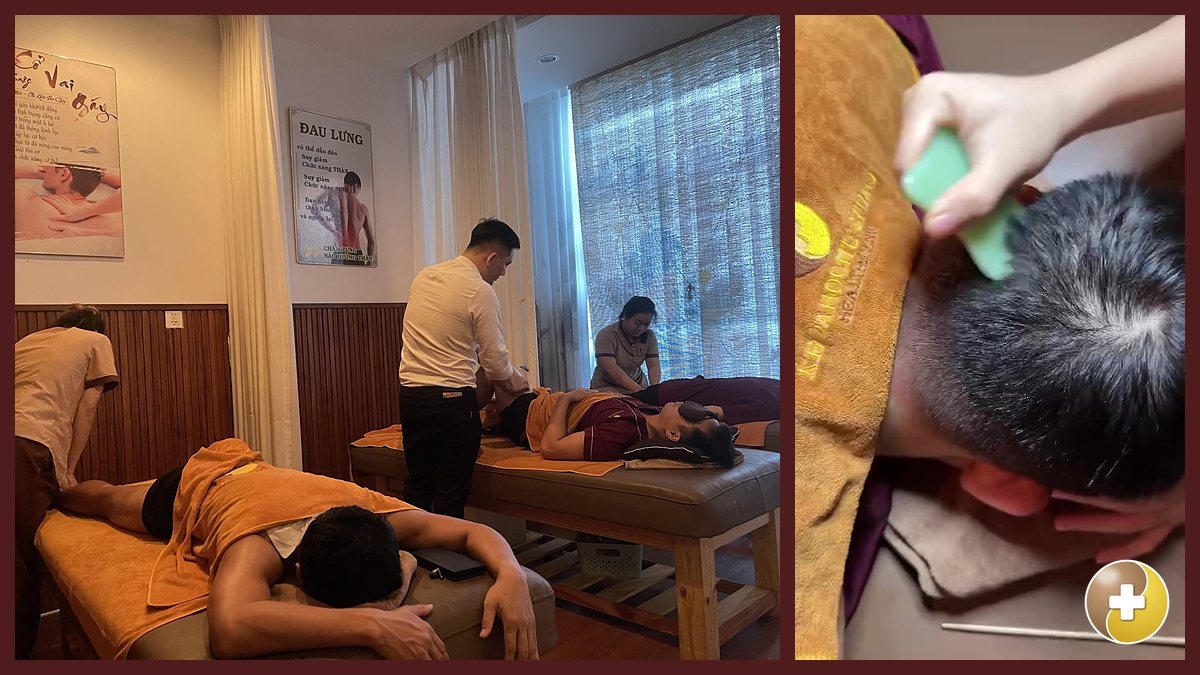
Quick answer: To massage a headache, stroke the forehead outward, circle the temples, release the hollows under the skull, hold the crown point Bách hội, then press Hợp cốc and Thái Xung, about 10 minutes, gently. A sudden severe headache needs medical help first. Tong Gia in District 12 and District 9, Ho Chi Minh City offers hands-on head care.
Want Lương Y Tống Văn Huynh’s team to read your spine and posture in person?
What headache self-massage is, and which headaches it suits
Headache self-massage is a short sequence of strokes, circles and gentle presses with your fingertips on the places that tighten when your head hurts: the temples, the forehead, the scalp, the hairline at the back of the neck, the shoulders, and a few points on the hands and feet. The aim is not to switch the pain off. It is to soften the muscles around the head and neck and slow your breathing, so that your body can settle. It supports you; it does not replace a medical check when a headache looks unusual.
In Western terms, brain tissue itself does not feel pain. Headache comes from the structures around it: the muscles of the head and neck, blood vessels, the membranes around the brain, nerves in the scalp and face, the sinuses, eyes, teeth and jaw. The most common type is tension-type headache: a dull, pressing ache like a tight band or a helmet that is too small, on both sides of the head or rising from the back of the neck. This is the type massage helps most clearly, because so much of it starts in the muscles of the forehead, temples, scalp, neck and upper shoulders. With migraine, gentle massage between attacks can help you relax, but during a strong attack many people cannot bear touch on the head; resting in a dark, quiet room usually suits them more.
Among expats and visitors in Ho Chi Minh City, the people who ask Tong Gia how to massage a headache are usually:
- Office and remote workers who spend eight to ten hours at a laptop and feel their temples tighten by late afternoon.
- Motorbike riders who wear a helmet in midday heat and traffic noise and arrive home with a squeezed head.
- Shift workers and frequent flyers whose sleep times change every week.
- Parents of young children who sleep in pieces and need something that takes five to ten minutes at home.
- Students and teachers during exam season, with late nights and plenty of coffee.
This guide moves from why your head hurts to where to press, in what order and how hard. For a wider picture of head care at Tong Gia, see our page on headache and dizziness acupressure, and for questions about the herbal hair wash and head massage, read Vietnamese head spa in Saigon: Q&A.
Common causes, and why massaging the right places makes the head feel lighter
Knowing where your headache comes from tells you where to start. These are the causes our practitioners hear about most often:
- Forward head posture: hours looking down at a phone or a low laptop make the small muscles under the skull and the neck muscles work hard just to hold the head up. Muscles that stay tight lose blood flow, ache, and send pain up into the head.
- Mental stress: under pressure we frown, clench the jaw and lift the shoulders without noticing. The Tong Gia curriculum notes that long-term mental pressure creates chronic tightness in the deep muscles, especially the trapezius and the long muscles beside the spine, which leads to tension-type headache.
- Short or irregular sleep: late nights, shift work, jet lag and long weekend lie-ins all make the head heavy in the morning.
- Eye strain: near work and old glasses tighten the muscles around the eyes, forehead and temples.
- The Saigon climate: strong sun, dehydration, air conditioning blowing on the back of the neck, and traffic noise.
- Coffee and meals: a lot of coffee followed by a sudden stop, or skipped meals, can both trigger a headache.
Why does massage help? From a Western point of view, slow pressure lets a tight muscle lengthen, improves blood flow through soft tissue, and sends pleasant signals from skin receptors to the brain, so the nervous system shifts from "guarding" to resting. The nerve roots from the upper neck vertebrae (C1 to C3) also supply the back of the head, so when the back of the neck softens, many people feel the pressure in the forehead and temples ease as well. That is why the neck matters as much as the temples in this routine.
Signs worth noting before you start
Spend a minute answering these questions. They help you choose where to massage, and they help you notice when self-massage is not appropriate:
- Where it hurts: forehead, both temples, the crown, the back of the head, one side or both. If the pain rises from the back of the neck, start there; if both temples are tight, focus on the temples and jaw.
- What it feels like: squeezing, dull, throbbing with the pulse, electric jolts, burning on the skin.
- When it comes: on waking, after work, after time in the sun, before a period.
- What comes with it: stiff neck, sore shoulders, tired eyes, teeth grinding, nausea, sensitivity to light, dizziness, blocked nose.
- Your week: hours of sleep, cups of coffee, screen hours, and how many days you took a painkiller.
When to see a doctor
Self-massage suits a familiar headache of mild to moderate strength with no unusual signs. Please see a doctor at a medical facility, and skip self-massage for now, if:
- This is a strong headache you have never had before, or your usual pattern has changed: more often, more severe, or waking you at night.
- The headache followed a knock to the head, even a light one, especially if you are older or take blood thinners. Do not massage an area that has just been hit.
- Headaches began after the age of 50, particularly temple pain with jaw ache when chewing or blurred vision.
- You are pregnant and have strong headaches, swollen legs or blurred vision.
- You have high blood pressure and measure a very high reading together with a severe headache.
- Headaches come with tiredness, pale skin or unexplained weight loss; have a check-up at a medical facility at the same time, as anaemia or another cause may be involved.
- You need painkillers on many days each week to cope.
Call 115 straight away (the emergency number in Vietnam) for a sudden, explosive headache unlike anything before, or a headache with vomiting, high fever, stiff neck, confusion, seizures, weakness or numbness on one side, a drooping face, slurred speech or double vision; or a headache with chest pain, shortness of breath and sweating.
This is a wellness service, not medical care. If you are being followed up by a medical team, keep to their advice; massage is only a relaxing support.
The Y Tướng Học view: organs and face signs linked with headaches
Y Tướng Học (face reading for wellness) in the Tong Gia curriculum rests on the idea that "the outer form reflects the inner organs": bone structure, complexion and body shape mirror the state of the organ systems in the Eastern wellness tradition. Knowing which pattern fits you helps you choose extra points for your routine.
- Liver (Can): in the Eastern tradition the Liver stores blood, keeps qi flowing smoothly and governs the tendons. Long stress makes Liver qi stagnate, muscles tighten and energy rush upward, a pattern common in people with work-pressure headaches. The curriculum lists the point Thái Xung (LR3) to soothe the Liver, move qi and ease stress, irritability, poor sleep and headache.
- Kidney and the "sea of marrow": the Kidney stores essence and governs bone and marrow, and the brain is called the sea of marrow. When Kidney essence is low, the curriculum describes nervous exhaustion, headache, dizziness, ringing in the ears and very light sleep.
- Heart (Tâm): the Heart houses the mind. Worriers who sleep badly often have headaches with insomnia; the curriculum uses Bách hội and Thần môn to clear the head and calm the mind.
- Spleen (Tỳ): the Spleen turns food into qi and blood. Irregular meals over a long time leave the head under-nourished, with fatigue and blurred vision.
Face and head shapes the curriculum links with headaches include the "Giáp" face (wide forehead, narrow pointed chin), described as "full above, weak below", with headache and poor sleep and a hot, reactive upper neck at C1 and C2; muscles that feel hard as wood, linked with stagnant Liver qi and tension headache; a scalp so thin it clings to the skull, linked with tight scalp and neck muscles; a pointed crown, a bulging forehead and a sharp, blade-like nose, all linked with qi rushing upward and vascular headaches; and a low, narrow forehead, linked with low Kidney essence. A red face and red eyes suggest heat, so cooling, downward strokes suit; a pale face and lips suggest weak qi and blood, so warm, gentle massage and a foot soak suit. This is traditional knowledge used to choose where to work, never to label anyone or name a disease. Read more in Eastern face reading for wellness: Q&A.
Spine and nerve-reflex areas involved
In the Tong Gia curriculum on spinal nerve-reflex balancing, the 33 vertebrae are grouped by the areas they serve: the neck (C1 to C7) serves the head, face, neck and arms; the upper and mid back (D1 to D12) relate to circulation, breathing and digestion; the lower back and sacrum relate to the kidneys, urinary system and legs. For the nervous and mental group, which includes long-standing headaches, poor sleep and vestibular complaints, the curriculum works on the whole neck C1 to C7, the upper back D1 to D3 and the sacral area, always as support, not a replacement for medical care. That is why this routine does not stop at the head.
| Spinal area | Nerves and function | Typical signs | Related organ (Eastern view) | Matching self-massage area |
|---|---|---|---|---|
| C1 to C3 (hairline at the back of the neck) | Upper neck serving the head; deep muscles under the skull | Pain rising from the back of the head to the crown and forehead; hot, stiff nape | Liver, Kidney | Hollows under the skull |
| C4 to C7 | Neck, shoulders, arms | Shoulder ache climbing into the head; stiff neck when turning | Liver governs tendons | Upper trapezius, top of the shoulders |
| D1 to D3 (upper back) | Circulation, breathing | Tightness between the shoulder blades; shallow breathing under stress | Lung, Heart | Ask someone to press along both sides of the upper spine |
| Temples, forehead, crown | Head and face; temporalis and scalp muscles | Tight temples, heavy forehead, tired eyes, jaw clenching | Liver opens into the eyes; Heart houses the mind | Temples, forehead, Bách hội |
| Sacral area | Elimination, pelvic organs | "Hot above, cold below": warm head, cold lower back | Kidney | Warm foot soak, keep the lower back warm |
The table shows "related" areas to guide where to work, not a cause. If your headaches start in a tight neck, our neck and shoulder massage Q&A explains how we work on that area.
The Tong Gia method for people with frequent headaches
Home massage helps mild episodes. When headaches return week after week and the neck feels like a rope, a practitioner can read your spine by hand and work more deeply. Tong Gia Acupoint Wellness (Huyệt Đạo Tống Gia) is a Vietnamese Eastern wellness method developed by Lương Y (master of traditional Vietnamese wellness) Tống Văn Huynh over more than 13 years, combining Eastern wellness, Y Tướng Học and spinal nerve-reflex balancing. A session runs like this:
- Observation: we ask where and when it hurts, how you sleep, your coffee and screen time, and whether you have had a medical check; we look at face shape, forehead, complexion and how the head and shoulders sit. If any sign from the doctor section appears, we do not proceed and suggest a medical check first.
- Reading the spine by hand: the practitioner rests, strokes, presses and rolls the skin to read four things: skin temperature, the muscle layer, the shape of each vertebra and your sensation, comparing left with right and upper with lower along C1 to C7 and D1 to D3 to find "over-active" spots that are warm, hard or tender.
- Muscle release: softening the deep muscles under the skull, the neck, trapezius and levator scapulae, building pressure through five levels from one finger to the whole hand, only on the over-active areas.
- Acupressure on the right points: along the nape and temples, with a gentle hold on Bách hội (GV20) at the crown to clear the head and calm the mind; for stressed guests, Thái Xung on the foot as well. The practitioner stops when the skin over a key point turns from dry to slightly moist, and cools warm skin or warms cool skin.
- Home routine: the practitioner shows you the seven steps below on your own head and adjusts your pressure.
A typical session: the guest is often an office worker in their thirties whose temples tighten every afternoon; self-massage helps for a while, then the pressure returns. Talking for a few minutes, the practitioner sees the head held forward, raised shoulders, a slight frown and firm jaw muscles. Lying face down, the area under the skull is warm and hard on both sides, C2 is tender, and the upper trapezius feels like a cord. Most of the time goes into releasing the neck and shoulders at light to medium pressure; lying face up, the practitioner works the temples and jaw, strokes the forehead and holds Bách hội through a few slow breaths. Guests often say their head feels "like taking off a tight helmet". Before leaving, they learn where the hollows under the skull are and are reminded to raise the screen to eye level.
Suitable services (single-session prices, see prices):
- Head care, 60 minutes: 750,000 VND (about 29 USD). Time for the head, the back of the skull and head points; good for recurring headaches and a tense head at night.
- Neck and shoulder care, 60 minutes: 550,000 VND (about 21 USD), first visit 399,000 VND (about 15 USD). Good when pain starts in the neck and shoulders and climbs into the head.
- Herbal hair wash with neck and shoulder massage, 60 minutes: 250,000 VND (about 10 USD). A relaxing option for a mildly heavy head after work.
What guests feel: during the session, tight spots in the nape feel sore in a pleasant way; the curriculum calls this "creating a sensation wave", a rhythmic pressure that lets the muscle contract and then let go so the body can adjust. Many guests feel sleepy during the hold on Bách hội. Afterwards most describe a lighter head, brighter eyes, an easier neck turn and deeper sleep; a few feel slight neck soreness the next day. Tong Gia supports and helps rebalance; we do not promise that headaches will end. For more on points used for sleep, read acupressure for sleep: Q&A.
Want Lương Y Tống Văn Huynh’s team to read your spine and posture in person?
Self-care at home: the 7-step, 10-minute headache massage and prevention
Get ready: sit back in a chair or lie down, dim the lights, warm your hands and keep your nails short. Use the pads of your fingers, never the nails. Press only until it feels pleasantly sore, never sharp. Breathe slowly throughout: in through the nose for 4 seconds, out for 6 seconds, the 4–6 breathing taught in the Tong Gia curriculum to settle body and mind.
| Step | Area | How | Time |
|---|---|---|---|
| 1 | Forehead | Palms on the forehead, stroke slowly from the centre out to both temples | 1 minute |
| 2 | Temples | Index and middle fingers circle slowly in the soft hollow of each temple, backwards then forwards | 1–2 minutes |
| 3 | Scalp | All ten fingertips on the scalp, press lightly and move the scalp as if shampooing, from the front hairline over the crown to the back | 1–2 minutes |
| 4 | Crown (Bách hội) | Hold gently with the middle finger at the top of the head, where the midline meets the line joining the tops of the ears, for five breaths | 30–60 seconds |
| 5 | Back of the neck | Thumbs in the hollows under the skull on both sides (the Phong Trì area), press upward and circle; then stroke down the sides of the neck to the shoulders | 2 minutes |
| 6 | Shoulders | Right hand squeezes the left shoulder muscle, left hand the right; squeeze and release, then roll the shoulders slowly | 1 minute |
| 7 | Hands and feet | Press Hợp cốc on the back of the hand and Thái Xung on the top of the foot; before bed, add Thần môn at the wrist crease | 1–2 minutes |
Tips for each step
- Temples: if they throb with your pulse, just rest the fingers and stroke, do not press hard. If you grind your teeth, also circle the jaw muscle just in front of the ear with the mouth slightly open.
- Bách hội: the curriculum uses it to clear the head and calm the mind, not to lower blood pressure; if you have high blood pressure, keep measuring and follow your medical advice.
- Back of the neck: there are vessels and nerves here, so press slowly in small circles; never crack or twist the neck forcefully.
- Hợp cốc: between the first and second bones of the hand, near the edge of the second; the curriculum notes it should not be used during pregnancy.
- Thái Xung: on top of the foot in the dip between the big toe and second toe, sliding up towards the ankle; good for headaches that come with stress or anger.
Prevention, so you need the routine less often
- Raise your screen to eye level and rest your eyes every hour: look far away for 20 seconds, roll your shoulders.
- Sleep seven to eight hours at regular times, weekends included; keep naps to 15–30 minutes. After a long flight, see jet lag massage: Q&A.
- Drink enough water in the heat; have coffee before 2 pm and cut down gradually; do not skip meals.
- Keep air conditioning off the back of your neck; wear a wide-brimmed hat in the sun.
- Soak your feet in warm water for 10–15 minutes before bed to relax; people with diabetes should check the water temperature carefully.
If you have massaged regularly for one or two weeks and still have headaches on many days, it is time for a medical check to find the cause, and then a session where your neck can be read more closely.
Booking
- District 12: 225 Dương Thị Mười, Phường Tân Chánh Hiệp, Quận 12 (District 12), daily 8:00–19:00.
- Vinhomes Grand Park: Căn T16-21 khu Manhattan, Phường Long Bình, TP. Thủ Đức (Thu Duc City, former District 9), daily 9:00–20:00.
WhatsApp or Zalo +84 888 264 559 (0888 264 559 in Vietnam), or book online; genuine Google Maps reviews are linked from each branch page. Tell us where your head hurts, what kind of pain it is, whether you have been checked, and whether you would like us to teach you the routine. If you live in or visit Ho Chi Minh City, come and try this Vietnamese method.
Visit us
- Đông Y Huyệt Đạo Tống Gia Quận 12 (District 12)
225 Dương Thị Mười, Phường Tân Chánh Hiệp, Quận 12, HCMC · 8:00–19:00 daily · 0888 264 559 · Directions on Google Maps - Đông Y Huyệt Đạo Tống Gia Quận 9 (Vinhomes Grand Park, District 9)
Căn T16-21 khu Manhattan, Vinhomes Grand Park, Phường Long Bình, TP. Thủ Đức, HCMC · 9:00–20:00 daily · 0888 264 559 · Directions on Google Maps
Want Lương Y Tống Văn Huynh’s team to read your spine and posture in person?
FAQ
How do I massage a headache at home? Sit back or lie down and breathe slowly. Stroke the forehead outward, circle the temples, move the scalp, hold the crown point, press the hollows under the skull, squeeze the shoulders, then press Hợp cốc and Thái Xung. About 10 minutes, pleasantly sore, never sharp.
When is the right time for a head massage for headache and stress? At the end of the working day or before bed, when your head starts to feel heavy and before the pain is strong. Add 4–6 breathing, in for 4 seconds and out for 6; before sleep, press Thần môn at the wrist crease.
Is it normal to have a headache after a massage? Mild neck soreness the next day can happen if pressure was too strong or one spot was worked too long; it usually fades within a day. If the headache keeps getting worse, or comes with nausea, dizziness, blurred vision or numb hands, stop and get a medical check.
How long does it take for headache massage to help? With tension-type headache many people feel lighter during or soon after 10–15 minutes. If regular self-massage for one or two weeks has not reduced how often headaches come, get a medical check rather than pressing harder.
Can I massage a headache when pregnant? Gentle forehead strokes and light work on the temples, scalp and shoulders are usually fine, but avoid the Hợp cốc point, as the Tong Gia curriculum advises. Strong headaches in pregnancy, especially with swollen legs or blurred vision, need a medical check straight away.
Can I book a headache massage at Tong Gia as a foreigner? Yes. Message +84 888 264 559 on WhatsApp or Zalo with where it hurts and your preferred branch. Addresses are kept in Vietnamese on our pages so you can show them to a taxi or ride-hailing driver.
Author: Lương Y Tống Văn Huynh – founder of Huyệt Đạo Tống Gia, a master of traditional Vietnamese wellness with over 13 years in Eastern wellness care, Y Tướng Học (face reading) and spinal nerve-reflex balancing massage.
Updated: 2026-11-16
Related guides
- Headache self-massage: seven simple steps at home, when to skip it, and a hands-on session at Tong Gia in Ho Chi Minh City
- Headache with eye pain: why your head and eyes ache together, when to get checked, and what your body needs
- Headache relief without painkillers: eight natural ways, when to get checked, and how Tong Gia supports you in Ho Chi Minh City
- What is the space between the eyebrows called? Glabella, Ấn Đường and why this spot tightens
- The Taiyang temple acupoint: where to find it, how to press it safely, when to skip it, and how Tong Gia cares for the head
- Head massage in Ho Chi Minh City: the types, what it really does and how to choose your session
This is a wellness service, not medical care.