
What is the space between the eyebrows called? Glabella, Ấn Đường and why this spot tightens
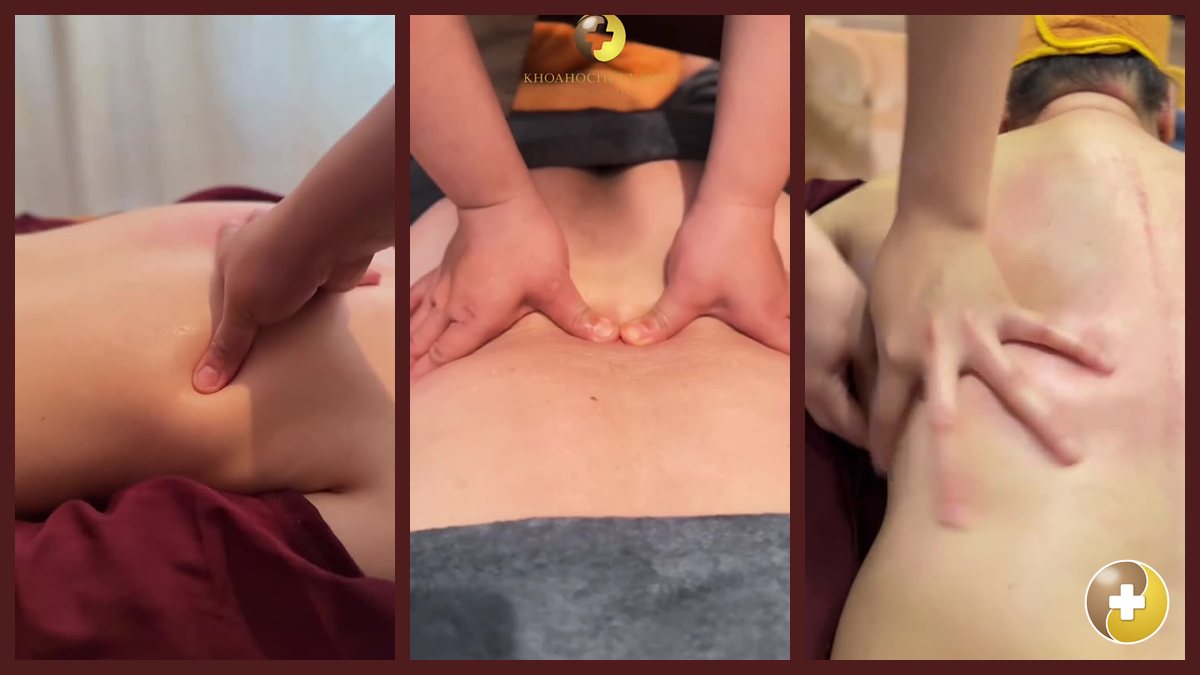
Quick answer: The space between the eyebrows is the glabella in anatomy and Ấn Đường in Eastern medicine and Vietnamese face reading. Frowning, screens, sinus congestion and a stiff neck make it tighten. Tong Gia Acupoint Wellness in District 12 and Vinhomes Grand Park, Ho Chi Minh City, cares for it by hand.
Want Lương Y Tống Văn Huynh’s team to read your spine and posture in person?
What is the space between the eyebrows called?
Many people notice a vertical crease between their brows in the mirror, or a dull ache right in the middle of the forehead every afternoon, and then wonder what this spot is actually called. The short answer: in anatomy it is the glabella, the smooth patch of frontal bone between the two brow ridges, just above the root of the nose. In Eastern medicine and in Vietnamese face reading it is called Ấn Đường (often written Yintang in Chinese sources), which is both the name of the area and of an acupoint sitting exactly midway between the inner ends of the eyebrows. Tong Gia Acupoint Wellness (Huyệt Đạo Tống Gia), a Vietnamese wellness method built by Lương Y (master of traditional Vietnamese wellness) Tống Văn Huynh, uses all three views to understand why this small area tightens up.
In Western anatomy, under the skin of the glabella lies the frontal bone; behind it sits the frontal sinus, and nearby, between the eye sockets, the ethmoid sinuses. Two small muscles work on the surface: the corrugator, which pulls the brows together and creates vertical frown lines, and the procerus, which pulls the skin down and creates a horizontal line at the bridge of the nose. Sensation here is carried by small branches of the trigeminal nerve. With muscle, sinus and sensory nerve packed so closely together, long-held frowning, congested sinuses or irritated nerve endings are all felt as tightness, pressure or ache right between the eyes.
| Point of view | Name of the area | What lies there | What it is used for |
|---|---|---|---|
| Western anatomy | Glabella | Frontal bone, frontal sinus, corrugator and procerus muscles, trigeminal nerve branches | Describing structure, frown lines and pressure |
| Eastern acupoints | Ấn Đường point (Yintang) | Midpoint between the inner ends of the eyebrows | Gentle pressing to relax the forehead |
| Tong Gia face reading (Y Tướng Học) | Ấn Đường, Ấn Đường bone | Bone, skin, muscle tone and complexion between the brows | Observation to choose which part of the back to read first |
In Ho Chi Minh City the picture is familiar: office workers staring at screens ten hours a day, ride-hailing drivers squinting into midday glare on Hanoi Highway, night-shift engineers in the industrial parks. Almost everyone frowns without noticing. Expats add jet lag and dry air-conditioned apartments. If you are new to the city, our face reading for wellness Q&A explains how this kind of observation works.
Common causes of tension between the eyebrows
- Close screen work: small text and bright screens keep the eyes focusing and the corrugator muscle contracted for hours.
- Glare on the road: riding a motorbike at noon without sunglasses means squinting the whole way.
- Uncorrected eyesight: short-sightedness or astigmatism makes people frown to read signs.
- Stress and overthinking: frowning while concentrating slowly becomes a habit, then a line.
- Blocked nose and sinuses: dry air-con, traffic fumes and the change of seasons swell the nasal lining and create pressure behind the forehead.
- Short sleep: late nights leave the eyes and forehead heavy in the morning.
- Tight neck and shoulders: according to the Tong Gia curriculum, long-term mental pressure stiffens the whole occipito-frontal muscle and the shoulder lifters, so neck tension spreads up into the head.
In Eastern medicine terms, as taught in the Tong Gia curriculum, the Liver system governs smooth flow, so stress makes Liver qi stagnate and the sinews tighten; the eyebrows, seen as the surplus of the sinews, show this. The Lung system governs qi and breathing; the Heart system houses the spirit. These are functional concepts, not statements that your liver, lungs or heart are ill.
Other signs worth noticing
- A vertical line between the brows that stays even when your face is relaxed.
- Forehead heaviness or a dull ache late in the afternoon.
- Stuffy nose, and tenderness when pressing the middle of the forehead or beside the nose.
- Frequent sighing, a pressed feeling in the chest, palpitations under stress.
- Tired, dry, twitching eyes; tight jaw or temples, morning teeth clenching.
- Stiff neck, raised shoulders, light sleep.
Many of these overlap with tension-type head discomfort; see our headache and dizziness acupressure page.
When to see a doctor
Most tightness between the eyebrows comes from tired muscles, tired eyes, mild sinus congestion or stress. Some signs, however, should never wait. Please see a doctor at a medical facility promptly, and do not rely on massage, if you have:
- A sudden, severe headache unlike anything before.
- Forehead pain with fever, thick yellow-green nasal discharge for more than 10 days, or swelling and redness around the eye.
- Blurred or double vision, pain inside the eye, nausea or vomiting.
- Weakness or numbness on one side, facial drooping, slurred speech: call 115 immediately.
- Pain after a blow to the head or face.
- A lump or sore between the brows that does not go away within a few weeks.
- Headaches that grow worse over weeks or wake you at night; ongoing fatigue or weight loss should be checked in parallel.
Chest tightness, shortness of breath and cold sweats: call 115 at once. This is a wellness service, not medical care.
Face reading view: what Ấn Đường says about Heart, Lung and Liver
Y Tướng Học (face reading for wellness) follows the principle "the outer form reflects the inner organs". In the Tong Gia curriculum, the Ấn Đường bone is the bone between the eyebrows, linked to the Ấn Đường point, and it directly mirrors the Heart and Lung systems. When the area is full, wide and bright, the curriculum describes an open, generous person who balances emotions well.
When it is sunken, narrow, deeply lined or the muscle feels bound and hard, the curriculum lists three tendencies: Lung qi stagnation, with long-running sinus and nasal sensitivity, shallow breathing and breathlessness; Heart blood stasis, with a pressed chest, sighing, palpitations and anxiety; and deep stress that tightens the facial muscles, neck and shoulders. The eyebrows on either side reflect the Liver: smooth, continuous brows suggest well-regulated Liver qi. Brows that grow into the middle and lock together are read as deep Liver qi stagnation that blocks the Heart and Lung area.
Face reading is only a hint for where to start checking with the hands. It is reference knowledge from the school, never a medical conclusion and never used to judge anyone. More in the face reading for wellness page.
Spine and nerve-reflex zones linked to the area between the brows
The Tong Gia method takes the head and spine as its root: the head is the centre of the central nervous system, the spine is where the autonomic nervous system branches out. In the curriculum, the cervical spine C1–C7 governs the head, face, neck and arms; the thoracic spine D1–D12 relates to circulation, breathing and digestion. For the nervous and emotional group (long-term headaches, poor sleep, dizziness, nervous exhaustion), the curriculum combines C1–C7, the upper thoracic D1–D3 and the sacral zone.
A Western way to picture it: the frontalis muscle at the front and the occipitalis at the back of the skull are joined by a thin sheet of tissue over the crown. When the back of the neck tightens, the pull reaches the forehead, so rubbing the forehead alone often does little until the neck is released.
| Spinal zone | Nerve and function | Link to the area between the brows | Related organ system |
|---|---|---|---|
| C1–C3 (base of skull) | Head and face; occipital muscle joined to the forehead | Heavy forehead, ache rising from the neck | Kidney (Governor vessel), Liver |
| C4–C7 | Neck, shoulders, arms | Raised shoulders pulling the whole head tight | Liver (governs sinews) |
| D1–D3 (Lung shu point below D3) | Breathing | Shallow breath, stuffy nose, forehead pressure in cold air | Lung |
| D4–D5 (Heart shu point below D5) | Circulation | Pressed chest, sighing, frowning when worried | Heart |
The table shows related zones for choosing where to work, not a conclusion about illness. Acupoints do not act directly on the heart or lungs; in traditional theory they help regulate qi and blood and ease discomfort.
The Tong Gia method: spinal nerve-reflex balancing massage
Every session at both branches follows the method of Lương Y Tống Văn Huynh, founder of Tong Gia, with over 13 years of practice in Eastern wellness, face reading and spinal nerve-reflex balancing. The curriculum's "three nos": no chemicals or herbs taken or injected, no needles, no rough force. The core skill is reading with the soft pads of the fingertips. A typical session for someone with a tight brow area:
- Questions and screening: type of headache, fever, vision changes, recent knocks, blood pressure, pregnancy.
- Observation: width of Ấn Đường, frown lines, brow shape, forehead colour, breathing, shoulder height.
- Reading the spine by hand: skin temperature, the muscle layer, vertebral shape and sensation, comparing left and right.
- Muscle release: back of the skull, neck, shoulders and upper back first.
- Acupressure on the right zone: Lung and Heart shu points on the back as needed, Bách hội at the crown to calm the mind, then gentle fingertip work over the forehead and Ấn Đường.
- Home advice: breathing, screen set-up and sleep.
Suitable services and prices (same at both branches)
- Head care, 60 min: 750,000 VND (about 29 USD). For a heavy forehead, brow tension, stiff neck and light sleep.
- Nose and sinus care, 60 min: 350,000 VND (about 13 USD). When forehead pressure comes with a blocked nose.
- Herbal hair wash with neck and shoulder massage, 60 min: 250,000 VND (about 10 USD). A gentle weekend option; see the Vietnamese head spa Q&A.
Full list on the price page.
A typical session
One late afternoon at the District 12 branch, an accountant from Quang Trung Software Park came in during closing week, after almost ten hours a day at the computer. Her forehead felt heavy every afternoon, the frown line looked deeper and her nose blocked up under the air-con. Screening found no fever, no vision change and normal blood pressure. Her Ấn Đường looked narrow, the brow muscle stayed tense even while talking, and her right shoulder sat higher. Reading the spine, the base of the skull and C1–C3 felt knotted and warmer; D1–D3 felt like a hard band. The practitioner released the neck and shoulders first, pressed the Lung shu points, then moved to the head: Bách hội, then slow strokes from Ấn Đường out to the temples.
What guests usually feel
During neck release many feel a "good ache" and warmth rising to the crown; when the fingertips glide over the brows, the forehead seems to smooth out and breathing slows by itself. Afterwards the head feels lighter, eyes brighter, the neck turns more easily, and many sleep more deeply that night. Everyone is different; Tong Gia does not promise to erase lines or end headaches in one visit, only to help muscles soften and the body rebalance. For sleep-related tension, read the acupressure for sleep Q&A, and for neck tension the neck and shoulder massage Q&A.
Want Lương Y Tống Văn Huynh’s team to read your spine and posture in person?
Self-care at home and prevention
- Rest your eyes: every 20 minutes or so, look into the distance for a few seconds; keep the screen at or below eye level with text large enough not to squint.
- Wear sunglasses on the road and check your glasses if you must squint to read.
- Press Ấn Đường gently: slow circles with the pad of the middle finger for 1–2 minutes, then stroke outward to the temples.
- Belly breathing daily: slow in through the nose, a longer breath out, a few minutes before bed.
- Keep the neck warm, sleep before 11 pm: do not let the air-con blow onto the back of your neck.
Booking
Tong Gia is open every day. You can check the star rating and real reviews on each branch's Google Maps profile before you come:
- District 12 branch: 225 Dương Thị Mười, Tân Chánh Hiệp ward (Phường Tân Chánh Hiệp), District 12. Open 8:00–19:00 daily. Convenient from District 12, Go Vap and Hoc Mon. See District 12 page.
- Vinhomes Grand Park branch: unit T16-21, Manhattan zone (Căn T16-21 khu Manhattan), Vinhomes Grand Park, Long Bình ward, Thu Duc City. Open 9:00–20:00 daily. Convenient from Vinhomes Grand Park, District 9, Thu Duc and Thao Dien. See Vinhomes Grand Park page.
Call, Zalo or WhatsApp +84 888 264 559, or book online. Mention "head care" or "sinus care", the branch and your preferred time; tell us in advance if you are pregnant, have high blood pressure or recently hit your head.
Visit us
- Đông Y Huyệt Đạo Tống Gia Quận 12 (District 12)
225 Dương Thị Mười, Phường Tân Chánh Hiệp, Quận 12, HCMC · 8:00–19:00 daily · 0888 264 559 · Directions on Google Maps - Đông Y Huyệt Đạo Tống Gia Quận 9 (Vinhomes Grand Park, District 9)
Căn T16-21 khu Manhattan, Vinhomes Grand Park, Phường Long Bình, TP. Thủ Đức, HCMC · 9:00–20:00 daily · 0888 264 559 · Directions on Google Maps
Want Lương Y Tống Văn Huynh’s team to read your spine and posture in person?
FAQ
What is the space between the eyebrows called? In anatomy it is the glabella. In Eastern medicine and Vietnamese face reading it is Ấn Đường (Yintang), also the name of the acupoint at the midpoint between the inner ends of the brows.
Why do I get pain between my eyebrows? Common reasons are eye strain, long frowning, stress, short sleep, a tight neck or congested frontal and ethmoid sinuses. Sudden severe pain, fever, vision changes or one-sided weakness need a doctor right away.
Does the frown line between the eyebrows say anything about health? Physically it comes from years of corrugator muscle contraction. In the Tong Gia curriculum a narrow, lined Ấn Đường hints at Lung qi stagnation, Heart blood stasis and deep stress. It is a hint for care, not a medical conclusion.
Is pressing the Yintang point safe? Gentle circles with a fingertip for 1–2 minutes are generally comfortable and relaxing. Do not press hard, and avoid it on swollen or broken skin or after a knock to the head.
Does the head care session at Tong Gia include the area between the brows? Yes. The 60-minute head care session (750,000 VND, about 29 USD) releases the neck and shoulders first, then works gently over the crown, forehead and Ấn Đường. Book on +84 888 264 559.
Can I book in English? Yes. Message us on WhatsApp or Zalo at +84 888 264 559 or use the online booking page; share the branch, time and any health conditions.
Author: Lương Y Tống Văn Huynh – founder of Huyệt Đạo Tống Gia, a master of traditional Vietnamese wellness with over 13 years in Eastern wellness care, Y Tướng Học (face reading) and spinal nerve-reflex balancing massage.
Updated: 2026-11-16
Related guides
- Headache self-massage: seven simple steps at home, when to skip it, and a hands-on session at Tong Gia in Ho Chi Minh City
- Headache with eye pain: why your head and eyes ache together, when to get checked, and what your body needs
- Headache relief without painkillers: eight natural ways, when to get checked, and how Tong Gia supports you in Ho Chi Minh City
- What is the space between the eyebrows called? Glabella, Ấn Đường and why this spot tightens
- The Taiyang temple acupoint: where to find it, how to press it safely, when to skip it, and how Tong Gia cares for the head
- Head massage in Ho Chi Minh City: the types, what it really does and how to choose your session
This is a wellness service, not medical care.