
Herbal hair wash near Di An: an herbal wash with spine-guided neck care, and which branch to choose
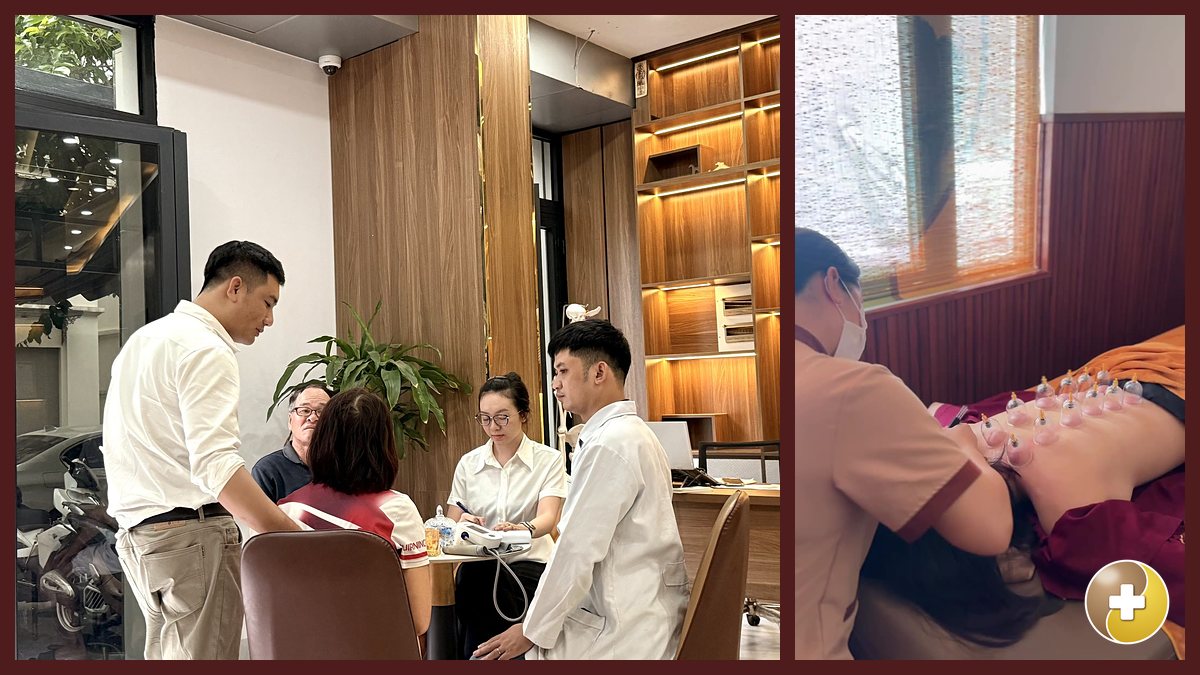
Quick answer: Tong Gia has no branch in Di An; the nearer ones are Vinhomes Grand Park (District 9) and 225 Dương Thị Mười (District 12), Ho Chi Minh City, each roughly 12–18 km away. The neck is read, and a warm herbal wash is combined with release of the nape and shoulders; 60 minutes 250,000 VND (about 10 USD).
Want Lương Y Tống Văn Huynh’s team to read your spine and posture in person?
Herbal hair wash near Di An: who looks for it, and is it worth the trip?
A Vietnamese herbal hair wash (gội đầu dưỡng sinh) uses warm water infused with herbs, combined with massage of the scalp, the back of the neck and the shoulders. Unlike bending over a basin at home or a quick salon wash, you do not bend your neck, and the session focuses on softening muscles. In Western terms the lighter head afterwards comes from three things: the neck stops holding up a head of about 4–5 kg; the scalp is full of sensory nerve endings, so slow, even strokes move the body into rest mode; and the thin muscle sheet over the skull, linking the forehead and the back of the head, softens. No shampoo "detoxes" the body through the scalp; filtering waste is the job of the liver and kidneys.
Di An, formerly part of Binh Duong province and now part of Ho Chi Minh City, is home to large industrial parks such as Song Than, the Di An railway station and the National University village on the Dong Hoa side. So the people searching for an herbal hair wash here are very different from inner-city residents. Many are factory workers who stand on production lines, sew or pack for eight to twelve hours a shift, then wash quickly in a hot rented room and go to sleep. Others are students in the university dormitories, studying late over laptops. There are workshop managers and line leaders, including foreign managers at factories in the area, under pressure from orders and short on sleep. And there are families around Di An station and Dong Hoa who want a weekend break.
Tong Gia Acupoint Wellness (Huyệt Đạo Tống Gia) has no branch in Di An. To be straightforward: from Di An to the District 9 – Vinhomes Grand Park branch or the District 12 branch at 225 Dương Thị Mười is roughly 12–18 km depending on where you live, and at rush hour it can take more than 30 minutes, so it is not a quick stop. Why people still make the trip: a Tong Gia wash is not just about clean hair; the neck is read and released following the Tong Gia curriculum, and line workers who want care for the back as well can mention it when booking; the time needed depends on your condition, and the practitioner advises when you book.
| Group in Di An | Why they book a hair wash | Why (Western view) |
|---|---|---|
| Workers at Song Than and other industrial parks | Heavy head, stiff nape, tired back after shifts | Standing on the line, looking down at products for hours; night shifts disturb sleep |
| Sewing and packing staff | Tired nape and shoulders, numb hands | Constant head-down work, repetitive hand movements, low stools |
| University village students | Tight head at exam time, little sleep | Laptops, late nights, irregular meals |
| Workshop managers, line leaders | Pain at both sides of the head, poor sleep | Order pressure, walking hot, noisy floors |
| Families near Di An station and Dong Hoa | Weekend unwinding | A tense week; a few hours of real rest |
Common causes of a heavy head and stiff neck in Di An
- Standing on the line and looking down: with the head tipped forward for hours the muscles at the back of the neck stay stretched; long standing tires the lower back, and the whole chain of back muscles stiffens.
- Night and rotating shifts: daytime sleep in a hot, noisy room is shallow, so the head stays heavy.
- Hot, stuffy rented rooms: lots of sweat, a greasy, itchy scalp, and a fan blowing on the head during sleep.
- Laptops at exam time: students sit on beds or at low desks with their heads bent for hours.
- Truck-heavy commutes: roads around the industrial parks are crowded and dusty at shift change; helmets and raised shoulders all the way.
- Order pressure: according to the Tong Gia curriculum, prolonged mental pressure can tighten the whole forehead-to-back-of-head muscle and the shoulder-lifting muscles, so neck fatigue spreads into the head.
- Washing late after a shift and sleeping with damp hair: a heavy head and cold neck the next morning.
In Eastern medicine, the Tong Gia curriculum says the Spleen governs the muscles and limbs: when it is weak, the arms and legs feel tired and the muscles slack, which many manual workers eating at irregular shift times describe. The Kidney governs the bones, produces marrow that feeds the brain and "shows in the hair": people who stay up late and overwork often mention tired lower back and knees, dry, shedding hair and a heavy head. These are functional ideas of traditional medicine used to guide care, not a statement that your spleen or kidneys are ill.
Other signs to watch
- A heavy back of the head, a stiff nape, catching when you turn.
- Lower back and calf fatigue after a standing shift.
- Numb, tired hands after sewing or packing.
- A scalp that gets greasy fast, itches or flakes.
- Pain at both temples and trouble sleeping after a high-pressure day.
- Shallow daytime sleep after night shifts, still tired on waking.
These signs help the practitioner decide whether to start with the skull base, shoulders, back or scalp. They are not used to name a disease.
When to see a doctor
An herbal hair wash is relaxation care. Please see a doctor at a medical facility first, and do not use a wash or massage instead, if you have:
- A sudden, severe headache unlike any before, with vomiting, high fever or a stiff neck: call 115 or go to the emergency room.
- Weakness or numbness on one side, a drooping face, slurred speech or sudden blurred vision: call 115.
- Chest pain or tightness, shortness of breath or cold sweats during or after the wash: call 115.
- Lasting hand numbness, weak grip, dropping things, numbness running into the fingers; or back pain spreading down the leg with numbness: get your spine checked.
- A headache after a knock at work, with nausea or drowsiness: go to emergency care.
- Headaches that get steadily worse over weeks or wake you at night.
- A widespread itchy scalp with pus spots or patchy hair loss: see a dermatologist.
- Lasting fatigue, weight loss, pale skin and heavy hair loss: get checked at a medical facility in parallel.
If you are pregnant, have heart disease or high blood pressure, or recently had head or neck surgery, tell us beforehand so water temperature and pressure can be adjusted. This is a wellness service, not medical care.
The Y Tướng Học view: what the head, forehead and scalp show
What Tong Gia adds to an ordinary herbal wash is Y Tướng Học (face reading for wellness): "the signs show outside, the organs lie inside". According to the Tong Gia curriculum, practitioners notice features like these, often seen in guests from Di An:
- A flat back of the head (seen in profile the head looks thin): weak Kidney qi and Kidney yang, with a tendency to low back and knee fatigue, feeling cold, light sleep and early joint ageing. Common in people who have stood on lines for years; keep the nape and back warm after washing.
- A "bare bone" head with very thin scalp tight on the skull: leaning towards Liver and Kidney yin deficiency, with tight, knotted tendons and headaches from deep tension in the scalp muscles and neck. Slow, light strokes only.
- A tilted head: often with a shifted spinal axis and uneven muscles on both sides; people who repeat one movement to one side get both sides of the nape read carefully.
- A forward forehead with a narrow back of the head: "strong in front, weak behind", prone to nervous exhaustion, dream-disturbed sleep, ringing ears and breathlessness when overworking; common in students at exam time.
- A prominent forehead: qi and blood crowd upward, the nerves stay tense, with one-sided headaches; the curriculum adds that long-standing Liver qi stagnation can affect the Stomach, so managers often have headaches together with stomach pain under stress.
This is school-based reference knowledge to choose which areas to focus on, then checked by hand on the spine. It does not replace a medical check and is never used to judge a guest.
Spine segments and nerve-reflex zones involved
According to the Tong Gia curriculum, the neck vertebrae C1–C7 relate to the head, face, neck and arms, with nerve roots exiting between the vertebrae. The nerve and mind group (long-running headaches, poor sleep, tension) is worked through C1–C7, the upper back D1–D3 and the sacral zone; the muscle and joint group (tired neck, numb limbs) combines C5–C7, the lumbar spine L1–L5 and S1–S5. That is why line workers often need both the nape and the lower back, not just the scalp.
| Segment | Nerves and function | What Di An guests feel | Related organ (Eastern view) |
|---|---|---|---|
| C1–C3 | Head, skull-base muscles | Heavy head after a shift or a night of study | Kidney, Liver |
| C3–C5 | Neck, upper trapezius | Stiff nape from looking down at the line or a laptop | Liver |
| C5–C7 | Shoulders, arms, hands | Tired shoulders, numb hands after sewing or packing | Liver, Spleen |
| L1–L5, S1–S5 | Lower back, legs | Tired lower back and legs after standing shifts | Kidney |
| C1–C7, D1–D3, sacral zone | Nerve and mind group | Poor sleep after night shifts, order pressure | Heart, Kidney |
The table says "related" only to guide care; it is not used to name a disease.
The Tong Gia method: a hair wash guided by spinal nerve-reflex balancing
Tong Gia was founded by Lương Y Tống Văn Huynh, a master of traditional Vietnamese wellness with over 13 years in Eastern-medicine wellness care, Y Tướng Học and spinal nerve-reflex balancing massage. The wash follows the same idea of reading the body and choosing the right areas. It includes the main parts below, adjusted by the practitioner to each guest.
- Observation: standing and sitting posture, head tilt, which shoulder is higher, complexion, head shape, scalp and hair; questions about shifts, sleep and repetitive tasks.
- Reading the spine by hand: according to the Tong Gia curriculum, the hands read skin temperature, the muscle layer, the shape of each vertebra and sensation, comparing both sides. Work focuses on "excited" zones (warmer skin, tight muscle, more tenderness) and does not press directly on "inhibited" ones.
- Muscle release at the nape and shoulders: the skull base, upper trapezius and shoulder-lifting muscles are softened. If you also want lower back care, mention it when booking; the time needed depends on your condition, and the practitioner advises when you book.
- Warm herbal wash: an herbal wash combined with release of the nape and shoulders; slow, even scalp strokes and rhythmic acupressure on the head. The curriculum notes the Bách hội point on the crown is used to clear the mind and calm the spirit in traditional medicine.
- Self-care tips: changing position during shifts, neck and shoulder stretches on breaks, wash times, drying hair and daytime sleep after night shifts.
A typical session
A typical session: a line worker from an industrial park near Di An station books a Sunday morning after a week of night shifts. She has a heavy head, a stiff nape, a tired lower back and an itchy scalp from her hot room. The practitioner sees the head pushed forward, slightly raised shoulders and a flat back of the head; on the spine, C1–C3 and C5–C7 feel warm and thick, and both sides of L4–L5 are tight. The session combines a warm herbal wash with release of the nape and shoulders and slow scalp strokes; because she had mentioned when booking that she wanted lower back care too, the practitioner also worked that area. She falls asleep during the session. At the end she is advised to tuck her chin, roll her shoulders and shift her weight between feet on breaks, and to sleep in a darkened room without a fan on her head.
Matching services and prices
- Hair wash with neck and shoulder massage, 60 minutes: 250,000 VND (about 10 USD), for a heavy head and stiff nape after standing or sewing shifts.
- Extra 30 minutes of area massage: 199,000 VND (about 8 USD). Line workers who want care for both the neck and the back should mention it when booking; the time needed depends on your condition, and the practitioner advises when you book.
- Gội đầu trược khí hair wash, 45 minutes: 150,000 VND (about 6 USD), a shorter, lighter wash that suits students.
See the full price list. Read more: massage for Hi-Tech Park workers in Thu Duc, District 12 massage for hard-working bodies, herbal hair wash in Ho Chi Minh City: Q&A and the main page Vietnamese head spa.
What guests feel during and after
Tender spots are usually just below the back of the skull, between the shoulder blades and in the lower back if you add it. As the nape softens, many people feel the head lighten and breathing slow, and many fall asleep. Afterwards the scalp feels fresh, the neck turns more easily and the next sleep tends to be deeper. Experiences differ; Tong Gia helps the body relax and find its balance again and does not promise that headaches or hair loss will disappear.
Want Lương Y Tống Văn Huynh’s team to read your spine and posture in person?
From Di An: which branch, and when to go
Both branches are roughly 12–18 km from Di An depending on where you live; this is an estimate along main roads, so check live travel time on Google Maps at the hour you plan to leave. If it is over 30 minutes, choose a day off and combine errands in one trip.
- Dong Hoa and the university village: usually easier to reach the Vinhomes Grand Park branch (open 9:00–20:00), heading along the Hanoi Highway towards Suoi Tien and into Vinhomes Grand Park.
- Di An station, central Di An and Song Than industrial park: you can go to the District 12 branch (open 8:00–19:00) along Highway 1A towards District 12 and on to Dương Thị Mười, or to District 9; compare both routes on Google Maps at that hour.
- Times to avoid: industrial park shift changes and the 6:30–8:00 and 16:30–18:30 peaks, when roads fill with trucks and worker buses.
Workers usually choose Sunday morning or a day off after a week of nights. University students often come in groups at weekends after exams. Managers can stop at District 9 in the evening since it is open until 20:00. Message which branch you plan to visit and how many people are coming so time can be held.
Self-care at home and prevention
- Take 1–2 minute breaks during shifts: tuck the chin gently ten times, roll the shoulders, shift your weight, stretch your back.
- Wash early and dry before bed: never sleep with damp hair or with a fan blowing on your head.
- Keep your room airy: open the window when you can and point the fan at the wall or your feet.
- Sleep in a darkened room after night shifts: curtains or an eye mask, and less phone time before sleep.
- Massage the scalp 3–5 minutes each evening: fingertips from the front hairline over the crown to the nape, lightly.
Booking
- Vinhomes Grand Park branch (easier from Dong Hoa and the university village): Căn T16-21 khu Manhattan, Vinhomes Grand Park, Phường Long Bình, TP. Thủ Đức (unit T16-21, Manhattan block, Thu Duc City). Open 9:00–20:00 daily.
- District 12 branch: 225 Dương Thị Mười, Phường Tân Chánh Hiệp (Tan Chanh Hiep Ward, District 12). Open 8:00–19:00 daily.
Book online or call, Zalo or WhatsApp +84 888 264 559. Tell us which part of Di An you come from, which branch you prefer, whether you want a relaxing wash or a wash plus back work, how many people and your planned time. Real reviews are on Google Maps via each branch page. The method was developed by Lương Y Tống Văn Huynh, founder of Tong Gia, and visitors to Ho Chi Minh City are welcome to experience this Vietnamese Eastern-medicine approach.
Visit us
- Đông Y Huyệt Đạo Tống Gia Quận 12 (District 12)
225 Dương Thị Mười, Phường Tân Chánh Hiệp, Quận 12, HCMC · 8:00–19:00 daily · 0888 264 559 · Directions on Google Maps - Đông Y Huyệt Đạo Tống Gia Quận 9 (Vinhomes Grand Park, District 9)
Căn T16-21 khu Manhattan, Vinhomes Grand Park, Phường Long Bình, TP. Thủ Đức, HCMC · 9:00–20:00 daily · 0888 264 559 · Directions on Google Maps
Want Lương Y Tống Văn Huynh’s team to read your spine and posture in person?
FAQ
Where can I get an herbal hair wash near Di An? Tong Gia has no branch in Di An. The two nearer branches are Vinhomes Grand Park (District 9) and 225 Dương Thị Mười (District 12), each roughly 12–18 km away; Dong Hoa and the university village usually find District 9 easier.
Is it worth the trip from Di An? It is roughly 12–18 km and can take over 30 minutes at rush hour, so it is not a quick stop. People still come because the wash includes reading and releasing the neck; if you also want back care, mention it when booking so the practitioner can advise on timing.
How much is a hair wash? Hair wash with neck and shoulder massage, 60 minutes: 250,000 VND (about 10 USD); gội đầu trược khí, 45 minutes: 150,000 VND (about 6 USD); extra 30 minutes of area massage: 199,000 VND (about 8 USD).
I stand on a production line. What should I add? Line workers often feel both the nape and the lower back, so many choose the wash with neck and shoulder massage. If you want care for both areas, mention it when booking; the time needed depends on your condition, and the practitioner advises when you book. If back pain spreads down the leg or the leg goes numb, see a doctor first.
Will it help me sleep after night shifts? Many people sleep more deeply because the nape softens and breathing slows. It varies by person; if poor sleep lasts for weeks, get checked at a medical facility in parallel.
Can we come as a group? Yes, students and co-workers often book in groups at weekends. Message the number of people, the branch and your time so rooms can be arranged together.
Author: Lương Y Tống Văn Huynh – founder of Huyệt Đạo Tống Gia, a master of traditional Vietnamese wellness with over 13 years in Eastern wellness care, Y Tướng Học (face reading) and spinal nerve-reflex balancing massage.
Updated: 2026-11-16
Related guides
- What does acupressure do? Effects on muscles, nerves and the five organs, and how Tong Gia works in Ho Chi Minh City
- Acupressure in Thu Duc: pressure chosen by reading your spine, at the branch that suits your ward
- Sore after acupressure: is it normal? How to tell ordinary aching from warning signs, why it happens and how to look after yourself after a session in Ho Chi Minh City
- What are gua sha and cupping: two Vietnamese folk warming methods, the cupping points and when to skip them
- Unblocking the meridians (đả thông kinh lạc): what it really means, how a hands-on session works and what you will feel in Ho Chi Minh City
- Herbal compress: what the warmth really does, where it goes and who it suits
This is a wellness service, not medical care.