
Sore after acupressure: is it normal? How to tell ordinary aching from warning signs, why it happens and how to look after yourself after a session in Ho Chi Minh City
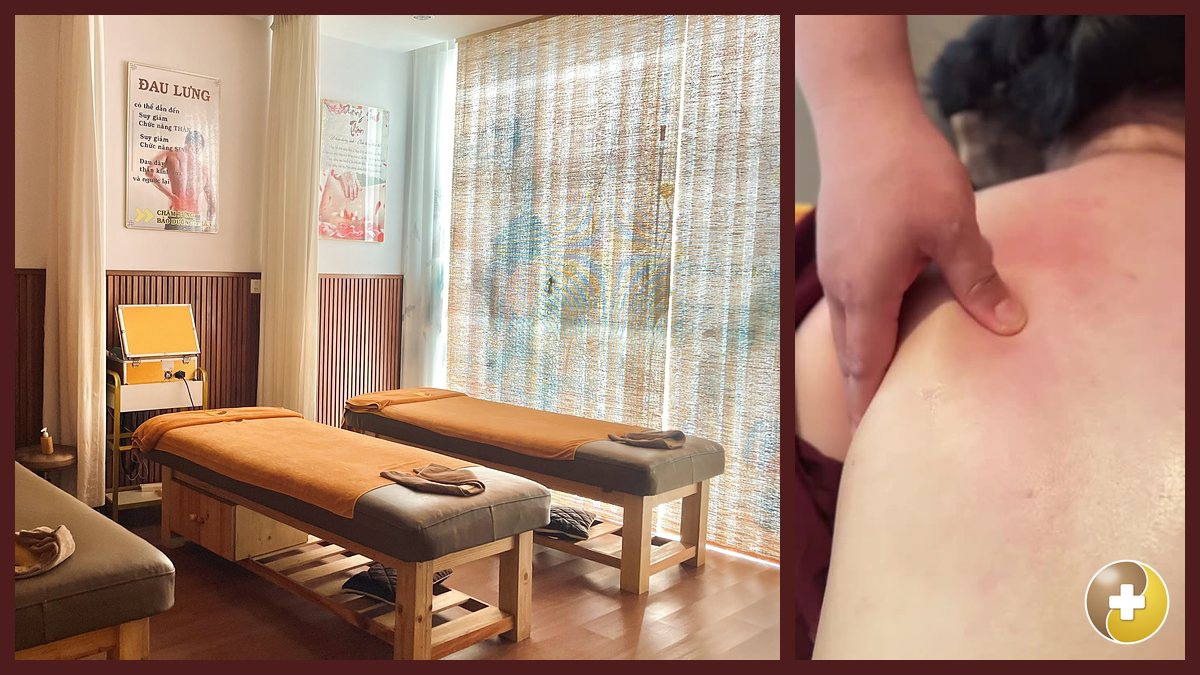
Quick answer: Feeling sore after acupressure is usually fine if it is a dull ache in the area that was worked and it fades over a day or two. Sharp pain that keeps growing, a hot swollen area, spreading bruises, numbness, weakness or lasting dizziness need a medical check. Tong Gia in Ho Chi Minh City builds pressure gradually to keep this to a minimum.
Want Lương Y Tống Văn Huynh’s team to read your spine and posture in person?
Why am I sore after acupressure, and is it a problem?
Plenty of people walk out of their first acupressure session feeling great, then notice the next morning that their shoulders, back or calves ache as if they had been to the gym. It is one of the most common questions we hear. The short answer: most of the time it is a normal muscle reaction, but a few kinds of pain are signals to stop and get checked.
The modern view: when hands knead, press and glide over muscle that has been tight for a long time, muscle fibres and connective tissue are stretched and compressed again and again. The muscle then needs time to adapt, much like the stiffness after a new workout; the area may feel warm, tender to touch and achy when you move. Tiny blood vessels under the skin can break if pressed too hard, or more easily in people on blood thinners, which leaves a bruise. That is why the same session leaves one person feeling light and another sore all day.
The Eastern view: tight muscle is usually where qi and blood have stagnated. As it releases and flow returns, an ache that turns warm and then light is the body adjusting itself. The Tong Gia manual calls the sensation it aims for a "wave of feeling": a good, rhythmic ache that lets the muscle contract and let go by itself. But the manual also marks the idea of "pressing hard to get the qi moving" as unsafe: more pain does not mean more benefit.
| Type of soreness | Where it usually is | Usually lasts | What to do |
|---|---|---|---|
| Dull ache, gym-like stiffness | The area that was worked: neck, shoulders, back, calves | Fades over 1–2 days | Stay warm, drink warm water, move gently |
| One point tender to press | A tight knot in the muscle | A few days, easing | Do not press it hard yourself; tell the practitioner next time |
| Small bruise, no swelling | Thin skin, people who bruise easily or take blood thinners | A few days to over a week | Watch it; mention it next time so pressure is reduced |
| Sharp, growing pain, hot red swelling | Anywhere | Not easing after 2–3 days | Get a medical check |
| Numbness, weakness, pain running down a limb | Neck, lower back | Any | Get a medical check soon |
"One to two days" describes what Tong Gia guests commonly report; it is not a fixed rule for everyone. For what acupressure feels like during a session, see our acupressure Q&A.
Common causes of soreness after a session
Soreness after acupressure usually comes from several things together:
- Muscle that has been tight for a long time: office and remote workers at a screen 8–10 hours a day, drivers, people on their feet all day. The tighter the muscle, the more it tends to ache the first time it is released.
- A first session: the muscle is not used to the pressure, like the first workout after a long break.
- Too much pressure or too long on one spot: especially when the area was not read first, or when a guest believes "it has to hurt to work" and does not speak up.
- Pressing zones that should not be pressed directly: the Tong Gia manual separates "excited" zones (warmer skin, tight muscle), which are worked, from "inhibited" zones (cooler skin), which are not pressed directly. Pressing hard on inhibited zones tends to leave people tired and sore.
- A body that is run down: poor sleep, hunger, dehydration, just over an illness; muscles recover more slowly.
- Bruising easily: people on blood thinners and older people with thin skin; the manual says to use light pressure only and avoid bruised areas.
- Do-it-yourself force: asking a friend to press as hard as they can, cracking your own neck, walking on someone's back. These are common sources of lasting soreness and even injury.
Other signs to notice after the session
- Common and not worrying: feeling warm, a little sleepy and thirsty; a pinkish area that fades; passing urine a bit more; sleeping deeply that night.
- A mild headache after neck and shoulder work: common in people with very tight muscles at the base of the skull; it usually settles with rest and warm water.
- Neck and shoulders sorer than before: if it is just an ache that eases in a day or two, the muscle is adapting; if it gets worse, you cannot turn your head or you feel tingling down the arm, get it checked.
- Bruises: small, flat and fading is common with thin skin; widespread bruising or bruises where nobody pressed need a check.
- Dizziness or nausea on sitting up: often from getting up too quickly or being hungry; sit for a moment and sip warm water. If it lasts or keeps returning, get checked.
When to see a doctor
Call 115 (the emergency number in Vietnam) straight away for chest pain or tightness, shortness of breath or cold sweats, or a drooping face, slurred speech or sudden one-sided weakness, whether or not you have just had a massage.
Please see a doctor if, after a session, you have:
- Sharp pain, pain that keeps growing, or pain that has not eased after 2–3 days.
- A clearly swollen, hot or red area; fever.
- Numbness or weakness in an arm or leg, pain running down a limb, difficulty passing urine.
- A severe headache unlike your usual ones, lasting dizziness or blurred vision.
- Widespread bruising, bleeding gums, or bruises in places that were not pressed.
- Exhaustion, pale skin, dizziness (signs that can look like anaemia) or unexplained weight loss: get checked in parallel with any wellness care.
Before any acupressure, mention pregnancy, heart conditions, a stent or pacemaker, blood thinners, kidney disease, high blood pressure, osteoporosis or recent surgery. The Tong Gia manual requires practitioners to ask about history, work gently and follow your doctor's advice. This is a wellness service, not medical care.
The Y Tướng Học view: who gets sore, who needs a lighter touch
Following the principle "the outer form reflects the inner organs", looking before touching helps the practitioner choose the right pressure for the right person. The Tong Gia manual describes:
- Firm muscle that has turned hard as wood, dry and tender: a tendency towards qi stagnation and blood stasis with constrained Liver qi; deep, long-term spasm, especially in the trapezius and the long back muscles along the Bladder channel. These people often feel sore the first time their muscles are released, so the practitioner spreads the work over sessions rather than doing it all at once.
- The narrow "Mục" face (long, thin, bony): weak qi and blood, with a thin, slack layer of muscle along the spine and vertebrae that tend to sit deep. The manual prescribes gentle "tonifying" techniques (vibration, light gliding). Hard pressure here easily leaves the person tired and sore.
- Soft muscle that has become slack and cool, slow to spring back: a tendency towards a cold, weak Spleen and Stomach; warmth and light pressure suit better.
- Skin that bruises easily: Eastern theory links this to the Spleen's role in holding blood in the vessels; light pressure, and a health check if bruising is unusual.
- Very pale or sallow skin, dizziness, breathlessness: linked in the manual to weak Heart and Spleen; short, gentle work and a parallel health check.
This is school-based reference knowledge for choosing pressure and technique, not a way to name illness or judge character. More in our face reading Q&A.
Vertebrae and nerve-reflex zones
Post-session soreness often sits over the spinal segments where the muscles on both sides are tightest. The Tong Gia manual explains that nerve roots leave the spine between the vertebrae; the neck (C1–C7) serves the head, face, neck and arms, the thoracic spine (T1–T12) relates to circulation, breathing and digestion, the lumbar spine (L1–L5) to the kidneys, urinary function and legs.
| Vertebrae | Nerves and function | Common soreness afterwards | Organ system |
|---|---|---|---|
| C1–C3 | Head, base of the skull | Sore back of neck, heavy head for a few hours | Liver, Kidney |
| C5–C7 | Shoulders, arms | Sore shoulders and shoulder blades | Lung |
| T3–T5 | Breathing, circulation | Ache between the shoulder blades | Lung, Heart |
| T7–T9 | Digestion, liver and gallbladder | Ache along the mid-back muscle | Liver, Gallbladder |
| T11–T12 | Digestion | Ache in the lower thoracic muscles | Spleen, Stomach |
| L1–L5, S1 | Kidneys, urinary, legs | Sore lower back, buttocks, back of knees | Kidney |
Aching exactly where you were worked, easing day by day, is common. Pain running down an arm or leg with numbness or weakness suggests a nerve root is involved and needs a medical check.
The Tong Gia method: spinal nerve-reflex balancing
At Tong Gia Acupoint Wellness (Huyệt Đạo Tống Gia), "more pain" is never the goal. The method, a Vietnamese Eastern wellness approach built by the founder, Lương Y (master of traditional Vietnamese wellness) Tống Văn Huynh, with over 13 years in Eastern wellness, Y Tướng Học and spinal nerve-reflex balancing, keeps the school's "three nos", including no rough force. The manual's rules that keep soreness down:
- Look and ask first: face reading and history (blood thinners, heart conditions, pregnancy) to choose pressure and areas to avoid.
- Read the spine by hand: skin temperature, muscle layer, vertebra shape, tender points. Excited zones are worked; inhibited zones are not pressed directly.
- Five levels of pressure: one finger, the whole hand, bent arm, straight arm, full body weight; always light to firm, never firm straight away.
- A wave of feeling: a good, rhythmic ache, watching your reactions; if you say it is too much, pressure drops at once.
- Stop at the right time, watch the temperature: work on a point ends when the skin turns from dry to slightly moist; any unusual reaction means stopping.
- Finish with warmth and aftercare advice.
Services that suit people who fear pain or have been very sore before (single-session prices, see all prices):
- Neck-shoulder or lower-back care 60 minutes: 550,000 VND (about 21 USD), first visit 399,000 VND (about 15 USD), one area with pressure built up step by step.
- Eastern massage 60 minutes: 450,000 VND (about 17 USD), gentle for a first visit.
- Herbal compress: 130,000 VND (about 5 USD), added at the end to keep the released area warm.
A typical session
A common case at the Vinhomes Grand Park branch: a woman in her thirties working from home says that after acupressure elsewhere her shoulder blades ached for three days and she had bruises, so this time she is nervous. The practitioner first checks: no blood thinners, not pregnant. She notes a long, thin face and narrow shoulders; the muscles along the spine are thin, T3–T5 slightly warm, the lower back cool. The 60-minute neck-shoulder session starts with warming strokes and light vibration, and only then works gradually into the neck and between the shoulder blades, checking in every time pressure goes up. A warm herbal compress goes on the shoulders at the end. She is told to drink warm water that evening, avoid sitting under the air-conditioner and roll her shoulders gently if they ache.
What you feel during and after
During: a moderate ache on the tight points, then warmth, with the shoulders feeling as if they "open"; many people are surprised it hurts less than they feared. After: lighter, shoulders lower; a mild ache in the worked area for a day or two that then settles. Everyone differs; we do not promise pain will disappear, we help the body rebalance and adjust pressure in later sessions based on what you tell us. Read guests' views in acupressure, experience and neck and shoulder massage Q&A.
Want Lương Y Tống Văn Huynh’s team to read your spine and posture in person?
Aftercare at home and prevention
- Drink warm water and rest gently: avoid sitting straight under the air-conditioner or taking a cold shower right after.
- A warm compress for aching: a warm towel on the sore area for 10–15 minutes. If there is a fresh bruise or slight swelling, use a cool compress on the first day instead of heat.
- Move lightly: roll the shoulders, tilt the neck slowly, walk for a few minutes; gently moving muscle settles faster than lying still.
- Do not press the sore spot hard yourself to "break it up", do not crack your neck, do not ask someone to pound it.
- Tell the practitioner next time: where it stayed sore, whether you bruised, so pressure and technique can change; space sessions further apart if needed.
Prevention: sleep well, eat lightly about an hour before (not too hungry, not too full), share your full health history and say "lighter, please" whenever it is too much.
How to book
Tong Gia has two branches in Ho Chi Minh City, open every day, with real customer reviews on each branch's Google Maps profile:
- District 12: 225 Dương Thị Mười, Phường Tân Chánh Hiệp (Tan Chanh Hiep Ward, District 12). Open 8:00–19:00 daily.
- District 9 – Vinhomes Grand Park: Căn T16-21 khu Manhattan, Vinhomes Grand Park, Phường Long Bình, TP. Thủ Đức (unit T16-21, Manhattan zone, Long Binh Ward, Thu Duc City). Open 9:00–20:00 daily.
Call, Zalo or WhatsApp +84 888 264 559, or book online. If you have been very sore after acupressure before, say so when you book so the practitioner can plan a gentler session; visitors to Ho Chi Minh City are welcome to try this Vietnamese Eastern wellness method.
Visit us
- Đông Y Huyệt Đạo Tống Gia Quận 12 (District 12)
225 Dương Thị Mười, Phường Tân Chánh Hiệp, Quận 12, HCMC · 8:00–19:00 daily · 0888 264 559 · Directions on Google Maps - Đông Y Huyệt Đạo Tống Gia Quận 9 (Vinhomes Grand Park, District 9)
Căn T16-21 khu Manhattan, Vinhomes Grand Park, Phường Long Bình, TP. Thủ Đức, HCMC · 9:00–20:00 daily · 0888 264 559 · Directions on Google Maps
Want Lương Y Tống Văn Huynh’s team to read your spine and posture in person?
FAQ
Is it normal to be sore after acupressure? Usually yes, if it is a dull ache in the area that was worked and it fades over a day or two; the muscle is adapting after being released. Sharp pain that keeps growing, a hot swollen area, spreading bruises, numbness, weakness or lasting dizziness need a medical check.
How long does soreness after acupressure last? For most Tong Gia guests it eases over one to two days. People with long-standing tight muscles or on a first visit may take a little longer. If it has not eased after 2–3 days, or gets worse, get it checked.
Why do I ache after a massage? Usually because muscle that was tight for a long time has been stretched and compressed and needs time to adapt, like after a new workout. Too much pressure, too long on one spot, being tired or hungry, or bruising easily all make it more noticeable.
I have a headache after a neck massage. Is that a problem? It is common in people with very tight muscles at the base of the skull: a heavy head for a few hours that eases with rest and warm water. A severe headache unlike your usual ones, with vomiting, blurred vision or limb weakness, needs urgent medical attention.
Can acupressure cause harm? Done properly for the right person, the risk is low. Problems usually come from rough force, joint cracking, pressing inflamed areas, or not asking about pregnancy, heart conditions or blood thinners. That is why Tong Gia asks first and builds pressure from light to firm.
I bruised after acupressure. Should I worry? A small, flat bruise that fades is common with thin skin or blood thinners. Mention it next time so the practitioner uses lighter pressure and avoids the area. Widespread bruising or bruises where nobody pressed need a health check.
Author: Lương Y Tống Văn Huynh – founder of Huyệt Đạo Tống Gia, a master of traditional Vietnamese wellness with over 13 years in Eastern wellness care, Y Tướng Học (face reading) and spinal nerve-reflex balancing massage.
Updated: 2026-11-16
Related guides
- What does acupressure do? Effects on muscles, nerves and the five organs, and how Tong Gia works in Ho Chi Minh City
- Acupressure in Thu Duc: pressure chosen by reading your spine, at the branch that suits your ward
- Sore after acupressure: is it normal? How to tell ordinary aching from warning signs, why it happens and how to look after yourself after a session in Ho Chi Minh City
- What are gua sha and cupping: two Vietnamese folk warming methods, the cupping points and when to skip them
- Unblocking the meridians (đả thông kinh lạc): what it really means, how a hands-on session works and what you will feel in Ho Chi Minh City
- Herbal compress: what the warmth really does, where it goes and who it suits
This is a wellness service, not medical care.