
Acupressure in Thu Duc: pressure chosen by reading your spine, at the branch that suits your ward
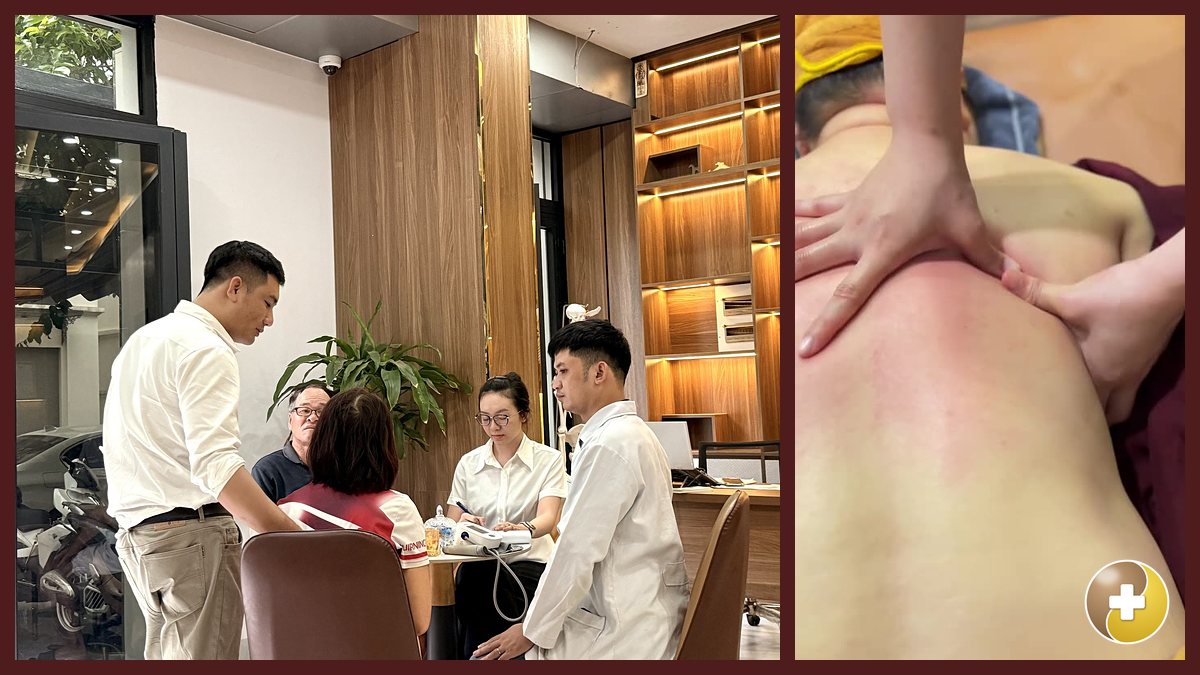
Quick answer: Tong Gia has no branch in the old Thu Duc core. From the University village or Linh Trung, the Vinhomes Grand Park branch is easier; from Linh Xuan or Tam Binh, the District 12 branch, both roughly 10–15 km away in Ho Chi Minh City. Every session reads the spine by hand before any pressure.
Want Lương Y Tống Văn Huynh’s team to read your spine and posture in person?
Acupressure in Thu Duc: what it is and why people here look for it
Acupressure means pressing, kneading and holding chosen points and zones of the body with the fingers and palms. In Western terms, rhythmic pressure on muscle and soft tissue helps tight muscle bundles let go, brings more blood flow to the area, stimulates sensory nerve endings under the skin and nudges the autonomic nervous system towards its resting mode. That is why many people feel a lighter head, slower breathing and easier sleep afterwards. Acupressure is not a medical procedure; it is hands-on wellness care that helps the body relax and find its balance again.
If you live or work in Thu Duc (the old Thu Duc district, now part of Thu Duc City), you have probably noticed that the people around you get tired in very specific ways. Lecturers, PhD candidates and students around the University village sit over theses and projects late into the night and get headaches and poor sleep in exam season. Shift workers and team leaders at Linh Trung Export Processing Zone stand on assembly lines or bend over workbenches, and come home with one shoulder heavier than the other. Market traders around Thu Duc market start at three or four in the morning, carry stock and squat to sell all day. Families in Hiep Binh Chanh and Hiep Binh Phuoc along Pham Van Dong often look for a place to take their elderly parents for easier sleep and less tired knees. A growing number of foreign lecturers, engineers and English teachers also live in the area.
What these groups share is that the discomfort rarely sits in one spot. The Tong Gia curriculum puts it simply: pain shows up in one place, but its source is often somewhere else. A headache may start with tight muscles at the base of the skull; poor sleep may come with a hot, tense upper back; tingling hands may relate to the lower neck. That is why a session at Tong Gia Acupoint Wellness (Huyệt Đạo Tống Gia) does not follow one fixed point chart for everyone: the spine is read first and the zones are chosen afterwards. See also our District 9 and Thu Duc page and the Thu Duc City massage Q&A.
| People in Thu Duc | Why they book acupressure | Zone usually read first |
|---|---|---|
| Lecturers and students, University village | Headache at the back of the head, poor sleep in exam season, tired eyes | Neck C1–C7, upper back D1–D3 |
| Shift workers, Linh Trung EPZ | One shoulder tired, light tingling in the arm, low back fatigue after a shift | Lower neck C5–C7, low back L1–L5 |
| Traders at Thu Duc market | Low back fatigue from lifting and squatting, short nights | Low back, sacral zone |
| Office workers on Vo Van Ngan, Kha Van Can | Stiff neck, heavy head in the evening, work stress | Neck, upper back |
| Older residents, Hiep Binh | Light sleep, tired knees, cold low back | Mid and low back |
Common causes: desks, shifts, roads and stress
- Hours of looking down: when the head drifts forward, the muscles at the back of the neck hold its weight all day. By evening the area under the skull is tight and the head feels heavy.
- Repetitive shift work: assembling, packing and checking parts makes one hand and one shoulder work non-stop, so one side becomes thicker and stiffer.
- Night shifts and broken sleep: rotating shifts, hot and noisy rented rooms and daytime sleep confuse the body clock; the nervous system struggles to switch off even when you are exhausted.
- Lifting and squatting: traders and delivery riders around the market bend and lift many times each morning, overloading the low back and buttock muscles.
- Long rides in heavy traffic: Pham Van Dong, National Road 1A, the Hanoi Highway and the Thu Duc intersection at rush hour make riders brace their shoulders and absorb vibration for a long time.
- Ongoing stress: thesis defences, exam weeks and month-end production targets make people raise their shoulders, clench their jaw and breathe shallowly without noticing.
- Age and air conditioning: older people lose muscle strength, sleep under the air conditioner and wake up stiff with a cold neck and back.
These factors feed each other: poor sleep stops muscles recovering, unrecovered muscles are stiffer the next day, and stiffness makes sleep worse. Acupressure in the right zones can loosen that loop at the muscle and nerve level, while habits need to change alongside it.
Other signs worth noting before you book
- Headache at the back of the head or the temples late in the afternoon.
- Trouble falling asleep, waking at night, still tired in the morning.
- Tingling or heaviness in the arm or a few fingers while working or riding.
- Tiredness spreading from the shoulders to between the shoulder blades.
- Low back fatigue and difficulty standing straight after bending or after a shift.
- Brief dizziness when standing up quickly.
- Bloating and poor appetite during stressful weeks.
Write down the two or three clearest signs, when they get worse and how long they have lasted, and send them when you book. The practitioner uses this to decide which zones to read first. If sleep is your main concern, see acupressure for sleep in Saigon.
When to see a doctor
Acupressure suits muscle tension and fatigue from posture, work and stress. Please see a doctor at a medical facility first, before any acupressure, if you have:
- Chest pain or tightness, shortness of breath, cold sweats, or pain spreading to the jaw or left arm: call 115 immediately.
- A sudden severe headache, slurred speech, a drooping face, or weakness or numbness on one side: call 115.
- Pain after a traffic accident, a fall or a blow.
- Numbness or weakness in the arms or legs that keeps getting worse, dropping things, unsteady walking, or bladder changes.
- Fever, a neck too stiff to bend, or a painful area that is swollen, hot and red.
- Long-lasting insomnia with low mood or strong anxiety, unexplained weight loss, fatigue and pallor: get checked at a medical facility in parallel.
- Pain that is worse at night and does not ease after several weeks of rest.
If you are pregnant, have heart disease or blood pressure problems, take blood thinners, or have a wound or skin condition on the back, tell us beforehand so the pressure can be adjusted or the area skipped. If you are under medical follow-up, keep following your doctor's advice. This is a wellness service, not medical care.
The Y Tướng Học view: reading the face to choose where to press
Y Tướng Học (face reading for wellness) rests on one idea: what is inside shows on the outside. According to the Tong Gia curriculum, before touching the back the practitioner looks at complexion, posture and face shape to guess which organ system is out of balance, then checks it by reading the spine by hand. For the needs most common in Thu Duc, the curriculum points to:
- The Heart (Tâm): shows on the tongue and complexion. When out of balance, the face looks pale or flushed, sleep is difficult and the heart may race. Worried, exam-stressed people often show this picture.
- The Liver (Can): shows in the eyes, nails and sinews. Signals are dry, tired eyes, irritability, a tense neck and cramps; a constrained Liver means shallow sleep. Screen and assembly-line work often brings tired eyes and a stiff neck together.
- The Spleen–Stomach (Tỳ Vị): shows in the mouth, lips and muscles. Pale lips, bloating, heaviness and tired limbs are common in people who eat quickly between shifts or late at night.
- The Kidneys (Thận): show in the ears, hair, bones and low back. Tired knees, a cold low back, ringing ears and forgetfulness are common in older people and long-time manual workers.
- The "Giáp" face (wide forehead, pointed chin): tends to be "full above, empty below": the C1–C2 area runs hot and over-active, bringing headaches, while the low back is often hollow and cool.
- The "Điền" face (square and full): rooted in the Spleen–Stomach, with thick back muscles that can tighten in a large patch around D11–D12.
This is traditional reference knowledge used to choose where to look first. It does not replace a medical check and is never used to judge a guest.
Spine segments and nerve-reflex zones involved
The Tong Gia curriculum divides the 33 vertebrae by the areas they relate to: the neck (C1–C7) to the head, face, neck and arms; the thoracic spine (D1–D12) to circulation, breathing and digestion; the lumbar spine (L1–L5) to digestion, kidneys, urinary and reproductive function and the legs; the sacrum and coccyx (S1–S5) to elimination and the pelvic floor. Nerve roots leave the spinal canal through the gaps between vertebrae, which is exactly where the fingers search when reading the spine. The curriculum also groups needs into four functional groups, each with its own spinal zones, so a session for poor sleep looks quite different from a session for a tired back after a shift.
| Segment / zone | Nerves and function | Typical signs in Thu Duc | Related organ (Eastern view) |
|---|---|---|---|
| C1–C7, D1–D3, sacral zone (nerve and mind group) | Head, neck, upper back; resting mode of the nervous system | Headaches, poor sleep in exam season or on night shifts | Heart, Liver |
| C5–C7, L1–L5, S1–S5 (muscle, bone and joint group) | Shoulders, arms, low back, legs | One tired shoulder, tingling hands, back fatigue from shifts and lifting | Liver, Kidneys |
| D1–D12, L1–L3 (internal organs and metabolism group) | Circulation, breathing, digestion | Bloating and poor appetite under stress, shallow breathing | Spleen–Stomach, Lungs |
| Low back | Lumbar area, legs | Cold low back and tired knees in older residents | Kidneys |
The table says "related" only, as a guide to where care is focused; it is not used to name any illness.
The Tong Gia method: spinal nerve-reflex balancing massage
This is a Vietnamese Eastern-medicine method built by Lương Y Tống Văn Huynh, a master of traditional Vietnamese wellness, over more than 13 years of practice in Eastern wellness, Y Tướng Học and spinal nerve-reflex balancing. Instead of pressing the same chart on everyone, each session follows a clear order: read, choose the zone, work, and stop at the right moment.
- Observation: how you sit, how far the head drifts forward, which shoulder is higher, complexion and face shape.
- Reading the spine by hand: the hand reads four objective factors from the curriculum, namely skin temperature, the cushion of muscle, the shape of each vertebra and the feeling of soreness or tingling under light probing, comparing left and right, above and below. Following the "active zone" principle, work focuses on warmer, tighter, more sensitive areas; quiet, cooler areas are not worked directly.
- Muscle release: softening the tight bundles found, from the neck and shoulder blades down the muscles beside the spine.
- Acupressure on the right zones: rhythmic waves of pleasant soreness, with pressure building through the curriculum's five levels (one finger, the whole hand, bent arm, straight arm, whole-body weight) as your body allows; when the skin at the working point turns from dry to slightly moist, that point is done.
- Self-care guidance: a few stretches, sitting, pillow and break habits that fit your job.
A typical session
A typical session with a PhD candidate living near the University village, ten hours a day at the computer before a thesis defence: headache at the back of the head, more than an hour to fall asleep, dry eyes. The head sits forward, the face is a little flushed in the evening, both shoulders are raised. Reading the spine, C1–C3 and D1–D3 feel warmer than the surrounding area, the muscle is thick and sore to light pressure, while the low back is cool and slightly hollow. The practitioner releases the base of the skull, the trapezius and shoulder blades, presses the neck and upper back in slow waves, works lightly over the sacral zone and does not push into the cool low back. Before leaving, the guest is shown how to dim the screen after 9 pm, stand up every hour and breathe slowly before bed.
Services and prices that fit
- Neck and shoulder or back care, 60 minutes: 550,000 VND (about 21 USD); first visit 399,000 VND (about 15 USD). 90 minutes: 750,000 VND (about 29 USD).
- Eastern massage: 60 minutes 450,000 VND (about 17 USD), 90 minutes 550,000 VND (about 21 USD), for full-body acupressure after stressful weeks.
- Head care, 60 minutes: 750,000 VND (about 29 USD), when headaches and sleep are the main concern.
Full price list on the prices page. Read more: massage for Hi-Tech Park workers in Thu Duc, acupressure massage in Saigon Q&A, a Thu Duc City massage experience and our acupressure massage page.
What guests feel during and after
The most sensitive spots are usually just below the skull, along the inner edge of the shoulder blades and on both sides of the low back. Pressure builds in waves rather than all at once. As these areas soften, many people notice their breathing slow down and their head clear; some fall asleep on the table. Afterwards the neck turns more easily and sleep often comes sooner; some feel a mild soreness for about a day, which is common after deep muscle release. Results vary from person to person; Tong Gia supports the body in relaxing and rebalancing, and does not promise that pain will disappear.
Want Lương Y Tống Văn Huynh’s team to read your spine and posture in person?
Which branch suits which part of Thu Duc?
Old Thu Duc stretches from Hiep Binh by the Saigon River to Linh Trung next to Suoi Tien, so one piece of advice does not fit everyone. The guide below uses the old ward names people still use; distances are rough estimates along main roads, so check Google Maps at the time you plan to travel.
- Linh Xuan, Linh Tay, Tam Binh, Tam Phu, Binh Chieu: take National Road 1A to District 12 and the branch at 225 Dương Thị Mười, roughly 10–15 km. It opens 8:00–19:00, which suits early mornings before a shift or late afternoons after one.
- Linh Trung (EPZ), Linh Chieu, Binh Tho, the University village: take the Hanoi Highway towards Suoi Tien and into Vinhomes Grand Park, roughly 10–15 km. It opens 9:00–20:00, handy after evening classes or work.
- Hiep Binh Chanh, Hiep Binh Phuoc: both branches are roughly 10–15 km via Pham Van Dong; compare the two routes on Google Maps, and consider a weekend visit with parents.
- Truong Tho, Linh Dong, around Thu Duc market: heading out via Kha Van Can or Vo Van Ngan to the Hanoi Highway, District 9 is usually simpler.
Ten to fifteen kilometres is not next door, especially at rush hour. Many Thu Duc residents still make the trip because the session is read from the spine and focused on the right zones rather than pressed evenly everywhere. To make the trip worthwhile, choose a 90-minute session or book two people from the same household together. If you run around Thu Duc, see also massage after running in Thu Duc.
Self-care at home and prevention
- Raise the screen to eye level: in a dorm or rented room a stack of books and a separate keyboard work fine.
- Take a short break every 45–60 minutes: stand, roll your shoulders and gently tuck your chin back ten times.
- Protect sleep on shift work: a dark, moderately cool room, the same sleep time after each shift, and less coffee in the second half of a shift.
- Lift with your knees: bend the knees, keep the back straight and hold loads close to the body.
- Keep the neck and back warm: do not let the air conditioner blow onto your neck; a warm compress for 10–15 minutes in the evening helps.
Booking
- District 9 – Vinhomes Grand Park branch (for the University village, Linh Trung, Binh Tho, Truong Tho): Căn T16-21 khu Manhattan, Vinhomes Grand Park, Phường Long Bình, TP. Thủ Đức (Unit T16-21, Manhattan block, Long Binh Ward, Thu Duc City). Open 9:00–20:00 daily.
- District 12 branch (for Linh Xuan, Tam Binh, Tam Phu, Binh Chieu): 225 Dương Thị Mười, Phường Tân Chánh Hiệp (Tan Chanh Hiep Ward, District 12). Open 8:00–19:00 daily.
Book online or call, Zalo or WhatsApp +84 888 264 559. Tell us which area feels tight, which ward you are in and your preferred time, and we will suggest the branch and hold a slot. You can read genuine reviews on Google Maps from each branch page. The method was built by Lương Y Tống Văn Huynh, founder of Tong Gia.
Visit us
- Đông Y Huyệt Đạo Tống Gia Quận 9 (Vinhomes Grand Park, District 9)
Căn T16-21 khu Manhattan, Vinhomes Grand Park, Phường Long Bình, TP. Thủ Đức, HCMC · 9:00–20:00 daily · 0888 264 559 · Directions on Google Maps
Want Lương Y Tống Văn Huynh’s team to read your spine and posture in person?
FAQ
Where can I get acupressure near Thu Duc? Tong Gia has no branch in the old Thu Duc core. From the University village, Linh Trung or Binh Tho, the Vinhomes Grand Park branch (District 9) is easier via the Hanoi Highway; from Linh Xuan, Tam Binh or Binh Chieu, the District 12 branch at 225 Dương Thị Mười via National Road 1A. Both are roughly 10–15 km.
How much is an acupressure massage in Thu Duc? Neck and shoulder or back care is 550,000 VND (about 21 USD) for 60 minutes, 399,000 VND (about 15 USD) on a first visit, and 750,000 VND for 90 minutes. Eastern massage is 450,000 VND for 60 minutes and 550,000 VND for 90 minutes; head care is 750,000 VND.
Does acupressure hurt? Some spots in tight muscle feel sore, but the curriculum's wave principle keeps the pressure rhythmic and pleasantly sore, building through five levels. Just say when it is too much and the practitioner will ease off.
Can acupressure help me sleep better? Many people fall asleep more easily after work on the neck, upper back and sacral zone, as muscles relax and the nervous system shifts towards rest. Results vary; long-lasting insomnia with anxiety or weight loss needs a medical check in parallel.
Can I bring my elderly parents from Hiep Binh for acupressure? Yes, but tell us beforehand about any heart condition, blood pressure problems or blood thinners so a lighter pressure is chosen. Older guests often suit a 60-minute session on a weekend with family; from Hiep Binh both branches are roughly 10–15 km.
How often should I get acupressure? It depends on how tired you are and on your work. People with long-standing tension often start with a few sessions close together and then space them out; posture and sleep habits remain the main part. The practitioner suggests a rhythm after reading your spine on the first visit.
Author: Lương Y Tống Văn Huynh – founder of Huyệt Đạo Tống Gia, a master of traditional Vietnamese wellness with over 13 years in Eastern wellness care, Y Tướng Học (face reading) and spinal nerve-reflex balancing massage.
Updated: 2026-11-16
Related guides
- What does acupressure do? Effects on muscles, nerves and the five organs, and how Tong Gia works in Ho Chi Minh City
- Acupressure in Thu Duc: pressure chosen by reading your spine, at the branch that suits your ward
- Sore after acupressure: is it normal? How to tell ordinary aching from warning signs, why it happens and how to look after yourself after a session in Ho Chi Minh City
- What are gua sha and cupping: two Vietnamese folk warming methods, the cupping points and when to skip them
- Unblocking the meridians (đả thông kinh lạc): what it really means, how a hands-on session works and what you will feel in Ho Chi Minh City
- Herbal compress: what the warmth really does, where it goes and who it suits
This is a wellness service, not medical care.