
Unblocking the meridians (đả thông kinh lạc): what it really means, how a hands-on session works and what you will feel in Ho Chi Minh City
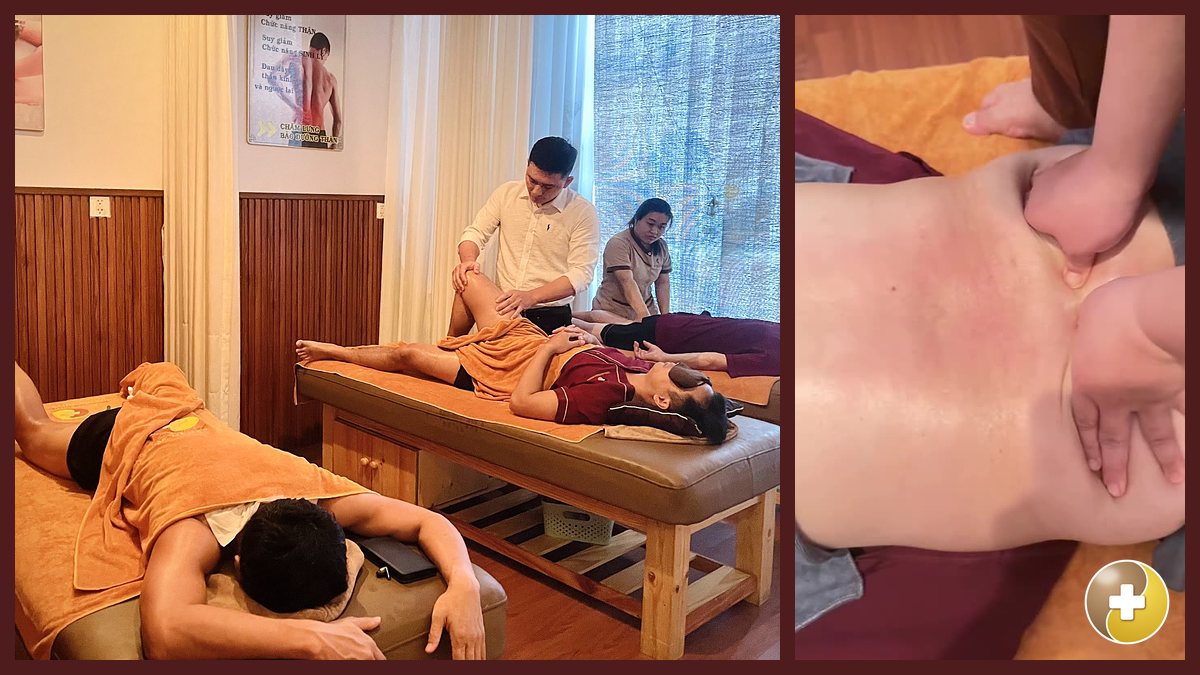
Quick answer: Unblocking the meridians (đả thông kinh lạc) means using the hands to release muscles and press acupoints along the channels so qi and blood flow freely again after long sitting, cold air or stress. In modern terms it softens tight muscle and improves soft-tissue circulation. Tong Gia offers it in District 12 and Vinhomes Grand Park, Ho Chi Minh City.
Want Lương Y Tống Văn Huynh’s team to read your spine and posture in person?
What does "unblocking the meridians" mean?
In Eastern wellness the body is crossed by a network of channels called meridians (kinh lạc in Vietnamese). The main channels run along the trunk and limbs; smaller branches link them to each other and to the skin. There are 12 main meridians, each named after an organ system (Lung, Large Intestine, Stomach, Spleen, Heart, Small Intestine, Bladder, Kidney, Pericardium, Triple Burner, Gallbladder, Liver), plus the Governing Vessel running up the middle of the back along the spine and the Conception Vessel down the front. Acupoints sit along these lines.
"Đả thông" literally means "to open up". When a channel is said to be blocked, Eastern wellness calls it stagnation of qi and blood: the area feels sore, heavy, stiff, colder or warmer than the skin around it. Unblocking the meridians by hand is a sequence of stroking, kneading, pressing and pushing along the channel and on its acupoints until the area softens, warms and feels lighter.
The modern view: no scan will show a tube called a meridian. What people feel as a "blocked channel" is usually muscle held tight for a long time, reduced blood supply to that muscle, and tender knots, combined with a nervous system stuck in "on" mode. When the hands soften the muscle, soft-tissue circulation improves and the body shifts towards rest (the parasympathetic side), so you feel warm, light and able to breathe deeper. The two explanations work together: the meridian map tells the practitioner where to work, knowledge of muscles, nerves and the spine keeps the work safe. For the background on the channels themselves, see our acupressure Q&A.
The Tong Gia training manual sums up the craft as "Open the meridians, strengthen body and mind", but it is equally clear about honest wording. A claim like "opening the meridians makes your liver healthy at once" is marked as overstated; the accurate version is that, in Eastern theory, opening the channels helps regulate qi and blood and supports symptom relief as part of overall wellbeing. Acupoints do not act directly on liver, kidney or lung cells.
| What you may hear | A more accurate view (Tong Gia manual) |
|---|---|
| One session and the pain is gone | Muscles soften and circulation improves, which can ease tension; results differ from person to person |
| Opening channels "detoxes" the liver | Massage relaxes muscle, improves soft-tissue circulation and lowers stress; the liver keeps working by its normal physiology |
| It must hurt a lot to work | Pressure builds from light to firm; a "good ache" is enough, rough force is avoided |
| Everyone gets the same routine | Each body has its own constitution and stagnant zones; observation and reading the spine come first |
Why do the meridians stagnate?
Channels do not block for no reason. Looking at daily life in Ho Chi Minh City, these causes come up again and again:
- Sitting in one position: office staff, engineers at the Saigon Hi-Tech Park and software teams in District 12 spend 8–10 hours over a screen. The neck, upper trapezius and long back muscles stay contracted, exactly where the Bladder and Gallbladder channels run.
- Air-conditioning and afternoon rain: Eastern wellness calls it invading cold, which slows qi and blood. The back of the neck, between the shoulder blades and the lower back usually stiffen first.
- Long-term stress: the manual describes how sustained pressure makes Liver qi stagnate, so muscles tighten and you find it hard to switch off. In modern terms, the sympathetic system stays on.
- Irregular meals and late nights: skipping breakfast, eating late, heavy food and alcohol strain the Spleen and Stomach, which Eastern theory sees as the source of qi and blood. Late nights steal the time when, according to the manual, blood returns to the Liver to be replenished.
- Long motorbike rides and physical work: riders, drivers and manual workers often feel it in the lower back and down the back of the legs, along the Bladder channel.
Signs that often come with stagnation
Because channels are long, stagnation tends to show along a line rather than at one point:
- Stiff neck and shoulders, ache at both temples, bitter taste in the morning: along the Gallbladder channel.
- Lower back ache spreading to the buttock and the back of the knee: along the Bladder channel. The old saying "for back pain, look to Weizhong" points to the acupoint in the middle of the knee crease.
- Tight tendons, cramps, irritability, fullness under the ribs: linked to the Liver channel.
- Palpitations, trouble falling asleep, tension on the inner arm: linked to the Heart and Pericardium channels.
- A patch of skin clearly colder or warmer than the rest, muscle that feels like a rope, a spot that is sharply tender.
These signs suggest where to work; they are not a way to name an illness. Numbness, weakness or pain that keeps getting worse needs a medical check, not just "a blocked channel".
When to see a doctor
Call 115 (the emergency number in Vietnam) straight away for chest pain or tightness, shortness of breath or cold sweats, or a drooping face, slurred speech or sudden weakness on one side.
Please see a doctor before booking if you have:
- Pain that has no clear cause, keeps worsening, is worse at night or does not ease with rest.
- Numbness or weakness in an arm or leg, dropping things, unsteady walking.
- A swollen, hot or red joint or muscle, or a recent fall or hard knock.
- Fever, especially with back pain or a severe headache.
- Exhaustion, pale skin, dizziness (signs that can look like anaemia) or unexplained weight loss: get checked in parallel with any wellness care.
If you are pregnant, have a heart condition or stent, take blood thinners, or have kidney disease or high blood pressure, tell us in advance so the practitioner can ask more and work gently, in line with your doctor's advice. Keep following your doctor's instructions for any condition you are being monitored for. This is a wellness service, not medical care.
The Y Tướng Học view: reading muscle tone and skin colour
Y Tướng Học (face reading for wellness) works from the principle "the outer form reflects the inner organs". For meridian work, the most useful part is reading the flesh and the skin, because that is what the hands are about to touch. According to the Tong Gia manual:
- Firm muscle that has turned hard as wood, dry and tender: a tendency towards qi stagnation and blood stasis with constrained Liver qi. High mental pressure keeps deep muscle in spasm, especially the trapezius and the long back muscles along the Bladder channel, with aching all over and tension headaches.
- Soft muscle that has become slack, cool and slow to spring back: a tendency towards a cold, weak Spleen and Stomach or fluid sitting in the tissue. This person needs warmth and a lighter touch, not hard pressure.
- Very pale or sallow skin: linked in the manual to weak Heart and Spleen, often with dizziness and breathlessness; the practitioner will suggest a health check as well.
- Dark patches on the cheekbones, dull complexion, darker lips: linked to stagnant Liver blood.
The ten face shapes also point to the part of the back to read first, for example the square "Điền" face often tightens around T11–T12, the "Thân" face around T7–T9. Face reading only gives a direction; the hands confirm it on the spine. It is a school-based reference, never a judgement of character. More on this in our face reading Q&A.
Vertebrae and nerve-reflex zones
This is where Eastern and modern views meet most clearly. The Tong Gia manual explains that the spinal cord sits in the spinal canal and nerve roots exit on both sides between vertebrae: the neck (C1–C7) serves the head, face, neck and arms; the thoracic spine (T1–T12) relates to circulation, breathing and digestion; the lumbar spine (L1–L5) to digestion, kidneys, urinary and reproductive function and the legs. The Bladder channel runs on both sides of the spine, carrying the "back-shu" points named after each organ system, right over the muscle where the nerve roots emerge.
| Vertebrae | Nerves and function | What stagnation feels like | Organ system, points |
|---|---|---|---|
| C1–C3 | Head, face, back of skull | Headache, stiff neck, light sleep | Kidney, Governing Vessel; Fengchi |
| C5–C7 | Shoulders, arms, hands | Tired shoulders, mild arm tingling | Lung; Dazhui, Jianjing |
| T3 | Breathing | Stiff upper back, shallow breath | Lung; Lung shu |
| T5 | Circulation | Fluttery chest, poor sleep | Heart; Heart shu |
| T7–T9 | Digestion, liver and gallbladder | Tension, fullness under the ribs | Liver, Gallbladder; Liver shu, Gallbladder shu |
| T11–T12 | Digestion | Bloating, poor appetite, thick stiff back muscle | Spleen, Stomach; Spleen shu, Stomach shu |
| L2–L5 | Kidneys, urinary, legs | Tired lower back and knees, cold feet | Kidney; Kidney shu, Weizhong |
The table shows links described in the manual, not conclusions about disease.
The Tong Gia method: spinal nerve-reflex balancing
At Tong Gia Acupoint Wellness (Huyệt Đạo Tống Gia), unblocking the meridians is part of a Vietnamese Eastern wellness method, spinal nerve-reflex balancing, built by the founder, Lương Y (master of traditional Vietnamese wellness) Tống Văn Huynh, with over 13 years in Eastern wellness, Y Tướng Học and spinal nerve-reflex balancing. The school follows "three nos": no chemicals or herbs injected or swallowed, no needles, no rough force. A session runs in order:
- Observation by Y Tướng Học: complexion, muscle tone, neck and shoulder posture, to choose which part of the back to read first.
- Reading the spine by hand: skin temperature, the muscle layer, the shape of each vertebra, and tender points. Warmer, tighter "excited" zones are worked; cooler "inhibited" zones are not pressed directly.
- Muscle release along the channels: pushing, rolling and gliding along the muscles beside the spine and across the shoulders, with five levels of pressure from one finger to full body weight, creating a wave of "good ache" so the muscle contracts and lets go by itself.
- Acupressure in the right zone: the back-shu points that match what was read, plus distant points on the same channel such as Weizhong for the lower back, Zusanli for a weak appetite, Taichong for stress. Work on a spot stops when the skin there turns from dry to slightly moist. No joint cracking.
- Self-care guidance for the organ system identified.
Suitable services (single-session prices, see all prices):
- Eastern massage 90 minutes: 550,000 VND (about 21 USD), covering back, neck, shoulders, arms and legs along the channels.
- Full-body care 120 minutes: 950,000 VND (about 37 USD), head to back to soles of the feet. See our 120-minute full-body Q&A.
- Neck-shoulder or lower-back care 60 minutes: 550,000 VND (about 21 USD), first visit 399,000 VND (about 15 USD), when the tension sits in one area.
A typical session
A common afternoon at the District 12 branch: an accountant at month-end, at her laptop until late, says she feels "tied up", her neck is stiff, her head heavy every afternoon and she struggles to fall asleep. The practitioner first checks: not pregnant, normal blood pressure. Her complexion is slightly dull, her jaw tight, and her shoulder muscle feels hard as wood. On the spine, the skin over C1–C3 and T7–T9 is warmer than around it, the mid-back muscle stands out like a rope, and the lower back is a little cool, so it only gets gentle warming. The 90-minute session works from the neck along the Gallbladder channel at the sides of the head, releases the mid-back, presses the Liver and Gallbladder shu points and Fengchi, then moves down to Taichong on the foot. She leaves with two tasks: roll the shoulders every hour and sleep before 11 pm.
What you feel during and after
During: a clear ache on the hard spots that turns into warmth spreading along the area; sometimes relief is felt somewhere quite different from the point being pressed, which is exactly how the channels connect the body. Many people breathe deeper and doze off. After: the body feels lighter, the head clearer, the shoulders lower; tight areas may feel mildly sore for a day or two. We do not promise that pain disappears after one session; the work only supports your body to rebalance. Read a guest's view in traditional Vietnamese massage, experience.
Want Lương Y Tống Văn Huynh’s team to read your spine and posture in person?
Self-care at home and prevention
- Change position every 45–60 minutes: stand, roll your shoulders, stretch your back.
- Press Zusanli: four finger-widths below the outer knee hollow, one finger-width outside the shin bone; 1–2 minutes each side, a mild ache is enough.
- Warm the lower back: rub your palms warm, place them either side of the lower back, rub up and down 50–100 times.
- Keep the neck and back warm under air-conditioning; soak your feet in water around 38–42°C for 15–20 minutes at night (diabetics, test the temperature carefully).
- Sleep before 11 pm, eat slowly, avoid late-night meals.
Do not crack your own neck or ask someone to press as hard as they can. If you are or may be pregnant, do not press Hegu or Sanyinjiao on yourself.
How to book
Tong Gia has two branches in Ho Chi Minh City, open every day, with real customer reviews on each branch's Google Maps profile:
- District 12: 225 Dương Thị Mười, Phường Tân Chánh Hiệp (Tan Chanh Hiep Ward, District 12). Open 8:00–19:00 daily.
- District 9 – Vinhomes Grand Park: Căn T16-21 khu Manhattan, Vinhomes Grand Park, Phường Long Bình, TP. Thủ Đức (unit T16-21, Manhattan zone, Long Binh Ward, Thu Duc City). Open 9:00–20:00 daily.
Call, Zalo or WhatsApp +84 888 264 559, or book online. If you are visiting Ho Chi Minh City, a session is a good way to try a Vietnamese Eastern wellness method; allow a few extra minutes on a first visit, and ask the practitioner to explain the channels as they work.
Visit us
- Đông Y Huyệt Đạo Tống Gia Quận 12 (District 12)
225 Dương Thị Mười, Phường Tân Chánh Hiệp, Quận 12, HCMC · 8:00–19:00 daily · 0888 264 559 · Directions on Google Maps - Đông Y Huyệt Đạo Tống Gia Quận 9 (Vinhomes Grand Park, District 9)
Căn T16-21 khu Manhattan, Vinhomes Grand Park, Phường Long Bình, TP. Thủ Đức, HCMC · 9:00–20:00 daily · 0888 264 559 · Directions on Google Maps
Want Lương Y Tống Văn Huynh’s team to read your spine and posture in person?
FAQ
What does unblocking the meridians mean? It means using the hands to stroke, knead and press along the channels and on acupoints so qi and blood flow freely again after a period of stagnation. In modern terms it softens tight muscle, improves soft-tissue circulation and helps the body shift into rest. No needles and no rough force are used.
Does unblocking the meridians hurt? Tight spots ache, but pressure builds from light to firm and a "good ache" is enough. Say so if it is too much and the practitioner eases off at once. Mild soreness for a day or two is common; pain that grows, swelling or numbness should be checked at a medical facility.
Does acupressure improve the flow of qi and blood? In Eastern theory, stimulating acupoints helps regulate qi and blood and supports symptom relief. In modern terms, pressing relaxes muscle and improves local circulation. It does not act directly on liver, kidney or heart cells.
How often should I have it done? It depends on your body and how tense you are. People who sit a lot often come once or twice a week at first, then less often as things ease. The practitioner suggests a rhythm after reading your spine; there is no pressure to buy a package.
What should I do after the session? Drink warm water, keep the neck and back warm, rest gently and avoid sitting under a cold air-conditioner straight away. Go to bed early that night. Light movement helps any mild soreness settle.
Who should not book this? Anyone with fever, a recent fall, a hot swollen area, or warning signs such as chest pain, breathlessness or one-sided weakness should get a medical check first. Pregnant women and people with heart conditions, blood thinners or high blood pressure must tell us in advance.
Author: Lương Y Tống Văn Huynh – founder of Huyệt Đạo Tống Gia, a master of traditional Vietnamese wellness with over 13 years in Eastern wellness care, Y Tướng Học (face reading) and spinal nerve-reflex balancing massage.
Updated: 2026-11-16
Related guides
- What does acupressure do? Effects on muscles, nerves and the five organs, and how Tong Gia works in Ho Chi Minh City
- Acupressure in Thu Duc: pressure chosen by reading your spine, at the branch that suits your ward
- Sore after acupressure: is it normal? How to tell ordinary aching from warning signs, why it happens and how to look after yourself after a session in Ho Chi Minh City
- What are gua sha and cupping: two Vietnamese folk warming methods, the cupping points and when to skip them
- Unblocking the meridians (đả thông kinh lạc): what it really means, how a hands-on session works and what you will feel in Ho Chi Minh City
- Herbal compress: what the warmth really does, where it goes and who it suits
This is a wellness service, not medical care.