
Tired neck and a numb, tingling head: common causes, stroke signs that need 115, and how Tong Gia helps
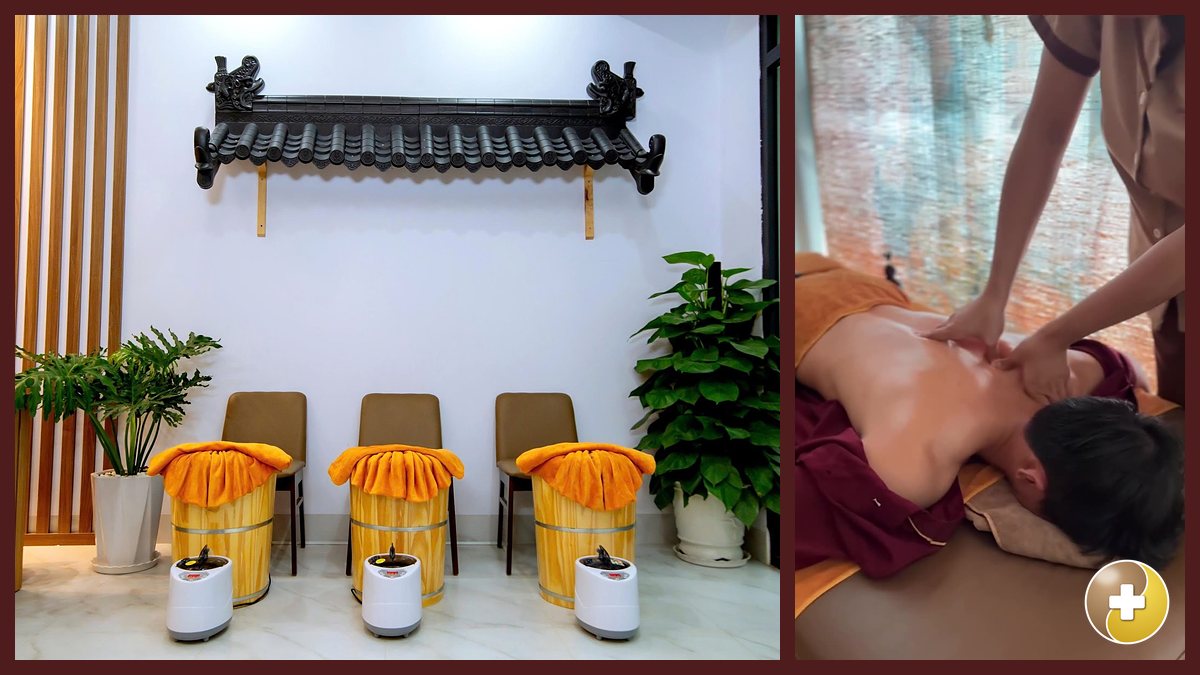
Quick answer: A tired neck with a numb or tingling scalp usually comes from tight muscles at the base of the skull irritating nerves, long hours looking down, a high pillow, neck wear or stress. One-sided face numbness, weak limbs or slurred speech means call 115. Tong Gia in Ho Chi Minh City releases the upper neck.
Want Lương Y Tống Văn Huynh’s team to read your spine and posture in person?
What is a tired neck with a numb head?
"Numb head" can mean pins and needles on the scalp, a crawling or buzzing feeling, or reduced sensation, often with a heavy head as if wearing a tight cap. With a tired neck, people describe it as "the back of my neck is stiff and the numbness climbs to the top of my head", "my scalp feels strange to touch", or "one side at the back of my head is numb". Some notice it after a long day at a computer, some on waking with a pillow that is too high, some when anxious and breathing fast.
In conventional medicine, a tired neck with scalp numbness is a sign, not a condition. Sensation at the back and top of the head comes from nerves that start in the upper neck and pass through the muscles at the base of the skull to reach the scalp. When those muscles stay tight for a long time, or the upper neck spine is irritated, the nerves are squeezed or irritated: numbness, tingling, sometimes sharp electric jolts from the nape to the crown. Mostly this is about muscles and posture, but sometimes head numbness is a dangerous nerve signal.
In Ho Chi Minh City, Tong Gia Acupoint Wellness (Huyệt Đạo Tống Gia) sees this in office workers, accountants, developers, students before exams, garment workers, drivers, people who wear a motorbike helmet for hours, people who tie their hair tightly and people under long stress.
Common causes: habits, work, posture and environment
From the conventional medical view, a tired neck with a numb head usually falls into seven groups. They help you compare, not label yourself.
1. Tight base-of-skull muscles irritating the occipital nerves
The group we see most. A forward head and long hours at a screen keep the small muscles under the skull and the nape working nonstop. Nerves passing through them get pinched, giving numbness, tingling, a heavy head and sometimes brief stabbing pain from the nape to the crown or behind the ear.
2. Posture and pillows
A high pillow, sleeping at a desk, propping the head on a bed frame to watch a phone: the neck is bent for hours and you wake tired, numb at the back of the head.
3. Stress, anxiety and fast breathing
Anxious people brace the neck, clench the jaw and breathe fast and shallow. Prolonged over-breathing can cause tingling in the head, around the lips and in the fingertips; together with tight neck muscles the head numbness becomes obvious.
4. The neck spine: wear and tear, discs
From middle age, discs and small joints in the neck wear; mornings are stiff, with numbness in the head or running into the shoulder and arm.
5. Outside pressure: helmets, tight hair, glasses, headphones
A tight helmet on long rides, a high tight ponytail, hair clips, glasses arms and over-ear headphones can all leave the scalp numb and tight. It usually eases once the pressure is removed.
6. Poor sleep, fatigue and some whole-body factors
Late nights, night shifts and long tiredness keep muscles from letting go. Long-lasting numbness can also relate to blood pressure, blood sugar or a lack of some B vitamins; those need tests at a medical facility.
7. Dangerous nerve signals
Head numbness with numbness of one side of the face or body, weak limbs, a drooping mouth, slurred speech or sudden blurred vision may be a stroke: call 115 at once. A burning, numb patch on one side of the scalp with blisters may be shingles. Numbness after a blow to the head needs a check too.
| Pattern | Likely group | Clues |
|---|---|---|
| Tingling at the back of the head with a tired nape by afternoon | Tight base-of-skull muscles | Pressing under the skull sends a buzz up |
| Electric jolts from nape to crown | Irritated occipital nerve | Scalp sensitive to touch |
| Numb on waking | High pillow, sleep posture | Eases after moving the neck |
| Tingling head, lips, fingers when anxious | Stress, fast breathing | Eases with slow breathing |
| Morning stiffness, numbness into the arm | Wear and tear, disc | Middle age and older |
| Numb scalp after a helmet or tight hair | Outside pressure | Eases when removed |
| One-sided face numbness, weakness, slurred speech | Possible stroke | Call 115 now |
Other signs to watch
- Where: back of the head, crown, one side or all over; does it spread to the face or arms?
- What it feels like: crawling, pins and needles, dullness or electric jolts.
- When: end of the day, on waking, under stress, after a helmet.
- Neck: tired nape, a stiff neck with a heavy head, hard to turn.
- Nerves: one-sided face or body numbness, weak limbs, drooping mouth, slurred speech, blurred vision, loss of balance.
- Whole body: high blood pressure or blood sugar, long fatigue, weight loss.
- Scalp: burning, redness, blisters.
When to see a doctor
- Sudden numbness of one side of the face or body, weak limbs, a drooping mouth, slurred speech or blurred vision: call 115 now and note the time it started.
- A sudden, severe headache, or one with fever, a stiff neck and vomiting: go to emergency.
- Neck or jaw pain with chest tightness, breathlessness, cold sweat: call 115.
- Numbness after a blow to the head, fall or accident.
- Numbness spreading to the arm, growing weakness, unsteady walking.
- A burning scalp with blisters on one side.
- Numbness lasting more than one to two weeks, returning, or with high blood pressure, high blood sugar or weight loss: get checked at a medical facility alongside any wellness care.
The Tong Gia curriculum also reminds practitioners that in older guests or people with underlying conditions, certain tilts of the face or tongue are warning signs of stroke risk and the guest must be sent for a medical check straight away. This is a wellness service, not medical care.
The Y Tướng Học view: Kidney essence, Liver sinews, the Governing Vessel
Y Tướng Học (face reading for wellness) says "what is inside shows outside". According to the Tong Gia curriculum, the base of the skull is where several organ systems speak up:
- The Kidney governs bones and marrow and feeds the brain: the brain is the "sea of marrow". The curriculum says weak Kidney essence leaves that sea empty: nervous exhaustion, headache, dizziness, ringing ears, and a tendency to spasm in the deep muscles under the skull with early wear of C1–C3.
- The Governing Vessel (the midline channel of the spine): the curriculum describes stagnation here as linked with balance problems, poor blood flow to the head and blurred vision when changing position.
- The Liver governs the sinews and stores blood: a weak Liver means stiff muscles, cramps and twitching; low Liver blood brings blurred vision, dizziness, dry eyes and brittle nails. Late nights leave the neck stiff and the head numb and heavy.
- Liver and Kidney yin deficiency: the curriculum describes people with a bony head and very thin scalp as having tight, knotted sinews, frequent aches and tension headaches from the deep layer of the whole scalp muscle and the neck.
- Heart and emotion: heavy worry strains Heart and Spleen; prolonged mental pressure tightens the scalp muscles and the shoulder lifters.
Things you can notice: a flat back of the skull, a sign of weak Kidney essence in the curriculum; a thin, hard-feeling scalp with little padding; thin ears, hair loss, forgetfulness, ringing ears; dry tired eyes, brittle nails and knitted brows; a broad forehead and pointed chin, the "Giáp" face, which the curriculum links with a warm, overactive upper neck (C1–C2) and balance-type headaches. These are clues for tailoring care, not a verdict on your health. See our face reading for wellness Q&A.
Spine segments and nerve-reflex areas involved
According to the Tong Gia curriculum, C1–C7 serve the head, face, neck and arms; nerve roots leave the spine through the gaps between vertebrae. The nerve and mind group (chronic headache, balance, insomnia, nervous exhaustion) works C1–C7 with D1–D3 and the sacrum; the muscle, bone and joint group (neck ache, tingling limbs) works C5–C7 with L1–L5 and S1–S5.
| Area | Role (curriculum) | Often felt as | Organ system |
|---|---|---|---|
| C1–C3, base of skull | Head, face; deep muscles under the skull | Numb back of head, heavy head, jolts to the crown | Kidney essence |
| C1–C2 | Upper neck easily warm, overactive | Numbness with dizziness, balance-type headache | Liver, Heart |
| C1–C7, D1–D3, sacrum | Nerve and mind group | Numb head under stress, insomnia | Liver qi, Heart |
| C5–C7 | Muscle, bone and joint group: tingling arms | Numbness into the shoulder and arm | Liver sinews |
| Spine midline | Flow of qi and blood to the head | Blurred vision on standing | Kidney, Governing Vessel |
How Tong Gia works: spinal nerve-reflex balancing massage
This is a Vietnamese Eastern wellness method built by Lương Y Tống Văn Huynh, master of traditional Vietnamese wellness and founder of Tong Gia, with over 13 years in Eastern wellness, Y Tướng Học and spinal nerve-reflex balancing.
- Observe and ask: where, since when, spreading to the face or arm, any weakness, slurred speech, head injury or high blood pressure. With a warning sign the practitioner stops and refers you on or calls 115. The back of the skull, scalp, ears, brows and facial symmetry are observed.
- Read the spine by hand, comparing left and right, upper and lower.
- Locate the key area, usually C1–C7 and D1–D3; only warm, tight, tender areas are worked, and the neck is never cracked or twisted.
- Release the muscles under the skull, the nape, trapezius, shoulder lifters and scalp, with light to moderate rhythmic pressure.
- Acupressure from the curriculum: Lie Que for "head and neck", Bai Hui to clear the head and calm the mind, Tai Chong to ease tension, He Gu for the face (never in pregnancy).
- Stop at the right moment; if numbness increases, work stops at once.
- Home tips: posture, pillow, slow breathing and base-of-skull stretches.
Suitable services (full price list):
- Neck and shoulder care, 60 minutes: 550,000 VND (about 21 USD), first visit 399,000 VND (about 15 USD); 90 minutes 750,000 VND (about 29 USD). See neck and shoulder massage.
- Head care, 60 minutes: 750,000 VND (about 29 USD), when numbness comes with a heavy head, dizziness or poor sleep. See headache and dizziness acupressure.
- Herbal hair wash with neck and shoulder massage, 60 minutes: 250,000 VND (about 10 USD), mainly for a tight scalp and mild neck ache. See Vietnamese head spa Q&A.
A typical session. A composite, not one guest's story: an accountant in District 12, about 35, had been working late through a busy few weeks. By evening his nape was tired and a buzzing numbness climbed from the back of his head to the crown, sometimes with electric jolts. He had been checked; blood pressure was normal and there was no weakness. The practitioner saw a forward head, a crease between the brows and a fairly flat back of the skull. Around C1–C3 the skin was warmer and the padding under the skull was bunched; pressing there sent numbness up to the crown. The session released the muscles under the skull, the nape, trapezius and scalp, pressed Lie Que and Tai Chong and finished at Bai Hui. Tender at first, then warmth rose into his head and the numbness faded; by the end his head felt light and turning was easy. He was advised to lower his pillow, raise his screen and sleep before 11 pm.
How guests feel. During the session: tenderness under the skull, then warmth, the scalp feeling "open" and the numbness settling. Afterwards many feel a lighter head and sleep deeper; some feel mild soreness for a day. Numbness from wear and tear, a disc or whole-body factors needs medical follow-up alongside. Tong Gia supports balance in the muscles and spine, with no promise that numbness will vanish after one visit.
Want Lương Y Tống Văn Huynh’s team to read your spine and posture in person?
Home care and prevention
- Chin tucks: sit tall, draw the chin straight back as if making a double chin, hold five seconds, ten times, a few rounds a day.
- Warmth under the skull for 15 to 20 minutes in the evening, and gentle self-massage along the hairline.
- Screen at eye level, pillow at the right height; stand and roll the shoulders every 45 to 60 minutes.
- Less pressure on the scalp: loosen the helmet strap, change the hairstyle, take breaks from over-ear headphones.
- Slow breathing under stress: in through the nose for about four seconds, out slowly for about six, for five to ten minutes; and enough sleep.
More reading: neck and shoulder massage Q&A and acupressure massage Q&A.
Book a session
- District 12: 225 Dương Thị Mười, Phường Tân Chánh Hiệp (Tan Chanh Hiep Ward, District 12). Open 8:00–19:00 daily.
- Vinhomes Grand Park, District 9: Căn T16-21 khu Manhattan, Phường Long Bình, TP. Thủ Đức (Unit T16-21, Manhattan zone, Long Binh Ward, Thu Duc City). Open 9:00–20:00 daily.
Book online or call, Zalo or WhatsApp +84 888 264 559. Tell us where the numbness is, since when, and whether you have arm tingling, high blood pressure or a medical check. Real guest reviews are on each branch's Google Maps page. In Ho Chi Minh City? Come and try a Vietnamese Eastern wellness method built by Lương Y Tống Văn Huynh.
Visit us
- Đông Y Huyệt Đạo Tống Gia Quận 12 (District 12)
225 Dương Thị Mười, Phường Tân Chánh Hiệp, Quận 12, HCMC · 8:00–19:00 daily · 0888 264 559 · Directions on Google Maps - Đông Y Huyệt Đạo Tống Gia Quận 9 (Vinhomes Grand Park, District 9)
Căn T16-21 khu Manhattan, Vinhomes Grand Park, Phường Long Bình, TP. Thủ Đức, HCMC · 9:00–20:00 daily · 0888 264 559 · Directions on Google Maps
Want Lương Y Tống Văn Huynh’s team to read your spine and posture in person?
FAQ
Why is my neck tired and my head numb? Common reasons are tight muscles at the base of the skull irritating the occipital nerves, long hours looking down, a high pillow, anxious fast breathing, neck wear, or pressure from a helmet or tight hair. Numbness of one side of the face or body, weak limbs, a drooping mouth or slurred speech may be a stroke: call 115 now.
Is numbness at the back of the head dangerous? Mostly it relates to muscles and posture and eases with rest, warmth and stretching. It is dangerous when sudden and combined with weakness, a drooping face, slurred speech, blurred vision, a severe headache, or after a blow to the head; then call 115 or go to emergency.
Can massage help a tired neck with a tingling scalp? Once warning signs are ruled out, releasing the muscles at the base of the skull can calm nerve irritation, free the scalp and lighten the head. Tong Gia uses moderate pressure on the neck, never cracks or twists it and stops if numbness increases.
Can stress make my scalp tingle? Yes. Anxiety makes people brace the neck and breathe fast and shallow, and prolonged over-breathing can cause tingling in the head, around the lips and in the fingers. Slowing the breath and dropping the shoulders usually helps. With weakness or slurred speech, call 115.
How long does neck-related head numbness last? Numbness from tight muscles or posture usually eases within days once posture, pillow and rest improve. If it has not eased after one to two weeks, keeps returning, or comes with high blood pressure or blood sugar, get checked.
Author: Lương Y Tống Văn Huynh – founder of Huyệt Đạo Tống Gia, a master of traditional Vietnamese wellness with over 13 years in Eastern wellness care, Y Tướng Học (face reading) and spinal nerve-reflex balancing massage.
Updated: 2026-11-17
Related guides
- Lump on the back of the neck: muscle knot, lymph node or cyst, and when to get it checked
- What causes a stiff neck? Seven common groups, one side or both, and when to get help
- Common health issues for IT workers: what developers often feel and how to look after it
- Pain in both shoulder blades: six common causes, the warning signs, and how Tong Gia can help
- Wrist pain after giving birth: causes, warning signs and gentle care in Ho Chi Minh City
- Shoulder pain from carrying heavy loads: six common causes, the warning signs, and how Tong Gia can help
This is a wellness service, not medical care.