
Tired, stiff neck with nausea: seven common causes, emergency signs and how Tong Gia can help
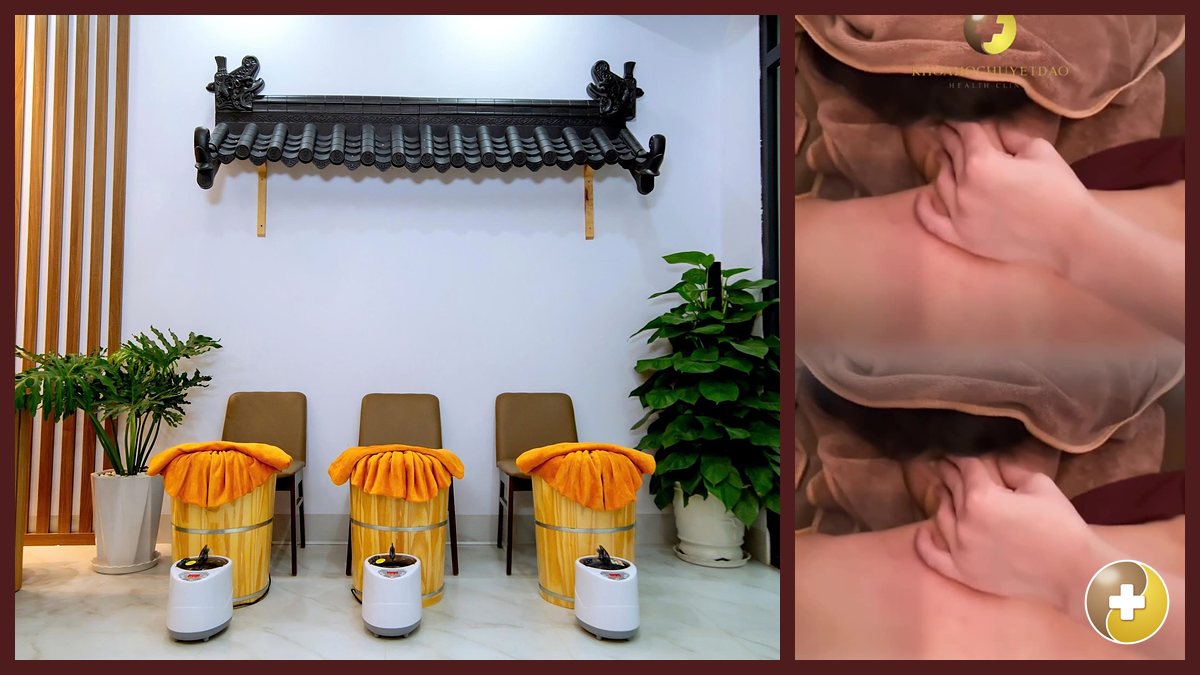
Quick answer: A tired neck with nausea usually comes from tight neck muscles causing headache or dizziness, or from migraine, motion sickness, the stomach or rising blood pressure. With fever, a severe headache, a stiff neck, constant vomiting or chest pain, get emergency care. Tong Gia in Ho Chi Minh City releases the neck and uses the Nei Guan point.
Want Lương Y Tống Văn Huynh’s team to read your spine and posture in person?
What is a tired neck with nausea?
In southern Vietnam people say "mỏi cổ mắc ói": the neck is tired, heavy and stiff, and at the same time you feel queasy and want to throw up. Some feel it after a long day at the computer, some after a coach ride spent looking at a phone, some on waking, often with dizziness or a heavy head.
In conventional medicine, neck fatigue with nausea is a cluster of signs, not one condition. The neck and nausea connect in several ways. Tight neck muscles can cause tension-type headache and dizziness that starts in the neck. The neck also sends the brain information about head position, alongside the inner ear and the eyes; when these signals disagree, you feel queasy as in motion sickness. Migraine often comes with a tired neck and nausea. And the stomach, blood pressure and some serious conditions can produce "tired neck, upset stomach" together.
In Ho Chi Minh City, Tong Gia Acupoint Wellness (Huyệt Đạo Tống Gia) hears this from office workers at the end of the day, students before exams, drivers, people riding long-distance coaches with their heads down, night-shift workers and people under long stress who eat in a hurry.
Common causes: habits, work, posture and environment
From the conventional medical view, a tired neck with nausea usually falls into seven groups. They help you compare, not label yourself.
1. Tight neck muscles and tension-type headache
Hours bent over a screen with the head forward and shoulders raised: the nape and base-of-skull muscles tighten, the head feels squeezed by a tight cap, worse in the afternoon, sometimes with mild queasiness.
2. Dizziness from the neck
When neck muscles are tight or the neck spine is irritated, the head-position signals reaching the brain get muddled: you feel unsteady, light-headed and sick, especially when turning the head.
3. Migraine
Migraine attacks often bring nausea, sensitivity to light and noise, and many people notice a tired neck before or during an attack. Poor sleep, skipped meals, stress and bright light are common triggers.
4. Motion sickness and screen sickness
Looking at a phone in a moving vehicle, watching videos on the bus or scrolling fast: the eyes say "still", the inner ear says "moving", and the neck is bent. The brain gets confused, you feel sick and the neck tires.
5. Inner-ear balance problems
Spinning dizziness, imbalance, nausea or vomiting when changing position; people instinctively brace the neck to keep the head still, which tires it further.
6. Stomach and stress
Eating fast then bending over work, reflux, bloating; long stress both tightens the neck and unsettles digestion. Morning queasiness with a tired neck is common in people who stay up late and eat late.
7. Blood pressure and emergencies
High blood pressure can bring a heavy nape, headache and nausea; anyone with a history of it should measure right away. Rarer and dangerous: meningitis, bleeding in the brain, head injury, stroke; and a heart attack sometimes shows as pain spreading to the neck and jaw with nausea and cold sweat. A woman with a late period and nausea should also consider pregnancy.
| Pattern | Likely group | Clues |
|---|---|---|
| Tired nape, heavy head by afternoon, mild queasiness | Tight neck muscles | Eases with rest and stretching |
| Unsteady and sick when turning the head | Neck-related dizziness | Stiff, hard-to-turn neck |
| One-sided headache, light sensitivity, nausea | Migraine | Poor sleep, skipped meals |
| Queasy in a vehicle while looking at a phone | Motion or screen sickness | Better looking far ahead |
| Spinning when changing position | Inner ear | Loss of balance |
| Queasy after meals, sour burps, stress | Stomach, stress | Late or rushed meals |
| Heavy nape, headache, known high blood pressure | Blood pressure | Measure now |
| Fever, severe headache, stiff neck, vomiting | Meningitis, brain bleed | Emergency now |
Other signs to watch
- Dizziness: unsteady when turning the neck, or the room spinning.
- Headache: at the back of the head, a tight-band feeling, or throbbing on one side with light sensitivity.
- Timing: end of the workday, in a vehicle, on waking, after meals.
- Digestion: sour burps, bloating, poor appetite.
- Whole body: fever, a neck too stiff to bend, drowsiness, rash.
- Nerves: numbness or weakness on one side, a drooping mouth, slurred speech, double vision.
- Heart: chest tightness, breathlessness, cold sweat.
When to see a doctor
- Chest tightness, breathlessness, cold sweat and nausea, pain spreading to the neck, jaw or left arm: call 115 now.
- Fever, severe headache, a stiff neck that cannot bend the chin to the chest, light sensitivity, vomiting: go to emergency now.
- A sudden, severe headache unlike any before, or with weakness, a drooping face, slurred speech or double vision: call 115.
- Neck fatigue and nausea after a blow to the head, fall or accident.
- Vomiting that will not stop, unable to eat or drink, exhaustion.
- Known high blood pressure with a heavy nape, nausea and headache: measure it and see a doctor.
- Nausea lasting days with weight loss or stomach pain: get checked at a medical facility alongside any wellness care.
According to the Tong Gia curriculum, a guest with nausea may have the Nei Guan point pressed, but persistent vomiting means a medical check, and cold sweat with nausea and chest pain means emergency care. This is a wellness service, not medical care.
The Y Tướng Học view: rebellious Stomach qi, Liver–Stomach disharmony
Y Tướng Học (face reading for wellness) says "what is inside shows outside". According to the Tong Gia curriculum, a tired neck with an upset stomach is a moment when several organ systems lose rhythm:
- The Stomach sends things down: the Stomach is the "sea of food and drink" and its qi should move downwards; when it rises instead, you get burping, nausea, hiccups and reflux. Rushed or late meals and bending over straight after eating make that harder.
- Liver–Stomach disharmony: in five-element terms Wood (Liver) restrains Earth (Spleen and Stomach); stress and frustration easily bring bloating and stomach pain, and conventional medicine also recognises the effect of stress on digestion. The curriculum describes people with wide cheekbones (the "Thân" face) as getting stomach pain, reflux and one-sided headaches as soon as they are tense.
- The Liver governs the sinews: a weak Liver means stiff muscles; very strong, rising Liver energy, the curriculum says, can bring flushing, sudden high blood pressure and spasm of the neck sinews. Low Liver blood brings blurred vision and dizziness.
- Heart, Spleen and sleep: heavy worrying strains Heart and Spleen: poor appetite, poor sleep, palpitations, and people who sleep badly often wake with a tired neck and queasy stomach.
Things you can notice: wide cheekbones, a quick temper and stomach pain under stress; a broad forehead with a pointed chin, the "Giáp" face, which the curriculum links with a warm, overactive upper neck (C1–C2) and balance-type headaches; pale, dry lips and poor appetite when the Spleen and Stomach need support; dry tired eyes, knitted brows and hard shoulders; drooping mouth corners and a tight jaw, which the curriculum links with Liver qi pressing on the Stomach, stress reflux and aching jaw and neck. These are clues for tailoring care, not a verdict on your health. See our face reading for wellness Q&A.
Spine segments and nerve-reflex areas involved
According to the Tong Gia curriculum, C1–C7 serve the head, face, neck and arms, and D1–D12 serve circulation, breathing and digestion. The nerve and mind group (headache, balance, sleep) works C1–C7 with D1–D3 and the sacrum; the internal organ group (blood pressure, stomach, digestion) works D1–D12 with L1–L3.
| Area | Role (curriculum) | Often felt as | Organ system |
|---|---|---|---|
| C1–C2 | Upper neck easily warm, overactive | Headache, balance-type dizziness, queasiness | Liver, Heart |
| C1–C3, base of skull | Deep muscles under the skull | Heavy head, blurred vision on standing | Kidney essence, Liver |
| C1–C7, D1–D3 | Nerve and mind group | Stress, poor sleep, headache | Liver qi stagnation |
| D7, D9 | Mid back | Stomach pain under stress, reflux | Liver–Stomach disharmony |
| D11–D12 | Digestion; settles the Stomach | Queasiness, bloating, poor appetite | Spleen and Stomach |
How Tong Gia works: spinal nerve-reflex balancing massage
This is a Vietnamese Eastern wellness method built by Lương Y Tống Văn Huynh, master of traditional Vietnamese wellness and founder of Tong Gia, with over 13 years in Eastern wellness, Y Tướng Học and spinal nerve-reflex balancing.
- Observe and ask: since when, any fever, severe headache, chest pain, weakness, head injury, high blood pressure, whether you have eaten. With a warning sign the practitioner stops and refers you on. Complexion, lips, cheekbones and brows are observed.
- Read the spine by hand, comparing left and right, upper and lower.
- Locate the key areas, usually C1–C7, D1–D3 and D7–D12; only warm, tight, tender areas are worked. You can sit or lie on your side if lying face down makes you queasy.
- Release the trapezius, shoulder lifters, muscles under the skull and along the neck and upper back, with light to moderate, even pressure so dizziness does not increase.
- Acupressure from the curriculum: Nei Guan, two finger-widths (2 cun) above the wrist crease between the two tendons, used in traditional Vietnamese medicine to ease nausea, settle the Stomach and calm the mind; Lie Que for head and neck; Tai Chong to ease tension; Bai Hui to clear the head; and the Spleen and Stomach points on the back for people who bloat.
- Stop at the right moment; if nausea increases, work stops at once.
- Home tips: how to press Nei Guan yourself, eye breaks, meals and posture.
Suitable services (full price list):
- Neck and shoulder care, 60 minutes: 550,000 VND (about 21 USD), first visit 399,000 VND (about 15 USD); 90 minutes 750,000 VND (about 29 USD). See neck and shoulder massage.
- Head care, 60 minutes: 750,000 VND (about 29 USD), when headache and dizziness dominate. See headache and dizziness acupressure.
- Spleen and Stomach wellness, 75 minutes: 750,000 VND (about 29 USD), when nausea comes with bloating, poor appetite and stress.
A typical session. A composite, not one guest's story: a customer-service agent in District 12, about 30, had been ending every shift for weeks with a tired neck, heavy head and queasy stomach. She often skipped lunch; her blood pressure had been checked and was normal, with no fever or chest pain. The practitioner noticed tense cheekbones, pale lips and knitted brows. C1–C2 was warmer, both sides of the nape were bunched and there were tight points around D7–D9. The session released the nape, shoulders and upper back, worked the mid back, pressed Nei Guan, Tai Chong and Lie Que and finished at Bai Hui. Halfway through her queasiness eased, then the nape warmed; by the end her head felt light and turning was easy. She was advised to eat lunch on time, rest her eyes every hour, press Nei Guan herself when queasy and get checked if the nausea continued.
How guests feel. During the session: tenderness at the nape, then warmth, the head lighter and queasiness settling. Afterwards many sleep deeper and wake with a lighter neck; some feel mild soreness for a day. Nausea from the stomach, inner ear or blood pressure needs medical follow-up alongside. Tong Gia supports balance in the muscles, spine and daily rhythm, with no promise that nausea will stop after one visit.
Want Lương Y Tống Văn Huynh’s team to read your spine and posture in person?
Home care and prevention
- Rest and look up: when queasy, sit still, look into the distance and breathe slowly; no phone in moving vehicles.
- Press Nei Guan on each wrist for one to two minutes with moderate pressure; persistent vomiting needs a medical check.
- Regular, slow meals; do not bend over straight after eating; dinner two to three hours before bed.
- Screen at eye level; every 45 to 60 minutes stand, stretch the neck, tuck the chin and roll the shoulders.
- Enough sleep, less stress, warmth on the nape for 15 to 20 minutes in the evening; measure blood pressure regularly if it runs high.
More reading: neck and shoulder massage Q&A and acupressure massage Q&A.
Book a session
- District 12: 225 Dương Thị Mười, Phường Tân Chánh Hiệp (Tan Chanh Hiep Ward, District 12). Open 8:00–19:00 daily.
- Vinhomes Grand Park, District 9: Căn T16-21 khu Manhattan, Phường Long Bình, TP. Thủ Đức (Unit T16-21, Manhattan zone, Long Binh Ward, Thu Duc City). Open 9:00–20:00 daily.
Book online or call, Zalo or WhatsApp +84 888 264 559. Tell us how long the nausea has lasted and whether you have dizziness, high blood pressure or a medical check. Real guest reviews are on each branch's Google Maps page. In Ho Chi Minh City? Come and try a Vietnamese Eastern wellness method built by Lương Y Tống Văn Huynh.
Visit us
- Đông Y Huyệt Đạo Tống Gia Quận 12 (District 12)
225 Dương Thị Mười, Phường Tân Chánh Hiệp, Quận 12, HCMC · 8:00–19:00 daily · 0888 264 559 · Directions on Google Maps - Đông Y Huyệt Đạo Tống Gia Quận 9 (Vinhomes Grand Park, District 9)
Căn T16-21 khu Manhattan, Vinhomes Grand Park, Phường Long Bình, TP. Thủ Đức, HCMC · 9:00–20:00 daily · 0888 264 559 · Directions on Google Maps
Want Lương Y Tống Văn Huynh’s team to read your spine and posture in person?
FAQ
Why do I feel sick when my neck is tired? Common reasons are tight neck muscles causing tension-type headache, dizziness that starts in the neck, migraine, motion or screen sickness, inner-ear problems, the stomach and stress, or rising blood pressure. With fever, severe headache, a stiff neck, constant vomiting, weakness or chest pain, get emergency care.
Is neck pain with nausea dangerous? Mostly it is linked to tight muscles, posture, poor sleep and stress and eases with rest. It is dangerous with fever, a stiff neck, a sudden severe headache, weakness, a drooping face, chest tightness, cold sweat or after a head injury: call 115 or go to emergency.
Which acupressure point helps nausea? According to the Tong Gia curriculum, Nei Guan, about two finger-widths above the wrist crease between the two tendons, is pressed to ease nausea and settle the Stomach in traditional practice; one to two minutes each side. Persistent vomiting needs a medical check, not just acupressure.
Can I have a massage if my neck is tired and I feel queasy? Once emergency signs are ruled out, gentle neck release and acupressure help muscles relax, the head feel lighter and queasiness settle. Tong Gia uses moderate pressure, can work with you seated and stops at once if nausea increases.
Why do I wake with a tired neck and nausea? Often from the wrong pillow, late nights, late dinners, reflux or stress. A better pillow, earlier dinner and enough sleep usually help. If morning nausea lasts, with worsening headaches, projectile vomiting or a late period, get checked.
Author: Lương Y Tống Văn Huynh – founder of Huyệt Đạo Tống Gia, a master of traditional Vietnamese wellness with over 13 years in Eastern wellness care, Y Tướng Học (face reading) and spinal nerve-reflex balancing massage.
Updated: 2026-11-17
Related guides
- Lump on the back of the neck: muscle knot, lymph node or cyst, and when to get it checked
- What causes a stiff neck? Seven common groups, one side or both, and when to get help
- Common health issues for IT workers: what developers often feel and how to look after it
- Pain in both shoulder blades: six common causes, the warning signs, and how Tong Gia can help
- Wrist pain after giving birth: causes, warning signs and gentle care in Ho Chi Minh City
- Shoulder pain from carrying heavy loads: six common causes, the warning signs, and how Tong Gia can help
This is a wellness service, not medical care.