
Neck and shoulder massage at home: how to do it safely for someone you love, where the limits are, and when to come to a branch
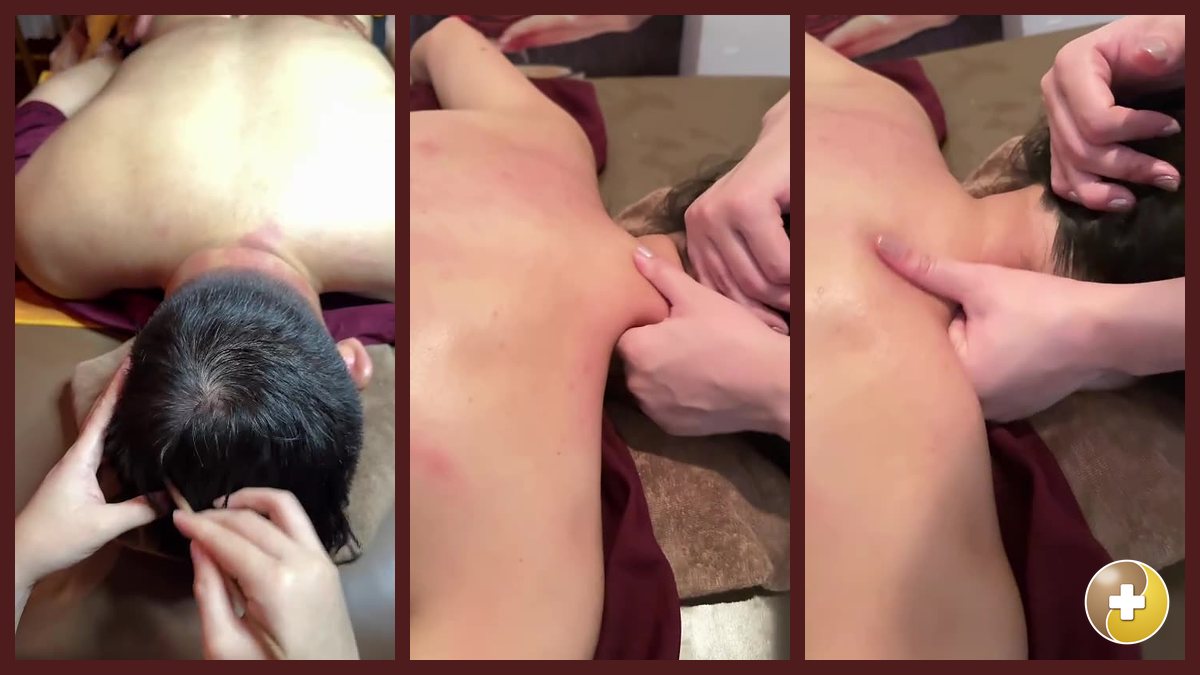
Quick answer: A neck and shoulder massage at home works if you gently stroke and knead the muscles beside the neck and on the shoulder tops for 10–15 minutes, never pressing the spine or cracking the neck. Arm numbness or dizziness needs a medical check; lasting stiffness suits a visit to Tong Gia in Ho Chi Minh City.
Want Lương Y Tống Văn Huynh’s team to read your spine and posture in person?
What does a neck and shoulder massage at home involve?
When people search for a neck and shoulder massage at home, this guide means someone in the household doing it for another (an adult child for a parent, a partner after a long workday). It focuses on exactly that: how to help someone you love feel lighter through the neck and shoulders without causing harm, and how to tell when home massage is no longer enough. All you need to start is warm hands, a chair with back support and fifteen quiet minutes in the evening.
In Western anatomy, three muscle groups do most of the work here: the trapezius, a broad sheet running from the base of the skull and the C7 vertebra out to the collarbone and shoulder blade; the levator scapulae, from the upper neck down to the top corner of the shoulder blade; and the small suboccipital muscles just under the hairline. Looking down at a phone, sitting at a laptop or riding a motorbike for hours keeps these muscles contracted to hold up a head of roughly 4–6 kg. Muscle that stays tight squeezes its own small blood vessels, so less blood arrives and waste products linger. The result is heavy shoulders, a stiff neck and difficulty turning the head. Gentle stroking and kneading soften the muscle, improve local circulation, stimulate skin receptors so pain is felt less for a while, and help the nervous system shift into rest mode.
A family member has one big advantage over self-massage: they can see and feel both sides, so they notice which side is tighter. What they lack is training in reading the spine. They cannot tell a "hot, contracted" zone from a "cool, weak" one, so it is easy to press the wrong place or press too hard. In Ho Chi Minh City, Tong Gia often meets adult children who have massaged a parent's shoulders every night for weeks with little lasting change, or partners who rub a new mother's shoulders each evening while the heaviness keeps growing. Home massage is a kind habit; it simply needs the right dose and a clear stopping point.
Why family members get stiff necks and shoulders
Before you put your hands on someone's shoulders, ask what they do most of the day. Different causes mean different areas and a different touch.
| Family member, habit | Muscles that tighten | What they usually say | Fine at home | Avoid at home |
|---|---|---|---|---|
| Older parents watching phones or TV with head bowed | Suboccipitals, upper trapezius | Stiff neck, heavy head by afternoon | Light strokes along the hairline, warm compress | Hard pressure, twisting or cracking the neck |
| Partner at a computer 8–10 hours | Levator scapulae, trapezius, rhomboids | Shoulders feel loaded, ache between the blades | Knead the top of the shoulders, stroke the inner edge of the blades | Pressing one point for too long |
| New mother carrying and feeding a baby | One-sided trapezius, chest muscles | One shoulder heavy, neck tilted | Light strokes, supported sitting | Pressing the Hợp cốc point unless pregnancy is ruled out |
| Motorbike riders, ride-hailing drivers | Trapezius, levator scapulae on both sides | Stiff shoulders, ache into the upper arm | Knead both shoulder tops, stroke from neck to shoulder | Massaging while the arm is very numb |
| Students bent over books | Suboccipitals, front neck muscles | Tired neck, headache at the back | Light strokes, reminders to sit tall | Strong pressure on thin, lean bodies |
| Sleeping with air conditioning on the neck | Whole neck and shoulder top | Wakes up stiff, hard to turn the head | Warm first, then stroke | Hot balm followed by cold air |
Long-running stress is the cause most often overlooked: worried people hunch their shoulders toward their ears without noticing. For more on everyday neck pain in the city, see neck and shoulder massage in Ho Chi Minh City: Q&A.
Questions to ask before massaging someone
- How long has it hurt? A few days of ache after heavy work is usually muscular. Weeks of pain, or pain that keeps building, needs a medical check first.
- Any tingling or numbness into the arm or fingers? This suggests an irritated nerve root in the neck; do not work deeply on the neck.
- Dizziness, nausea or blurred vision when turning the head? Not something to massage at home.
- A recent fall, knock or whiplash on the road? Do not massage; get checked.
- One sharp spot, or a broad ache? A broad, heavy ache suits stroking and kneading; a sharp, swollen or hot spot should be left alone.
- History: high blood pressure, diabetes, osteoporosis, bleeding disorders, blood thinners, pregnancy. The Tong Gia curriculum asks for all of these before any hands-on work.
- Skin: avoid wounds, inflamed spots or rashes.
When to see a doctor
Please see a doctor or go to a medical facility, instead of massaging at home, if your family member has:
- Weakness or numbness in the hands, dropping things, trouble with buttons, numbness spreading into both arms.
- Neck pain after a fall or traffic accident, especially in older people or anyone with osteoporosis.
- Dizziness, slurred speech, a drooping mouth, one-sided weakness or double vision: call 115 immediately.
- Left shoulder pain running down the arm with chest tightness, breathlessness or cold sweats: this may involve the heart; call 115 and do not massage.
- Fever with a very stiff neck or severe headache, or sensitivity to light.
- Unexplained weight loss, ongoing fatigue, pale skin, or swollen lymph nodes in the neck: get checked alongside any wellness care.
- Pain that worsens at night or lasts beyond 4–6 weeks despite rest.
- A known cervical disc problem or advanced neck degeneration: ask the medical team following them what level of massage is acceptable.
This is a wellness service, not medical care. For guests who already have medical advice, Tong Gia only offers supportive care within those limits.
The Y Tướng Học view: reading the person to choose a light or deeper touch
Y Tướng Học (face reading for wellness) rests on the idea that "what shows outside reflects the organs inside". For the neck and shoulders, the Tong Gia curriculum names three organ systems in traditional Eastern terms:
- The Liver governs the sinews: it nourishes tendons and ligaments. When it is strong, tendons are supple; when it is weak, muscles cramp and stiffen. It is also linked with emotion: prolonged anger or frustration slows the flow of qi and blood and makes it hard to relax.
- The Spleen governs the flesh and limbs: when it is weak, arms and legs feel tired and muscles slack. Strong pressure leaves this person more drained, not lighter.
- The Lung: the curriculum lists the Liệt khuyết point on the wrist, on the Lung channel, with the saying "for the head and neck, seek Liệt khuyết", to support a stiff neck.
Patterns family members can recognise, as described in the curriculum:
- Firm muscle that feels hard as wood: high mental pressure creates chronic deep contraction, especially in the trapezius and the long muscles of the back, with a risk of the muscle bands turning fibrous if they are not released in time. A family member can only soften the surface layer.
- High, prominent cheekbones: deep tendons and the trapezius tend to be knotted and prone to cramp.
- A long, narrow, thin face (the Mục shape): thin muscles along the spine, so only light strokes and gentle vibration. This person is very easy to over-massage.
- A wide forehead with a pointed chin (the Giáp shape): the upper neck around C1–C2 tends to run hot, often with headaches and poor sleep.
The curriculum also describes a face and neck tension pattern: long-term stress tightens the scalp muscles and the levator scapulae, causing chronic neck and shoulder ache that rises into the head. This is wellness knowledge for choosing a suitable touch, not a medical judgement and never a way to judge anyone.
Spine segments and nerve-reflex zones involved
The spine has 33 vertebrae. According to the Tong Gia curriculum, the neck (C1–C7) serves the head, face, neck and arms, and the upper and mid back (D1–D12) serve circulation, breathing and digestion. Nerve roots leave the spinal cord through the gaps on each side, so the rule at home is simple: work the muscle bands beside the spine, never press directly on the bones.
| Segment / area | Nerves, function | Common feeling | Related organ (Eastern view) | What family can do |
|---|---|---|---|---|
| C1–C3 (base of skull, hairline) | Head, face; deep suboccipital muscles | Stiff neck rising into the head, tired eyes | Liver (sinews) | Light strokes, slow fingertip circles |
| C3–C5 (sides of the neck) | Neck; levator scapulae attachments | Head catches when turning one way | Liver, Gallbladder | Stroke only, no deep kneading |
| C5–C7 (base of neck, shoulder top) | Shoulders, arms; nerve roots to the arm | Heavy shoulders, ache into the arm | Liver – Spleen | Thumb kneading at moderate pressure |
| D1–D3 (upper back between the blades) | Upper circulation and breathing | Ache between the blades, shallow breath | Lung, Heart | Stroke along the inner blade edge, warm rubbing |
In the curriculum, neck and shoulder ache with limb numbness sits in the musculoskeletal group, worked through C5–C7, L1–L5 and S1–S5 together. In other words, the neck is rarely only about the neck, and a branch session often reads the lower back too. The table shows links for choosing where to work, not conclusions about illness.
The Tong Gia method: how spinal nerve-reflex balancing differs from home massage
This is a Vietnamese traditional method developed by Lương Y (master of traditional Vietnamese wellness) Tống Văn Huynh, founder of Tong Gia, from over 13 years in Eastern wellness, Y Tướng Học and spinal nerve-reflex balancing. The curriculum says the hand must read four things before any work: skin temperature, the cushioning muscle layer, the shape of the spine and sensation. That is the main difference from home massage. A session follows a clear order:
- Observe and ask: work, how long, which side, arm numbness, medical checks; face shape, sitting posture, which shoulder sits higher.
- Read the spine by hand from skull to back: pressing to check skin warmth, stroking along muscles and the spinal groove, rolling to feel each vertebra's shape, comparing left with right and above with below, then narrowing to the key point.
- Muscle release by tissue type: pushing and circling for thick, rigid muscle; plucking across fibrous bands; vibration for soft, tired tissue; fine gliding in hollows. Only "hot", contracted zones are worked; pressure rises through five levels, from one finger to full body weight.
- Acupressure on the right area, including Liệt khuyết on the wrist. The session stops at a point once the skin there turns from dry to slightly moist.
- Self-care and family guidance: exactly where a family member may massage, how firmly and for how long.
A typical session: a woman in her mid-thirties brought her mother, nearly 60, to the branch. She had rubbed her mother's shoulders every night for weeks; it helped briefly, but each morning her mother woke stiff and could hardly turn left. No arm numbness, no dizziness, blood pressure checked and fine. The technician noted a long, thin face and a higher left shoulder. Reading the spine showed the left C5–C7 area hot and contracted, while the area between the shoulder blades was cool with thin muscle, which was exactly where the daughter had been pressing hardest. The session focused on the left shoulder top with pushing and circling at moderate pressure and only gentle vibration and warmth between the blades. The mother described soreness at first, then warmth and drowsiness, and turned her head left more easily by the end. The daughter learned to stroke from hairline to shoulder top at home and to stop squeezing between the blades.
Suitable services (see the price list):
- Neck and shoulder care, 60 minutes: 550,000₫ (about US$21), first visit 399,000₫ (about US$15); 90 minutes: 750,000₫ (about US$29).
- Hair wash with neck and shoulder massage, 60 minutes: 250,000₫ (about US$10), a gentle option for older parents.
- Extra 30-minute area: 199,000₫ (about US$8), to add the neck and shoulders to another booking.
What guests feel: tight spots are sore but pleasant, the curriculum calls it a "sensation wave" that lets the body adjust itself; the neck warms and many guests doze off. Afterwards the head turns more easily, the shoulders drop and sleep is often deeper; some feel mild muscle tiredness the next day. Long-standing stiffness usually needs a few sessions 5–7 days apart plus posture changes. Tong Gia supports balance and does not promise the pain will go. Related reading: booking a massage for parents in Vietnam and a neck and shoulder session in Saigon, step by step.
Want Lương Y Tống Văn Huynh’s team to read your spine and posture in person?
Neck and shoulder massage at home: 7 safe steps and prevention
If none of the warning signs above apply, you can spend 10–15 minutes in the evening on these steps:
- Position: the person sits in a chair with back support, hands on thighs, or leans forward onto a pillow on a table.
- Warm up: a warm towel on the neck and shoulders for 5 minutes, or rub your palms until warm and rest them there. Test heat on your own wrist first, particularly for older people and anyone with diabetes.
- Stroke: with the whole hand, stroke from the hairline down to the shoulder top and out to the shoulder joint, 10 times each side, as lightly as stroking a cat.
- Knead the shoulder top: thumb on the thick muscle, fingers wrapped in front, slow circles. Build pressure gradually and ask "is this all right?"; stop at a pleasant soreness, never a wince or held breath.
- Inner edge of the shoulder blade: stroke downward along it, 8–10 times each side, without pressing the bony bumps of the spine.
- Hairline at the back of the neck: very light fingertip circles; older people need only a touch.
- Finish: five strokes over the whole area, a glass of warm water, and a few minutes' rest before standing.
Never crack or twist someone else's neck, lean an elbow into an older person's shoulder, press Hợp cốc unless pregnancy is ruled out, or massage right after a heavy meal or during a fever. If pain or numbness increases afterwards, stop and get a medical check.
Prevention: screens and phones at eye level, a shoulder roll every 30–45 minutes, air conditioning off the neck, and a pillow of suitable height. More ideas for visitors and residents: traditional Vietnamese massage: Q&A.
Booking neck and shoulder care for a family member
Two branches in Ho Chi Minh City, open daily, with genuine guest reviews on Google Maps:
- District 12: 225 Dương Thị Mười, Phường Tân Chánh Hiệp (Tan Chanh Hiep Ward). 8:00–19:00 daily.
- Vinhomes Grand Park, District 9: Căn T16-21 khu Manhattan, Phường Long Bình, TP. Thủ Đức (Unit T16-21, Manhattan zone, Long Binh Ward, Thu Duc City). 9:00–20:00 daily.
Book online or call, Zalo or WhatsApp +84 888 264 559. When booking for a parent, mention their age, health conditions, any arm numbness or dizziness and whether they have had a medical check. You are welcome to sit in, watch, and ask how to massage them at home.
Visit us
- Đông Y Huyệt Đạo Tống Gia Quận 12 (District 12)
225 Dương Thị Mười, Phường Tân Chánh Hiệp, Quận 12, HCMC · 8:00–19:00 daily · 0888 264 559 · Directions on Google Maps - Đông Y Huyệt Đạo Tống Gia Quận 9 (Vinhomes Grand Park, District 9)
Căn T16-21 khu Manhattan, Vinhomes Grand Park, Phường Long Bình, TP. Thủ Đức, HCMC · 9:00–20:00 daily · 0888 264 559 · Directions on Google Maps
Want Lương Y Tống Văn Huynh’s team to read your spine and posture in person?
FAQ
Is a neck and shoulder massage at home a good idea? Yes, if it is gentle and in the right place: stroke and knead the muscle bands beside the neck and on the shoulder tops for 10–15 minutes, never press the spine and never crack the neck. If stiffness lasts for weeks, or there is arm numbness or dizziness, get a medical check first, then consider a session where the spine is read by hand, such as at Tong Gia.
How do I give my parents a simple neck massage? Seat them in a supported chair, use a warm towel for 5 minutes, stroke from hairline to shoulder top 10 times per side, knead the shoulder top with your thumb at moderate pressure, stroke down the inner edge of the shoulder blades, then make light circles along the hairline. Keep asking how it feels; older, thin people need a light touch.
Should family members press acupoints? It is not necessary. Stroking and kneading the muscle is enough at home; leave acupoints to trained hands. The Tong Gia curriculum notes, for example, that the Hợp cốc point is not used during pregnancy.
Why does my shoulder stiffness come back after massages? Usually the habit behind it continues (phones, uneven sitting, air conditioning on the neck), or only the surface layer is softened while the deep tight zone is missed. A Tong Gia session reads the spine by hand to find the key point and then gives posture advice.
Is soreness after a home massage normal? Mild muscle tiredness the day after firm pressure is common and fades. Sharp or growing pain, arm numbness, dizziness or nausea mean you should stop and get checked at a medical facility. Next time use less pressure and less time on any single spot.
What oil should I use when massaging a family member's neck and shoulders? A little massage oil or coconut oil lets your hands glide without pulling the skin. For older people with thin skin, avoid strong heating oils and test a small amount on the inner wrist first. Wipe off gently afterwards, keep the neck warm and avoid a fan or air-conditioner blowing straight at it.
Author: Lương Y Tống Văn Huynh – founder of Huyệt Đạo Tống Gia, a master of traditional Vietnamese wellness with over 13 years in Eastern wellness care, Y Tướng Học (face reading) and spinal nerve-reflex balancing massage.
Updated: 2026-11-16
Related guides
- Lump on the back of the neck: muscle knot, lymph node or cyst, and when to get it checked
- What causes a stiff neck? Seven common groups, one side or both, and when to get help
- Common health issues for IT workers: what developers often feel and how to look after it
- Pain in both shoulder blades: six common causes, the warning signs, and how Tong Gia can help
- Wrist pain after giving birth: causes, warning signs and gentle care in Ho Chi Minh City
- Shoulder pain from carrying heavy loads: six common causes, the warning signs, and how Tong Gia can help
This is a wellness service, not medical care.