
Relaxing massage or therapeutic-style massage: choose by your body, not the label
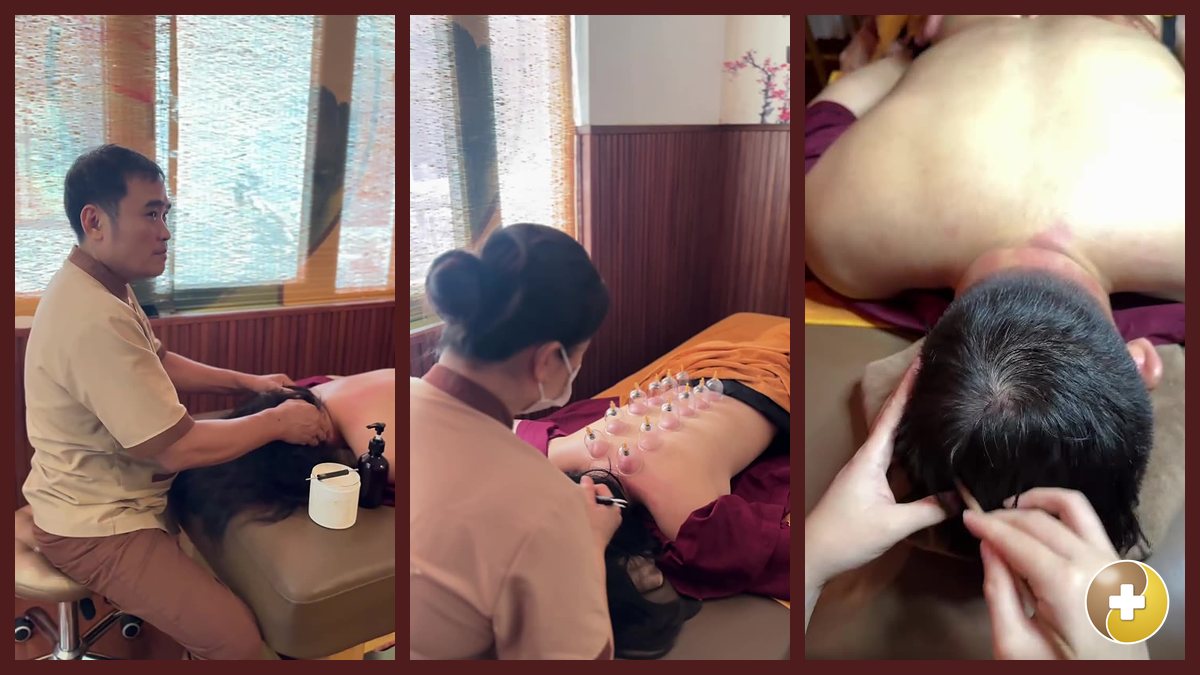
Quick answer: Choose a relaxing massage when you are generally tired, stressed or sleeping badly; choose a therapeutic-style massage when one area keeps aching or feels locked. Tong Gia Acupoint Wellness in District 12 and District 9, Ho Chi Minh City, reads the spine by hand, then works lightly where you need to unwind and deeply where muscle is locked.
Want Lương Y Tống Văn Huynh’s team to read your spine and posture in person?
Relaxing massage or therapeutic-style massage: what is the real difference?
A relaxing massage and a therapeutic-style massage both use the hands, but they ask different questions. A relaxing massage asks, "How do I help the whole body feel good and the mind slow down?" The hands move evenly with light to medium pressure across the back, shoulders and legs. A therapeutic-style massage asks, "Which area is out of balance, which muscle is locked, and why?" It starts by observing and searching, then spends its time on exactly that area with the right pressure and technique.
In Western medical terms, both act on the nervous system. Slow, even, warm strokes switch on more of the parasympathetic nervous system, the "rest and digest" branch: the heart rate slows, breathing deepens, muscles soften and many people get sleepy. That is the core value of a relaxing massage. But when a band of muscle has been tight for weeks, blood supply drops, metabolic waste builds up and tender knots form. Gliding strokes mostly soothe the surface. A therapeutic-style massage presses slowly, deeply and long enough on that exact point for the stretch sensors in muscle and tendon to signal the spinal cord, and the muscle is "told" to let go.
One thing to be clear about: at Tong Gia Acupoint Wellness (Huyệt Đạo Tống Gia), the word "trị liệu" in "spinal nerve-reflex balancing massage" is the name of a hands-on wellness method. It is not medical care and does not replace seeing a doctor. The Tong Gia training states that this knowledge is for care, relaxation and support within the school's theory.
| Point | Relaxing massage | Therapeutic-style massage (the Tong Gia way) |
|---|---|---|
| Goal | Whole-body ease, less stress, better sleep | Find and soften locked muscle; help rebalance the related spinal zone |
| Before starting | Asks soft or firm | Questions, safety screening, face reading, reading the spine by hand |
| Pressure | Light to medium, everywhere | 5 pressure levels, from one fingertip to full body weight, raised only where needed |
| Time | Split evenly across areas | Focused on the key zone and key point just found |
| Feeling | Soothing throughout | A dull ache on tight spots that eases; never sharp |
| Suits | General tiredness, stress, wanting a break | A recurring ache in one place, or relief that never lasts after relaxing massages |
Why so many people are unsure which to choose
Most guests who ask "relaxing or therapeutic-style?" do so for one of these reasons:
- Relaxing massages feel great, but the neck stiffens again within a day or two.
- Fear of pain: "therapeutic" sounds like hard pressure and cracked joints. In fact the Tong Gia training forbids rough force; pressure rises only as you respond.
- Work that strains one fixed area: office staff and remote workers in District 12, Go Vap or Thu Duc with a stiff neck and upper back; drivers and riders with a tired lower back; nail and hair technicians with sore forearms and shoulder blades; factory workers on long standing shifts with heavy legs.
- Stress and poor sleep with no single sore spot: people under pressure at the Saigon Hi-Tech Park, or managers, often just feel "wired".
- Bringing older parents: unsure which is safer for someone with health conditions.
In Vietnamese traditional wellness, the Tong Gia training links these two needs to different functions. General tension and difficulty relaxing relate to the Liver system, which keeps energy flowing (when it stagnates, a person becomes irritable and finds it hard to unwind), and to the Heart system, which houses the mind (awareness, mood, sleep). A tired muscle in one place relates to the Liver governing the tendons (when weak, muscles stiffen and cramp) and the Spleen governing muscles and limbs. These are functional ideas, not a medical finding.
Signs your body needs more than relaxation
- Tiredness in exactly the same spot again and again: always the right shoulder, always the left lower back, always between the shoulder blades.
- A hard knot or a cord-like band you can feel, which sends pain elsewhere when pressed.
- The neck will not turn fully; the lower back catches when you bend.
- Afternoon headaches at the back of the head with a stiff neck.
- One shoulder higher, hips tilted, shoes wearing unevenly.
- A relaxing massage feels good but the effect lasts only a day or two.
On the other hand, if you simply feel tired and heavy, struggle to fall asleep and have no clear sore spot, a relaxing full-body session or gentle Eastern wellness massage is often enough. Not everyone needs deep pressure.
When to see a doctor
Whichever style you choose, please see a doctor at a medical facility first, and skip massage for now, if you have:
- Numbness or weakness in arms or legs, unsteady walking, dropping things.
- Electric pain shooting down an arm or leg.
- A swollen, hot, red area or fever; pain after a fall or accident.
- A sudden severe headache, or a stiff neck with fever and vomiting.
- Changes in bladder or bowel control with back pain.
- Ongoing fatigue, weight loss or unexplained anaemia: get checked alongside any wellness care.
- Chest tightness, breathlessness, cold sweats, pain spreading to the left shoulder or jaw, a drooping face or one-sided weakness: call 115 immediately.
If you have heart disease, a stent, take blood thinners, have high blood pressure or are pregnant, tell us beforehand so the practitioner can work gently or avoid certain areas. This is a wellness service, not medical care.
The face-reading view: light touch or deep work?
Y Tướng Học (face reading for wellness) holds that "the signs show outside, the organs lie inside". In the Tong Gia training, reading the face and feeling the muscle help choose the approach before the hands go to work. This answers part of the question: some people suit gentle waves, others need deeper techniques.
- The "Mục" (目) face: long, narrow and thin. The training links it to low energy and blood, thin and slack muscles along the spine and vertebrae that sink in. This person needs tonifying, gentle vibration and light stroking, close to a relaxing feel, not deep force.
- The "Vương" (王) face: bony, with high cheekbones. Vertebrae tend to twist; fibrous muscle clings to the joint gaps, and the training calls for plucking and deep pushing to free it. A light relaxing massage is usually not enough here.
- The "Điền" (田) face: square and full, with thick back muscles that, when blocked, tighten in large sheets around D11–D12.
- Firm muscle turned wood-hard: "knotted" Liver energy, deep tightness in the trapezius and long back muscles; the training stresses timely deep muscle release.
- Soft, cold muscle that stays dented when pressed: the training links this to a cold, weak digestive system, feeling chilly, cold hands and feet; warm, gentle pressure suits them, along with keeping warm.
Complexion is a clue too: very pale or sallow skin with dizziness and palpitations is linked in the training to weak Heart and Spleen, so the work should be slow and light. These signs only guide the approach. They are not a health verdict and never used to judge anyone.
Vertebrae and nerve-reflex zones involved
In the Tong Gia training, the 33 vertebrae fall into zones: neck C1–C7 for the head, face, neck and arms; thoracic D1–D12 for circulation, breathing and digestion; lumbar L1–L5 for digestion, kidneys, urinary and reproductive function and the legs; sacrum and coccyx S1–S5 for elimination and the lower pelvis. A relaxing massage usually covers every area evenly; the Tong Gia method works in order, by functional group:
| What you need | Zones the training works | Common signs | Related organ system |
|---|---|---|---|
| Stress, poor sleep, headaches | C1–C7, D1–D3, sacral area | A mind that will not switch off, light sleep, heavy head | Heart (houses the mind), Liver (keeps energy flowing) |
| Neck, back aches, tingling hands or feet | C5–C7, L1–L5, S1–S5 | Stiff neck, tired lower back, tingling hands | Liver (tendons), Kidney (bone) |
| Bloating, poor digestion under stress | D1–D12, L1–L3 | Low appetite, bloating, tight mid-back | Spleen–Stomach, Liver |
| General tiredness, wanting rest | Even waves from neck to tailbone | Heavy, sluggish body | Varies |
The table shows "related to" in the training, not a medical finding.
The Tong Gia method: spinal nerve-reflex balancing massage
At Tong Gia, you do not have to pick one and give up the other. The method developed by Lương Y (master of traditional Vietnamese wellness) Tống Văn Huynh, the founder, over more than 13 years in Eastern wellness, Y Tướng Học and spinal nerve-reflex balancing, contains both: the hands read first to learn which area needs deep work and which only needs a "relaxing wave". It is a Vietnamese Eastern-wellness method, and visitors to Ho Chi Minh City are welcome to try it. The training sets three "No" rules: no needles, nothing invasive, no rough force. A session runs like this:
- Questions and screening: where it aches and for how long, health conditions, pregnancy, any warning sign. A warning sign means no session and advice to get checked.
- Observation: how you stand, shoulder and hip height, complexion, face shape, following "the signs show outside, the organs lie inside".
- Reading the spine by hand: press-and-lift to feel skin temperature, glide along the groove of the spine, probe the muscle layer, roll each vertebra, comparing left and right, top and bottom. The training calls this reading the "four objective factors": skin temperature, the muscle layer, the shape of each vertebra and sensation.
- Ordered work: only "excited" zones (warmer skin, tight muscle, more tenderness) get focused attention; "inhibited" zones are never pressed directly. The technique follows the muscle: push-and-rotate for thick, tight muscle, plucking for fibrous bands, vibration to create a relaxing wave for soft, thick or nervously exhausted tissue, gliding pressure for sunken areas.
- Acupressure on the right points: the key points found are pressed in turn; work stops when the skin there turns from dry to slightly moist.
- Self-care tips: two or three things to do at home.
Thanks to the reading step, someone who needs to unwind gets light, even work with plenty of vibration waves, while someone with a locked area gets deep work in exactly that spot and gentle work everywhere else. More on the approach at traditional Vietnamese massage and in traditional Vietnamese massage: Q&A.
Choosing a service
- Eastern wellness massage, 60 minutes: 450,000 VND (about 17 USD); 90 minutes: 550,000 VND (about 21 USD), for general tiredness and stress, a relaxing full-body option.
- Neck and shoulder or back care, 60 minutes: 550,000 VND (about 21 USD), first visit 399,000 VND (about 15 USD); 90 minutes 750,000 VND (about 29 USD), for one area that needs deeper work.
- Full-body care, 120 minutes: 950,000 VND (about 37 USD), when you want to relax and also have a few tight spots worked thoroughly; see 120-minute full-body massage: Q&A.
Price questions are answered in massage prices in Ho Chi Minh City: Q&A, and you can read how acupressure feels in acupressure massage in Saigon. Full list: price list.
What a typical session looks like
One evening at the Vinhomes Grand Park branch, the guest, a remote worker, had booked a 90-minute Eastern wellness massage with the note "just want to relax, scared of pain". Asked a little more, they mentioned a tired upper back and a heavy head by afternoon. The practitioner saw the left shoulder sitting higher and the head slightly forward. Reading the spine, most of the back was soft with even skin temperature, but D1–D3 on the left was warmer, with a tight band of muscle. The session kept to what the guest wanted: most of the time was vibration waves and light, even strokes over the back and legs, while only the upper left back got slow push-and-rotate, pressure rising a little at a time. The guest dozed off mid-session and left saying the upper back felt "much lighter, and nowhere near as painful as I feared". They were advised to raise the laptop and stand and stretch every hour.
How it feels during and after
Where the work is light, you feel warm, soothed and sleepy. Where it is deep, you feel a dull ache that eases; the Tong Gia training calls this a "pleasant ache", used to let the body adjust itself. It should never be sharp or make you hold your breath; just say so and the pressure comes down. Afterwards many people feel lighter, their shoulders drop and they sleep more deeply; the next day a deeply worked area may feel slightly sore, like after exercise. Everyone responds differently, and Tong Gia does not promise that pain will be gone after one session; the aim is to help muscles let go and rebalance.
Want Lương Y Tống Văn Huynh’s team to read your spine and posture in person?
Self-care at home and prevention
- Ask yourself: general tiredness or one spot? Note for a week which area gets tired; your next booking will fit better.
- Change position every 45 minutes: stand up, roll the shoulders back 10 times, bend forward gently, take a few steps.
- Slow belly breathing for 5 minutes before bed: in for 4 counts, out for 6, to switch on the "rest and digest" system.
- Warm compress on the tired area for 10–15 minutes; never on swollen or hot areas.
- Keep a rhythm: if the same spot keeps aching, add a daily stretch routine for that area.
Book a session
Tong Gia has 2 branches in Ho Chi Minh City, open every day, with real guest reviews on Google Maps:
- District 12: 225 Dương Thị Mười, Phường Tân Chánh Hiệp (Tan Chanh Hiep Ward, District 12). Open 8:00–19:00 daily.
- Vinhomes Grand Park, District 9: Căn T16-21 khu Manhattan, Phường Long Bình, TP. Thủ Đức (Unit T16-21, The Manhattan, Long Binh Ward, Thu Duc City). Open 9:00–20:00 daily.
Call, message on Zalo or WhatsApp +84 888 264 559, or book online. Just write "want to relax" or "sore in this area" and whether you like light or medium pressure; the practitioner will read your spine and shape the session around you.
Visit us
- Đông Y Huyệt Đạo Tống Gia Quận 12 (District 12)
225 Dương Thị Mười, Phường Tân Chánh Hiệp, Quận 12, HCMC · 8:00–19:00 daily · 0888 264 559 · Directions on Google Maps - Đông Y Huyệt Đạo Tống Gia Quận 9 (Vinhomes Grand Park, District 9)
Căn T16-21 khu Manhattan, Vinhomes Grand Park, Phường Long Bình, TP. Thủ Đức, HCMC · 9:00–20:00 daily · 0888 264 559 · Directions on Google Maps
Want Lương Y Tống Văn Huynh’s team to read your spine and posture in person?
FAQ
Should I choose a relaxing massage or a therapeutic-style massage? If you are simply tired and stressed with no clear sore spot, a relaxing full-body massage is often enough. If the same area aches again and again, you can feel knots, or relief never lasts, choose therapeutic-style work so that area is read and worked precisely.
Does a therapeutic-style massage hurt? Tight spots feel a dull ache that eases; it should never be sharp. The Tong Gia training rules out rough force and raises pressure only as you respond, so tell the practitioner any time it feels like too much.
Will a relaxing massage help me sleep after a stressful week in Saigon? Slow, warm, even strokes switch on the body's rest system, so many people feel sleepy and sleep more deeply that night. If poor sleep lasts for weeks, or comes with palpitations or weight loss, see a doctor to find the cause.
I had a relaxing massage but my neck is still stiff. Why? Often the tight area sits deep and gliding strokes only soothe the surface, or the posture habits behind it have not changed. Therapeutic-style work reads the spine to find the right area and adds posture advice, so the relief usually lasts longer.
Which is better for my older parents visiting Vietnam? Tell us about any heart condition, blood pressure issue or blood thinners. The practitioner will use light pressure and avoid certain areas; tight spots are still cared for, just more slowly and gently than for a younger person.
How much do they cost at Tong Gia? Eastern wellness massage: 450,000 VND (about 17 USD) for 60 minutes, 550,000 VND (about 21 USD) for 90. Neck and shoulder or back care: 550,000 VND for 60 minutes (399,000 VND first visit), 750,000 VND for 90. Full-body care, 120 minutes: 950,000 VND (about 37 USD).
Author: Lương Y Tống Văn Huynh – founder of Huyệt Đạo Tống Gia, a master of traditional Vietnamese wellness with over 13 years in Eastern wellness care, Y Tướng Học (face reading) and spinal nerve-reflex balancing massage.
Updated: 2026-11-16
Related guides
- What does acupressure do? Effects on muscles, nerves and the five organs, and how Tong Gia works in Ho Chi Minh City
- Acupressure in Thu Duc: pressure chosen by reading your spine, at the branch that suits your ward
- Sore after acupressure: is it normal? How to tell ordinary aching from warning signs, why it happens and how to look after yourself after a session in Ho Chi Minh City
- What are gua sha and cupping: two Vietnamese folk warming methods, the cupping points and when to skip them
- Unblocking the meridians (đả thông kinh lạc): what it really means, how a hands-on session works and what you will feel in Ho Chi Minh City
- Herbal compress: what the warmth really does, where it goes and who it suits
This is a wellness service, not medical care.