
Shoulder blade pain when breathing in: six common causes, the warning signs, and how Tong Gia can help
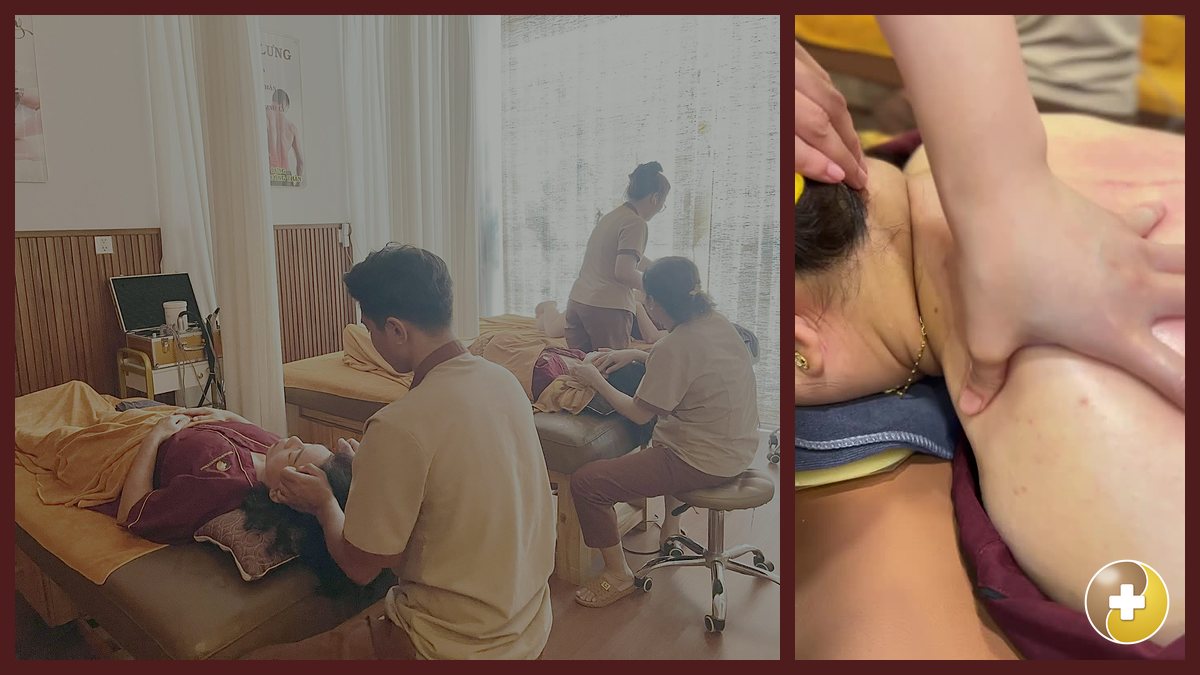
Quick answer: Shoulder blade pain on breathing in usually comes from tight muscles around the shoulder blade, a stuck rib-spine joint or intercostal nerve pain; less often from the lungs, heart or liver. Pain with fever, breathlessness, chest tightness or a sudden onset needs a medical check now. Tong Gia Acupoint Wellness (Huyệt Đạo Tống Gia), District 12 and District 9, Ho Chi Minh City, cares for this area by hand.
Want Lương Y Tống Văn Huynh’s team to read your spine and posture in person?
What is shoulder blade pain when breathing in?
This is a sharp, stabbing or tight pain around the shoulder blade, along its inner edge or just below it, that appears or gets stronger each time you breathe in, especially with a deep breath, a yawn, a cough, a sneeze or a laugh. Breathing out gently eases it, breathing in brings it back. Many people describe it as "something catching behind the back", so they stop halfway through each breath.
In Western medicine, every breath in lowers the diaphragm, the muscles between the ribs pull the chest open, each rib turns slightly where it joins the spine, and the muscles around the shoulder blade must stretch too. The Tong Gia curriculum notes that breathing in and out relies on the diaphragm and the intercostal muscles, at around 12 to 20 breaths a minute at rest. So a strain, a stuck joint or inflammation anywhere along this chain, from muscle, rib joint and nerve to the lining of the lungs, the lungs themselves or organs that sit against the diaphragm, can make the shoulder blade hurt on a breath in.
It is a symptom, not a disease. Most everyday cases come from muscles and joints, but some come from the lungs, the heart, or the liver and gallbladder, and those need a medical check soon. This page helps you tell which situations you can watch at home and which need a medical check now.
In Ho Chi Minh City, Tong Gia Acupoint Wellness (Huyệt Đạo Tống Gia) often meets this pain in office and IT workers hunched over laptops for 8 to 10 hours, ride-hailing drivers, factory workers in the industrial parks, people with a long cough after a cold, people who slept twisted on one side, and expats returning to sport after a break. People who hold their breath under stress also report it often.
Common causes: habits, work, posture and environment
From a Western medical view, shoulder blade pain on breathing in usually falls into six groups. They help you describe the pain, not to label yourself; only a medical facility can confirm the cause.
1. Strained muscles around the shoulder blade and between the ribs
Slouching with rounded shoulders, carrying loads on one side, days of coughing, or overdoing chest and back workouts can leave these muscles tight. A deep breath stretches them, so the pain is sharp at one spot that hurts when pressed and changes when you change position. This is the most frequent group in daily life.
2. A stuck rib-spine joint or a bad sleeping position
Each rib joins a thoracic vertebra at the back. Sleeping twisted, turning suddenly, reaching high or riding a motorbike for hours with a curved back can lock this joint, and the muscles around it guard it. Pain sits along the inner edge of one shoulder blade and stabs on deep breaths, twisting or lying flat.
3. Intercostal nerve pain and shingles
A nerve runs under each rib. When irritated it gives a burning, electric pain along a band from the back around to the chest, worse on breathing in or coughing. A band of blisters a few days later suggests shingles and needs a medical visit.
4. The lungs and their lining
Pleurisy or pneumonia brings sharp pain on breathing in, often with fever, cough and tiredness. A collapsed lung causes sudden one-sided chest pain spreading to the back with breathlessness. A blood clot in the lung, more likely after long immobility or a long flight with a swollen painful calf, causes pain on breathing in with breathlessness and a fast heartbeat. None of these are for home watching.
5. Referred pain from the diaphragm: liver, gallbladder, stomach
The diaphragm's nerve comes from the neck, so irritation under it can be felt in the shoulder. The Tong Gia curriculum notes that the liver lies under the right side of the diaphragm and touches it, which is why liver problems sometimes cause right shoulder pain, for example right upper belly pain after fatty meals spreading to the right shoulder with nausea.
6. The heart and its lining
Angina can spread to the left shoulder, left shoulder blade, left arm, neck and jaw. Inflammation of the heart lining causes chest pain that worsens with deep breaths and lying flat and eases when leaning forward. The curriculum adds that left chest pain is not always the heart; it may be muscle, rib or stomach. You cannot sort this out at home.
| Pain on breathing in | Likely group | Clue |
|---|---|---|
| Sharp at one spot, tender to press, changes with position | Muscle, rib-spine joint | After slouching, twisted sleep, coughing, hard workouts |
| Burning band from back to chest | Intercostal nerve, shingles | Blisters may follow |
| With fever, cough, fatigue | Pneumonia, pleurisy | Get checked the same day |
| Sudden, with breathlessness and fast heartbeat | Collapsed lung, lung clot | Call 115 |
| Right side after fatty meals, nausea | Liver, gallbladder | Medical check |
| Left side with chest tightness, cold sweat | Heart | Call 115 now |
Other signs to watch
- Whether the pain is one tender spot or deep inside.
- Whether only deep breaths hurt, or also twisting, lifting the arm, lying flat.
- Fever, cough, phlegm, chills, heavy fatigue.
- Breathlessness, needing to sit up to breathe, bluish lips.
- Chest tightness, cold sweat, pain into the left arm, neck or jaw.
- Nausea, bloating or yellow skin with right-sided pain.
- Blisters or burning skin in a band.
- A swollen, painful calf after a flight or bed rest.
- A stiff neck or tingling arm on the same side.
Note which side, since when, after what, what makes it worse, and any fever or breathlessness. It helps medical staff and our practitioners understand you quickly.
When to see a doctor
With any of the following, please see a doctor at a medical facility first and hold off on massage:
- Chest tightness, breathlessness or cold sweat, or pain into the left shoulder, arm, neck or jaw: call 115 now.
- Sudden, severe pain on one side with breathlessness or a racing heart: call 115.
- Coughing blood, high fever, thick phlegm, exhaustion.
- Pain after a fall, a blow to the chest or an accident: the ribs need checking.
- Pain after a long flight or bed rest with a swollen, painful calf.
- Right-sided pain with nausea, fever, yellow skin, or after fatty meals.
- A band of blisters on the skin.
- Pain lasting more than one to two weeks, getting worse, or present at rest; with weight loss, long fatigue or night sweats: get checked at a medical facility alongside any wellness care.
If a medical facility already follows your heart, lungs or liver, keep to their advice and tell the practitioner. This is a wellness service, not medical care.
The Y Tướng Học view: the Lungs govern qi, the Liver governs the sinews
Y Tướng Học, Vietnamese Eastern face and body reading, holds that the outside reflects the organs inside. In the Tong Gia curriculum, breathing and the shoulder blade area relate to several organ systems:
- Lungs govern qi: they rule breathing and the body's qi; when weak, you feel short of breath, speak softly, tire easily. Weak ventilation shows as fast, shallow breathing.
- Lungs rule breathing out, Kidneys grasp the breath in: when the Kidneys do not grasp qi, breaths are short and breathing in feels hard.
- Liver governs the sinews: it nourishes tendons and ligaments; when weak, muscles tighten and cramp. When Liver qi stagnates, the chest feels tight, temper rises, sleep suffers. People who hold their breath and lift their shoulders under stress fit this picture.
- Spleen governs the flesh: it makes the qi and blood that feed muscles; a weak Spleen leaves muscles soft and tired.
What you can observe yourself:
- Nose, skin, breath: where the Lungs show. Dry skin, a blocked nose, shallow breathing or frequent sighing are signals to care for the Lungs.
- Eyes, nails, tendons: where the Liver shows; dry tired eyes, irritability, a tight neck and shoulders, cramps.
- The "Đồng" face (同): long yet square, firm bone and flesh, a Metal type led by the Lungs. The curriculum notes the upper back tends to tighten around D3, the Lung point area, affecting breathing; keep breathing deep, keep the neck and chest warm, care for the upper back.
- Posture: rounded shoulders, a sunken chest, one shoulder blade higher.
These are signals for fitting care to the person, not a medical verdict. Learn more in our face reading Q&A.
Spine segments and nerve-reflex areas involved
In the Tong Gia curriculum, the neck (C1–C7) serves the head, face, neck and arms; the thoracic spine (D1–D12) serves circulation, breathing and digestion. Nerve roots leave on both sides between the vertebrae, where the practitioner's fingers search.
| Segment | Nerve / function | Typical signs | Eastern organ |
|---|---|---|---|
| C5–C7 | Neck to arm; muscle-bone-joint group | Shoulder blade pain with stiff neck, tingling arm | Liver (sinews) |
| D1–D3 (D3 Lung point) | Breathing, upper back | Pain at the inner shoulder blade on deep breaths | Lungs |
| D7, D9 (Liver, Spleen points) | Mid back, digestion | Tight flanks under stress | Liver, Spleen |
| D11–D12 (Spleen, Stomach points) | Digestion, making qi and blood | Tired back muscles, heaviness | Spleen–Stomach |
Besides the spine, the practitioner works the muscles around the shoulder blade, the trapezius, the front of the chest and below the collarbone. The curriculum calls working the spinal key point and a matching outer point together "paired adjustment".
How Tong Gia works: spinal nerve-reflex balancing massage
This method was built by Lương Y Tống Văn Huynh, master of traditional Vietnamese wellness and founder of Huyệt Đạo Tống Gia, over more than 13 years of Eastern wellness, Y Tướng Học and spinal nerve-reflex balancing. A session for this pain includes:
- Observe and ask: side, onset, trigger, fever, cough, breathlessness, chest tightness, any medical check. Warning signs mean we stop and advise a medical check.
- Read the spine by hand: skin temperature, the muscle layer, vertebra shape and sensation, compared left and right.
- Locate the key area and point: usually C5–C7, D1–D3 and around the shoulder blade; only "excited" areas (warm, tight, more painful) are worked; no cracking, no hard pressure on the rib cage.
- Release the muscles: trapezius, muscles around the shoulder blade, along the upper spine and the chest, in a gentle wave, paced with your slow breathing.
- Acupressure in the right area of the shoulder and upper back.
- Stop at the right time: when the skin at the key point turns from dry to slightly moist.
- Home guidance: sitting, belly breathing, gentle chest stretches.
Suitable services (see prices):
- Neck and shoulder care 60 min: 550,000 VND (about 21 USD), first visit 399,000 VND (about 15 USD); 90 min: 750,000 VND (about 29 USD). See neck and shoulder massage.
- Lung wellness session 90 min: 900,000 VND (about 35 USD) for shallow breathers with a tight upper back, once the lungs have been checked.
- Cupping to clear cold 30 min: 85,000 VND (about 3 USD) when the upper back took air-conditioning or rain; not with fever.
A typical session
This combines many sessions, not one guest's story. A software engineer around 35 in District 12 had sharp pain at the inner edge of his right shoulder blade on every deep breath for four days, no fever, no cough, and a medical check had found normal lungs. His right shoulder rolled forward and he breathed mostly with his chest. Along D2–D3 on the right the skin was warmer and the muscle layer thick, with one spot he called "exactly there". The practitioner released the trapezius, the muscles around the right shoulder blade and the chest, pressed points in the shoulder blade area and coached slow belly breaths. It ached at first, then warmth spread across the upper back; by the end he could breathe deeper with only a slight catch.
What guests feel
During the session: a tender ache at tight spots, then warmth, shoulders dropping, the chest feeling more open. Afterwards many breathe more easily and sleep better; some feel mild soreness for a day. Everyone differs; Tong Gia helps rebalance the related muscles and spine and does not promise the pain will vanish in one visit. More in our neck and shoulder massage Q&A and back massage Q&A.
Want Lương Y Tống Văn Huynh’s team to read your spine and posture in person?
Home care and prevention
- Slow belly breathing: sit tall, hand on belly, breathe in through the nose so the belly rises, breathe out long; 5 minutes, two or three times a day. Do not force deep breaths while it stabs.
- Sit well: screen at eye level, back supported; every 30 to 45 minutes stand and roll the shoulders back 10 times.
- Gentle chest stretch in a doorway, 20 seconds, three times; stop if pain rises.
- Warmth: a warm pack on the shoulder blade for 15 to 20 minutes for muscle pain, never with fever.
- Keep the upper back warm away from direct air-conditioning, and avoid sleeping twisted.
If pressure points interest you, read our acupressure Q&A.
Book a session
- District 12: 225 Dương Thị Mười, Phường Tân Chánh Hiệp (Tan Chanh Hiep Ward, District 12). Open 8:00–19:00 daily.
- Vinhomes Grand Park, District 9: Căn T16-21 khu Manhattan, Phường Long Bình, TP. Thủ Đức (Unit T16-21, Manhattan zone, Long Binh Ward, Thu Duc City). Open 9:00–20:00 daily.
Book online or call, Zalo or WhatsApp +84 888 264 559. Tell us which side hurts, since when, and whether you have had a medical check. Real guest reviews are on each branch's Google Maps page. In Ho Chi Minh City? Come and try a Vietnamese Eastern wellness method built by Lương Y Tống Văn Huynh.
Visit us
- Đông Y Huyệt Đạo Tống Gia Quận 12 (District 12)
225 Dương Thị Mười, Phường Tân Chánh Hiệp, Quận 12, HCMC · 8:00–19:00 daily · 0888 264 559 · Directions on Google Maps - Đông Y Huyệt Đạo Tống Gia Quận 9 (Vinhomes Grand Park, District 9)
Căn T16-21 khu Manhattan, Vinhomes Grand Park, Phường Long Bình, TP. Thủ Đức, HCMC · 9:00–20:00 daily · 0888 264 559 · Directions on Google Maps
Want Lương Y Tống Văn Huynh’s team to read your spine and posture in person?
FAQ
Why does my shoulder blade hurt when I breathe in? Most often it is tight muscles around the shoulder blade or between the ribs from slouching, coughing or a twisted sleep, a stuck rib-spine joint, or intercostal nerve pain. Less often, and needing a medical check, it is pleurisy, pneumonia, a collapsed lung, the heart, or the liver and gallbladder.
Is shoulder pain on a deep breath dangerous? Pain at one tender spot that changes with position, without fever or breathlessness, is usually muscular. Sudden pain with breathlessness, a racing heart, coughing blood, fever, or a swollen calf after a flight can be serious: call 115 or go to a medical facility.
Could left shoulder blade pain on breathing be my heart? Not always; muscles, ribs and the stomach can also cause it. But with chest tightness, cold sweat, breathlessness or pain into the left arm, neck or jaw, call 115 straight away.
Right shoulder blade pain and shortness of breath: what does it mean? It may be a tight right shoulder blade, but also the right lung or the liver and gallbladder under the diaphragm. With fever, nausea, yellow skin, pain after fatty meals or real breathlessness, get a medical check first.
Can massage help shoulder blade pain when breathing? Once lung, heart and liver causes are ruled out and the pain is from muscles or rib joints, muscle release and acupressure around the shoulder blade help the area relax so breathing feels easier. With fever, breathlessness or after a chest injury, get a medical check first.
How long does it take to ease? Muscle or rib-joint pain often settles over a few days to about a week with good posture, belly breathing, warmth and muscle release. Pain beyond one to two weeks, getting worse or present at rest, needs a medical check.
Author: Lương Y Tống Văn Huynh – founder of Huyệt Đạo Tống Gia, a master of traditional Vietnamese wellness with over 13 years in Eastern wellness care, Y Tướng Học (face reading) and spinal nerve-reflex balancing massage.
Updated: 2026-11-17
Related guides
- Lump on the back of the neck: muscle knot, lymph node or cyst, and when to get it checked
- What causes a stiff neck? Seven common groups, one side or both, and when to get help
- Common health issues for IT workers: what developers often feel and how to look after it
- Pain in both shoulder blades: six common causes, the warning signs, and how Tong Gia can help
- Wrist pain after giving birth: causes, warning signs and gentle care in Ho Chi Minh City
- Shoulder pain from carrying heavy loads: six common causes, the warning signs, and how Tong Gia can help
This is a wellness service, not medical care.