
Therapeutic-style massage for women: why shoulders, back and head tire, and how Tong Gia helps
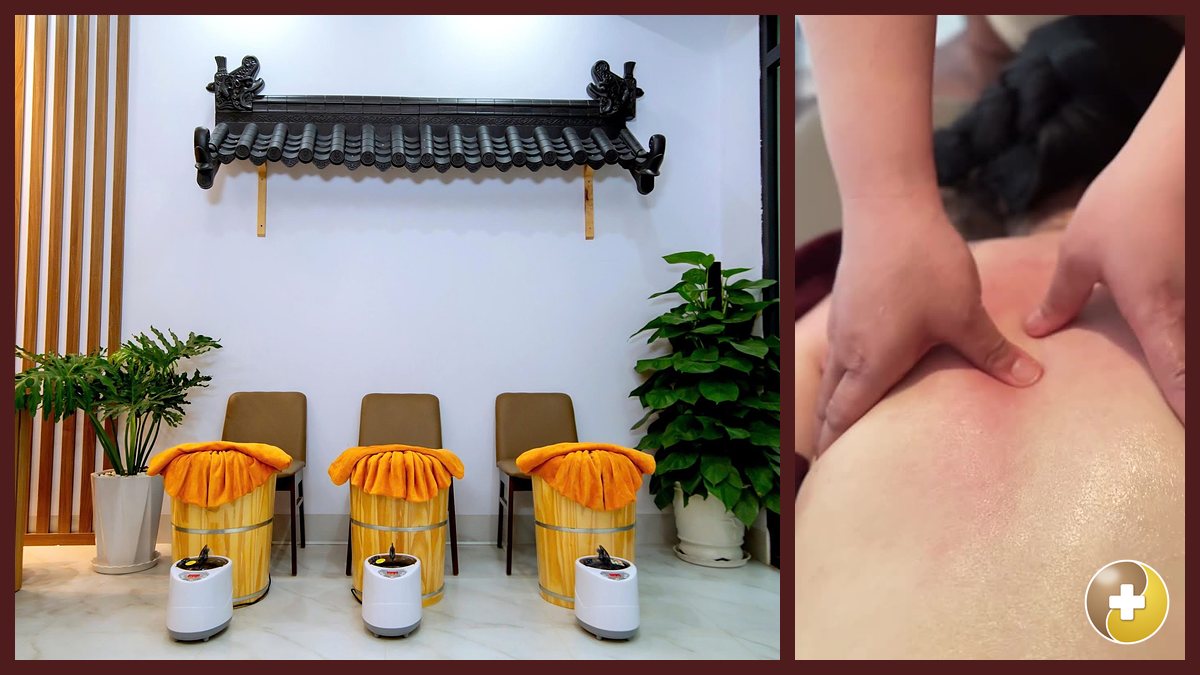
Quick answer: Therapeutic-style massage for women is gentle hands-on wellness care for the zones women tire most: neck and shoulders, lower back, a heavy head, cold hands and feet. At Tong Gia Acupoint Wellness in District 12 and District 9, Ho Chi Minh City, practitioners read your face and spine by hand before they begin.
Want Lương Y Tống Văn Huynh’s team to read your spine and posture in person?
What is therapeutic-style massage for women?
Therapeutic-style massage for women is a hands-on wellness session shaped around a woman's body and daily rhythm: targeted work on muscle, tendon, fascia and the nerve-reflex zones along the spine, to soften areas that have locked up, improve soft-tissue circulation and help the body rebalance. "For women" is not only about who is on the table. It is about the zones women in Ho Chi Minh City bring in most: a tight neck and shoulders from desk work or carrying a child, a heavy head before a period, a tired lower back from standing or high heels, cold hands and feet, and light, broken sleep from a busy mind.
In Western terms, muscle held tense for weeks brings poorer blood supply, tighter fascia and a nervous system that keeps the muscle on guard. Women often have thinner muscle layers, so repeated postures tire them sooner, and many put family and work before their own body. When the right spot is pressed deeply and long enough, the stretch sensors in muscle and tendon signal the spinal cord and the muscle lets go; steady, warm hands switch on more of the parasympathetic "rest" system. The Tong Gia training is clear: massage helps muscles relax, improves soft-tissue circulation, reduces stress and supports the body's natural recovery. It does not "detox" or "cleanse the liver", and it does not replace medical care.
In Eastern wellness, the Tong Gia training describes the Liver not as the organ alone but as a whole system linked to energy, blood, sinews, eyes, nails, emotions and the menstrual cycle. The Bladder meridian runs along both sides of the spine and carries the back points of the organs, such as Tâm du (BL15, 心俞, Heart), Can du (BL18, 肝俞, Liver), Tỳ du (BL20, 脾俞, Spleen) and Thận du (BL23, 肾俞, Kidney). At Tong Gia Acupoint Wellness (Huyệt Đạo Tống Gia) the method is called spinal nerve-reflex balancing massage, a Vietnamese traditional wellness method developed by Lương Y (master of traditional Vietnamese wellness) Tống Văn Huynh over more than 13 years of practice. It is gentle, discreet and wellness-focused, not medical care. For women living in or visiting Ho Chi Minh City, it is a calm, grounded way to experience Vietnamese Eastern wellness.
Tong Gia likes to say that lasting beauty starts inside. Rosy skin, coloured lips, bright eyes and deep sleep are signs the organs inside are working well; when they stay out of balance, the face dulls and tiredness shows before you say a word.
Common reasons women's necks, backs and heads get tired
| Habit or situation | What happens in the body | Zone that gets tired |
|---|---|---|
| Laptop and phone work | The head drifts forward and the neck muscles hold it up all day | Neck, between the shoulder blades, back of the head |
| Carrying a baby, breastfeeding, a bag on one shoulder | One side carries more and the spine compensates | One shoulder, upper back, wrists |
| Standing for hours, high heels | The pelvis tips forward; lower back and calves stay tight | Lower back, glutes, calves |
| Stress, worry, keeping things inside | The "alert" nervous system stays on; in Eastern terms Liver energy gets stuck | Raised shoulders, tense head, tight chest |
| Late nights, too little sleep, strict dieting | Muscle cannot recover; in Eastern terms the Spleen-Stomach makes less energy and blood | Fatigue, cold hands and feet, light-headedness |
| Air conditioning all day | Muscle tightens in the cold and circulation slows | Neck, shoulders, cold lower back |
From the Eastern view in the Tong Gia training, a few functions come up often for women: the Liver keeps energy flowing (when disturbed: bloating, tight chest, irritability, poor sleep, irregular cycles), the Liver stores blood (when low: dizziness, dry eyes, brittle nails, cramps, light periods), the Spleen governs muscle and limbs and makes energy and blood, and the Heart houses the mind and sleep. These are functional ideas from traditional medicine, not signs of disease. For sleep, see acupressure for sleep in Saigon.
Signs worth noticing
- Neck and shoulders tighten every afternoon; one shoulder sits higher; you keep squeezing your own shoulder.
- A heavy head or pain at the temples, often in the days before a period.
- Cold hands and feet, more so under stress or in air conditioning.
- Trouble falling asleep, vivid dreams, waking at night, still tired in the morning.
- A dull complexion, pale lips, dry tired eyes, brittle nails.
- A tired lower back and knees after standing; tingling fingertips after a lot of hand work.
- Easily irritated or upset, hard to relax even on a day off.
Most of these relate to muscle, posture, sleep and emotions. One sign alone says nothing definite about any organ.
When to see a doctor
This massage does not replace a medical check. Please see a doctor at a medical facility first if you have:
- Numbness or weakness in the arms or legs; pain shooting like electricity into an arm or leg.
- Severe lower abdominal pain, bleeding outside your period, or a cycle that has been irregular for months.
- A new lump in the breast or abdomen, or unusual discharge.
- Back pain with fever, burning urination, blood in the urine, or colicky flank pain.
- A sudden severe headache, a stiff neck with fever and vomiting, or dizziness with slurred speech or blurred vision.
- Long-lasting fatigue, pale skin, dizziness like anaemia, or unexplained weight loss: get checked at a medical facility alongside any wellness care.
- Chest tightness, shortness of breath, cold sweats, pain spreading to the left arm or jaw, a drooping face or weakness on one side: call 115 immediately.
If you are pregnant or might be, tell us when you book. Following the Tong Gia training, the practitioner does not use Hợp cốc (LI4, 合谷) or Tam âm giao (SP6, 三阴交), does not work on the abdomen and keeps the touch very light. After giving birth, after surgery, or with heart disease, high blood pressure, kidney disease or blood thinners, ask the health professionals who follow you about timing and let us know beforehand. This is a wellness service, not medical care.
The face-reading view: Liver, Spleen and Heart in a woman's face
Y Tướng Học (face reading for wellness) says the signs show outside, the organs lie inside, and the organs are the cause, the signs are the effect. In the Tong Gia training, the practitioner reads the face first to find where balance is lost, then confirms by touch along the spine. It is observation for wellness, not fortune-telling. For women, three organs come up most: the Liver (skin tone, emotions, eyes), the Spleen (lips, rosy colour, muscle tone) and the Heart (complexion, sleep).
- Liver: bright eyes, pink nails and supple tendons mean balance; dry eyes, a frown between the brows, tight shoulders and cramps suggest stuck Liver energy or Liver blood that needs nourishing.
- Spleen: rosy lips, good appetite and firm muscle mean a strong Spleen; pale lips, bloating, tired limbs and soft cool flesh mean it needs support.
- Heart: a rosy face and deep sleep mean enough Heart energy; a pale face, restless sleep and palpitations mean the mind needs rest.
| Face shape | How it looks | Constitution | What to care for | Back zone checked |
|---|---|---|---|---|
| Mục (目) | Long, narrow, slim | Yin Wood, thin energy and blood | Nourish, sleep enough, light "tonifying" touch | Thin muscles along the spine |
| Giáp (甲) | Wide forehead, pointed chin | "Strong above, weak below" | Cool the head and neck, protect sleep, support the low back | C1–C2 and low back |
| Thân (申) | Wide cheekbones, narrow forehead | Liver-Gallbladder and Spleen-Stomach | Release stress, care for the ribs and mid-back | D7–D9 |
| Dụng (用) | Two sides of the face uneven | Yin-yang leaning to one side | Balance both sides, correct posture | Shifted axis, uneven muscles |
Every type has strengths: the Mục type is thoughtful and curious, the Giáp type quick and bright. Learn more on Eastern face reading for wellness in Vietnam.
Vertebrae and nerve-reflex zones involved
The Tong Gia training divides the 33 vertebrae into neck C1–C7 (head, face, neck, arms), upper and mid-back D1–D12 (circulation, breathing, digestion), lower back L1–L5 (digestion, kidneys, urinary and reproductive function, legs) and sacrum S1–S5 (elimination and the pelvic floor). Nerve roots leave between the vertebrae, which is where the practitioner reads.
| Vertebrae | Nerves and function | Common in women | Organ in Eastern view |
|---|---|---|---|
| C1–C3 | Base of skull, head | Headaches, tense head, dizziness when tired | Liver, Kidney |
| C5–C7, D1 | Nerve roots to shoulders and arms | Tight shoulders, tired wrists, tingling fingertips | Liver (sinews) |
| D4–D5 | Chest and heart zone (BL14, BL15) | Poor sleep, palpitations, tight chest when worried | Heart |
| D7–D9 | Ribs, liver zone (BL18 at D9) | Irritability, tension before a period | Liver |
| D11–D12 | Digestion (BL20, BL21) | Bloating, low appetite, pale lips | Spleen-Stomach |
| L1–L3 | Kidneys, urinary (BL23 at L2) | Cold tired lower back, cold hands and feet | Kidney |
| L4–L5, S1–S5 | Legs, pelvis | Low back and glute ache, heavy legs | Kidney, Liver |
The Tong Gia training places the function group linked to the menstrual cycle in the D10–D12, L1–L3 and S1–S5 zones, as supportive school material that never replaces medical follow-up.
The Tong Gia method: spinal nerve-reflex balancing massage for women
Three "no's": no chemicals or herbs swallowed or injected, no needles, no rough force. Pressure rises through 5 pressure levels, from one fingertip to full body weight, only where needed; for slim, low-energy bodies the practitioner uses light tonifying vibration and kneading.
- Observe: face, skin, lips, eyes, posture and shoulder level; questions about work, sleep, cycle, pregnancy or recent birth, and health history.
- Read the spine by hand: skin temperature, muscle layer, vertebra shape and points of sensation, comparing left and right.
- Muscle release: pushing and rotating for thick muscle, plucking across fibrous bands on the shoulder blades, vibration for a tired body.
- Acupressure in the right zone: for example Can du (BL18) and Thái xung (LR3, 太冲) for stress and guarded shoulders; Tâm du (BL15) and Thần môn (HT7, 神门) for poor sleep; Tỳ du (BL20) and Túc tam lý (ST36, 足三里) for fatigue. Work stops once the skin over the key point turns from dry to slightly moist.
- Home care advice: stretches and tips for carrying a child, wearing a bag and sitting at a desk.
| Service | Length | Price (VND, approx. USD) |
|---|---|---|
| Neck-shoulder or lower-back care | 60 / 90 min | 550,000 (≈ $21), first visit 399,000 (≈ $15) / 750,000 (≈ $29) |
| Liver wellness care | 75 min | 750,000 (≈ $29) |
| Hair wash with neck-shoulder massage | 60 min | 250,000 (≈ $10) |
A typical session: a woman in her mid-thirties, an office worker with a small child, living in Vinhomes Grand Park, came to the District 9 branch after work. Her right shoulder was always tight, her head felt heavy before her period and she woke at night with her child. The practitioner noticed a higher right shoulder, a slight frown, pale lips and cool hands. Reading the spine found tight, warm muscle at C5–C7 on the right and around D7–D9, while the lower back felt cool. The 60 minutes released the right shoulder, pressed BL18 and BL15 and worked gently along the mid-back. The cool lower back was noted; she was advised that if she wants care for the lower back too, she should mention it when booking, as the time needed depends on her condition and the practitioner will advise when she books. She left saying her shoulder felt light, her head clear and her hands warmer. You may feel a "good ache" at key points; mild soreness for a day or two is normal; results vary and nothing is promised after one visit. See also neck and shoulder massage in Saigon and herbal hair wash in Ho Chi Minh City.
Want Lương Y Tống Văn Huynh’s team to read your spine and posture in person?
Self-care at home and prevention
- Switch sides: alternate the arm you carry your child or bag with; stand and roll the shoulders back 10 times every 45 minutes at a desk.
- Warm the neck for 10–15 minutes in the evening and keep the lower back and feet warm in air conditioning; never heat a swollen, hot area.
- Five minutes of slow belly breathing before bed: in for 4, out for 6; put the phone away early.
- Eat regular meals: in Eastern terms the Spleen-Stomach is the source of energy and blood.
- Choose low shoes for long standing days and stretch your calves each evening.
Book a session
Tong Gia has two branches in Ho Chi Minh City, open every day:
- District 12: 225 Dương Thị Mười, Phường Tân Chánh Hiệp (Tan Chanh Hiep ward, District 12). Daily 8:00–19:00.
- District 9, Vinhomes Grand Park: Căn T16-21 khu Manhattan, Phường Long Bình, TP. Thủ Đức (unit T16-21, Manhattan zone, Long Binh ward, Thu Duc City). Daily 9:00–20:00.
Call, Zalo or WhatsApp +84 888 264 559, or book online. Mention your tired zones, pregnancy or recent birth and any health conditions. Real guest reviews are on each branch's Google Maps profile.
Visit us
- Đông Y Huyệt Đạo Tống Gia Quận 12 (District 12)
225 Dương Thị Mười, Phường Tân Chánh Hiệp, Quận 12, HCMC · 8:00–19:00 daily · 0888 264 559 · Directions on Google Maps - Đông Y Huyệt Đạo Tống Gia Quận 9 (Vinhomes Grand Park, District 9)
Căn T16-21 khu Manhattan, Vinhomes Grand Park, Phường Long Bình, TP. Thủ Đức, HCMC · 9:00–20:00 daily · 0888 264 559 · Directions on Google Maps
Want Lương Y Tống Văn Huynh’s team to read your spine and posture in person?
FAQ
What is therapeutic-style massage for women, and is it gentle? It is hands-on wellness care with a clear target on muscle, tendon and the nerve-reflex zones along the spine, focused on the zones women tire most. Pressure rises through 5 pressure levels only where needed and as you respond; slim or low-energy bodies get a light, tonifying touch. It is not medical care.
I work at a desk in Saigon and my shoulders are always tight. Will this help? Desk work keeps the neck muscles holding the head all day. This massage releases the neck and shoulder blades and reads the C5–C7 zone by hand. Most guests feel lighter after the session, and posture tips help it last longer.
I'm pregnant. Can I still book? Tell us when you book. Following the Tong Gia training, the practitioner avoids Hợp cốc (LI4) and Tam âm giao (SP6), does not work on the abdomen and keeps the touch very light. After giving birth or surgery, ask the health professionals who follow you about timing first.
Can massage help with constant tiredness and poor sleep? It relaxes muscle and reduces stress, and many women sleep more deeply that night. Long-lasting fatigue with pale skin, dizziness, weight loss or months of irregular cycles should be checked at a medical facility at the same time.
How do I know my face-reading type? Look in the mirror at your skin tone, lips, eyes, brows and whether one shoulder sits higher. In Y Tướng Học, the Liver shows in the eyes and nails, the Spleen in the lips, the Heart in the complexion. At Tong Gia the practitioner observes first, then confirms by touch on the spine.
How much does a session cost? Neck-shoulder or lower-back care is 550,000 VND (≈ $21) for 60 minutes, 399,000 VND (≈ $15) on the first visit, 750,000 VND (≈ $29) for 90 minutes; Liver wellness care 75 minutes 750,000 VND; hair wash with neck-shoulder massage 60 minutes 250,000 VND (≈ $10).
Author: Lương Y Tống Văn Huynh – founder of Huyệt Đạo Tống Gia, a master of traditional Vietnamese wellness with over 13 years in Eastern wellness care, Y Tướng Học (face reading) and spinal nerve-reflex balancing massage.
Updated: 2026-11-16
Related guides
- What does acupressure do? Effects on muscles, nerves and the five organs, and how Tong Gia works in Ho Chi Minh City
- Acupressure in Thu Duc: pressure chosen by reading your spine, at the branch that suits your ward
- Sore after acupressure: is it normal? How to tell ordinary aching from warning signs, why it happens and how to look after yourself after a session in Ho Chi Minh City
- What are gua sha and cupping: two Vietnamese folk warming methods, the cupping points and when to skip them
- Unblocking the meridians (đả thông kinh lạc): what it really means, how a hands-on session works and what you will feel in Ho Chi Minh City
- Herbal compress: what the warmth really does, where it goes and who it suits
This is a wellness service, not medical care.