
What is a Vietnamese head spa (gội đầu dưỡng sinh)? Benefits, steps and who it suits, explained by Tong Gia
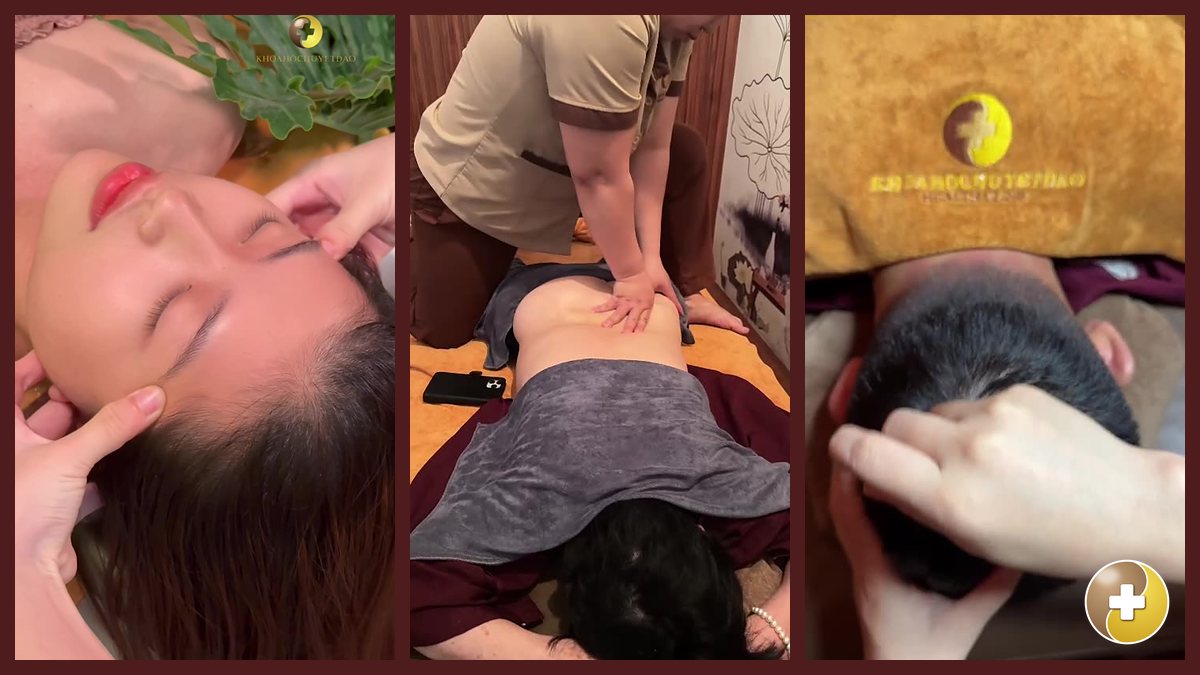
Quick answer: A Vietnamese head spa (gội đầu dưỡng sinh) is a warm herbal hair wash combined with scalp massage, muscle release at the neck and shoulders, and acupressure on the head, so your head feels lighter and your neck softer. Unlike a salon wash, it works on the neck too. Tong Gia offers it in Ho Chi Minh City.
Want Lương Y Tống Văn Huynh’s team to read your spine and posture in person?
What is a Vietnamese head spa, and how is it different from a salon hair wash?
A Vietnamese head spa, called gội đầu dưỡng sinh in Vietnamese, is head-and-neck care in which washing is only one step. It combines a warm herbal wash, fingertip scalp massage, release of the muscles at the back of the neck and shoulders, and gentle pressure on points on the head. The goal is not just clean hair but a lighter head, a softer neck and a calmer nervous system.
A salon wash focuses on hair: cleanse, condition, blow-dry, style, maybe a few minutes of scalp rubbing. A head spa focuses on you: why the head feels heavy, why the neck is stiff, why sleep is light, and which neck and shoulder areas are pulling that feeling upwards. At Tong Gia Acupoint Wellness (Huyệt Đạo Tống Gia), the herbal wash is combined with reading the neck by hand and releasing the neck and shoulder muscles.
In Western anatomy terms, a session works on three layers:
- The scalp: oil glands, sweat glands and hair roots. In Saigon's heat and humidity, with a motorbike helmet every day, the scalp gets oily and itchy quickly.
- The scalp muscle: a thin muscle running from the forehead to the back of the skull (occipitofrontalis). Under stress it tightens, and the head feels squeezed by a band.
- The deep muscles under the skull and the neck vertebrae: small muscles just below the occipital bone that link the head to C1–C2. Hours of screens and phones stiffen them, and the ache climbs into the back of the head.
Who usually books one in Ho Chi Minh City: office workers under air-conditioning all day, long motorbike commuters, busy parents, people whose head feels heavy in humid weather, light sleepers, and older guests who simply enjoy a slow, unhurried wash. Read more in the Vietnamese head spa Q&A and the herbal hair wash Q&A.
Why so many people need one: common causes
- Forward head posture: looking at screens and phones pulls a head of about 4–5 kg forward; the neck muscles hold it all day.
- Long-term stress: according to the Tong Gia curriculum, ongoing mental pressure tightens the whole occipitofrontalis and the shoulder-lifting muscles, so neck fatigue spreads into the head.
- Heat, humidity and helmets: sweat, traffic dust and an unwashed helmet liner press oil back onto the scalp.
- Air-conditioning on the neck: hours under a vent make the neck muscles contract from cold.
- Washing the wrong way at home: bending the neck over a low basin, very hot water, scratching with nails, sleeping with wet hair.
- Short sleep: late nights and broken sleep leave the head heavy in the morning.
Signs that a head spa suits you
- Your head still feels heavy after washing at home.
- Turning the neck feels stiff; pressing under the skull is tender.
- Tight temples and tired eyes every afternoon.
- An oily, itchy scalp after a day in a helmet.
- Trouble falling asleep, light sleep, groggy mornings.
- Raised, stiff shoulders after work.
At Tong Gia these signs help choose where to focus: scalp, base of the skull or shoulders. They are not used to name any illness.
When to see a doctor
A head spa is relaxation care. Please see a doctor at a medical facility, rather than relying on a wash or massage, if you have:
- A sudden, severe headache unlike any before, with vomiting, high fever, stiff neck, weakness, a drooping face or slurred speech: call 115 immediately.
- A headache that worsens over days or wakes you at night.
- Dizziness, ringing ears, double vision, numbness on one side of the face.
- A headache after a blow to the head.
- Hair falling out in patches, or a red, weeping, pus-filled scalp.
- Heavy hair loss with tiredness, weight loss or pale skin: get checked at a medical facility at the same time.
- Uncontrolled high blood pressure, pregnancy, or recent head or neck surgery: ask a medical professional before a head spa with acupressure.
This is a wellness service, not medical care.
The Y Tướng Học view: what the head, hair and scalp say about the organs
Y Tướng Học (face reading for wellness) in the Tong Gia curriculum follows one principle: "the signs show outside, the organs lie inside". The head is linked in the curriculum to the brain and spinal cord system and to inborn root energy. "Organs" here are functional systems in Eastern wellness, not anatomical organs.
The Kidney shows in the hair. The Kidney stores essence, governs bones and marrow, opens into the ears and shows in the hair: dark, glossy hair reflects sufficient essence and blood; dry, falling or early grey hair reflects a weaker Kidney system.
The Lung governs skin and body hair. It spreads qi to the surface; a dry, easily irritated or quickly oily scalp is the outermost layer of that system.
The Liver keeps qi flowing. Long stress makes Liver qi stagnate; the curriculum notes that under heavy pressure the scalp tightens and Liver yang can rise, bringing pain at the crown.
Three head shapes a Tong Gia practitioner pays attention to:
- Round, upright head: a round crown, straight axis and full occiput. The Governing Vessel and Bladder meridian flow well, but under pressure the scalp tightens easily.
- Head with a "dragon bone": a round, firm occiput. If this area is flat, the curriculum links it to insufficient Kidney essence and tight deep muscles under the skull, affecting the upper neck C1–C3.
- Bony head with thin scalp: thin skin stuck to the skull, hard to the touch; linked to Liver–Kidney yin weakness and headaches from tension in the whole scalp muscle and neck.
Reading signs only helps choose where to start; it never names a disease.
Spine and nerve-reflex areas involved in a head spa
In the Tong Gia curriculum on spinal nerve-reflex balancing, the 33 vertebrae are grouped by the areas they serve; the neck group C1–C7 serves the head, face, neck and arms. Washing without softening the neck rarely keeps the head light for long.
| Vertebrae / area | Nerves, function | Common signs | Organ system (Eastern view) |
|---|---|---|---|
| C1–C3, right under the skull | Upper neck linking head and spine; deep suboccipital muscles | Heavy back of head, stiff turning | Kidney (occiput, Governing Vessel) |
| C4–C7 | Neck, shoulders, arms | Tired neck, tight shoulders spreading upwards | Liver governs the tendons |
| T1–T3 | Upper back, circulation, breathing | Tightness between the shoulder blades, shallow breathing | Lung, Heart |
| Crown, Bách hội (GV20, 百会) | Where the midline meets the line between the ear tips | A tense head that will not let go, light sleep | Governing Vessel |
| Scalp muscle and skin | Occipitofrontalis; oil and sweat glands | Oily, itchy scalp, band-like tightness | Lung (skin), Kidney (hair) |
For chronic headaches and long-term poor sleep, the curriculum combines C1–C7, T1–T3 and the sacral area. The table shows "related" areas for choosing where to work, not a conclusion about any disease.
The Tong Gia head spa with spinal nerve-reflex balancing
Every session follows the method of Lương Y Tống Văn Huynh, a master of traditional Vietnamese wellness who founded Tong Gia and has over 13 years of practice in Eastern wellness, Y Tướng Học and spinal nerve-reflex balancing. Each visit combines an herbal wash with muscle release for the neck and shoulders, adjusted to each person; the main parts are:
- Observation: how long you sit at a screen and wear a helmet, how you sleep, blood pressure, pregnancy; a look at the hairline, scalp, complexion, head shape and shoulder height.
- Reading the spine by hand: fingers check each vertebra from C1 to C7 and T1 to T3, comparing left with right and top with bottom (the Symmetry principle), looking for "excited" zones: warmer skin, tighter muscle, more tenderness.
- Muscle release: the muscles under the skull, neck and shoulders, with pressure built up through 5 pressure levels, only on excited zones.
- Warm herbal wash: comfortably warm water that never runs into your eyes, with steady fingertip work across the whole scalp, from the forehead and crown to the temples and the base of the skull. According to the curriculum, herbs act mainly locally through the skin, keeping it warm and adding a sense of relaxation.
- Acupressure on the right points: a gentle hold on Bách hội (GV20) to clear the head and calm the mind; work on tight points under the skull and along the neck. When the skin at a point turns from dry to slightly moist, that point is done.
- Self-care guidance: hair dried thoroughly before you leave, tips on washing at home without folding the neck, and a 3–5 minute self-massage.
A typical session: the guest is often an office worker who comes after work with a heavy head since lunchtime, tight temples and trouble sleeping. The practitioner finds the right side under the skull harder and warmer than the left, with the right shoulder raised. The visit combines a warm herbal wash with release of the neck and shoulders until turning feels easier. Many guests drift off while the crown point is held for a few slow breaths. The hair is dried completely before leaving, with a reminder to keep the air-conditioner off the neck that night.
Suitable services (single-session prices, see the full price list or the head spa page):
- Gội đầu trược khí (herbal hair wash), 45 min: 150,000 VND (about 6 USD). Herbal wash and scalp massage.
- Hair wash with neck and shoulder massage, 60 min: 250,000 VND (about 10 USD). Adds muscle release at C1–C3 and the shoulders.
- Head care, 60 min: 750,000 VND (about 29 USD). Deeper work on the head and neck for long-term tension and poor sleep.
What guests feel: a cool, lightening scalp, a pleasant ache on tight points under the skull (the curriculum calls it "creating a sensation wave" so the body can adjust itself), and often sleepiness. Afterwards most describe a lighter head, an easier neck turn and deeper sleep; a few feel mild neck soreness the next day. Tong Gia supports balance and does not promise that one wash ends head heaviness. For a related topic, see the neck and shoulder massage Q&A.
Want Lương Y Tống Văn Huynh’s team to read your spine and posture in person?
Self-care at home and prevention
- Do not fold your neck: raise the basin to chest height or wash standing in the shower; afterwards roll your shoulders slowly ten times.
- Dry your roots before bed, never sleep under air-conditioning with wet hair, and let sweat dry for 15–20 minutes after a hot ride before washing.
- 3–5 minute self-massage: fingertips in small circles from forehead to crown, a light press on Bách hội for a few breaths, then along the hairline at the nape.
- Screen at eye level; every 45–60 minutes stand up and look into the distance for a few breaths.
- Wash your helmet liner every week.
Booking
- District 12: 225 Dương Thị Mười, Phường Tân Chánh Hiệp, Quận 12 (District 12), daily 8:00–19:00.
- Vinhomes Grand Park: Căn T16-21 khu Manhattan, Phường Long Bình, TP. Thủ Đức (Thu Duc City, former District 9), daily 9:00–20:00.
WhatsApp or Zalo +84 888 264 559 (0888 264 559 inside Vietnam), or book online. You can read genuine reviews on Google Maps from each branch page. Mention "head spa", 45 or 60 minutes and your branch. Staff mainly speak Vietnamese and reply in English with a translation tool. If you live in or visit Ho Chi Minh City, you are welcome to try this Vietnamese wellness method in person.
Visit us
- Đông Y Huyệt Đạo Tống Gia Quận 12 (District 12)
225 Dương Thị Mười, Phường Tân Chánh Hiệp, Quận 12, HCMC · 8:00–19:00 daily · 0888 264 559 · Directions on Google Maps - Đông Y Huyệt Đạo Tống Gia Quận 9 (Vinhomes Grand Park, District 9)
Căn T16-21 khu Manhattan, Vinhomes Grand Park, Phường Long Bình, TP. Thủ Đức, HCMC · 9:00–20:00 daily · 0888 264 559 · Directions on Google Maps
Want Lương Y Tống Văn Huynh’s team to read your spine and posture in person?
FAQ
What is a Vietnamese head spa? It is a wash with warm herbal water, combined with scalp massage, muscle release at the neck and shoulders, and acupressure on the head. Unlike a salon wash, the aim is a lighter head, a softer neck and relaxation, not only clean hair.
What does a head spa actually do for me? It cleans the scalp, relaxes the scalp muscle and the neck muscles, and most guests leave with a lighter head and an easier neck turn; many sleep more deeply that night. It is relaxation care, not a replacement for a check-up for unusual headaches or patchy hair loss.
Is a head spa good for you? For heavy heads, stiff necks and stress, yes, when done properly: warm (not hot) water, a well-supported neck, hair dried fully, pressure that suits you. With uncontrolled high blood pressure, pregnancy or recent head or neck surgery, ask a medical professional first.
How is a head spa at Tong Gia different from a salon wash? A salon wash mainly cleans and styles the hair. At Tong Gia, the visit combines an herbal wash with release of the neck and shoulder muscles, a health check-in first and self-care tips afterwards; the practitioner adjusts it to how you are on the day.
How often should I get one? Many guests come every 1–2 weeks, more often during stressful periods. You do not need it daily; at home keep washing normally with a mild shampoo and dry your roots well.
Can I go straight out into the wind afterwards? Let your hair be dried completely and rest a few minutes first. Avoid riding into cold wind or sitting with air-conditioning blowing on your neck right after, so the softened neck muscles do not tighten again.
Author: Lương Y Tống Văn Huynh – founder of Huyệt Đạo Tống Gia, a master of traditional Vietnamese wellness with over 13 years in Eastern wellness care, Y Tướng Học (face reading) and spinal nerve-reflex balancing massage.
Updated: 2026-11-16
Related guides
- What does acupressure do? Effects on muscles, nerves and the five organs, and how Tong Gia works in Ho Chi Minh City
- Acupressure in Thu Duc: pressure chosen by reading your spine, at the branch that suits your ward
- Sore after acupressure: is it normal? How to tell ordinary aching from warning signs, why it happens and how to look after yourself after a session in Ho Chi Minh City
- What are gua sha and cupping: two Vietnamese folk warming methods, the cupping points and when to skip them
- Unblocking the meridians (đả thông kinh lạc): what it really means, how a hands-on session works and what you will feel in Ho Chi Minh City
- Herbal compress: what the warmth really does, where it goes and who it suits
This is a wellness service, not medical care.