
Back acupoints: where they sit along the spine, what they relate to and how to press them safely
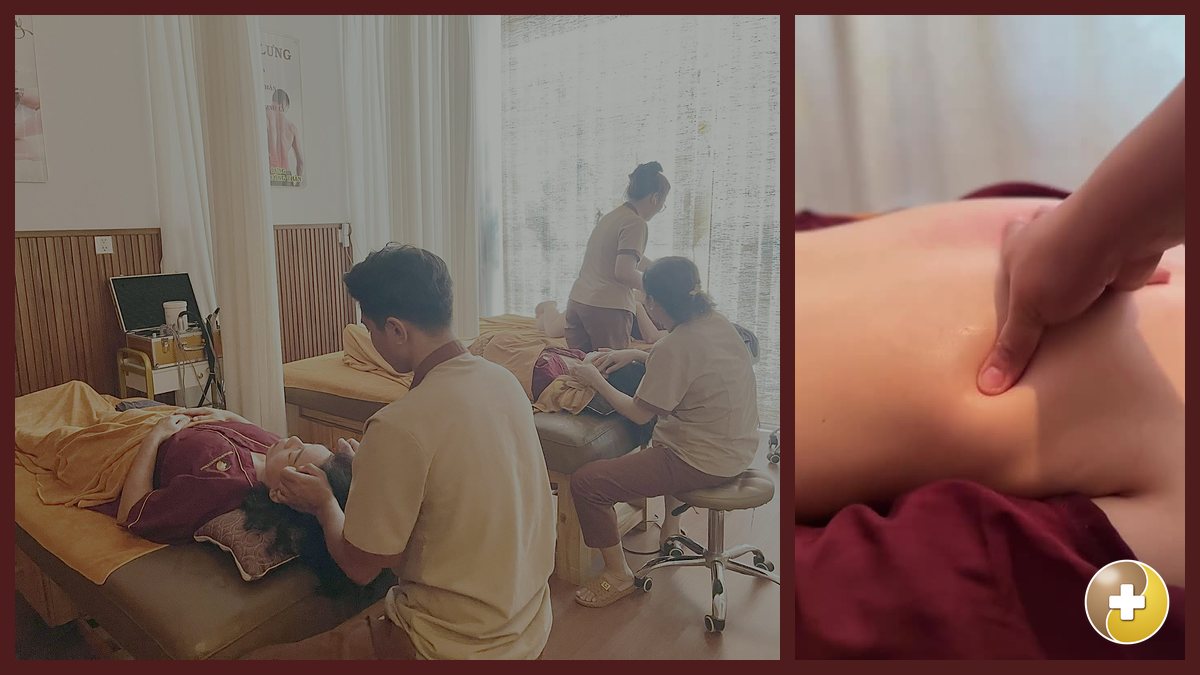
Quick answer: The main back acupoints are the back shu points running in two lines beside the spine, one for each organ: Lung shu, Heart shu, Liver shu, Spleen shu, Stomach shu and Kidney shu, plus Mingmen, Zhishi and Weizhong behind the knee. Tong Gia Acupoint Wellness in Ho Chi Minh City reads the spine by hand before pressing.
Want Lương Y Tống Văn Huynh’s team to read your spine and posture in person?
What are the back acupoints? A plain explanation, East and West
When people talk about "back acupoints", they usually mean a row of points running in two parallel lines on either side of the spine, about two finger-widths out from the midline. In traditional Eastern wellness these are the back shu points (Bối du in Vietnamese): each organ system has its own shu point, stacked from top to bottom roughly in the order the organs sit inside the body. The training manual of Tong Gia Acupoint Wellness (Huyệt Đạo Tống Gia) describes the Bladder channel beside the spine as "the place where the shu points of the organs gather".
From a Western anatomy view, this strip overlies the erector spinae, trapezius, rhomboids and quadratus lumborum. Just beneath are the gaps between vertebrae, where the spinal nerve roots exit to each side. Branches go to the skin and back muscles, and some connect with the sympathetic chain that helps regulate heart rate, breathing, digestion and the kidneys. That is why firm, well-placed pressure along the spinal groove often does more than loosen muscle: breathing slows, the belly settles, and many people get sleepy. It is a nervous-system response, nothing mystical.
The Tong Gia manual maps the 33 vertebrae like this: neck C1–C7 for head, face, neck and arms; thoracic D1–D12 for circulation, breathing and digestion; lumbar L1–L5 for digestion, kidneys, urinary and reproductive function and the legs; sacrum and coccyx S1–S5 for elimination and the pelvic floor. With that map in mind, it makes sense that upper-back points are used for shallow breathing, mid-back points for bloating, and lower-back points for tired lower back and knees.
In Ho Chi Minh City, the people who ask us about back acupoints are often expats working long hours in air-conditioned offices, ride-hailing drivers, factory staff bent over production lines, shop staff on their feet all day, and adult children who want to rub their parents' backs properly. This guide covers why the points get tight, warning signs, the face-reading view, a point-by-point table, how Tong Gia works and what you can do at home.
Why the back points feel tight and tender: habits, work, posture, climate
If pressing beside your spine feels sore, lumpy or "knotty", it is usually the muscle around the point that has been contracted for a long time. Common causes:
- Slouching at a screen: the upper back rounds, the head drifts forward, and the muscles between the shoulder blades (around Lung shu and Heart shu) are under strain all day.
- Long motorbike rides: vibration, wind on the back and a fixed grip on the throttle leave the waist area (around Kidney shu) aching.
- Bending and lifting: factory work, gardening, hand-washing laundry load L4–L5 and the hips.
- Air-con blowing on your back: cold muscle contracts and the lower-back skin feels cooler than elsewhere.
- Stress and irregular meals: many people get a hard band along the mid-back with bloating and burping, the zone of Liver, Spleen and Stomach shu.
- Little movement, very soft mattress: weak core and glutes make the back muscles do the extra work.
The Tong Gia manual trains practitioners to read four things in each area: skin temperature (warmer means an "excited" zone, cooler an "inhibited" one), the muscle layer (lumpy, hard, slack, fibrous), vertebra shape (raised, raised-and-shifted, shifted, sunken-and-shifted, sunken) and sensation (tender, numb, sharp). The soreness you feel is only the fourth factor; the other three decide whether to press, and how hard.
Signs to notice before pressing your back points
- Tender skin that is also hot, swollen or red: do not press there.
- Pain that travels: from the back to the chest or belly, or down to the buttock and leg with pins and needles, suggests an irritated nerve root.
- Pain on one side of the lower back with burning urination, blood in urine or fever.
- Pain between the shoulder blades that rises with effort, with chest tightness or breathlessness.
- Pain that does not change with position, or wakes you at night.
- Your history: osteoporosis, pregnancy, bleeding disorders, blood thinners, recent surgery, tumours. Tong Gia practitioners ask about these before laying hands on you.
When to see a doctor
If any of the following apply, please see a doctor first and do not press your back points or book a massage:
- Upper-back or between-the-shoulder-blades pain with chest pain, breathlessness or cold sweats, or pain spreading to the jaw or left arm: call 115 (Vietnam emergency) now.
- Numbness in the saddle area, inability to pass urine, or loss of bladder or bowel control: go to emergency.
- Leg weakness, a foot that drags, frequent tripping.
- Pain after a fall or accident; sudden back pain in older adults or people with osteoporosis.
- Fever, chills, flank pain with urinary symptoms.
- Unexplained weight loss, ongoing fatigue, pale skin like anaemia: get checked at a medical facility in parallel; acupressure does not replace this.
- Pain lasting more than 4–6 weeks despite rest and posture changes.
This is a wellness service, not medical care. As the Tong Gia manual puts it, acupoints do not act directly on organ cells; stimulating them supports circulation and comfort. If you are following medical advice, keep following it.
The Y Tướng Học view: which organs "show" on the back
The core idea of Y Tướng Học (face reading for wellness) is "the signs show outside, the organs lie inside". The back is one of the clearest places where this shows: each organ has a shu point, so when an organ system is out of balance its shu area tends to be harder, warmer or cooler. According to the Tong Gia manual:
- Lung shows in the nose, skin and breath. Shallow breathers who sigh a lot often have a tight upper back around Lung shu.
- Heart shows in the tongue and complexion. People with palpitations, poor sleep and a pale or flushed face tend to be tight around Heart shu.
- Liver shows in the eyes, nails and tendons. Under stress, the long back muscles pull into a hard band and the sides of the ribs feel tight.
- Spleen–Stomach shows in the mouth, lips and flesh. Poor appetite, bloating and pale lips often go with a large hard patch just below the ribs at the back.
- Kidney shows in the ears, hair, bones and lower back: tired lower back and knees, a cold lower back, fatigue when standing.
The ten face shapes in the manual also point to where to check first: a square, fleshy face (田) often carries thick muscle and a hard patch at D11–D12; a long, firm, square face (同) tends to tighten around D3; wide cheekbones (申) often hold the key point at D7–D9; a wide forehead with a pointed chin (甲) tends to run hot at the top of the neck and cool and sunken in the low back; a round face (圓) often has a cool, soft lower back; a long, thin face (目) has thin spinal muscles and needs only gentle work. This is a wellness lens for choosing where to look and how much pressure to use, not a medical finding and never a judgement.
Spine segments and nerve-reflex zones: the back acupoint table
Locations follow the Tong Gia manual. A "cun" is a body-relative unit; 1.5 cun out from the spine is roughly the width of your index and middle fingers held together.
| Point | Location | Spine level, nerve function | Common feeling | Related organ |
|---|---|---|---|---|
| Dingchuan (EX-B1) | Beside the spine below C7 | Lower neck, upper back; breathing | Stiff neck, shallow breath | Lung |
| Lung shu (BL13) | Below D3, 1.5 cun out | D1–D5: breathing | Ache between shoulder blades | Lung |
| Jueyin shu (BL14) | Below D4, 1.5 cun out | Circulation | Chest tightness under stress | Pericardium |
| Heart shu (BL15) | Below D5, 1.5 cun out | Circulation | Palpitations, poor sleep | Heart |
| Liver shu (BL18), Gallbladder shu (BL19) | Mid-back, between Heart shu and Spleen shu | D7–D10: digestion, liver and gallbladder | Hard mid-back band, tight ribs | Liver, Gallbladder |
| Spleen shu (BL20) | Below D11, 1.5 cun out | Digestion | Bloating, low appetite | Spleen |
| Stomach shu (BL21) | Below D12, 1.5 cun out | Digestion | Burping, heavy upper belly | Stomach |
| Kidney shu (BL23) | Below L2, 1.5 cun out | L1–L3: kidney, urinary | Aching waist, cold lower back | Kidney |
| Mingmen (GV4) | Hollow below L2 on the midline | L2 | Cold, tired lower back | Kidney yang |
| Zhishi (BL52) | Below L2, 3 cun out | L2, outer line | Weak, tired lower back | Kidney |
| Weizhong (BL40) | Centre of the back of the knee crease | Bladder channel, legs | Lower back ache | Bladder–Kidney |
Weizhong is not on the back, but it always travels with this group because of the old line the manual repeats: "for back pain, look to Weizhong". The table shows relationships for choosing where to work, not a way to label any organ as diseased. The manual also groups spine zones by purpose: nervous-system and sleep work uses C1–C7, D1–D3 and the sacrum; muscle and joint work uses C5–C7, L1–L5 and S1–S5; digestion and metabolism uses D1–D12 and L1–L3. For more reading, see our back massage Q&A and the acupressure massage Q&A.
The Tong Gia method: spinal nerve-reflex balancing on the back points
The method was built by Lương Y Tống Văn Huynh, a master of traditional Vietnamese wellness and the founder of Tong Gia, over more than 13 years of practice in Eastern wellness, Y Tướng Học and spinal nerve-reflex balancing. What makes it different from pressing points off a chart is read first, press second: the same Kidney shu might need warming in one person, cooling in another, and no pressure at all in a third. A session runs like this:
- Observation and screening questions: face shape, posture, skin tone; how long it has hurt, whether it travels, pregnancy, blood pressure, heart conditions, bleeding risk. Any warning sign and we stop and suggest a medical check.
- Reading the spine by hand: pressing, stroking, rolling along the spinal groove from neck to sacrum, comparing left with right and top with bottom, looking for "excited" zones (warm skin, hard muscle, rising tenderness).
- Muscle release only on excited zones, never pushing directly into inhibited ones. Pressure builds through 5 pressure levels: one finger, whole hand, bent arm, straight arm, whole-body weight; thin-muscled guests stay at the lighter levels.
- Acupressure on the right points: Lung shu for shallow breathing, Heart shu for restless sleep, Spleen and Stomach shu for bloating, Kidney shu, Mingmen, Zhishi and Weizhong for a tired lower back. Work stops when the skin at the key point turns from dry to slightly moist; warm skin is cooled, cool skin is warmed.
- Home-care coaching: one or two points you can rub yourself, desk posture and how often to come back.
A typical session: a man in his forties, an accountant with a square, fleshy face, came in with mid-back ache and bloating after office lunches. The practitioner found thick, lumpy muscle at D11–D12 with slightly warm skin, while the lower back felt cool. She released the patch below the ribs with the whole hand and then the bent arm, worked Spleen and Stomach shu until the skin turned moist, moved down to warm Kidney shu and Mingmen, and finished on Weizhong behind both knees. He said his belly gurgled softly, his back warmed up and he dozed for a few minutes; afterwards his mid-back felt lighter and twisting was easier. He was advised to walk for ten minutes after lunch rather than lie down.
Suitable services (single-session prices, see price list; 1 USD ≈ 26,000 VND):
- Back and waist care, 60 min: 550.000₫ (about 21 USD), first visit 399.000₫ (about 15 USD); 90 min: 750.000₫ (about 29 USD).
- Traditional Eastern massage, 60 min: 450.000₫ (about 17 USD) for whole-body relaxation and mild stress-related back tension.
- Herbal compress: 130.000₫ (about 5 USD), added at the end for a cold, stiff back.
What does it feel like? During the session, tight spots feel sore but pleasant; the manual calls this "creating a wave of sensation", a rhythm that lets the muscle contract and then let go. The back warms, breathing slows, many guests get drowsy. Afterwards the back feels lighter, sitting upright is easier and sleep is often deeper; the next day you may feel mild muscle tiredness, as after light exercise. Tong Gia supports and helps restore balance; we do not promise the pain will vanish. Guests' own accounts are in back massage in Saigon: a guest's experience.
Want Lương Y Tống Văn Huynh’s team to read your spine and posture in person?
Caring for your back points at home
- Rub the Kidney shu area, as the Tong Gia manual teaches: rub your palms until warm, place them on both sides of the lower back and rub up and down 50–100 times until warm. Skip fresh, swollen strains.
- Press Weizhong: sit with knees bent and use your thumb on the centre of the knee crease, 1–2 minutes each side, just to a mild ache. Skip it if you have visible varicose veins there.
- Ask a family member to stroke both sides of your spine with the whole hand, top to bottom, medium pressure; never press straight down on the bony tips, never use elbows or hard tools.
- The Ba Duan Jin move "both hands hold the feet to strengthen the kidneys and waist": bend forward, sliding the hands down the back to the legs, slowly, 6–8 times. Go gently with spinal pain or high blood pressure.
- Prevention: stand up every 30–45 minutes, keep your screen at eye level, keep air-con off your back, take a short walk after meals. Sleep problems? See acupressure for sleep.
If you are pregnant, have osteoporosis or take blood thinners, do not press hard on your back and ask a medical professional first.
Booking
Two branches in Ho Chi Minh City, open daily; you can read genuine guest reviews on Google Maps from each branch page:
- District 12: 225 Dương Thị Mười, Phường Tân Chánh Hiệp (Tan Chanh Hiep Ward). 8:00–19:00 daily.
- Vinhomes Grand Park, District 9: Căn T16-21 khu Manhattan, Phường Long Bình, TP. Thủ Đức (Unit T16-21, Manhattan zone, Long Binh Ward, Thu Duc City). 9:00–20:00 daily.
Book online or call, Zalo or WhatsApp +84 888 264 559. Tell us which part of the back bothers you (upper, middle or lower), whether it travels, any medical checks, pregnancy or health conditions, and whether you like light or medium pressure. This Vietnamese method, developed by Lương Y Tống Văn Huynh, is a good thing to try while you live in or visit Ho Chi Minh City.
Visit us
- Đông Y Huyệt Đạo Tống Gia Quận 12 (District 12)
225 Dương Thị Mười, Phường Tân Chánh Hiệp, Quận 12, HCMC · 8:00–19:00 daily · 0888 264 559 · Directions on Google Maps - Đông Y Huyệt Đạo Tống Gia Quận 9 (Vinhomes Grand Park, District 9)
Căn T16-21 khu Manhattan, Vinhomes Grand Park, Phường Long Bình, TP. Thủ Đức, HCMC · 9:00–20:00 daily · 0888 264 559 · Directions on Google Maps
Want Lương Y Tống Văn Huynh’s team to read your spine and posture in person?
FAQ
What are the main back acupoints? Mostly the back shu points in two lines beside the spine: Lung shu (D3), Jueyin shu (D4), Heart shu (D5), Liver and Gallbladder shu in the mid-back, Spleen shu (D11), Stomach shu (D12) and Kidney shu (L2), plus Mingmen on the midline and Zhishi further out. Weizhong behind the knee is always used with them for back ache.
Which acupoints help lower back pain? The Tong Gia manual uses Kidney shu, Mingmen, Zhishi and Weizhong for a tired lower back. The spine is read first: warm, hard zones get released, cool zones get warmed. If pain runs down the leg or the leg feels weak, see a doctor first.
Where exactly is the Kidney shu point? Below the spinous process of L2, 1.5 cun out on each side, roughly level with the navel at the back. Mingmen sits in the hollow directly below L2 on the midline, and Zhishi is 3 cun out.
Is it safe to press my own back points at home? Warm rubbing and gentle whole-hand pressure are usually fine. Do not press hard on the vertebrae, do not use hard tools, and avoid hot, swollen areas. If you are pregnant, have osteoporosis, take blood thinners or had recent surgery, ask a medical professional first.
Can back acupressure help me sleep? Many guests sleep more easily because the nervous system relaxes. For sleep, the Tong Gia manual combines the neck C1–C7, upper back D1–D3 and the sacral area, with Heart shu. Long-lasting insomnia still deserves a medical check.
How often should I have back acupressure? Rubbing Kidney shu can be a nightly habit. For long-standing tension, a full session every 5–7 days for a few weeks, then every 2–4 weeks to keep the muscles soft.
Author: Lương Y Tống Văn Huynh – founder of Huyệt Đạo Tống Gia, a master of traditional Vietnamese wellness with over 13 years in Eastern wellness care, Y Tướng Học (face reading) and spinal nerve-reflex balancing massage.
Updated: 2026-11-16
Related guides
- Acupressure for back pain: what it can do, which points are used and when to skip it
- Back acupoints: where they sit along the spine, what they relate to and how to press them safely
- Should I get a massage for back pain? When it helps, when to wait and when to get checked first
- Pain between the shoulder blades: why this strip of the back burns, three types to tell apart, and how Tong Gia cares for it in Ho Chi Minh City
- Back pain from sitting too long: why your lower back tires and how to care for it
- What causes back pain? A map of four areas, warning signs and Vietnamese spinal nerve-reflex care
This is a wellness service, not medical care.