
Should I get a massage for back pain? When it helps, when to wait and when to get checked first
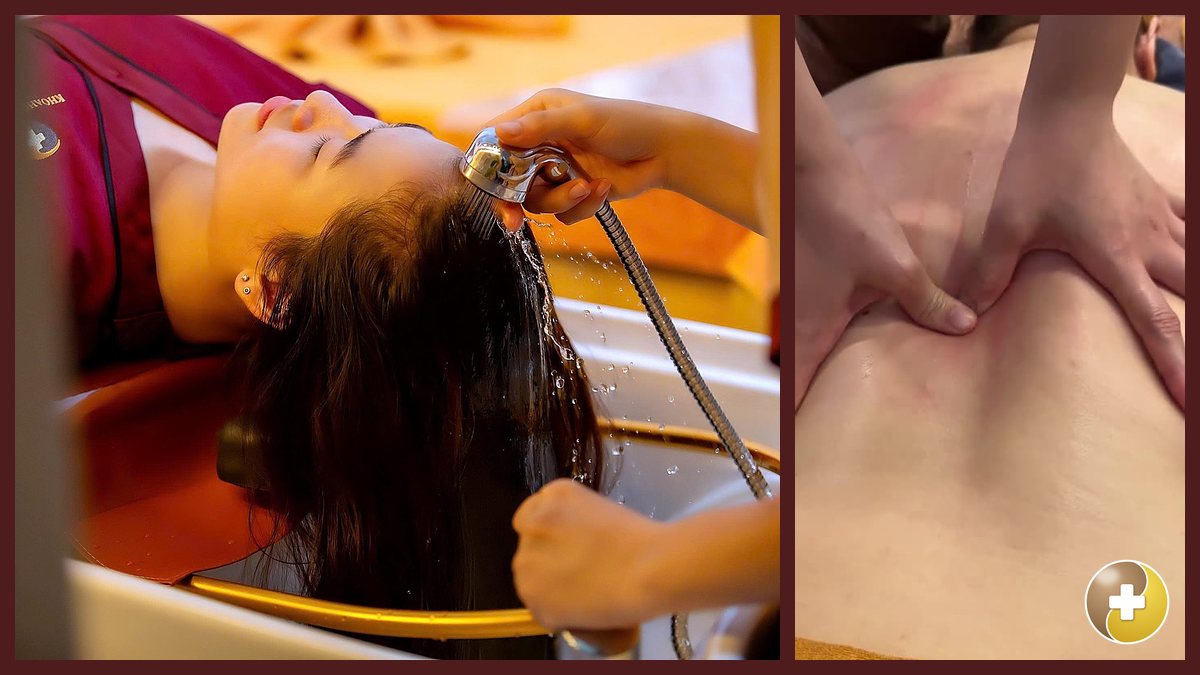
Quick answer: Yes, if your back pain comes from muscles, posture, cold or stress and there are no warning signs. Wait 1–3 days after a fresh twist; see a doctor first if there is fever, leg weakness or urinary change. Tong Gia Acupoint Wellness in District 12 and District 9, Ho Chi Minh City, adjusts pressure to each body.
Want Lương Y Tống Văn Huynh’s team to read your spine and posture in person?
Should you get a massage for back pain? What massage actually does
Short answer: for most back pain caused by muscles, posture or stress, yes, as long as warning signs are ruled out and the massage is the right kind. Some situations call for waiting (the first days of an acute strain, swelling, a recent fall), and some mean no back massage until you have seen a doctor (fever, leg numbness or weakness, urinary changes, a suspected fracture).
In Western terms, massage mainly works on soft tissue: muscle, tendon, fascia and skin. When the spinal erectors, quadratus lumborum or trapezius stay tight for a long time, small blood vessels inside the muscle are squeezed, the muscle gets less blood and you feel aching, tightness and dull pain. The right pressure and strokes help the muscle soften and blood flow improve; stimulating skin receptors briefly reduces how strongly pain is felt; and the nervous system shifts into a calmer state, with slower breathing and easier sleep. That is why many people feel lighter straight after a session.
Massage does not push a herniated disc back in, does not "put vertebrae back in place", and does not replace a medical check when the cause is the kidneys, bones or nerves. Knowing these limits helps you pick the right time and the right place.
At Tong Gia Acupoint Wellness (Huyệt Đạo Tống Gia) in Ho Chi Minh City, this question comes up all the time from expats who sit at laptops under air conditioning, ride motorbikes daily, train at the gym, or have just landed after a long flight.
Which back pain suits massage, and which should wait
| Situation | Back massage? | Why | What to do |
|---|---|---|---|
| Aching, tight back from sitting, riding, phone posture | Yes | Tight, under-supplied muscle; release helps it soften | Targeted muscle release plus posture changes |
| Cold, stiff back from air conditioning or rain | Yes | Cold makes muscle contract; warmth and release relax it | Massage with warming, herbal compress |
| Stress and poor sleep | Yes | Muscles brace unconsciously; massage calms the nervous system | Gentle, even rhythm, include head and neck |
| Sharp pain 1–3 days after a twist or heavy lift | Wait | Soft tissue may be acutely inflamed; deep pressure can flare it | Relative rest, gentle walking; light massage later |
| Known disc herniation or spinal wear (after a medical check) | Possibly, with medical clearance | Only soften muscles around the area, no hard pressure on vertebrae | Bring your results, tell the practitioner |
| Pain with fever, burning urine, blood in urine, leg weakness, after a fall | No, get checked first | Cause may be kidney, infection, nerve or bone | See a doctor |
| Pregnancy, severe osteoporosis, bleeding disorders, broken skin on the back | With caution | Position, pressure and areas need adjusting | Ask your doctor; mention it when booking |
The common causes that respond well to massage are mostly habits: slumped sitting for 8–10 hours, low screens, long motorbike rides, lifting with the back, weak core and glutes, soft mattresses, air conditioning on your back and long-term stress. For these, massage is half the answer; changing habits is the other half.
Signs worth checking before you book
- How long has it hurt? A few days after a twist, or a dull ache for months? Acute pain usually needs to settle first.
- Does moving help? Relief when you walk or stretch suggests muscle. Pain at night that rest does not ease needs a check.
- Does it travel down the leg, with tingling? That suggests an irritated nerve root.
- Whole-body signs: fever, weight loss, ongoing fatigue, burning urine, blood in the urine.
- Is the area swollen, hot or red? If so, don't massage that spot.
- Medical history: pregnancy, high blood pressure, diabetes, kidney disease, bleeding disorders, blood thinners. The Tong Gia curriculum requires practitioners to ask about these before starting.
When to see a doctor
Please see a doctor at a medical facility first, and skip back massage for now, if you have:
- Back pain with chest pain, breathlessness or sweating, or pain spreading to the jaw or left arm: call 115 immediately.
- Saddle-area numbness, inability to pass urine, or loss of bladder or bowel control: go to emergency.
- Leg weakness, foot drop, frequent tripping, spreading numbness.
- Pain after a fall or accident, or sudden pain in older adults with fragile bones.
- Fever or chills; one-sided flank pain with burning urine or blood.
- Unexplained weight loss, lasting fatigue, pale skin, or a history of cancer: get checked in parallel; massage cannot replace that.
- Night pain, worsening pain, or pain lasting over 4–6 weeks despite rest and posture changes.
- Heart conditions, stents or pacemakers: ask your doctor before the session.
This is a wellness service, not medical care. If you are following a doctor's plan, Tong Gia works only within those limits.
The Y Tướng Học view: why some backs need firm pressure and others gentle work
Vietnamese traditional wellness asks not just "should I get a massage?" but "what kind, for this person?". In the Tong Gia curriculum the lower back is "the house of the Kidney", and the Kidney governs the bones; the Liver governs the tendons (supple when strong, cramping when weak) and the emotions, so stress often tightens the long back muscles into bands. Kidney weakness shows as aching back and knees, tiring quickly when standing and a cold lower back.
The core idea of Y Tướng Học (face reading for wellness) is "the signs show outside, the organs lie inside". Lương Y Tống Văn Huynh, master of traditional Vietnamese wellness, uses face shape to choose both where to start and how firm to be:
- Long, thin, bony face (目): thin spinal muscles, vertebrae that sink easily. Not suited to deep pressure; the curriculum calls for gentle tonifying techniques such as vibration and light kneading.
- Full cheeks and jaw (由): very thick lower back and hip muscles prone to stagnation; deeper work around the hips.
- Square, fleshy face (田): thick back muscles, large tight patches at T11–T12; tolerates firm pressure.
- Bony face, high cheekbones (王): fibrous muscle stuck in joint gaps; needs plucking and deep pushing.
- Round face (圓): cool skin and soft muscle at the lower back, dull ache; warming matters more than force.
- Wide jaw (風): pain that moves around, muscles tightening unevenly with position changes.
So "harder is better" is not true for everyone. This is a wellness reading for choosing technique, not a medical conclusion and never a judgement.
Spine segments and nerve-reflex zones involved
According to Tong Gia's spinal nerve-reflex balancing curriculum, T1–T12 serve circulation, breathing and digestion; L1–L5 serve digestion, kidneys, urinary and reproductive organs and the legs; S1–S5 serve elimination and the lower pelvis. Nerve roots leave between the vertebrae, so good massage softens the muscle around those gaps rather than pressing straight down on the spinous processes.
| Segment | Function served | Typical complaint | Related organ | Massage note |
|---|---|---|---|---|
| T3–T7 | Breathing, circulation | Ache between shoulder blades, shallow breathing | Lung (BL13), Heart (BL15) | Moderate pressure, watch the breath |
| T7–T12 | Digestion | Stiff mid back under stress, bloating | Liver, Spleen-Stomach | Not right after a big meal |
| L1–L3 | Kidneys, urinary tract | Tired waist, cold lower back | Kidney (BL23, GV4 at L2) | Warm first, press later |
| L4–L5 | Legs | Low back pain on bending or lifting | Kidney – Liver | Disc problems: soften side muscles only |
| L5–S1, sacrum | Sciatic nerve, pelvis | Pain into buttock and leg | Liver – Kidney – Bladder | Numbness down the leg: get checked first |
The Tong Gia method: spinal nerve-reflex balancing for back pain
The method was built by Lương Y Tống Văn Huynh, founder of Tong Gia, over more than 13 years of practice in traditional Vietnamese wellness, Y Tướng Học and spinal nerve-reflex balancing. Unlike a standard relaxation massage, it reads first, works second, and knows when to stop.
- Observation and screening: duration, radiation, medical checks, pregnancy, blood pressure, diabetes, kidney disease, bleeding risk; face and posture. Any warning sign means no session and advice to get a medical check.
- Reading the spine by hand: skin temperature, muscle layer and the shape of each vertebra, compared above, below and side to side.
- Muscle release only in "excited" zones (warm, tight, more tender), building through 5 pressure levels: one finger, whole hand, bent arm, straight arm, body weight. Thin-muscled guests stay at the light levels.
- Acupressure: Kidney shu (BL23, 腎俞) 1.5 cun beside L2, Mingmen (GV4, 命門), Zhishi (BL52, 志室) and Weizhong (BL40, 委中) behind the knee. Work stops when the skin at the key point turns from dry to slightly moist.
- Home-care advice: posture, stretches, and when to come back.
A typical session: a slim woman around 50 with a long face comes with her daughter. Years of lower back ache; a previous very hard massage left her sore for days, so she was hesitant. A medical check showed mild spinal wear. The practitioner sees the 目 pattern, thin spinal muscles and a cool, hollow L3–L5. The whole session stays at the one-finger and whole-hand levels, with vibration and light kneading, warming the Kidney shu and Mingmen area before finishing on Weizhong. She falls asleep halfway and calls the next day to say her back feels light, not sore.
Suitable services (see the price list):
- Back and waist care, 60 min: 550,000₫ (about US$21); first visit 399,000₫ (about US$15); 90 min: 750,000₫ (about US$29).
- Traditional Eastern massage, 60 min: 450,000₫ (about US$17) for mild, stress-related back tension.
- Herbal compress: 130,000₫ (about US$5) after the session for a cold, stiff back.
What you feel: sore-but-pleasant pressure on tight points, spreading warmth, often drowsiness; afterwards a lighter back, easier bending and deeper sleep, sometimes mild muscle tiredness the next day. If pain clearly worsens or numbness appears, tell us and get checked. Will massage make back pain go away? For muscular pain many people improve clearly over a few sessions plus habit changes; for disc or wear-related pain it only makes the surrounding muscles softer and more comfortable. Tong Gia supports balance and does not promise the pain will disappear. More reading: back massage in Saigon: Q&A, a back massage session, step by step, acupressure massage questions.
Want Lương Y Tống Văn Huynh’s team to read your spine and posture in person?
Self-care between sessions
- Walk a little every day; long bed rest weakens muscles and invites relapse.
- Stand up every 30–45 minutes, screen at eye level, small cushion behind the waist.
- Ten minutes each morning: knees to chest, cat–cow, glute bridge. Stop if pain increases.
- Rub the Kidney shu area: warm your palms, place them on both sides of the lower back and rub up and down 50–100 times. No heat on a fresh, swollen strain.
- Sensible rhythm: long-standing pain, one session every 5–7 days for a few weeks, then less often; desk-related tension, every 2–4 weeks. Travellers can see massage after a long flight.
Booking
Two branches in Ho Chi Minh City, open daily, with genuine guest reviews on Google Maps:
- District 12: 225 Dương Thị Mười, Phường Tân Chánh Hiệp (Tan Chanh Hiep Ward). 8:00–19:00 daily.
- Vinhomes Grand Park, District 9: Căn T16-21 khu Manhattan, Phường Long Bình, TP. Thủ Đức (Unit T16-21, Manhattan zone, Long Binh Ward, Thu Duc City). 9:00–20:00 daily.
Book online or call, Zalo or WhatsApp +84 888 264 559. Tell us how long it has hurt, whether it travels down the leg, whether you have had a medical check, any pregnancy or health conditions, and whether you prefer light or medium pressure.
Visit us
- Đông Y Huyệt Đạo Tống Gia Quận 12 (District 12)
225 Dương Thị Mười, Phường Tân Chánh Hiệp, Quận 12, HCMC · 8:00–19:00 daily · 0888 264 559 · Directions on Google Maps - Đông Y Huyệt Đạo Tống Gia Quận 9 (Vinhomes Grand Park, District 9)
Căn T16-21 khu Manhattan, Vinhomes Grand Park, Phường Long Bình, TP. Thủ Đức, HCMC · 9:00–20:00 daily · 0888 264 559 · Directions on Google Maps
Want Lương Y Tống Văn Huynh’s team to read your spine and posture in person?
FAQ
Should I get a massage for back pain? Yes, if the pain comes from muscles, posture, cold or stress and there are no warning signs. Wait 1–3 days after a fresh twist with sharp pain. Skip back massage and see a doctor first if there is fever, urinary change, leg weakness, a recent fall or night pain.
Will massage make my back pain go away? For muscular pain, many people improve clearly over a few sessions combined with better posture and movement. For disc problems or spinal wear, massage only makes the surrounding muscles softer and more comfortable. Tong Gia is a wellness service and does not promise results.
Can I get a massage with a herniated disc? Possibly, after a medical check and with clearance. Practitioners only soften the muscles beside the spine, with no hard pressure on the vertebrae and no twisting. Leg weakness or bladder changes mean no massage and an urgent check.
Is a harder massage better for back pain? Not necessarily. Thin, bony bodies need light pressure and gentle techniques; thick, stiff muscles need deeper work. Too much pressure can leave you sore for days. The right pressure feels sore but pleasant.
How often should I get a back massage? For long-standing pain, about once every 5–7 days for a few weeks, then less often. For desk-related tension, every 2–4 weeks, plus standing up every 30–45 minutes.
How much is a back massage at Tong Gia? Back and waist care is 550,000₫ (about US$21) for 60 minutes, 399,000₫ (about US$15) on your first visit, and 750,000₫ (about US$29) for 90 minutes.
Author: Lương Y Tống Văn Huynh – founder of Huyệt Đạo Tống Gia, a master of traditional Vietnamese wellness with over 13 years in Eastern wellness care, Y Tướng Học (face reading) and spinal nerve-reflex balancing massage.
Updated: 2026-11-16
Related guides
- Acupressure for back pain: what it can do, which points are used and when to skip it
- Back acupoints: where they sit along the spine, what they relate to and how to press them safely
- Should I get a massage for back pain? When it helps, when to wait and when to get checked first
- Pain between the shoulder blades: why this strip of the back burns, three types to tell apart, and how Tong Gia cares for it in Ho Chi Minh City
- Back pain from sitting too long: why your lower back tires and how to care for it
- What causes back pain? A map of four areas, warning signs and Vietnamese spinal nerve-reflex care
This is a wellness service, not medical care.