
Back pain from sitting too long: why your lower back tires and how to care for it
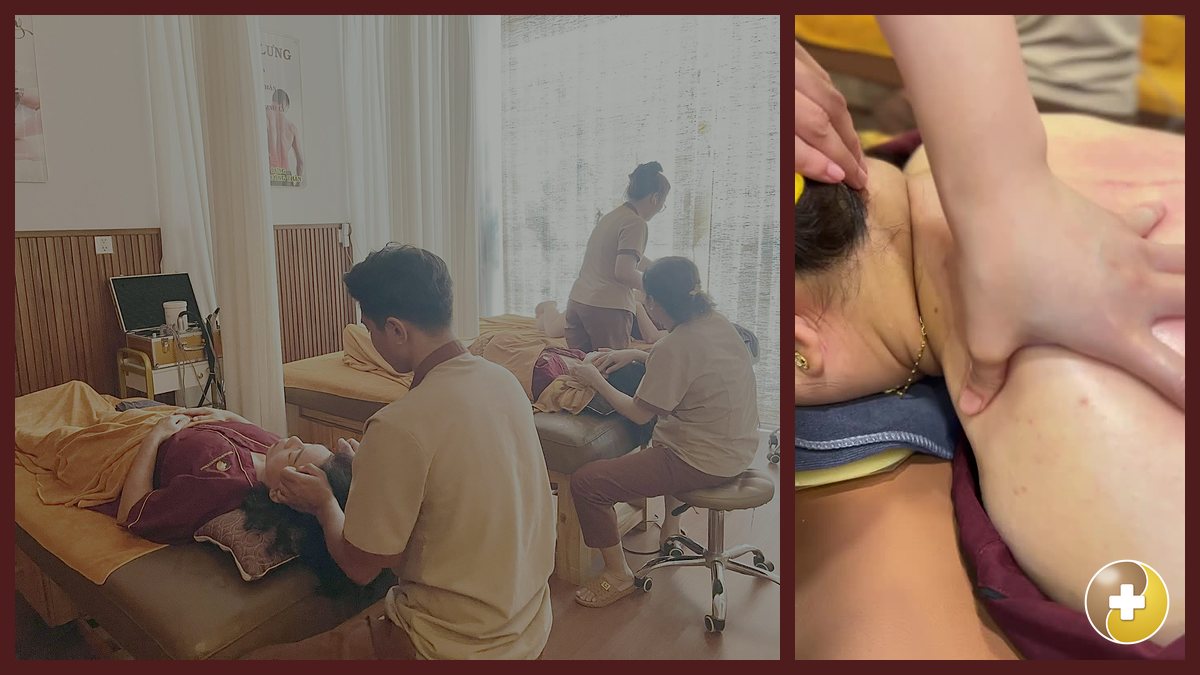
Quick answer: Back pain from sitting too long usually comes from lower-back muscles holding one position for hours and discs loaded by a rounded back. Standing every 45 minutes, a better chair and muscle release along the spine help. Tong Gia Acupoint Wellness (Huyệt Đạo Tống Gia), District 12 and Vinhomes Grand Park, Ho Chi Minh City, cares for backs by hand.
Want Lương Y Tống Văn Huynh’s team to read your spine and posture in person?
What back pain from sitting too long is, and who gets it
Back pain from sitting too long is that tired, stiff, heavy or dull ache in the lower back, sometimes the mid-back or around the tailbone, that appears after one or two hours in a chair and builds towards the end of the day. When you stand up the back feels "stuck"; you push on the desk and stretch for a moment before you can straighten. In Western terms most cases are mechanical. The erector spinae muscles along the spine hold your trunk for hours and become fatigued and tight; the lumbar discs carry more load when you sit than when you stand, especially when the back rounds into a C shape; the hip flexors at the front shorten while the glutes barely work and weaken, pulling the pelvis and lower back out of their natural position.
In Ho Chi Minh City the people who complain about this are office workers at the Quang Trung Software Park and in the towers of District 1 and 3, engineers at the Saigon Hi-Tech Park working at screens and microscopes, ride-hailing drivers, online sellers, students preparing for exams, and remote workers on a sofa with a laptop on their knees. Many also ride a motorbike 30–60 minutes each way, which means another long sit on a vibrating seat. The fatigue piles up from morning to night.
This is different from pain in the middle of the back while sitting and from tailbone pain when sitting. This article gives the overall picture and focuses on the lower back, the area that tires most in people who sit a lot. If your whole back is tired, see a back massage session in Saigon.
Common causes: habits, work, posture and environment
- Hours without standing up: muscles do not alternate between contracting and relaxing, blood flow drops and waste builds up, causing tiredness and stiffness.
- A chair with no lumbar support: too deep, too soft or without a backrest; you slide forward and the back curls like a prawn.
- A low screen or a laptop on your lap: the head and shoulders move forward and drag the whole spine into a curve.
- Sitting to one side: crossed legs, sitting on one foot, a thick wallet in the back pocket that tilts the pelvis.
- Long motorbike rides: low seats, bumpy roads, traffic jams; the lower back sits and absorbs vibration at the same time.
- Little exercise and weak core and glutes: the "armour" that supports the spine thins out and the lower back takes the load.
- Extra weight: a heavier belly pulls the lower back into an arch and L4–L5 carries more.
- Cold air conditioning: chilled back muscles contract and feel worse by evening.
- Work stress: you brace while concentrating, breathe shallowly and never fully relax.
Accompanying signs to watch
- Pain spreading to the buttock, the back of the thigh or calf, sometimes numb feet.
- A stiff back in the morning; bending to tie shoes is hard.
- A sharp twinge when you stand up, easing only after a few steps.
- One side of the lower back hurts more; shoulders or hips look uneven.
- Tired knees, fatigue when standing, cold hands and feet, waking at night to urinate.
- Neck and shoulder tension and headaches, because the whole spine is pulled into a curve.
When to see a doctor
Please see a doctor at a medical facility soon if back pain from sitting comes with:
- Leg numbness or weakness that keeps getting worse, tripping, a dropping foot.
- Numbness in the groin, buttocks or saddle area, or difficulty controlling bladder or bowels: go to emergency immediately.
- Fever, flank pain with burning urination or blood in the urine, or cramping flank pain spreading to the lower abdomen.
- Pain after a fall or accident, particularly in older adults or people with osteoporosis.
- Night pain that rest does not ease, unexplained weight loss or ongoing fatigue: get checked in parallel.
- Upper-back pain spreading to the chest, chest tightness, shortness of breath or cold sweats: call 115 immediately.
This is a wellness service, not medical care.
The Y Tướng Học view: Kidney, Spleen and the outward signs of a tired back
According to the Tong Gia curriculum, the Kidney stores essence, governs bones and marrow and is linked to the lower back, knees and ears; when its function weakens, the lower back and knees tire and standing quickly becomes uncomfortable. The Spleen governs the flesh and limbs: irregular meals, long sitting and little movement leave muscles soft and limbs heavy. The Liver governs the sinews, and long stress makes them pull tight. The curriculum is also clear that most back pain comes from muscles, ligaments and the spine; it is not a reason to conclude you have a kidney disease.
Y Tướng Học (face reading for wellness), developed by Lương Y Tống Văn Huynh, a master of traditional Vietnamese wellness, is built on "the appearance is outside, the organ is inside." For people whose back tires when sitting, the practitioner notices:
- The ears: the Kidney "opens" into the ears; full, rosy ears suggest strong Kidney energy, thin pale ears suggest keeping the lower back warm and cared for.
- The bridge of the nose: the curriculum sees the nose as a miniature of the spine; a crooked bridge often goes with a tilted spinal axis, so L4–L5–S1 and the pelvis deserve a closer look.
- A round, full face: a Water type whose lower back tends to feel cool, with soft muscles; warmth and gentle regular movement help.
- A face narrow above and wide below: thick lower-back and hip muscles that congest easily; stretching the hips and lower back helps.
- Sitting posture: shoulders falling forward, belly pushed out, hips at different heights.
Vertebrae, nerve reflex areas and related organs
The Tong Gia curriculum links the lumbar spine L1–L5 with digestion, kidneys, urinary and reproductive function and the legs, and the sacrum S1–S5 with elimination and the pelvic area. Muscle–bone–joint concerns such as disc problems, sciatica, neck aches and numb limbs are checked at C5–C7, L1–L5 and S1–S5.
| Vertebrae | Nerves / function | What you feel after long sitting | Related organ |
|---|---|---|---|
| D10–D12 | Mid-to-lower back, digestion | Tired waist, bloating if you sit straight after eating | Spleen and Stomach |
| L1–L3 | Kidneys, urinary tract, front of thigh | Upper lower-back fatigue, a cool back, night urination | Kidney |
| L4–L5 | Nerve roots to buttocks and legs | Low back ache, pain into the buttock, numb legs | Kidney |
| S1–S5, tailbone | Pelvis, elimination | Tailbone and buttock ache on hard chairs | Kidney |
| C5–C7, D1–D3 | Shoulders, arms, upper back | Neck and shoulder tension from slouching | Liver, Lung |
The Tong Gia method: spinal nerve-reflex balancing for people who sit all day
This Vietnamese traditional method was developed by Lương Y Tống Văn Huynh over more than 13 years and follows eight rules of the hand. A session for back pain from sitting:
- Observation: hours of sitting, chair and desk, commuting distance, health history; posture, hip height, ears and nose bridge.
- Reading the spine by hand: touching, stroking, pressing and rolling from the neck to the tailbone to feel skin temperature, muscle layer, raised, sunken or shifted vertebrae and tender points.
- Muscle release: softening the erector spinae, quadratus lumborum and glutes, with pressure rising in five steps and focused on warm, tight areas.
- Acupressure on the right points: following the curriculum, working the Bladder meridian down both sides of the spine and pressing Shenshu (BL23), Zhishi (BL52) and Mingmen (GV4), plus Weizhong (BL40) behind the knee for back pain. Work stops when the skin turns from dry to slightly moist.
- Self-care advice: chair height, standing breaks and rubbing the lower back at home.
Tight spots feel tender but pleasant, the lower back warms up and many guests say their legs feel lighter. Afterwards standing up is easier and sleep is deeper; mild tenderness the next day usually fades within a day or two. Because this kind of pain is about habits, the session helps rebalance muscles and spine, while how long the relief lasts depends on how you sit every day.
A typical visit: a software developer who sits 9–10 hours a day and games at weekends comes in with pain on the left side of the lower back and a twinge every time he stands up in the afternoon. The practitioner finds the left hip higher, the left lumbar muscles thick and warm, L4–L5 tender on the left and the sacral area cool. The 90-minute session releases the left lower back and buttock, works the Bladder meridian, Shenshu and Weizhong, and ends with advice to set the chair so the knees sit slightly below the hips, with a 45-minute timer to stand.
| Service | Duration | Price |
|---|---|---|
| Back and waist care | 60 min | 550,000 VND (≈ 21 USD); first visit 399,000 VND (≈ 15 USD) |
| Back and waist care | 90 min | 750,000 VND (≈ 29 USD) |
| Cupping to release cold (add-on) | 30 min | 85,000 VND (≈ 3 USD) |
See back massage in Saigon: Q&A, body massage for Quang Trung Software Park workers and massage prices in Ho Chi Minh City.
Want Lương Y Tống Văn Huynh’s team to read your spine and posture in person?
Home care and prevention for desk workers
- The 45–2 rule: after 45 minutes of sitting, stand for 2 minutes, walk, stretch tall and gently lean back.
- Set up the chair: feet flat, knees level with or slightly below the hips, back against the chair; put a small cushion behind the lower back if needed.
- Do not cross your legs or keep a wallet in the back pocket during long sits or rides.
- Rub the lower back: as taught in the curriculum, rub your palms until warm, place them on both sides of the lower back and rub up and down 50–100 times until warm.
- Use your glutes and core: walk 20–30 minutes a day and add a few gentle exercises.
How to book
- District 12 branch: 225 Dương Thị Mười, Tân Chánh Hiệp Ward (District 12), 8:00–19:00 daily.
- District 9 branch: Unit T16-21, Manhattan subdivision, Vinhomes Grand Park, Long Bình Ward, Thủ Đức City (former District 9), 9:00–20:00 daily.
- Hotline / Zalo / WhatsApp: +84 888 264 559.
- Online booking: /dat-lich.
When booking, just say "I sit a lot and my lower back hurts" and how many hours you sit each day, so the right session length can be prepared. If you live in or are visiting Ho Chi Minh City, this is an easy way to experience a Vietnamese traditional wellness method from Tong Gia Acupoint Wellness (Huyệt Đạo Tống Gia).
Visit us
- Đông Y Huyệt Đạo Tống Gia Quận 12 (District 12)
225 Dương Thị Mười, Phường Tân Chánh Hiệp, Quận 12, HCMC · 8:00–19:00 daily · 0888 264 559 · Directions on Google Maps - Đông Y Huyệt Đạo Tống Gia Quận 9 (Vinhomes Grand Park, District 9)
Căn T16-21 khu Manhattan, Vinhomes Grand Park, Phường Long Bình, TP. Thủ Đức, HCMC · 9:00–20:00 daily · 0888 264 559 · Directions on Google Maps
Want Lương Y Tống Văn Huynh’s team to read your spine and posture in person?
FAQ
Why does my back hurt when I sit for a long time? Usually because the lower-back muscles hold one position for hours and the lumbar discs carry more load when the back rounds. If you also have worsening leg weakness, bladder changes, fever or weight loss, get a medical check.
What can office workers do about back pain? Stand for 2 minutes every 45 minutes, set the chair so your back rests against it and the knees are not above the hips, keep the screen at eye level and walk every day. A muscle release session along the spine helps when muscles have been tight for a long time.
Is back pain from sitting a sign of weak kidneys? Do not assume so. Most back pain comes from muscles, ligaments and the spine. Kidney-related pain is usually in the flank with fever, burning urination or blood in the urine, and needs a medical check.
Does massage help a back that is tired from sitting? It softens the back muscles and improves blood flow, so the back feels lighter and moves more easily. Changing how you sit keeps the effect longer.
How long until it eases? Simple muscle fatigue often settles within days once you stand up regularly and move. If pain lasts more than 4–6 weeks or keeps getting worse, get it checked.
How much is a 60-minute back session? 550,000 VND (about 21 USD), or 399,000 VND (about 15 USD) on your first visit; 90 minutes is 750,000 VND (about 29 USD).
Author: Lương Y Tống Văn Huynh – founder of Huyệt Đạo Tống Gia, a master of traditional Vietnamese wellness with over 13 years in Eastern wellness care, Y Tướng Học (face reading) and spinal nerve-reflex balancing massage.
Updated: 2026-11-16
Related guides
- Acupressure for back pain: what it can do, which points are used and when to skip it
- Back acupoints: where they sit along the spine, what they relate to and how to press them safely
- Should I get a massage for back pain? When it helps, when to wait and when to get checked first
- Pain between the shoulder blades: why this strip of the back burns, three types to tell apart, and how Tong Gia cares for it in Ho Chi Minh City
- Back pain from sitting too long: why your lower back tires and how to care for it
- What causes back pain? A map of four areas, warning signs and Vietnamese spinal nerve-reflex care
This is a wellness service, not medical care.