
Cupping for a common cold: how much it warms you up, who should skip it, and how Tong Gia does it
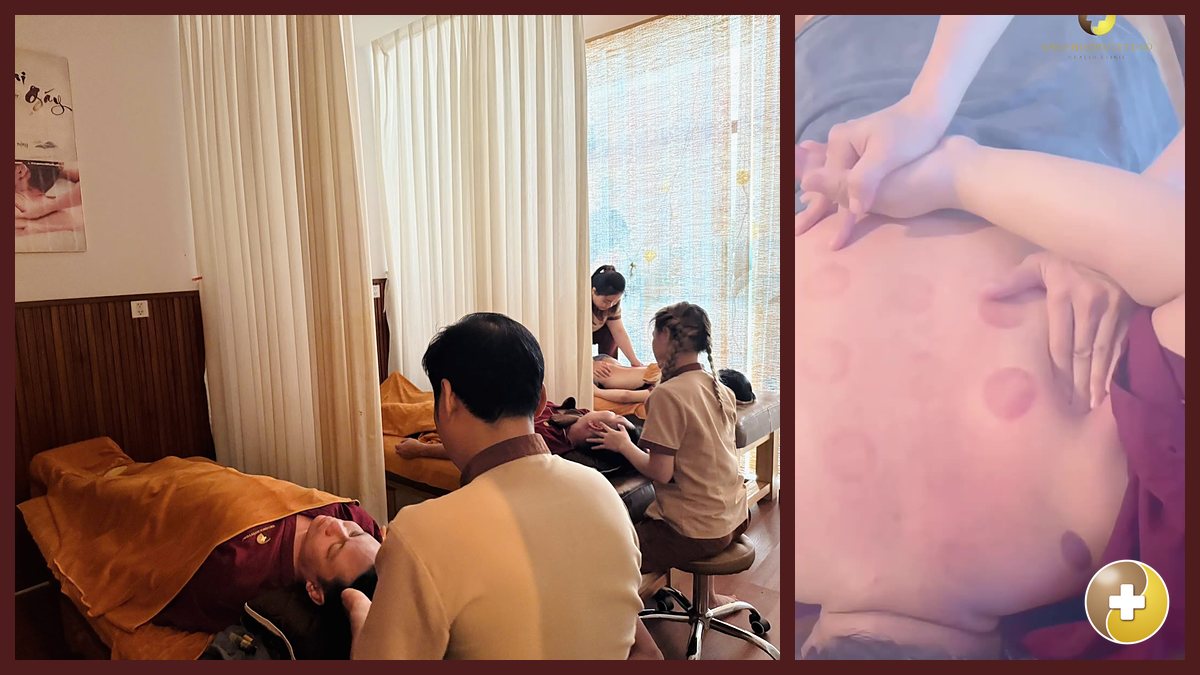
Quick answer: Cupping does not make a cold go away: colds are viral and usually clear in 7–10 days. When you have just caught a chill and have no fever, warming dry cupping relaxes a cold, tight neck and upper back, eases shivering and helps you sleep. In Ho Chi Minh City, Tong Gia pairs it with herbal steam; high fever or breathlessness needs a doctor.
Want Lương Y Tống Văn Huynh’s team to read your spine and posture in person?
What is a common cold, and where does cupping fit?
In Western medicine, the common cold is a viral infection of the upper airways, the nose and throat. More than a hundred viruses can cause it, rhinoviruses most often, spread by droplets and by hands touching the nose and mouth. Typical signs are sneezing, a clear runny nose, a blocked nose, a scratchy throat, a mild cough, general tiredness and sometimes a low fever. Most colds clear by themselves in about 7–10 days as the immune system does its job; antibiotics do not work against viruses.
So can cupping get rid of a cold? Honestly, no. A cup cannot kill a virus or shorten how long it stays. What cupping does is act on the skin and the superficial muscle layer. The negative pressure lifts the skin, blood flows towards the area so it turns warm and pink, the fascia around the muscles is gently stretched so muscles that have tightened in the cold soften, and the sensory nerve endings under the skin receive a new stimulus, so aching and shivering feel less intense. You relax, breathe more slowly and fall asleep more easily. For someone who has just caught a chill and has no fever, that is a real difference in comfort.
In Ho Chi Minh City, "catching a cold" is rarely about cold weather. It is about temperature swings: sitting in an office at 18–20°C all day and stepping out into 33°C, riding home through an afternoon downpour in a wet shirt, a late cold shower, sleeping with a fan blowing on the back of your neck. Many expats notice they catch more colds here than they expected, precisely because of air-conditioning. Vietnamese grandparents grew up with cupping and coin scraping; younger people look for somewhere to "get warmed up" after a day of sneezing.
Cold, flu and look-alikes
| Feature | Common cold | Seasonal flu | What to do |
|---|---|---|---|
| Onset | Gradual, sneezing and runny nose first | Sudden, high fever, aching all over | Flu: rest, see a doctor if severe |
| Fever | None or mild | Often 38.5–40°C | With a fever: no cupping |
| Tiredness | Mild, you can still work | Exhausted, bedridden | Rest, drink enough fluids |
| Duration | About 7–10 days | 1–2 weeks, possible complications | Lasting longer: see a doctor |
| Cupping | Gentle cupping possible without fever | Not during fever | Ask the practitioner first |
Common reasons people catch a chill
- Temperature swings: in and out of air-conditioned rooms, vents blowing straight onto the neck and back.
- Rain and drying sweat: riding home in the rain, sweating and then standing in front of a fan.
- Poor sleep and stress: lower resistance to whatever virus is going round the office or school.
- Crowded spaces: buses, the metro, factories, open-plan offices.
- Lots of iced drinks: iced tea or water straight after coming in from the sun.
In Eastern-medicine terms, the Tong Gia curriculum explains that the Lung (Phế) governs the skin and body hair and holds the defensive qi that resists outside influences; when it is weak, you catch colds easily, sweat easily and have dry skin. The Lung also "opens into the nose": a clear nose, good sense of smell and a strong voice. What Vietnamese people call "catching wind" corresponds to a wind-cold pattern: wind and cold enter from outside, the defensive qi at the surface closes up, and you feel chilly, get goosebumps and a stiff upper back. These are functional concepts of traditional medicine, not a statement that your lungs are ill.
Related signs to watch for
- A cold, shivery neck and upper back when there is a draught; wanting another layer.
- Repeated sneezing, a clear runny nose, one or both nostrils blocked.
- A heavy head, dull ache across the forehead and temples.
- A scratchy throat, slight hoarseness, a dry cough.
- General tiredness, a stiff neck that is hard to turn.
- Your temperature: this decides whether cupping is suitable. Check it before you go.
When to see a doctor
A mild cold usually clears by itself, but please see a doctor at a medical facility, and do not use cupping instead of a check-up, if you have:
- A fever of 38.5°C or higher, a fever lasting more than 3 days, or a fever that returns after settling.
- Shortness of breath, wheezing, chest pain on deep breathing; a cough with thick green or yellow phlegm that persists.
- Symptoms lasting more than 10 days, or getting worse instead of better.
- Ear pain, severe facial sinus pain, or pus from the nose.
- Young children, older adults, pregnancy, heart or lung disease, diabetes or a weakened immune system: ask a health professional early.
- Blood thinners or easy bruising: ask a health professional before cupping.
Chest pain or tightness, shortness of breath, cold sweats: call 115 immediately. This is a wellness service, not medical care.
The face-reading view (Y Tướng Học): who tends to catch wind-cold
Y Tướng Học (face reading for wellness) says "what is outside reflects what is inside". According to the Tong Gia curriculum, practitioners look at the face, skin and ears to decide which part of the back to read first:
- Unevenly enlarged pores: classed as weak Lung qi, open to wind and cold, prone to colds and allergic rhinitis.
- A long but square face with firm bone and flesh (the "Đồng" shape): Metal element, Lung-dominant; good constitution, but illness tends to come from wind-cold and dryness; the upper back around D3 (Lung Shu) tightens easily.
- Ears that stick out forward "to catch the wind": Lung and Kidney qi deficiency; wind-cold enters easily, ringing ears in a draught, weather-related rhinitis.
- Thin, soft ear rims and a flat mastoid bone: weak Kidney yang and low resilience; very sensitive to weather, cold hands and feet.
- A narrow, sunken area between the brows with tight muscles: Lung qi stagnation, sinus trouble, shallow breathing.
These are cues for where to start, not health conclusions. For cupping in general, see our cupping Q&A.
Spinal segments and nerve-reflex zones involved in a cold
The Tong Gia curriculum maps cervical C1–C7 to head, face, neck and arms; thoracic D1–D12 to circulation, breathing and digestion; lumbar L1–L5 to kidneys, urinary system and legs. It notes that Lung Shu lies on the Bladder meridian of the upper back and that Da Zhui on the Governor Vessel is traditionally used for colds. Nerve roots leave through the gaps on each side of the vertebrae, so cups go on the muscle on either side of the spine, never on the spinous processes.
| Zone (segment, point) | Nerve function | Sign during a cold | Related organ system |
|---|---|---|---|
| C1–C3 (base of skull) | Head, face | Heavy head, dull forehead and temple ache | Lung (opens into the nose) |
| C7 (Da Zhui, Ding Chuan) | Neck, shoulders, arms | Cold, shivery neck, stiff shoulders | Lung (defensive qi) |
| D1–D3 (Lung Shu below D3) | Breathing | Cold, tight upper back, sneezing, mild cough | Lung (skin and hair) |
| D4–D7 (mid-back) | Circulation, breathing | Tired back, shallow breath | Heart, Lung |
| L2 (Kidney Shu, Ming Men) | Kidneys, legs | Cold lower back, cold hands and feet | Kidney |
"Related" zones guide where to cup; they are not conclusions about illness. Acupoints do not act directly on lung tissue; stimulating them helps harmonise qi and blood in traditional terms.
The Tong Gia method: warming cupping within spinal nerve-reflex balancing
At Tong Gia Acupoint Wellness (Huyệt Đạo Tống Gia), cupping is part of the Vietnamese traditional method developed by founder Lương Y Tống Văn Huynh, a master of traditional Vietnamese wellness with over 13 years in Eastern-medicine wellness, face reading and spinal nerve-reflex balancing. The curriculum's three "no" rules apply: no chemicals or herbal products by injection or mouth, no needles, no rough force. So this is dry cupping only, with no skin cutting:
- Ask and measure: fever, cough, breathing, blood pressure, pregnancy, blood thinners, broken skin. With a fever we do not cup and recommend rest or a doctor.
- Observe: complexion, breathing, pores, shoulders hunched against the cold.
- Read the spine by hand: from C1 to L5, checking skin temperature, the muscle layer, vertebral shape and sensation, comparing left and right to find cold, tight zones. Following the curriculum's temperature rule: warm what is cool, cool what is hot.
- Muscle release: softening the base of the skull, shoulders and upper back so cups grip evenly without strong suction.
- Acupressure: Da Zhui, Ding Chuan and Lung Shu on the back; Lie Que for a stiff neck; He Gu for a heavy face and blocked nose (not during pregnancy).
- Cupping: a few static cups at the base of the neck and upper back; suction suited to skin thickness and age; stop once the skin is warm and slightly moist.
- Aftercare: keep the neck warm, drink something warm, skip cold showers that night.
Services that suit a chill
- Warming cupping, 30 minutes: 85,000 VND (about 3.30 USD) for a cold, tight neck and upper back with no fever.
- Herbal steam: 120,000 VND (about 4.60 USD) after getting caught in the rain; gentle sweating feels warming and comforting.
- Nose and sinus care, 60 minutes: 350,000 VND (about 13.50 USD) for a blocked nose and heavy forehead and cheeks.
Each service is priced separately; see the price page. Compare warming options in our gua sha and herbal steam Q&A, and read what a visit feels like in cupping in Saigon: the experience.
A typical session
One early rainy-season evening at the District 12 branch, the guest was a warehouse worker near National Highway 1A who had spent the day in a cold storage room and then ridden home in the rain. He was sneezing, his neck felt cold and one nostril was blocked. The practitioner took his temperature: no fever; and checked: no breathlessness, no chest pain, no blood thinners. His shoulders were raised and his face a little pale. Reading the spine, the skin around C7 and D1–D3 was clearly colder than the lower back, the muscles between the shoulder blades were tight, with one tense point beside D3. He had a herbal steam first, then muscle release on the neck and shoulders, acupressure on Da Zhui, Ding Chuan, Lung Shu and He Gu, and a few static cups at the base of the neck and upper back. He left in a high-collared shirt with a warm drink and advice to sleep early with no fan blowing on him.
What guests feel during and after
As a cup first draws, the skin feels tight for a few seconds, then you get used to it; many feel warmth spreading across the back, shoulders lifting and breathing deepening. Afterwards you feel warmer, less shivery, the neck turns more easily and sleep comes more easily. Marks may be tender for a day or two before fading. The cold still runs its course; Tong Gia does not promise that a cold will disappear after cupping, only that the body warms, muscles loosen and you rest more comfortably.
Want Lương Y Tống Văn Huynh’s team to read your spine and posture in person?
Self-care at home and prevention
- Rest and drink warm fluids: sleep is the single most useful thing during a cold; gargle with warm salt water.
- Keep the neck and lower back warm: angle air-con vents away from you; wear a light jacket on evening rides.
- After rain: dry off and change quickly; warm your palms and rub both sides of the lower back 50–100 times, as the Tong Gia curriculum suggests.
- Belly breathing: in through the nose for about 4 seconds, out slowly for about 6, 5–10 minutes daily.
- No home cupping kits, no hard scraping during a fever; wash your hands often so the family does not catch it.
How to book
Both branches are open every day; you can read real reviews on each branch's Google Maps profile before coming:
- District 12: 225 Dương Thị Mười, Phường Tân Chánh Hiệp (Tan Chanh Hiep ward). Open 8:00–19:00 daily.
- Vinhomes Grand Park, District 9: Căn T16-21 khu Manhattan, Phường Long Bình, TP. Thủ Đức (unit T16-21, Manhattan zone, Long Binh ward, Thu Duc City). Open 9:00–20:00 daily.
Call, Zalo or WhatsApp +84 888 264 559, or book online. Mention "cupping" or "herbal steam" and tell us if you have a fever, are pregnant, take blood thinners or bruise easily. If you live in or are visiting Ho Chi Minh City, it is a simple way to try a Vietnamese traditional method.
Visit us
- Đông Y Huyệt Đạo Tống Gia Quận 12 (District 12)
225 Dương Thị Mười, Phường Tân Chánh Hiệp, Quận 12, HCMC · 8:00–19:00 daily · 0888 264 559 · Directions on Google Maps - Đông Y Huyệt Đạo Tống Gia Quận 9 (Vinhomes Grand Park, District 9)
Căn T16-21 khu Manhattan, Vinhomes Grand Park, Phường Long Bình, TP. Thủ Đức, HCMC · 9:00–20:00 daily · 0888 264 559 · Directions on Google Maps
Want Lương Y Tống Văn Huynh’s team to read your spine and posture in person?
FAQ
Can cupping help a common cold? Cupping does not get rid of a cold, because colds are viral. When you have just caught a chill and have no fever, warming cupping relaxes a cold, tight neck and back, eases shivering and helps you sleep. With a fever, skip it.
Herbal steam or cupping: which suits a chill better? If you were caught in the rain and feel cold all over, a herbal steam warms the whole body; if the neck and upper back feel cold and tight, cupping works locally. At Tong Gia many guests steam first, then have cupping.
Which acupoints are used for a wind-cold chill? According to the Tong Gia curriculum, Da Zhui, Ding Chuan and Lung Shu on the back, and Lie Que and He Gu on the hand, are traditionally used for colds. Acupressure helps a heavy head and stiff neck; it does not replace seeing a doctor for a fever.
Can I have cupping with a fever? No. With a fever, especially from 38.5°C, the body needs rest and monitoring. A fever beyond 3 days, breathlessness or chest pain means seeing a doctor.
How long does a cold last? A common cold usually clears in about 7–10 days. Rest, warm fluids and keeping warm make it more comfortable. If it lasts beyond 10 days or gets worse, see a doctor.
How often can I have cupping when I keep catching colds? Wait until the old marks have fully faded, usually a few days to a week, before cupping the same spot again, and look at sleep, air-con habits and stress, which affect how often you catch colds.
Author: Lương Y Tống Văn Huynh – founder of Huyệt Đạo Tống Gia, a master of traditional Vietnamese wellness with over 13 years in Eastern wellness care, Y Tướng Học (face reading) and spinal nerve-reflex balancing massage.
Updated: 2026-11-16
Related guides
- What does acupressure do? Effects on muscles, nerves and the five organs, and how Tong Gia works in Ho Chi Minh City
- Acupressure in Thu Duc: pressure chosen by reading your spine, at the branch that suits your ward
- Sore after acupressure: is it normal? How to tell ordinary aching from warning signs, why it happens and how to look after yourself after a session in Ho Chi Minh City
- What are gua sha and cupping: two Vietnamese folk warming methods, the cupping points and when to skip them
- Unblocking the meridians (đả thông kinh lạc): what it really means, how a hands-on session works and what you will feel in Ho Chi Minh City
- Herbal compress: what the warmth really does, where it goes and who it suits
This is a wellness service, not medical care.