
Does massage reduce stress? What changes in your body after one session, and when to see a doctor
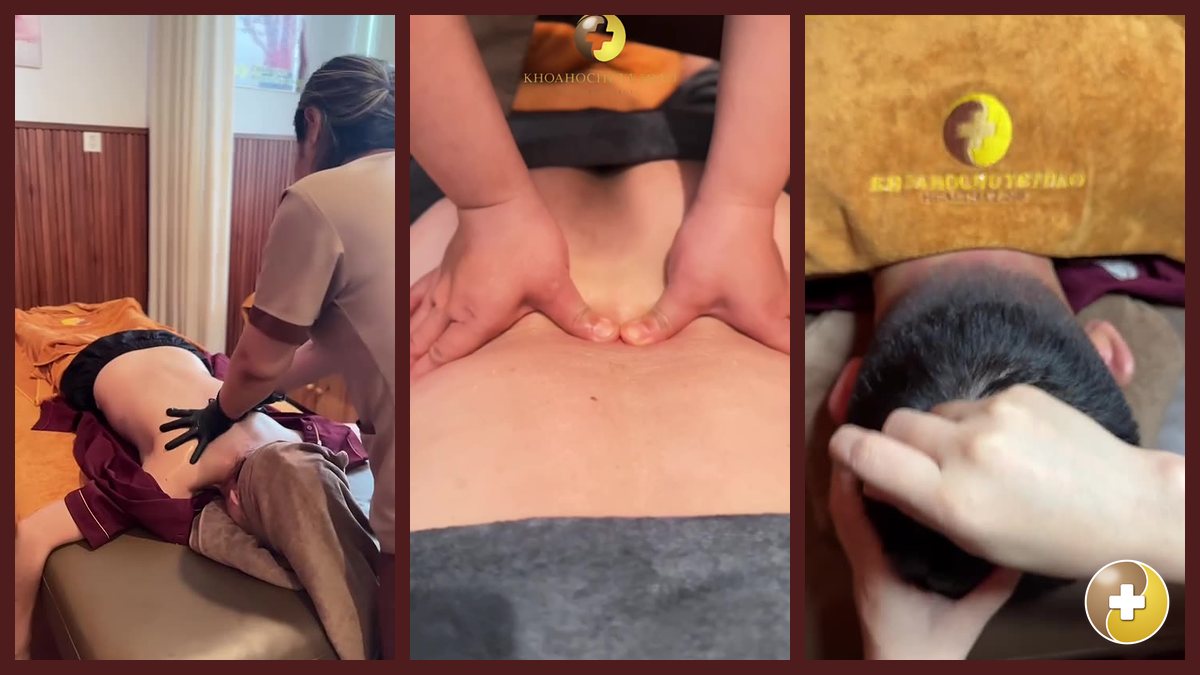
Quick answer: Yes, massage can ease the feeling of stress: braced muscles let go, breathing slows and the nervous system shifts toward rest, so sleep often comes easier that night. It does not replace a medical check when stress lasts for weeks. At Tong Gia in Ho Chi Minh City, a 60-minute Eastern massage is 450,000 VND (about 17 USD).
Want Lương Y Tống Văn Huynh’s team to read your spine and posture in person?
Does massage reduce stress? What stress is, in plain Western terms
The short answer is yes, as long as we are clear about what "reduce" means. Stress is not a disease. It is the body's normal response to pressure: a deadline, a motorbike ride through rush-hour traffic in District 1, a landlord message, a visa renewal, a child's exams. The sympathetic nervous system switches on, the adrenal glands release adrenaline and cortisol, the heart speeds up, blood pressure rises, the neck, shoulders and jaw brace, and breathing becomes fast and shallow. That response helps you deal with the problem in front of you. The trouble starts when the switch never turns off: tense at work, tense on the way home, still tense lying in bed.
Massage works directly on the physical side of stress. Rhythmic pressure on skin and muscle sends sensory signals to the spinal cord and brain; gently stretched muscle relaxes; more blood reaches the tissue, so the skin warms. When the strokes are slow and even, the autonomic nervous system moves toward its parasympathetic branch, the "rest and digest" mode: breathing slows, shoulders drop, and many people fall asleep on the table. Tong Gia's training material puts it simply: massage relaxes muscle, improves circulation in soft tissue, eases tension and supports the body's own recovery. The same material notes that ongoing stress raises heart rate and blood pressure, spoils sleep and stops the body from recovering, so a session that helps the body "power down" at the right moment has real value.
Massage does not remove the cause of pressure, and it is not a substitute for counselling or a medical check when stress has turned into anxiety or weeks of poor sleep. What it can do is break the loop of tight muscles, shallow breathing, poor sleep, fatigue and even more tension. In Ho Chi Minh City the people who ask this question are often expats working long hours on a laptop, engineers at the Saigon Hi-Tech Park, teachers, remote workers on US or European time zones, and parents juggling work and school runs. If you have just landed and your body clock is off as well, see jet lag massage in Saigon.
Common causes of stress for people living in the city
Stress rarely has a single source. Usually several small habits add up week after week:
- Heavy workload and late messages: back-to-back calls, chats after midnight, a brain that never gets a break.
- Sitting in one position: head forward toward the screen, shoulders lifted; the neck and upper back hold tension all day and keep sending "alert" signals.
- Heat, noise and traffic: an hour on a motorbike or in a Grab car through smog and horns is enough to make anyone short-tempered before dinner.
- Late nights and phone in bed: screen light and stimulating content keep the brain in work mode.
- Little exercise, irregular meals: skipped breakfast, late dinner, a lot of iced coffee to fight daytime sleepiness.
- Living far from family: quiet worries about money, visas or relatives at home that you do not talk about but carry in your shoulders.
Eastern medicine looks at stress through organ functions. In Tong Gia's material, long-standing anger or pressure makes Liver qi stagnate and the flow of qi and blood slows; a person with stagnant Liver qi gets irritable and finds it hard to relax. The Liver (Wood) overacts on the Spleen (Earth): tension and frustration easily bring bloating, stomach discomfort and irregular bowels, and Western medicine also recognises that stress affects digestion. The Heart in traditional theory includes both blood vessels and the mind, meaning mood, sleep and emotion, so when the Heart is disturbed you feel jittery and sleep poorly. These are functional ideas from traditional medicine; they do not mean your liver or heart is diseased.
Signs that often come with stress
The body usually shows stress before we admit it. Check yourself against this list:
- Muscles: stiff neck, shoulders up near the ears, a hot band between the shoulder blades; grinding teeth at night, sore jaw in the morning.
- Head: a heavy head, a tight band around the temples by late afternoon.
- Breathing and heart: frequent sighing, breathing high in the chest, occasional fluttering even at rest.
- Sleep: trouble falling asleep, waking at 3 a.m. thinking about work, tired on waking.
- Digestion: poor appetite, bloating, burping when anxious.
- Mood: snapping at people you love, poor focus, wanting to avoid company.
Many people only notice the neck pain and never link it to stress. If sleep is the main problem, read acupressure for sleep in Saigon.
When to see a doctor
Massage is wellness care for everyday tension and tiredness. If you have any of the following, please see a doctor at a medical facility, and do not use massage in place of a medical check:
- Low mood or anxiety for more than two weeks, loss of interest in everything, or thoughts of harming yourself: contact a mental health professional right away.
- Weeks of insomnia with only a few hours of sleep, daytime drowsiness, near-misses on the road.
- Episodes of racing heartbeat, dizziness or near-fainting.
- Shaking hands, unexplained weight loss, heavy sweating, intolerance to heat: get checked at a medical facility in parallel, not only massage.
- A sudden severe headache, headache with vomiting, weakness on one side, facial drooping or slurred speech.
- You take something prescribed for blood pressure: keep taking it exactly as prescribed; do not stop because you feel calmer after a massage.
Chest pain, shortness of breath or cold sweats: call 115 immediately; no massage, no acupressure. This is a wellness service, not medical care.
Face reading (Y Tướng Học): how stress shows on the face and posture
Y Tướng Học (face reading for wellness) has a saying: "the signs show outside, the organs lie inside". Before touching you, a Tong Gia practitioner looks at your face, the way you sit and the feel of your muscles to see where tension has settled. According to Tong Gia's material, these features often appear in people who have been stressed for a long time:
- A narrow area between the eyebrows (Ấn Đường) with vertical lines and tight muscle: the material links this to deep stress affecting the autonomic nervous system, with tight facial muscles and neck-shoulder tension, plus sighing, palpitations and worry.
- Eyebrows that meet in the middle: described as deep Liver qi stagnation, with a face that always looks tense and a habit of sighing.
- Firm flesh that feels hard as wood: high mental pressure causes deep, long-term muscle spasm, clearest in the trapezius and the long muscles beside the spine; such people often ache all over and get tension headaches.
- High, bony cheekbones: linked with rising Liver fire, quick temper and heat in the head; because the Liver governs the sinews, the upper back muscles are usually very knotted.
- A pale or flushed face with poor sleep and palpitations: a Heart signal; dry tired eyes, irritability and a tight neck are Liver signals.
These signs only suggest where to feel first. They are not a health verdict, and they are never used to judge anyone's character. The hands reading the spine decide what to work on.
Spine and nerve-reflex zones linked to tension
Tong Gia's method takes the head and the spine as the root: the head is the centre of the central nervous system (thinking, command), and the spine carries the autonomic nervous system (automatic functions such as heartbeat, breathing and digestion). Spinal nerve roots leave the cord through the gaps between vertebrae, so under stress the muscles on both sides of the spine tighten into cords, and softening those cords helps the autonomic system settle. The back-shu points of the organs lie along the Bladder channel, about 1.5 cun from the midline.
| Zone (vertebrae) | Nerves and function | What you feel under stress | Related organ | Common points |
|---|---|---|---|---|
| C1–C3 (base of skull) | Head, face; deep sub-occipital muscles | Heavy head, tight temples, poor focus | Liver, Kidney | Hairline at the back of the neck |
| C4–C7 (lower neck, shoulders) | Neck, shoulders, arms | Stiff neck, raised shoulders, tired arms | Liver (governs sinews) | Shoulder line, base of neck |
| T4–T5 (upper back) | Circulation; Jueyinshu below T4, Xinshu below T5 | Palpitations, tight chest, poor sleep | Heart, Pericardium | BL14, BL15 |
| T9–T12 (mid back) | Digestion | Cord-like mid-back, bloating when anxious | Liver, Spleen–Stomach | BL18, BL20 |
| L1–L5 (lower back) | Kidneys, legs; Shenshu level with L2 | Tired lower back, drained by evening | Kidney | BL23 |
The table shows related zones to guide the hands, not a verdict on your health. Acupoints do not act directly on the heart or liver; in traditional theory, working them helps balance qi and blood, calm the mind and ease discomfort.
The Tong Gia method: spinal nerve-reflex balancing massage
At Tong Gia Acupoint Wellness (Huyệt Đạo Tống Gia), a stress session follows the spinal nerve-reflex balancing method developed by Lương Y (master of traditional Vietnamese wellness) Tống Văn Huynh, who founded Tong Gia and has over 13 years in Eastern wellness, Y Tướng Học and spinal nerve-reflex balancing. The method grew from the head-and-spine legacy of Lương y Nguyễn Tham Tán and Master Công Kim Thắng. It follows three "no" rules: nothing to swallow or inject, no needles, and no rough force. For a stressed body, "no rough force" matters a lot: heavy pressure makes muscles brace against the hand, the opposite of what we want.
- Questions and screening: blood pressure, heart conditions, pregnancy, blood thinners, recent sleep, where you feel tense. Warning signs mean no session and advice to see a doctor.
- Observation: complexion, the area between the brows, shoulder height, breathing pattern, muscle quality.
- Reading the spine by hand: pressing, gliding and rolling from neck to tailbone to read skin temperature, the muscle layer, the shape of each vertebra and sensation; left is compared with right to separate "excited" zones (warm, tight) from "inhibited" ones (cool, slack).
- Muscle release: base of skull, shoulders, upper and mid back, with pressure rising from one finger to the whole palm; a vibration technique is used to create a relaxing wave for nervous exhaustion.
- Acupressure on the right points: pressing in time with your out-breath where the hands found tension.
- Calming strokes and home advice: light strokes along the back, a final temperature check, and breathing and point exercises to take home.
Three principles keep the session from overloading you: focus only on warm, tight zones; stop when the skin over the main point turns from dry to slightly moist; and bring temperatures back toward normal, cooling what is hot and warming what is cold. For more on the approach, see traditional Vietnamese massage and acupressure massage in Saigon.
Acupressure for stress: points the material often uses
- Taichong (LR3, 太冲): on the top of the foot; the key point of the Liver channel for moving stuck qi, used for stress, anger, poor sleep and headache.
- Ganshu (BL18, 肝俞): mid back; the back-shu point of the Liver for tension and fatigue.
- Xinshu (BL15, 心俞) and Jueyinshu (BL14, 厥阴俞): below T5 and T4, 1.5 cun out; calm the mind, ease a tight chest.
- Neiguan (PC6, 内关): 2 cun above the wrist crease between the two tendons; for palpitations, chest tightness, nausea.
- Shenmen (HT7, 神门): on the wrist crease, little-finger side; calms the mind and supports sleep.
- Baihui (GV20, 百会): crown of the head; clears the head and calms. Sessions often finish here.
Suitable services and prices
- Eastern massage, 60 minutes: 450,000 VND (about 17 USD); 90 minutes 550,000 VND (about 21 USD). For whole-body tension, with back release and calming points.
- Head care, 60 minutes: 750,000 VND (about 29 USD). When stress collects in the head: heaviness, tight temples, poor sleep.
- Hair wash with neck and shoulder massage, 60 minutes: 250,000 VND (about 10 USD). A gentle way to unwind after work; see Vietnamese head spa.
Full prices are on the price list.
What a typical stress session looks like
One evening at the Vinhomes Grand Park branch, the guest is an accountant at the end of the quarter. For two weeks she has been lying down and seeing spreadsheets, waking at night and getting up with a sore jaw. The practitioner checks first: normal blood pressure, not pregnant, no blood thinners. Her brows show two vertical lines, the right shoulder sits higher, and she breathes high in the chest. On the spine, the base of the skull and T4–T5 are clearly warmer, and the muscles beside the mid back form tight cords. The practitioner starts with a few minutes of slow breathing, releases the neck, shoulders and back for about 35 minutes, uses vibration on the upper back, presses Xinshu and Ganshu on each out-breath, then works Neiguan and Shenmen on both wrists, Taichong on both feet, and finishes at Baihui. She leaves with a 4–6 breathing routine and a plan to keep her phone outside the bedroom.
What guests usually feel
During the neck work, most people feel a dull ache where the muscle is tight, then a softening, as if a band around the head has been loosened. On the back, breathing slows by itself; some people yawn non-stop, some fall asleep. Afterwards the body feels warm, the shoulders sit lower, the mind feels quieter, and falling asleep is easier that night. A few people feel mild muscle soreness for a day, like after light exercise. Everyone responds differently; Tong Gia does not promise that stress disappears after one session, only that the body gets help to rebalance.
Want Lương Y Tống Văn Huynh’s team to read your spine and posture in person?
Self-care at home and prevention
- 4–6 breathing: breathe in through the nose for 4 seconds, out slowly for 6 seconds, 5–10 minutes a day, ideally when you get home and before bed.
- Press Neiguan when tense: gentle circles on each wrist for 1–2 minutes when you feel jittery during the day.
- Shenmen before sleep and a foot rub: 1–2 minutes on each wrist with slow breathing, then rub the sole of each foot for 3–5 minutes; Yongquan (KI1) on the sole is described as drawing heat downward and calming the mind.
- Sit quietly for 10–15 minutes and take a short nap: 15–30 minutes after lunch is enough.
- Move for about 30 minutes a day: a walk in the park, gentle exercise, and a shoulder roll every 45–60 minutes at the desk.
How to book
Tong Gia Acupoint Wellness has two branches in Ho Chi Minh City, open every day, with real customer reviews on Google Maps:
- District 12: 225 Dương Thị Mười, Phường Tân Chánh Hiệp (Tan Chanh Hiep Ward, District 12). Open 8:00–19:00 daily.
- District 9 – Vinhomes Grand Park: Căn T16-21 khu Manhattan, Phường Long Bình, TP. Thủ Đức (unit T16-21, Manhattan zone, Long Binh Ward, Thu Duc City). Open 9:00–20:00 daily.
Call, Zalo or WhatsApp +84 888 264 559, or book online. Say you want a massage for stress, choose 60 or 90 minutes, and mention pregnancy, heart or blood-pressure conditions, or blood thinners. If you finish work late, the Vinhomes Grand Park branch is open until 20:00. Visiting Ho Chi Minh City? It is a calm way to try a Vietnamese traditional method developed by Lương Y Tống Văn Huynh.
Visit us
- Đông Y Huyệt Đạo Tống Gia Quận 12 (District 12)
225 Dương Thị Mười, Phường Tân Chánh Hiệp, Quận 12, HCMC · 8:00–19:00 daily · 0888 264 559 · Directions on Google Maps - Đông Y Huyệt Đạo Tống Gia Quận 9 (Vinhomes Grand Park, District 9)
Căn T16-21 khu Manhattan, Vinhomes Grand Park, Phường Long Bình, TP. Thủ Đức, HCMC · 9:00–20:00 daily · 0888 264 559 · Directions on Google Maps
Want Lương Y Tống Văn Huynh’s team to read your spine and posture in person?
FAQ
Does massage reduce stress? Yes. Massage helps braced muscles let go, slows breathing and shifts the nervous system toward rest, so you feel lighter and sleep more easily. It does not remove the cause of pressure, and it is not a substitute for a medical check when anxiety or insomnia lasts for weeks.
Which acupressure points help with stress? Tong Gia often uses Taichong (LR3) on the foot, Neiguan (PC6) and Shenmen (HT7) at the wrist, Baihui (GV20) on the crown, and Xinshu (BL15) and Ganshu (BL18) on the back. At home you can press Neiguan and Shenmen for 1–2 minutes each side with slow breathing.
What should I book to unwind after work in Saigon? For something gentle, the hair wash with neck and shoulder massage is 250,000 VND (about 10 USD) for 60 minutes. For whole-body tension, a 60-minute Eastern massage is 450,000 VND (about 17 USD). The Vinhomes Grand Park branch is open until 20:00.
Is long-term stress harmful? Ongoing stress raises heart rate and blood pressure, disturbs sleep and digestion, and keeps the neck and shoulders tight. If low mood or anxiety lasts over two weeks, insomnia lasts for weeks, or you have episodes of racing heartbeat, please see a doctor.
How often should I get a massage for stress? Many guests feel lighter after the first visit. During a tense period, once a week for a few weeks and then spacing it out by feel is common. Daily 4–6 breathing and a regular bedtime help the calm last longer.
Can I have a massage if I take something prescribed for blood pressure? Usually yes, but tell the practitioner beforehand so the pressure stays light and unsuitable areas are avoided. Keep following your prescription and do not stop it because you feel calmer. Chest pain or breathlessness means calling 115.
Author: Lương Y Tống Văn Huynh – founder of Huyệt Đạo Tống Gia, a master of traditional Vietnamese wellness with over 13 years in Eastern wellness care, Y Tướng Học (face reading) and spinal nerve-reflex balancing massage.
Updated: 2026-11-16
Related guides
- Better sleep without sleeping pills: 8 natural options and which one suits you
- Burnout exhaustion: understanding work-related depletion and how Vietnamese traditional care can help you rebalance
- Does massage reduce stress? What changes in your body after one session, and when to see a doctor
- Head massage for better sleep: why touching the scalp, temples and neck helps your body drift off
- Stress insomnia: why you are exhausted yet cannot sleep, and what your body needs
- Can't sleep? What to do tonight, over the next two weeks, and when to get checked
This is a wellness service, not medical care.