
Head massage for better sleep: why touching the scalp, temples and neck helps your body drift off
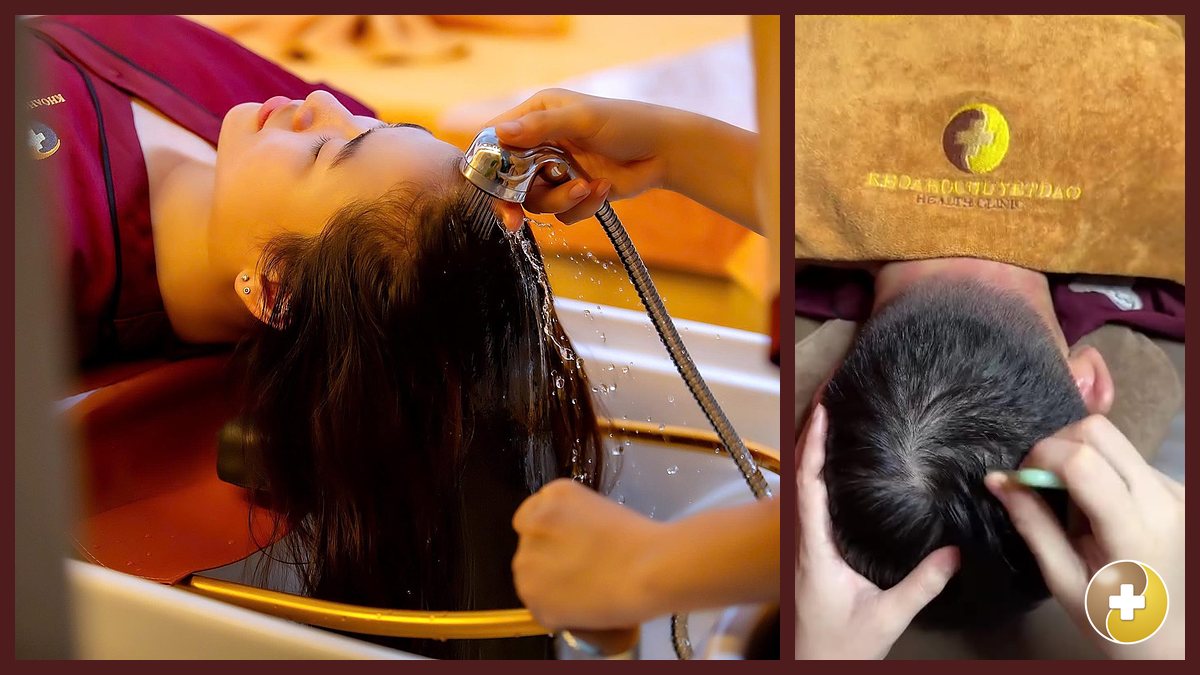
Quick answer: Yes, for many people a head massage helps them sleep better: slow work on the scalp, temples and back of the neck nudges the nervous system into rest mode and lets tight muscles let go. Tong Gia Acupoint Wellness in Districts 12 and 9, Ho Chi Minh City adds hand reading of the neck and calming acupressure.
Want Lương Y Tống Văn Huynh’s team to read your spine and posture in person?
What is head massage for sleep, in plain Western terms?
Many guests at Tong Gia Acupoint Wellness (Huyệt Đạo Tống Gia) tell the same story. At the hair salon, a few minutes of slow scalp rubbing makes their eyelids heavy, and some nod off in the wash chair. Yet at night in their own bed the head feels tight as a drum, the temples throb, the back of the neck is hot, and sleep will not come. That "someone touches my head and I get sleepy" feeling is not random. A head massage helps you sleep because it works on the area that is keeping your body on alert: the scalp, face and upper neck.
The Western explanation: the scalp, forehead, temples and neck are packed with sensory nerve endings, mostly from the trigeminal nerve (face, forehead, temples) and the occipital nerves (back of the head and neck). Underneath lie thin muscles: the occipitofrontalis covering the skull like a cap, the temporalis connected to the jaw, and small suboccipital muscles holding the head upright on the neck. Stress, long screen hours and jaw clenching keep these muscles working all day. Their tension signals travel to the brain like a reminder that the day is not over.
Slow, even, warm strokes send the opposite message. The parasympathetic nervous system, the branch in charge of rest and digestion, becomes more active: the heart rate slows, breathing lengthens, muscles soften. The body reads the situation as safe, and moving into sleep becomes easier. This is the general effect of rhythmic touch, not magic, and how strongly you feel it varies from person to person.
In Ho Chi Minh City we often see this need in expats working long screen days in District 1 or Thao Dien, engineers at the Saigon Hi-Tech Park, digital nomads on shifting time zones, parents up at night with small children, and older visitors who sleep lightly and wake early.
Common causes: why your head will not switch off
A head massage works far better when you understand what is holding the tension. The usual sources we see:
- Screens right up to bedtime: laptop work and phone scrolling late at night keep the eye and forehead muscles busy, and screen light keeps the brain alert.
- Head pushed forward all day: looking down at a phone or a low laptop makes the suboccipital muscles work hard; by evening the neck feels hot and heavy.
- Jaw clenching: when focused or anxious, the temporalis and masseter tighten; you wake with a tired jaw and tight temples.
- Air conditioning on the neck, sleeping with wet hair: a cold neck tightens, and many people wake with a heavy head.
- Afternoon coffee: the second iced coffee after 3 pm keeps the mind awake at night.
- An overthinking mind: unfinished work, money, family, visa paperwork; the head keeps scanning even when the body is tired.
- Jet lag and shifting hours: long-haul flights, video calls with home at odd times, late weekends followed by early Mondays.
Other signs to watch
If your head is what is holding your sleep hostage, you will usually notice a few of these:
- A heavy head, like a hat that is too tight, or tight temples in the evening.
- A hot, stiff neck; pressing the hairline at the back of the head feels sore.
- Dry, tired, stinging eyes after work; heavy eyelids that open again as soon as you lie down.
- Grinding teeth at night, a tired jaw in the morning.
- Taking more than 30 minutes to fall asleep, or light sleep with many dreams.
- Waking in the night with the mind picking up the day where it left off.
- Waking unrefreshed and needing coffee to function.
If jet lag is part of the picture, read jet lag massage in Saigon: questions answered.
When to see a doctor
Please see a doctor at a medical facility if you notice any of the following:
- A sudden, severe headache, "the worst ever", or weakness on one side, a drooping face, slurred speech or blurred vision: call 115 (Vietnam's ambulance line) immediately.
- Crushing chest pain, shortness of breath or cold sweats while lying awake: call 115 immediately and do not seek massage.
- Headache with fever, a stiff neck or repeated vomiting, or a headache after a blow to the head.
- Repeatedly high blood pressure; very high readings (from 180/110 according to the Tong Gia curriculum) with a severe headache or blurred vision need urgent care.
- Insomnia almost every night for more than a month, clearly affecting work or driving.
- Loud snoring or pauses in breathing that a partner notices, morning headaches.
- Unexplained weight loss or a long-lasting low mood: get checked at a medical facility alongside any wellness care, and tell someone close to you.
Skip head massage if the scalp has a wound, an infection or a rash, or after head and neck surgery until your medical team says it is fine. If you are pregnant, tell your practitioner first so they avoid unsuitable points. This is a wellness service, not medical care.
The Y Tướng Học view: Heart, Liver and Kidney show up in the head
In the Tong Gia curriculum, the Heart (Tâm) houses the spirit and governs the mind, awareness and sleep; when it weakens, people sleep poorly, dream a lot and forget things. The curriculum stresses that "Heart-type" insomnia in traditional terms does not mean heart disease. The Liver (Can) keeps energy flowing; when it is disturbed people become irritable and sleep badly, and the Liver is also linked to the eyes and to sleep. The Kidney (Thận) stores essence and is said to fill the "sea of marrow" in the head. When that reserve runs low, the curriculum lists nervous exhaustion, headaches, dizziness, ringing in the ears and very light sleep.
| Pattern (traditional view) | Often seen in | Sleep style | Signs around the head |
|---|---|---|---|
| Liver energy stuck, Liver heat | High-pressure jobs, people who hold anger in | Hard to fall asleep, many dreams | Tight temples, red dry eyes, heat rising to the head |
| Heart blood low, worry draining Heart and Spleen | Brain workers with irregular meals | Broken sleep, easily startled | Heavy head, forgetfulness, pale face |
| Kidney essence low | Long-term night owls, middle age and older | Very light sleep, early waking | Empty-feeling head, dizziness, tinnitus, tired neck |
What does it look like on the outside? Y Tướng Học (face reading for wellness) rests on the line "what is outside mirrors what is inside". For guests with a tense head and poor sleep, practitioners look at a flat back of the skull (linked in the curriculum to low Kidney essence and deep tightness at C1–C3), dull or broken-out temple corners of the forehead (Liver and Gallbladder heat, poor sleep, nightmares, dry eyes), many tangled forehead lines (long-term pressure tightening the scalp and shoulder muscles), and a narrow, vertically lined spot between the brows. These are school-specific reference ideas that help choose where to start; they do not replace a medical check-up and are never used to judge anyone. More in Eastern face reading for wellness.
Spine segments and nerve-reflex areas involved
The head sits on the neck, and the neck is the gateway for every signal going up to the brain. According to the curriculum, C1–C7 relate to the head, face, neck and arms, and D1–D12 (thoracic) relate to circulation, breathing and digestion. For the nerve-and-mind group (long-term headaches, long-term poor sleep, nervous exhaustion) the curriculum combines C1–C7, upper back D1–D3 and the sacral area.
| Segment | Nerves, function | What you feel | Organ link (Eastern view) |
|---|---|---|---|
| C1–C2 (base of skull) | Back of head, occipital nerves | Hot neck, heavy head, lying awake | Heart, Liver |
| C3 (deep neck) | Deep muscles holding the head | Pressure behind the eyes, jaw clenching | Liver, Kidney |
| C4–C7 | Neck, shoulders, arms | Braced shoulders, tired arms | Liver |
| D1–D3 | Chest, heart, lungs | Shallow breathing, fluttering when lying down | Heart, Lung |
| Sacral area | Pelvic nerves | Light sleep, tired lower back, cold feet | Kidney |
The table shows links to guide the session; it is not a medical finding. Rubbing only the scalp while the neck and upper back stay braced usually brings relief for a few hours at most.
How Tong Gia works: spinal nerve-reflex balancing massage
The method was built by Lương Y (master of traditional Vietnamese wellness) Tống Văn Huynh over more than 13 years of Eastern wellness, Y Tướng Học and spinal nerve-reflex balancing. For sleep, the goal is to cool the head and neck, soften the scalp, temple and jaw muscles, then connect down to the neck and upper back so the body truly lets go.
- Observe: complexion, forehead, the spot between the brows, eyes, tongue, posture. The practitioner asks how you sleep and when you drink coffee or use your phone.
- Read the spine by hand: feel skin temperature, run along the muscles and press each segment from C1 down, comparing left and right: temperature, muscle layer, shape and sensation.
- Muscle release: soften the suboccipital area, the hairline, temples and the scalp "cap", light to medium pressure at a slow, even rhythm. The curriculum uses a vibrating technique to create relaxing waves for nervous exhaustion.
- Acupressure on the right points: Bai Hui (Bách hội) on the crown to clear and calm the mind, Shen Men (Thần môn) on the wrist to calm the spirit and support sleep, Nei Guan (Nội quan) for tension and fluttering, Tai Chong (Thái Xung) on the foot for stress, and San Yin Jiao (Tam âm giao) for tiredness and poor sleep (never during pregnancy).
- Home guidance: a 5-minute self scalp rub, Shen Men before bed, slow breathing.
A typical session: a Head Care session with an accountant sleeping 4–5 hours a night during year-end closing. The practitioner notices horizontal forehead lines, tight temples and a clenched jaw. C1–C2 feels clearly warmer, pressing the back hairline sends soreness up to the crown, and the muscles between the shoulder blades are thick. Work starts at the shoulders and neck so the body gets used to the hands, then moves to the scalp from forehead to neck, the temples and the jaw angle. Around minute 25 her breathing slows and she dozes off. The session ends with Bai Hui and the wrists, plus a short lesson in self massage.
- Head Care, 60 minutes: 750,000 VND (about US$29), for a heavy head, tight temples, hot neck and poor sleep.
- Hair wash with neck and shoulder massage, 60 minutes: 250,000 VND (about US$10), to unwind after work.
- Herbal "turbid qi" hair wash, 45 minutes: 150,000 VND (about US$6), a short, gentle option before bed.
Full list on the price page. See also Vietnamese head spa in Saigon, herbal hair wash questions and acupressure for sleep.
What guests feel: soreness at the back hairline and temples at first, then warmth, a lighter head and eyes that want to close. Many fall asleep on the table. That night most fall asleep faster and wake with a clearer head; some feel drowsy and want an early night, a common response as the body shifts into rest. Results differ; Tong Gia helps your body rebalance and makes no promise to end insomnia.
Want Lương Y Tống Văn Huynh’s team to read your spine and posture in person?
Home care and prevention
- Five-minute scalp rub: use ten fingertips, not nails, pressing lightly in slow circles from the front hairline to the crown and down to the neck, after your hair is dry.
- Bai Hui and Shen Men: Bai Hui sits where the midline of the head meets the line joining the tops of the ears; press gently for a minute. Shen Men is the hollow on the wrist crease on the little-finger side; 1–2 minutes per side with slow breathing.
- 4–6 breathing: as the curriculum suggests, in through the nose for 4 seconds, out for 6, for 5–10 minutes in bed.
- Warm neck, dry hair: blow-dry your hair before bed, keep the air conditioner off your neck, choose a pillow that keeps the neck level.
- A 30-minute landing time: no screens or work messages; coffee before 2 pm; a short 15–30 minute nap around midday.
Book a session
- District 12: 225 Dương Thị Mười, Phường Tân Chánh Hiệp (Tan Chanh Hiep Ward, District 12). Open 8:00–19:00 daily.
- Vinhomes Grand Park, District 9: Căn T16-21 khu Manhattan, Phường Long Bình, TP. Thủ Đức (Unit T16-21, Manhattan zone, Long Binh Ward, Thu Duc City). Open 9:00–20:00 daily.
Book online or call, Zalo or WhatsApp +84 888 264 559. Tell us how you sleep and which part of your head feels tight (forehead, temples, back of the neck). An early-evening slot lets you go straight home to rest. Real reviews are on each branch's Google Maps page. Living in or visiting Ho Chi Minh City? Come and try a Vietnamese Eastern wellness method built by Lương Y Tống Văn Huynh.
Visit us
- Đông Y Huyệt Đạo Tống Gia Quận 12 (District 12)
225 Dương Thị Mười, Phường Tân Chánh Hiệp, Quận 12, HCMC · 8:00–19:00 daily · 0888 264 559 · Directions on Google Maps - Đông Y Huyệt Đạo Tống Gia Quận 9 (Vinhomes Grand Park, District 9)
Căn T16-21 khu Manhattan, Vinhomes Grand Park, Phường Long Bình, TP. Thủ Đức, HCMC · 9:00–20:00 daily · 0888 264 559 · Directions on Google Maps
Want Lương Y Tống Văn Huynh’s team to read your spine and posture in person?
FAQ
Does head massage really help you sleep better? For many people, yes. Slow strokes on the scalp, temples and neck activate the rest-and-digest side of the nervous system, slow the heart rate and loosen braced muscles, so falling asleep gets easier. It works better when the neck and upper back are released too and screens go off before bed.
Which acupressure points help me fall asleep? In the Tong Gia curriculum, Shen Men on the wrist crease (little-finger side) is used to calm the spirit and support sleep, Bai Hui on the crown to clear the mind, and Nei Guan for tension. Press each gently for 1–2 minutes with slow breathing. Avoid San Yin Jiao during pregnancy.
Can a head massage stop my mind racing at night? It helps the body move into rest mode, so many guests feel the mental chatter slow down. Pair it with habits: write tomorrow's tasks on paper, stop work messages after 9 pm and keep the phone outside the bedroom.
Is a Vietnamese hair wash with massage good for sleep? A warm hair wash with scalp and neck massage is very relaxing; many people doze off in the chair. Dry your hair fully before bed. If a tight head and poor sleep have lasted for weeks, the 60-minute Head Care session goes deeper.
How often should I get a head massage for sleep? Many guests sleep more easily the same night. When the problem is long-standing, practitioners often suggest a few sessions close together in the first 2–3 weeks, then spacing them out, plus a 5-minute self scalp rub each evening. If insomnia lasts over a month, get checked at a medical facility as well.
Is head massage safe, and who should avoid it? For healthy adults, moderate pressure is safe. Avoid it with scalp wounds or infections, after head or neck surgery until cleared, or during a sudden severe headache with weakness or slurred speech (call 115). Tell your practitioner if you are pregnant or have high blood pressure.
Author: Lương Y Tống Văn Huynh – founder of Huyệt Đạo Tống Gia, a master of traditional Vietnamese wellness with over 13 years in Eastern wellness care, Y Tướng Học (face reading) and spinal nerve-reflex balancing massage.
Updated: 2026-11-16
Related guides
- Better sleep without sleeping pills: 8 natural options and which one suits you
- Burnout exhaustion: understanding work-related depletion and how Vietnamese traditional care can help you rebalance
- Does massage reduce stress? What changes in your body after one session, and when to see a doctor
- Head massage for better sleep: why touching the scalp, temples and neck helps your body drift off
- Stress insomnia: why you are exhausted yet cannot sleep, and what your body needs
- Can't sleep? What to do tonight, over the next two weeks, and when to get checked
This is a wellness service, not medical care.