
Can't sleep? What to do tonight, over the next two weeks, and when to get checked
Quick answer: If you can't sleep, work in three stages. Tonight: screens off early, slow 4–6 breathing, and leave the bed if still awake after 20 minutes. Next two weeks: fixed wake-up time, no coffee after 2 pm. Over a month: get checked. Huyệt Đạo Tống Gia in Districts 12 and 9, HCMC, helps the body unwind.
Want Lương Y Tống Văn Huynh’s team to read your spine and posture in person?
What insomnia is, and why "what should I do" depends on the situation
Insomnia means you have the time and a place to sleep, yet you struggle to fall asleep, wake up in the night and lie there, or wake far too early, and the next day you feel tired, foggy and short-tempered. In Western physiology, sleep is driven by two systems: the body clock, which follows light, meal times and wake-up times, and "sleep pressure", which builds the longer you stay awake. When the sympathetic nervous system is still switched on by stress, the heart runs fast, muscles stay tense and the mind keeps racing, so the body cannot shift into rest mode.
That is why there is no single fix. Two bad nights before a deadline need a different response from six months of poor sleep. Lying awake for two hours is different from falling asleep fine and waking at 3 am. This guide sorts the steps by time: tonight, the next two weeks, and when to get checked. Visitors whose sleep was knocked out by a long flight can also read our jet lag massage Q&A.
In Ho Chi Minh City we see the same scenes again and again: expats answering emails from bed because head office is six hours behind, shift workers at the Thu Duc hi-tech park getting home at midnight, small business owners still doing the accounts in their heads, women around menopause woken by night sweats, and older parents who go to bed at 8 pm and are wide awake by 3 am.
Common causes of sleepless nights
- Stress and worry: work, money, family. The typical pattern is trouble falling asleep, then fear of another bad night, which feeds the cycle.
- Stimulants: coffee, strong tea, milk tea and energy drinks after 2 pm; alcohol in the evening helps you drop off but breaks sleep later in the night. Vietnamese iced coffee is much stronger than many visitors expect.
- Light and screens: scrolling in bed pushes the body clock later.
- Irregular hours: rotating shifts, long naps, sleeping in until noon at weekends, late heavy dinners.
- Aches and tension: a stiff neck, sore back or numb hands wake you each time you turn over.
- Age and hormones: menopause, the months after giving birth and older age all make sleep lighter.
- Health issues: sleep apnoea, depression, an overactive thyroid, reflux, frequent night urination and chronic pain. These need a medical check, not just home tips.
Other signs to watch
- Pounding heart or a jumpy feeling when you lie down.
- Tight neck and shoulders, heavy head, pressure at the temples.
- Poor appetite, bloating, a mind that keeps worrying.
- Hot palms and soles, night sweats.
- Getting up to urinate twice or more, cold feet, tired lower back and knees.
- Loud snoring with pauses in breathing, morning headaches, dozing during the day.
- Low mood lasting weeks, losing interest in things you used to enjoy.
Start a sleep diary from the first night: bedtime, the time you actually fell asleep, how often you woke, wake-up time, caffeine and alcohol, and your mood. After one to two weeks you will see patterns, and any professional you see will understand your situation much faster.
When to see a doctor
- Chest pain or tightness, shortness of breath, cold sweats, especially while lying down or on waking: call 115 (Vietnam emergency) right away.
- Waking up breathless, needing to sit up or pile up pillows to breathe, swollen ankles.
- Loud snoring with breathing pauses, or sleepiness so strong you nod off while driving.
- Low mood for more than two weeks, or thoughts of harming yourself: tell someone close and seek help immediately.
- Insomnia with unexplained weight loss, shaking hands or a racing heart, or with pale skin, fatigue and dizziness: get checked at a medical facility in parallel.
- Poor sleep three or more nights a week for over a month despite changing habits.
- Insomnia after a head injury, or with a severe headache and vomiting.
Please see a doctor if your symptoms are severe, unusual, or don't improve. Don't start sleep aids without medical advice, and if you are already being followed for heart, blood pressure or mood, keep to that plan and tell our staff before your session. This is a wellness service, not medical care.
The Y Tướng Học view: the Heart houses the mind
Y Tướng Học, the Vietnamese art of reading the body, works on the idea that "what shows outside reflects what happens inside". In the Tong Gia curriculum, sleep is linked first to the Heart (Tâm) in the Eastern sense: the Heart houses the mind and governs mood and sleep. The curriculum is clear that "Heart" insomnia in Eastern terms does not mean heart disease. Three other organ systems often join in:
| Organ system (Eastern view) | Typical pattern | What may show outside | First thing to try |
|---|---|---|---|
| Heart | Hard to fall asleep, vivid dreams, palpitations | Tongue reddish with little coating, or a pale face | Slow 4–6 breathing, press Shenmen (HT7) |
| Liver | Stress, irritability, "stuck" Liver qi | Red, dry, tired eyes; shoulders hunched and hard | Neck and shoulder stretches |
| Spleen | Overthinking, poor appetite, palpitations | Pale lips, soft muscles, heavy body | Light dinner 2–3 hours before bed |
| Kidney | Night urination, tired back and knees | Dry thinning hair, cold lower back | Warm foot bath, rub the soles, bed before 11 pm |
These are traditional concepts used to choose the right approach for each person, not medical labels. Learn more on our face-reading wellness page and the Eastern face reading Q&A.
Spine segments and nerve-reflex areas involved
The Tong Gia curriculum maps the 33 vertebrae to body regions: neck C1–C7 to the head, face, neck and arms; upper and mid back D1–D12 to circulation, breathing and digestion; lower back L1–L5 to digestion, kidneys, urinary system and legs; sacrum S1–S5 to the pelvic area. Long-term sleeplessness sits in the "nerves and mind" group, worked through C1–C7, D1–D3 and the sacral area.
| Spine area | Nerves / function | Linked sleep complaints | Eastern organ |
|---|---|---|---|
| C1–C3 (base of skull) | Head, face, suboccipital muscles | Heavy head, tight temples, trouble dropping off | Liver |
| C4–C7 | Neck, shoulders, arms | Stiff neck, numb hands at night | Liver (tendons) |
| D1–D3 | Upper back, breathing | Shallow breathing, sighing | Lung, Heart |
| D4–D5 | Chest and heart area | Palpitations, startling awake | Heart |
| L2 and sacrum | Kidneys, urinary system, legs | Night urination, cold feet | Kidney |
How Tong Gia works: spinal nerve-reflex balancing massage
This is a Vietnamese traditional wellness method developed by Lương Y Tống Văn Huynh, a master of traditional Vietnamese wellness with over 13 years in Eastern wellness care, Y Tướng Học and spinal nerve-reflex balancing. A session for someone who can't sleep follows these steps:
- Observe and ask: sleep pattern, caffeine, alcohol, work hours, any medical checks; face, tongue, eyes and posture.
- Read the spine by hand: skin temperature, the muscle layer, the shape of each vertebra and your sensations, comparing left and right.
- Find the key points: usually around C1–C3, D1–D5 and the sacrum, working only on "overactive" areas (warm, tight, more tender).
- Release the muscles: base of the skull, trapezius and along the upper spine, with a slow, even rhythm and pressure built up gradually from one finger.
- Acupressure: Baihui on the crown, Shenmen and Neiguan at the wrist, Xinshu on the back, Taichong for stress, Yongquan on the sole; Sanyinjiao is not used in pregnancy.
- Stop at the right moment and show you two or three things to do at home.
Suitable services (same prices at both branches, full list on our prices page):
- Heart wellness care, 75 min: 750,000 VND (about 29 USD). For racing thoughts, palpitations, vivid dreams.
- Head care, 60 min: 750,000 VND (about 29 USD). When a heavy head and tight neck come with poor sleep.
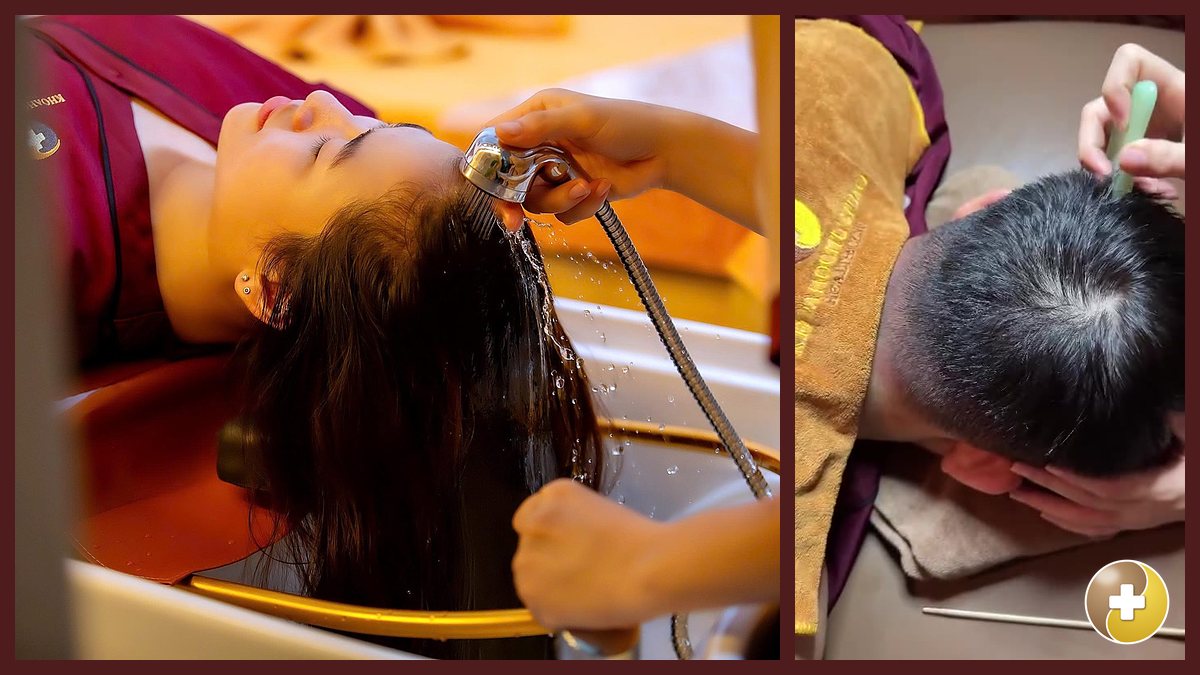
- Herbal hair wash with neck and shoulder massage, 60 min: 250,000 VND (about 10 USD). A gentle option after a few rough nights.
See also our sleep acupressure service page, the acupressure for sleep Q&A and the neck and shoulder massage Q&A.
A typical session
This is a composite of many sessions, not one guest's story. A project manager in her thirties had spent three weeks taking over an hour to fall asleep during a busy quarter. Her eyes were dry and red, her shoulders lifted, and the base of her skull felt clearly warmer than the rest of her neck. The session began with a few minutes of slow breathing, then a slow release of the neck and upper back, Xinshu on the back, and finally Baihui, Shenmen, Neiguan and Taichong. She dozed off for a while on the table. She left with three tasks: laptop closed before 10 pm, no coffee after 2 pm, and pressing Shenmen each night.
What guests usually feel
During the session most people feel tenderness at the neck and between the shoulder blades, then a lighter head and slower breathing; many fall asleep. Afterwards the shoulders drop and the head feels clearer, and many find it easier to fall asleep that night; some feel mild soreness for a day, like after exercise. Everyone is different, and we do not promise perfect sleep after one visit.
Want Lương Y Tống Văn Huynh’s team to read your spine and posture in person?
Home care and prevention: tonight and the next two weeks
| When | What to do | Why |
|---|---|---|
| Tonight | Screens off 30 min before bed; slow 4–6 breathing for 5–10 min; press Shenmen 1–2 min each side | Calms the nervous system |
| Awake after ~20 min | Get up, sit in dim light, read paper, return when sleepy | Stops the bed becoming linked with lying awake |
| Awake at 3 am | Don't check the time or your phone; breathe slowly, rub your soles | Clock-watching creates worry, screens wake you fully |
| Next 2 weeks | Same wake-up time daily; naps 15–30 min; no coffee after 2 pm; dinner 2–3 hours before bed | Resets the body clock |
| After a month | Take your sleep diary to a medical check | Look for an underlying cause |
- Slow 4–6 breathing: in through the nose for 4 seconds, out slowly for 6.
- Shenmen (HT7): the hollow on the wrist crease on the little-finger side; press gently 1–2 minutes each side.
- Warm foot bath for 15–20 minutes at roughly 38–42°C, then rub the soles 3–5 minutes each; people with diabetes should test the water carefully.
- Bed before 11 pm and get up on time even after a bad night.
- Move about 30 minutes a day and get morning light; avoid hard workouts close to bedtime.
Don't try to force sleep: the harder you try, the more awake you get. Keep the rhythm steady and sleep usually follows.
Book a session
- District 12: 225 Dương Thị Mười, Tân Chánh Hiệp Ward (address in Vietnamese for your driver). Open 8:00–19:00 daily.
- Vinhomes Grand Park, District 9: Unit T16-21, Manhattan area, Long Bình Ward, Thủ Đức City. Open 9:00–20:00 daily.
Call, Zalo or WhatsApp +84 888 264 559, or book online. Tell us how you sleep, for how long, and whether you have had a medical check. An early evening slot lets you go straight home to rest. You can read genuine guest reviews on each branch's Google Maps listing.
Visit us
- Đông Y Huyệt Đạo Tống Gia Quận 12 (District 12)
225 Dương Thị Mười, Phường Tân Chánh Hiệp, Quận 12, HCMC · 8:00–19:00 daily · 0888 264 559 · Directions on Google Maps - Đông Y Huyệt Đạo Tống Gia Quận 9 (Vinhomes Grand Park, District 9)
Căn T16-21 khu Manhattan, Vinhomes Grand Park, Phường Long Bình, TP. Thủ Đức, HCMC · 9:00–20:00 daily · 0888 264 559 · Directions on Google Maps
Want Lương Y Tống Văn Huynh’s team to read your spine and posture in person?
FAQ
What should I do if I can't sleep? Tonight, switch off screens 30 minutes early, do slow 4–6 breathing and press Shenmen on the wrist; if you are still awake after about 20 minutes, get up and return when sleepy. For the next two weeks keep a fixed wake-up time and no coffee after 2 pm. If it lasts over a month, get a medical check.
Why do I wake up at 3 am and can't get back to sleep? Early waking is common with age, evening alcohol and stress. Avoid checking the time or your phone, breathe slowly and rub your soles. If it comes with low mood or loss of interest for more than two weeks, get checked.
Can Vietnamese coffee keep me awake at night? Yes. Vietnamese coffee is strong, and caffeine can affect sleep many hours later. Move your last cup to before 2 pm and watch strong tea, milk tea and energy drinks too.
Which acupressure points help with sleep? The Tong Gia curriculum uses Shenmen and Neiguan at the wrist, Baihui on the crown and Yongquan on the sole. Sanyinjiao on the lower leg is avoided in pregnancy. Press gently 1–2 minutes each before bed.
Does massage help insomnia? When poor sleep comes with stress and a stiff neck, muscle release and acupressure help the body relax, and many people fall asleep more easily that night. Results vary, and long-term insomnia should also be checked medically.
How do I book a sleep session in Ho Chi Minh City? Call, Zalo or WhatsApp +84 888 264 559 or book online. Choose District 12 or Vinhomes Grand Park in District 9; an early evening slot works well.
Author: Lương Y Tống Văn Huynh – founder of Huyệt Đạo Tống Gia, a master of traditional Vietnamese wellness with over 13 years in Eastern wellness care, Y Tướng Học (face reading) and spinal nerve-reflex balancing massage.
Updated: 2026-11-16
Related guides
- Better sleep without sleeping pills: 8 natural options and which one suits you
- Burnout exhaustion: understanding work-related depletion and how Vietnamese traditional care can help you rebalance
- Does massage reduce stress? What changes in your body after one session, and when to see a doctor
- Head massage for better sleep: why touching the scalp, temples and neck helps your body drift off
- Stress insomnia: why you are exhausted yet cannot sleep, and what your body needs
- Can't sleep? What to do tonight, over the next two weeks, and when to get checked
This is a wellness service, not medical care.