
Driver back pain: why hours behind the wheel tire your lower back and how to look after it
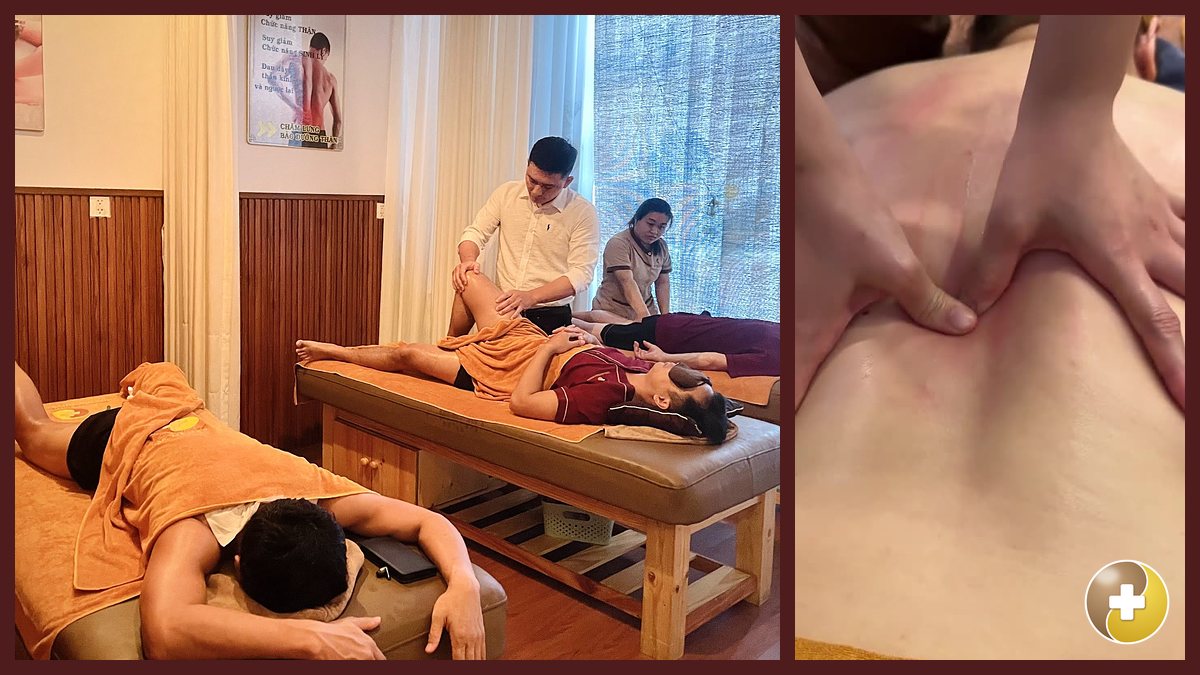
Quick answer: Driver back pain usually comes from hours of sitting, road vibration, a seat with no lumbar support and lifting cargo straight after a long drive. Adjusting the seat, stopping to walk about every two hours and muscle release along the spine help. Tong Gia Acupoint Wellness (Huyệt Đạo Tống Gia), District 12 and Vinhomes Grand Park, Ho Chi Minh City, cares for backs by hand.
Want Lương Y Tống Văn Huynh’s team to read your spine and posture in person?
What driver back pain is, and who gets it
Driver back pain is the tired, stiff, aching or sometimes sharp feeling in the lower back that builds up after hours behind the wheel. Many drivers describe the same moment: after three or four hours on the road they step out of the vehicle and have to stand with a hand on the hip before they can straighten up. The next morning the lower back feels "stuck" and bending to tie a shoe is hard. In Western medical terms most cases are mechanical: the long muscles beside the spine hold the trunk upright for the whole route, the lumbar discs carry more load in prolonged sitting, and road vibration travels up through the seat all day. This article does not label any condition; it explains why driving tires the back and how to look after it.
In Ho Chi Minh City, Tong Gia Acupoint Wellness (Huyệt Đạo Tống Gia) often sees these drivers:
- Ride-hailing car drivers working 10–12 hours a day, waiting for trips in an air-conditioned car and eating lunch in the driver's seat.
- Truck and container drivers on National Road 1, Road 13 and the routes into industrial parks, who drive long hours and also help load and unload.
- Bus, shuttle and school-run drivers who start early, finish late or drive night shifts.
- Private and family chauffeurs who wait for long periods and then drive a long stretch without a break.
If you drive a motorbike for deliveries, the posture and vibration are different. This page focuses on people who drive cars, trucks and buses for a living. Many of our foreign guests who drive in Saigon also recognise themselves here.
Common causes: habits, work, posture and environment
Back pain in drivers rarely has a single cause. It is usually many small loads added together every day:
- Sitting for hours without a break: back muscles do not alternate between contracting and relaxing, blood supply to the muscle drops and waste products build up, causing tiredness and stiffness. Rush-hour traffic at the city gateways makes the sitting time even longer.
- Constant vibration: in Western medical terms, whole-body vibration from the road and engine forces the back muscles to brace continuously; trucks and buses on rough roads get more of it.
- A poorly adjusted seat: reclined too far or too upright, sitting too far from the wheel so the arms reach, legs too straight on the pedals, no lumbar support so the lower back curls into a C shape.
- The right leg works harder: holding the accelerator and braking all day tires the right hip and buttock, and the pelvis can tilt.
- A thick wallet in the back pocket lifts one side of the pelvis for hours.
- Lifting straight after a long drive: stiff, cold back muscles plus bending to lift cargo is a classic moment for an acute strain.
- Short sleep and night shifts: the body does not recover, and you brace to stay alert, so shoulders and back tighten.
- Irregular meals and holding urine: quick fried meals and drinking little water to avoid stops leave the belly heavy and the body tired.
- Air conditioning blowing on the back and neck for hours: muscles contract in the cold and ache more in the evening.
- Little exercise outside driving hours: abdominal and gluteal muscles weaken, so the lower back carries more.
Accompanying signs to watch
Driver back pain often comes with other signs. Writing them down helps separate simple muscle fatigue from something that needs checking:
- Pain spreading to the buttock, back of the thigh or calf; numbness in the right foot after holding the accelerator.
- Heavy, tired legs and tight calves on long routes.
- Numb hands or fingers after gripping the wheel for a long time, or on waking.
- Stiff neck and a headache at the back of the head by late afternoon.
- Tired, dry eyes on night drives, glare from oncoming headlights.
- Tailbone pain on a hard seat or bumpy roads.
- Tension and irritability in traffic jams, light sleep, getting up at night to urinate.
- One side of the lower back hurting more, hips at different heights in the mirror.
When to see a doctor
Please see a doctor at a medical facility soon, and skip massage for now, if back pain comes with:
- Leg numbness or weakness that keeps getting worse, a weaker brake foot, tripping when walking. This also affects driving safety, so get checked right away.
- Numbness in the groin, buttocks or saddle area, or difficulty controlling bladder or bowels: go to emergency immediately.
- Fever, flank pain with burning urination or blood in the urine, or cramping flank pain spreading to the lower abdomen, especially if you often hold urine or drink little water.
- Pain after a traffic collision, a fall from a truck bed or a slip while lifting.
- Night pain that rest does not ease, unexplained weight loss or ongoing fatigue: get checked in parallel.
- Upper-back pain spreading to the chest, chest tightness, shortness of breath or cold sweats: stop somewhere safe and call 115 immediately.
This is a wellness service, not medical care.
The Y Tướng Học view: Kidney, Liver, Spleen and the outward signs of a driver's back
According to the Tong Gia curriculum, the Kidney stores essence, governs bones and marrow and is linked to the lower back, knees and ears; when its function weakens, the lower back and knees tire and standing quickly becomes uncomfortable. The Liver governs the sinews and opens into the eyes: stress, late nights and staring at the road make sinews pull tight and eyes dry. The Spleen governs the flesh and limbs: irregular meals, long sitting and little movement leave muscles soft and limbs heavy. The curriculum is clear that back pain has many causes; it is not a reason to conclude you have kidney disease.
Y Tướng Học, the Vietnamese face-and-body reading taught at Tong Gia, rests on one line: "the signs are outside, the organs are inside". With a driver who has back pain, the practitioner looks at:
- The ears: the Kidney opens into the ears; thin, pale ear rims and stiff tissue around the ears point to weaker Kidney energy, often seen with lower-back and knee fatigue, feeling cold and night urination.
- The bridge of the nose: the curriculum sees the nose as a small picture of the spine; a crooked bridge often goes with a tilted spinal axis, so the lower back and pelvis are checked carefully.
- Eyes and nails: red, dry eyes after night drives and pale, brittle nails suggest caring for the Liver and protecting sleep.
- Face shape: a face narrow on top and wide below, or a round full face, tells the practitioner to check the lower back and hips first, where muscle is thick and tends to hold cold and congestion.
- How you sit and step out of the vehicle: shoulders rolled forward, belly forward, pushing up with the hands, a bent first step.
This is not fortune telling. It simply guides which area to start with and whether the touch should be gentle and nourishing or deeper to release muscle.
Vertebrae, nerve reflex areas and related organs
The Tong Gia curriculum maps the spine as follows: the neck C1–C7 relates to the head, face, neck and arms; the thoracic spine D1–D12 to circulation, breathing and digestion; the lumbar spine L1–L5 to digestion, kidneys, urinary and reproductive function and the legs; the sacrum and coccyx S1–S5 to elimination and the pelvic floor. For the muscle–bone–joint group (neck and shoulder aches, sciatic-type pain, numb hands and feet) it combines C5–C7, L1–L5 and S1–S5. The table speaks only of what is "related", not a medical conclusion:
| Vertebrae / area | Nerves and function | What drivers often feel | Related organ |
|---|---|---|---|
| C5–C7, D1–D3 | Shoulders, arms, hands | Stiff neck, numb hands on the wheel | Liver (sinews) |
| D10–D12 | Lower thoracic, digestion | Aching waistline, bloating after a rushed meal | Spleen and Stomach |
| L1–L3 | Kidneys, urinary tract, front thigh | Upper lumbar ache, cold back, night urination | Kidney |
| L4–L5 | Nerve roots to buttock and leg | Low back pain into the buttock, numb accelerator foot | Kidney |
| S1–S5, coccyx | Pelvis, elimination | Tailbone pain on hard seats and bumpy roads | Kidney |
Why do drivers ache in both the neck and the back? The spine is one connected axis: when the lower back curls, the head and shoulders move forward to compensate and the neck carries extra load. That is why a session for drivers works from the neck down to the sacrum rather than rubbing only the painful spot.
The Tong Gia method: spinal nerve-reflex balancing for drivers
The method was built by Lương Y Tống Văn Huynh, master of traditional Vietnamese wellness and founder of Huyệt Đạo Tống Gia, over more than 13 years of practice in Eastern wellness, Y Tướng Học and spinal nerve-reflex balancing. It follows eight principles of the hands. A session for a driver usually includes:
- Observation and questions: what you drive, how many hours a day, whether you load cargo, day or night shifts, which side hurts, whether it spreads to the leg; posture, hip levels, ears, nose bridge and complexion.
- Reading the spine by hand: pressing, stroking and rolling from the neck to the sacrum to feel skin temperature, muscle layers, raised, sunken or shifted vertebrae and tender points, comparing left and right.
- Muscle release: softening the spinal erectors, quadratus lumborum and glutes, especially on the accelerator side; pressure rises gradually through five levels and focuses only on "active" zones (warm, tight, tender).
- Acupressure in the right areas: following the Bladder meridian along both sides of the spine, pressing Shenshu (BL23), Zhishi and Mingmen, and Weizhong (BL40) behind the knee, the classic point for back pain. Work stops when the skin at the point turns from dry to slightly moist.
- Self-care guidance: seat set-up, break rhythm, how to lift after a long drive, warming the lower back at home.
What guests feel: during the session tight spots feel sore in a pleasant way, the lower back warms up and many drivers say their legs feel "lighter"; quite a few fall asleep. Afterwards standing up is easier and sleep is deeper; the next day there may be mild tenderness where muscles were very tight, usually fading in a day or two. The session helps rebalance muscles and spine; how long the effect lasts depends on how you sit and rest while driving.
A typical session: a truck driver on an industrial-park route, driving about nine hours a day and loading his own cargo, came in with pain on the right side of his lower back; every afternoon he had to stand with a hand on his hip after climbing down. The practitioner found the right hip higher, the right buttock and lumbar muscles thick and warm, tenderness at L4–L5 on the right, a cooler sacral area, thin ear rims and a tired complexion from short sleep. A 90-minute session released the right lumbar and gluteal muscles, worked along the Bladder meridian, pressed Shenshu and Weizhong and finished with light neck work. He was advised to put a small cushion behind his lower back, move his wallet out of the back pocket, stop and walk a few minutes about every two hours, and not lift cargo the moment he steps down.
| Suitable service | Length | Price |
|---|---|---|
| Back and waist care | 60 min | 550,000 VND (about 21 USD); first visit 399,000 VND (about 15 USD) |
| Back and waist care | 90 min | 750,000 VND (about 29 USD) |
| Full-body care (back, neck, legs) | 120 min | 950,000 VND (about 37 USD) |
Read more in what a back massage in Saigon feels like, back massage questions and answers, massage in District 12 for hard-working bodies and massage prices in Ho Chi Minh City.
Want Lương Y Tống Văn Huynh’s team to read your spine and posture in person?
Home care and prevention for drivers
- Set the seat before you drive: sit right back, knees slightly bent with the brake fully pressed, elbows slightly bent on the wheel; add a small cushion or rolled towel behind the lower back if the seat has no lumbar curve.
- Break rhythm: roughly every two hours stop somewhere safe, get out, walk, stretch and gently arch the back a few times.
- Do not lift the moment you step out: walk a minute or two first; when lifting, squat, keep the back straight, hold the load close and stand up with your legs.
- Take the wallet out of your back pocket and angle the air vents away from your back and neck.
- Warm the lower back: following the Tong Gia curriculum, rub your palms until warm, place them on both sides of the lower back and rub up and down until warm; a warm foot soak in the evening helps you relax and sleep.
- Eat regular meals, drink enough water, do not hold urine for long; on days off walk 20–30 minutes to strengthen the core and glutes.
How to book
- District 12 branch: 225 Dương Thị Mười, Tân Chánh Hiệp Ward (District 12), 8:00–19:00 daily.
- District 9 branch: Unit T16-21, Manhattan subdivision, Vinhomes Grand Park, Long Bình Ward, Thủ Đức City (former District 9), 9:00–20:00 daily.
- Hotline / Zalo / WhatsApp: +84 888 264 559.
- Online booking: /dat-lich.
When booking, just write "driver, back pain", your type of vehicle and daily driving hours so the right session length can be prepared. Shift drivers can pick an early slot in District 12 or a late slot in District 9. If you live in or are visiting Ho Chi Minh City, this is an easy way to experience a Vietnamese traditional wellness method developed by Lương Y Tống Văn Huynh.
Visit us
- Đông Y Huyệt Đạo Tống Gia Quận 12 (District 12)
225 Dương Thị Mười, Phường Tân Chánh Hiệp, Quận 12, HCMC · 8:00–19:00 daily · 0888 264 559 · Directions on Google Maps - Đông Y Huyệt Đạo Tống Gia Quận 9 (Vinhomes Grand Park, District 9)
Căn T16-21 khu Manhattan, Vinhomes Grand Park, Phường Long Bình, TP. Thủ Đức, HCMC · 9:00–20:00 daily · 0888 264 559 · Directions on Google Maps
Want Lương Y Tống Văn Huynh’s team to read your spine and posture in person?
FAQ
Is back pain in drivers serious? Most of the time it is muscle fatigue from long sitting, vibration and seat posture, and it eases with a better seat set-up, regular breaks and steady care of the back muscles. If it comes with leg weakness or numbness, saddle numbness, bladder or bowel changes, fever or follows a collision, see a doctor first.
What is a simple way to prevent back pain while driving? Sit right back in the seat, add a small cushion behind the lower back, keep the knees slightly bent with the brake fully pressed, take the wallet out of your back pocket and stop to walk about every two hours. Do not lift cargo the moment you step out; walk a minute or two first.
Why do drivers get back pain and sore arms and legs too? Hours of driving load the whole spinal axis: when the lower back curls, the neck and shoulders work harder, gripping the wheel tires the hands and holding the accelerator tires the hip and knee. The Tong Gia curriculum checks C5–C7, L1–L5 and S1–S5 together for this group. Swollen, hot or red joints need a medical check.
What should I do about tired legs on long drives? Stop somewhere safe, walk for a few minutes, rise up and down on your toes and drink enough water. In the evening soak your feet in warm water and rest them raised for a while. One swollen, red, hot or painful calf after a long trip needs medical attention right away.
How much is a back session at Tong Gia? Back and waist care is 550,000 VND (about 21 USD) for 60 minutes, 399,000 VND (about 15 USD) on the first visit, and 750,000 VND (about 29 USD) for 90 minutes, at both the District 12 and Vinhomes Grand Park branches.
Author: Lương Y Tống Văn Huynh – founder of Huyệt Đạo Tống Gia, a master of traditional Vietnamese wellness with over 13 years in Eastern wellness care, Y Tướng Học (face reading) and spinal nerve-reflex balancing massage.
Updated: 2026-11-17
Related guides
- Hip and side cramps: six common causes, telling them from deeper pain, and how Tong Gia can help
- Pain in the middle of the back: four types to tell apart, warning signs, and how Tong Gia cares for it in Ho Chi Minh City
- Back pain and kidney failure: the signs that actually matter, the tests to ask for, and safe back care in Ho Chi Minh City
- Where is kidney back pain felt? Location, type of pain, warning signs, and how to tell it apart from a sore back muscle
- Swayback lower back pain: how an over-arched lower back causes aching, when to get checked, and how Tong Gia cares for it in Ho Chi Minh City
- Lower back pain with tired, weak knees: common causes, when to get checked, and how Tong Gia cares for the back and legs in Ho Chi Minh City
This is a wellness service, not medical care.