
Swayback lower back pain: how an over-arched lower back causes aching, when to get checked, and how Tong Gia cares for it in Ho Chi Minh City
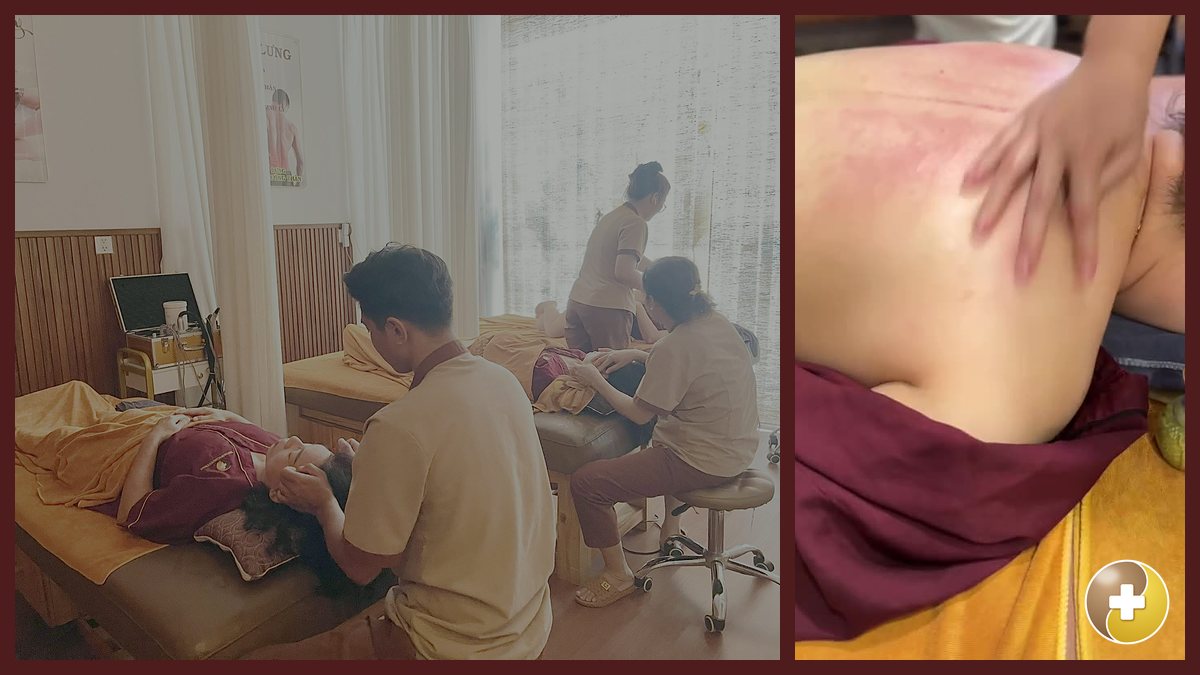
Quick answer: Swayback pain is a tired ache at the waist when the lower back arches too much – usually from long sitting that shortens the hip flexors, weak abs, high heels or belly weight. It is worse standing, better lying with knees bent. Tong Gia in Ho Chi Minh City releases the lumbar muscles by hand.
Want Lương Y Tống Văn Huynh’s team to read your spine and posture in person?
What is a swayback, and why does it hurt?
A swayback – an over-arched lower back – is a posture in which the lumbar spine curves forward more than usual: from the side you see a deep hollow at the waist, the belly pushed forward and the buttocks sticking out. In Western medicine, the lower back normally has a gentle forward curve; a swayback is when that curve becomes excessive. Two common patterns: an over-arched lower back with the pelvis tipped forward, and the "sway" posture where the hips drift forward and the upper body leans back, as if leaning on thin air.
The typical pain is a tired, heavy ache in the low back right at the hollow, worse after long standing, in heels, when reaching overhead or lying flat on a hard mattress with legs straight; better when sitting slightly bent forward or lying with knees bent. When the lower back is over-arched, the small joints at the back of the vertebrae (facet joints) are pressed together, the lumbar spinal muscles shorten and work all day, while the abdominal and buttock muscles lengthen and weaken. That front–back imbalance is the root of the ache.
A common self-check: stand with heels, buttocks and shoulder blades against a wall and slide a hand into the gap behind your lower back. A flat hand is typical; if a whole fist slides in easily, the curve may be increased. It is only a cue to notice your posture, not a medical assessment. In Ho Chi Minh City we see this posture in women who wear heels to work, pregnant and new mothers, people carrying weight around the belly, desk workers who hit the gym at night, shop and restaurant staff who stand for hours, and people who trained in dance or gymnastics.
Common causes: posture, work, habits, environment
| Factor | Why it deepens the curve (Western view) | Common in | What helps |
|---|---|---|---|
| Long sitting | Hip flexors at the front of the hip shorten and tilt the pelvis forward when you stand | Office workers, drivers | Daily hip-flexor stretch |
| Weak abs and glutes | The pelvis loses its front and back "belt" | Inactive people, after childbirth | Gentle deep-core and glute work |
| Belly weight, pregnancy | Centre of gravity moves forward, the back arches to balance | Overweight, pregnant women | Reduce load, change position, side-lying with a pillow |
| High heels | The heel tips the body forward; the lower back arches to compensate | Working women, sales staff | Lower heels, switch shoes mid-day |
| Poor gym technique | Arching while pressing or squatting; lots of chest work, little back work | Gym beginners | Neutral spine, coached technique |
| Standing with the belly out | Hanging on ligaments and facet joints instead of muscles | Waiters, guards, teachers | Shift weight, one foot on a low step |
A swayback is different from a hunched upper back (kyphosis) and from scoliosis (a sideways curve). Many people have both a rounded upper back and an over-arched lower back, one curve compensating for the other.
Accompanying signs to watch
- Worse standing, arching or in heels; better sitting bent forward or lying with knees bent: typical of compressed facet joints and spinal muscles.
- Tight front of the hip, a pull in the groin when standing tall; lying flat, the lower back lifts off the mattress.
- Belly pushed forward even when you are slim, buttocks out.
- Pain or tingling into the buttock or back of the thigh: a lumbar nerve root may be irritated.
- A teenager in back-arching sports (dance, gymnastics, volleyball) with lasting low back pain: needs a medical check.
- Whole-body clues: a cold lower back, tired knees, night urination; or calf cramps; or a soft belly and tired limbs – Kidney, Liver and Spleen signals in Eastern medicine.
When to see a doctor
If pain is severe, sudden, or comes with fever, numbness, weakness, chest pain or breathing difficulty, please see a doctor first. Also:
- Leg weakness, numbness in the groin or around the anus, trouble passing urine or loss of control – emergency.
- Pain after a fall, or pain on the bone in someone with osteoporosis.
- A teenager in arching sports with low back pain lasting more than 2–3 weeks – a vertebral stress injury should be ruled out.
- Fever, burning or bloody urine, colicky flank pain.
- Pregnant women with back pain plus bleeding, rhythmic belly pain or leaking fluid – see an obstetrician now.
- Unexplained weight loss or night pain that rest does not ease – please get a medical check alongside any wellness care.
This is a wellness service, not medical care. Tong Gia does not change the curve of your spine; assessing the curve belongs to medical professionals. We only support the muscles around the lower back and hips once warning signs are ruled out.
The Eastern face-reading view: which organs, what signs
In Eastern medicine the lower back is "the house of the Kidney". Per the Tong Gia course book, the Kidney governs bone and marrow, and a weak Kidney shows as tired lower back and knees. Kidney-shu lies below the spinous process of L2, 1.5 cun out; Mingmen sits in the hollow below L2 and warms Kidney yang for a cold, tired back; Zhishi lies 3 cun out and strengthens the back. The Liver governs the sinews – the shortened hip flexors pulling the pelvis are a "sinew" matter – and the Spleen governs muscle: a slack belly that cannot hold the pelvis suggests Spleen qi is not enough.
Vietnamese face reading says "the sign is outside, the organ is inside." With over 2,000 years of roots, it was systematised for organ-based care by Master Tống Văn Huynh, a master of traditional Vietnamese wellness. The course book notes: the "Giáp" face (wide forehead, pointed chin) shows "full above, empty below", with a lower back that is often sunken and cold; the "Do" face (narrow top, broad jaw) has very thick lumbar and hip muscles that congest easily; the round "Viên" face has a back that catches cold easily, cool skin over the lumbar area and slack muscles with a dull ache; a crooked nasal bridge, in the school's material, often goes with misalignment of the spinal axis and pelvis, with L4–L5–S1 under strain. The practitioner also watches your standing posture: depth of the waist hollow, belly, buttocks, knees locked back. This is observation for choosing where to work, never a medical verdict or a judgement.
Vertebrae and nerve reflex zones
| Vertebrae | Nerve, function | Typical swayback complaint | Related organ |
|---|---|---|---|
| D10–D12 | Thoracolumbar junction | Ache across the upper waist where the curve changes direction | Spleen, Stomach (below T11, T12) |
| L1–L3 | Upper lumbar; kidney, urinary, front of thigh | Tight front of hip, cold back, night urination | Kidney (Kidney-shu, Mingmen at L2) |
| L4–L5 | Lower lumbar; legs | Ache right in the hollow after standing, into buttock and back of thigh | Kidney, Liver (sinews) |
| S1–S5 | Sacrum; pelvis | Tired sacrum, one sacroiliac joint | Kidney |
Per the course book, L1–L5 govern digestion, kidneys, urinary and reproductive organs and the legs; the muscle–bone–joint group is worked through C5–C7, L1–L5 and S1–S5, always as support. In swayback guests, the practitioner usually finds two warm, knotted lumbar muscle strips while the belly and buttocks are soft.
The Tong Gia method: spinal nerve reflex balancing massage
This Vietnamese Eastern method was developed by Master Tống Văn Huynh, founder of Tong Gia Acupoint Wellness, from the Head-and-Spine school and over 13 years of practice, with three "No"s: no ingested or injected chemicals or herbs, no needles, no brute force. A session:
- Observe and ask: standing or sitting job, heels, pregnancy or recent birth, gym habits, tingling, medical check; face and side-view posture.
- Read the spine by hand from D10 to the sacrum, comparing sides (many swaybacks also tilt one hip).
- Release the shortened lumbar strips in "excited" zones, the glutes and hips, pressure building through five levels; vibration and a light touch for slack, cold muscle; both sides balanced together when they differ.
- Press Kidney-shu, Mingmen, Zhishi and open the Bladder line down to Weizhong behind the knee; stop when the skin turns from dry to slightly moist, warm a cold area.
- Home care: hip-flexor stretch, deep-core work, standing and footwear tips.
A typical session: a shop assistant around thirty, in heels all day, a year after giving birth, aching at the waist by afternoon and unable to lie flat without bending her knees; her check showed no disc problem. Deep waist hollow, lower belly forward, round face, cool lumbar skin. L3–L5 strips are knotted, warmer on the right; belly and buttocks soft. The practitioner releases both strips, softens the glutes, presses Kidney-shu and Mingmen and warms the area. Afterwards she can lie flat more easily and her waist feels warm and light; advice: flat shoes for half the shift and a pelvic-tilt exercise every evening.
Suitable services (see the price list): Back and waist care 60 min: 550,000 VND (about US$21), first visit 399,000 VND (about US$15); 90 min: 750,000 VND (about US$29); herbal compress: 130,000 VND (about US$5) for a cold, slack lower back; Kidney wellness 75 min: 750,000 VND (about US$29) for back ache with tired knees and night urination.
What you feel: sore-but-pleasant lumbar strips, a warm waist, lying flat and standing up more easily; most sleep deeply. Massage does not change the curve of the spine; we support muscle balance and do not promise the pain will vanish. More: back massage Q&A, a back massage experience in Saigon, cupping Q&A.
Want Lương Y Tống Văn Huynh’s team to read your spine and posture in person?
Self-care at home and prevention
- Hip-flexor stretch: kneel on one knee, other foot forward, squeeze the glute and push the hip forward until the front of the kneeling hip stretches; 30 seconds each side, twice.
- Pelvic tilt: lie on your back, knees bent; breathe out and press the lower back gently into the mattress with your abs, hold 5 seconds, 10 times each evening.
- Gentle glute bridge: knees bent, lift hips to a straight shoulder–knee line without arching, 5 seconds, 10 times.
- Stand well: feet hip-width, knees soft, belly not pushed out; one foot on a low step when standing long; lower heels.
- Sleep with a pillow under the knees, or on your side with a pillow between the thighs; rub warm palms over the Kidney-shu area 50–100 times before bed. Curious about reading the body? See our Eastern face reading Q&A.
Book a session
- District 12: 225 Dương Thị Mười, Tân Chánh Hiệp Ward (District 12). Open 8:00–19:00 daily.
- Vinhomes Grand Park, District 9: Unit T16-21, Manhattan zone, Long Bình Ward, Thủ Đức City. Open 9:00–20:00 daily.
Both branches have genuine guest reviews on Google Maps. Book online or call / Zalo / WhatsApp +84 888 264 559; let us know if you are pregnant or recently gave birth.
Visit us
- Đông Y Huyệt Đạo Tống Gia Quận 12 (District 12)
225 Dương Thị Mười, Phường Tân Chánh Hiệp, Quận 12, HCMC · 8:00–19:00 daily · 0888 264 559 · Directions on Google Maps - Đông Y Huyệt Đạo Tống Gia Quận 9 (Vinhomes Grand Park, District 9)
Căn T16-21 khu Manhattan, Vinhomes Grand Park, Phường Long Bình, TP. Thủ Đức, HCMC · 9:00–20:00 daily · 0888 264 559 · Directions on Google Maps
Want Lương Y Tống Văn Huynh’s team to read your spine and posture in person?
FAQ
Can a swayback cause lower back pain? Yes. An over-arched lower back compresses the facet joints and keeps the lumbar muscles short and working, while abs and glutes weaken. The result is a tired ache at the waist, worse standing or in heels. Leg weakness, numbness or bladder changes need a medical check.
How do I know if I have a swayback? Stand against a wall with heels, buttocks and shoulder blades touching. If a whole fist slides easily into the gap behind your lower back, and your belly sticks out even though you are slim, the curve may be increased. A professional assessment gives the real answer.
Why does my lower back hurt when I lie flat? With a swayback, the lower back lifts off the mattress when your legs are straight, so the muscles keep working. A pillow under the knees or side-lying with a pillow between the thighs is usually more comfortable.
Can massage fix a swayback? No. Massage does not change the curve of the spine. Releasing the lumbar and glute muscles eases the ache; combined with hip-flexor stretches, core work and better standing habits, the comfort lasts longer.
Is it safe during pregnancy? Tell us when booking. We adapt positions and avoid certain points in pregnancy; with bleeding, rhythmic belly pain or leaking fluid, see your obstetrician first.
Author: Lương Y Tống Văn Huynh – founder of Huyệt Đạo Tống Gia, a master of traditional Vietnamese wellness with over 13 years in Eastern wellness care, Y Tướng Học (face reading) and spinal nerve-reflex balancing massage.
Updated: 2026-11-17
Related guides
- Hip and side cramps: six common causes, telling them from deeper pain, and how Tong Gia can help
- Pain in the middle of the back: four types to tell apart, warning signs, and how Tong Gia cares for it in Ho Chi Minh City
- Back pain and kidney failure: the signs that actually matter, the tests to ask for, and safe back care in Ho Chi Minh City
- Where is kidney back pain felt? Location, type of pain, warning signs, and how to tell it apart from a sore back muscle
- Swayback lower back pain: how an over-arched lower back causes aching, when to get checked, and how Tong Gia cares for it in Ho Chi Minh City
- Lower back pain with tired, weak knees: common causes, when to get checked, and how Tong Gia cares for the back and legs in Ho Chi Minh City
This is a wellness service, not medical care.