
Hip and side cramps: six common causes, telling them from deeper pain, and how Tong Gia can help
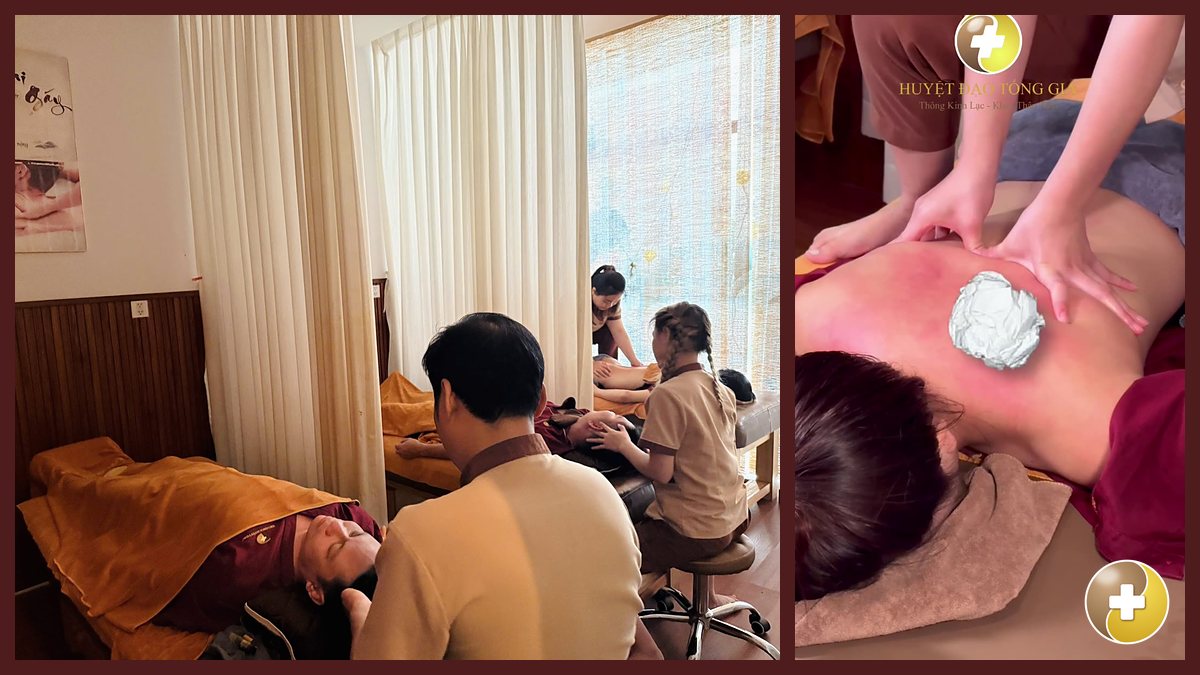
Quick answer: Hip cramps usually come from waist or buttock muscles tightening after long sitting and sudden effort, tired muscles, fluid loss, awkward sleep posture or cold. Deep colicky pain with fever, burning urine or blood in the urine needs a medical check. Tong Gia Acupoint Wellness (Huyệt Đạo Tống Gia) in District 12 and Vinhomes Grand Park, Ho Chi Minh City, cares for this area by hand.
Want Lương Y Tống Văn Huynh’s team to read your spine and posture in person?
What is a hip or side cramp?
A cramp around the hip is a sudden, strong, involuntary tightening of a muscle group there: one spot locks as if squeezed, it hurts sharply and you freeze, sometimes for a few seconds, sometimes a few minutes. The area often stays sore for the rest of the day.
People use "hip" for two different areas, so first work out where yours is:
- The side of the waist (the flank): between the lowest ribs and the top of the pelvis. In Western anatomy this holds the oblique abdominal muscles, the quadratus lumborum linking the last rib to the pelvis, and the long back muscles behind. Side cramps tend to strike when you reach for something, twist, bend to tie a shoe or stretch out in bed.
- The hip joint and buttock: the iliopsoas at the front (the main hip flexor), the tensor fasciae latae on the outside, and the gluteal and piriformis muscles behind. Buttock cramps on the right or left often come while cycling, running, getting up from a long squat or lying on your side with knees bent.
A cramp is a symptom, not the name of a condition. Most occasional cramps relate to tired muscles, fluid loss or posture. But the hip and flank are also where pain from the kidneys, bowel, ovaries, hip joint or sciatic nerve can show up, so it matters to tell a muscle cramp from deep, colicky pain. This guide helps you tell them apart, shows when to see a doctor and explains how Tong Gia looks at this area.
In Ho Chi Minh City, Tong Gia often meets hip cramps in office workers who sit all day and then run or play football in the evening; badminton and pickleball players who twist and reach; drivers and delivery riders; workers who lift; pregnant women; and older adults sleeping in cold air-conditioning.
Common causes: habits, posture and environment
These groups follow Western medicine and are meant to help you describe what happens, not to label it.
- Long sitting, then sudden effort. Eight or nine hours seated keep the hip flexors and quadratus lumborum shortened and the glutes idle. A sprint or a sudden twist on court then stretches and fires them before they are ready.
- Tired, overloaded muscle. Long runs, hills, long rides, core and glute workouts, jumping, lifting while twisting. Hip muscles work constantly to keep the pelvis level and cramp when exhausted, during exercise or later that night.
- Fluid and electrolyte loss. Heavy sweating in the Saigon heat, midday sport, too little water, plenty of beer or coffee, diarrhoea or vomiting. This is why many players cramp in the hip or buttock late in a match.
- Sleep posture and cold. Lying on one side with knees bent for hours, a big stretch on waking, a soft mattress that lets the hip sink, air-conditioning on the lower back.
- Spine, pelvic tilt and irritated nerves. A leg-length difference, standing on one leg, a curved lower back, a strained sacroiliac joint or an irritated lumbar root can make one side cramp more, which is why some people only ever cramp on the left hip or the right buttock.
- Life stages and health conditions. Late pregnancy stretches the ligaments and muscles of the hip and lower belly. Older age, diabetes, kidney disease, an underactive thyroid and some prescribed drugs, such as diuretics, make cramps more likely.
| Where and when | Muscles often involved (Western view) | Tip |
|---|---|---|
| Side of the waist, reaching or twisting | Obliques, quadratus lumborum | Warm up with trunk rotations |
| Front of the hip, running or football | Iliopsoas (hip flexor) | Stretch hip flexors after sitting |
| Right or left buttock, cycling, squatting | Glutes, piriformis | Stand up, walk, stretch the buttock |
| Outer hip, lying on your side | Tensor fasciae latae, gluteus medius | Pillow between the knees |
| Late in a hot match | Several groups, dehydration | Fluids with electrolytes |
| Deep colicky pain with fever or burning urine | Not muscle; possibly kidney or bowel | See a doctor, no massage |
During a cramp: stop and breathe slowly. For the waist, stand tall, raise the arm on that side and lean gently the other way. For the front of the hip, hold a chair, step the cramping leg back and lower the hip a little. For the buttock, lie on your back and draw that knee towards the opposite shoulder. Then rub lightly and apply warmth; do not squeeze the hard knot.
Other signs to watch
- A hard knot you can feel that eases when stretched usually means muscle; deep waves of pain that stretching does not touch do not.
- Pain spreading from the flank to the lower belly or groin.
- Fever, burning or frequent urination, blood in the urine, cloudy urine.
- Nausea, vomiting, belly pain that keeps building, especially low on the right.
- Limping, groin pain when walking, trouble turning the thigh.
- Numbness or tingling from the buttock down the leg, leg weakness.
- A bulge in the groin when standing, coughing or straining.
- For women: a late period or unusual bleeding with one-sided lower belly pain.
When to see a doctor
Please see a doctor first, and do not have the painful area massaged, if:
- You have colicky flank pain spreading to the lower belly, blood in the urine or burning urination, or fever with flank pain. The Tong Gia curriculum notes that kidney pain usually sits in the flank and comes with fever or urinary changes; it needs a medical check.
- Belly pain keeps building, focuses low on the right, with fever or vomiting.
- One-sided lower belly pain with a late period or bleeding; in pregnancy, regular tightening, fluid or bleeding.
- A painful groin bulge that will not go back.
- Groin pain that makes you limp, especially after a fall in an older person.
- Numbness or weakness in the leg, bladder changes or numbness around the back passage.
- Chest pain, breathlessness or cold sweats: call 115 (Vietnam's emergency number) at once.
- Frequent cramps with tiredness, thirst or weight loss: have blood sugar, electrolytes and kidneys checked alongside wellness care.
This is a wellness service, not medical care.
The Y Tướng Học view: Liver sinews, the Liver channel along the flanks, the Kidney at the lower back
Y Tướng Học (face and body reading for wellness) says what is inside shows outside. In the Tong Gia curriculum, hip and flank cramps connect with:
- The Liver governs the sinews: a weak Liver shows as stiff muscles, cramps and less flexibility; Liver blood deficiency adds dry eyes and brittle nails. The Ququan point is listed for tight sinews and cramps.
- Stagnant Liver qi: the curriculum describes tightness along both flanks when stress and frustration build up, and long-term anger slowing qi and blood, with tight muscles, cramps and poor sleep. Many people cramp in exactly the weeks of high pressure at work.
- The Kidney: the kidneys sit either side of the lumbar spine. Reduced Kidney function shows as an aching lower back and tired knees; Kidney yang deficiency as a cold lower back. The Kidney also keeps electrolytes in balance, and cramps can follow when this weakens.
- The Spleen governs muscle: when it is weak, limbs tire and muscles slacken, so they tire and then cramp.
Outward signs: a face widest at the cheekbones (the "Thân" shape) links to an overactive Liver–Gallbladder and flank tightness under stress, with key points around D7 and D9; a face narrow on top and broad at the jaw ("Do") links to very thick lower back and hip muscles; a round face ("Viên") to a cool, slack lower back. Ridged nails and dry eyes point to the Liver, thin ear rims to the Kidney. These are cues for care, not labels. See face reading for wellness.
Spine segments and nerve-reflex areas involved
In the Tong Gia curriculum, L1–L5 serve digestion, kidneys, urinary and reproductive organs and the legs; S1–S5 serve elimination and the pelvic floor. The muscle–bone–joint group combines C5–C7, L1–L5 and S1–S5, and for the "Do" and "Viên" face shapes the lower back and hip are checked first.
| Segment / area | Nerves / function | Typical signs | Organ system |
|---|---|---|---|
| D7–D9 (Liver shu area) | Liver and gallbladder, mid-back | Flank tightness under stress, cramps | Liver |
| D11–D12 (Spleen, Stomach shu) | Digestion; lower intercostal nerves to the side wall (Western view) | Waist cramps, bloating | Spleen |
| L1–L2 (Kidney shu, Mingmen, Zhishi) | Kidneys, quadratus lumborum | Cold, tired flank, side cramps | Kidney |
| L1–L3 | Iliopsoas, front of thigh (Western view) | Front-of-hip cramps when running | Liver, Kidney |
| L4–S1, sacroiliac joint | Glutes, sciatic nerve (Western view) | Buttock cramps, pain down the leg | Liver, Kidney |
How Tong Gia works: spinal nerve-reflex balancing massage
The method was built by Lương Y Tống Văn Huynh, a master of traditional Vietnamese wellness and founder of Tong Gia Acupoint Wellness, over more than 13 years of practice. A session for hip cramps:
- Observe and ask: waist or buttock, when, any fever, urinary changes, belly pain, late period or pregnancy, and whether you have had a check. Warning signs mean a doctor first. Then the face, nails, eyes and ears are read.
- Read the spine by hand: skin temperature, muscle layer, vertebral shape and your sensations, comparing both flanks and both buttocks.
- Find the key zone and point: often D7–D9, L1–L2 and the sacroiliac area; only "excited" zones (warm, tight, more painful) are worked directly.
- Release the muscles: long back muscles, quadratus lumborum, waist, buttocks, outer thigh and back of the knee, with a "sensation wave" that builds from one finger according to your feedback.
- Press the right acupoints: Liver and Spleen shu; Kidney shu, Mingmen and Zhishi; Weizhong at the knee crease; Ququan at the inner knee; Zhongfeng for tension along the Liver channel; Taichong on the top of the foot for stress; Sanyinjiao (never in pregnancy).
- Stop at the right moment: when the skin over the key point turns from dry to slightly moist; at once if anything feels wrong.
- Home guidance: waist and hip-flexor stretches, sitting and sleeping positions.
Suitable services (same price at both branches; see prices):
- Lower back care: 60 minutes 550,000 VND (about 21 USD), first visit 399,000 VND (about 15 USD); 90 minutes 750,000 VND (about 29 USD). Focus on lower back, waist and buttocks.
- Liver wellness care, 75 minutes: 750,000 VND (about 29 USD). When cramps come with stress, flank tightness, dry eyes or poor sleep.
- Herbal compress: 130,000 VND (about 5 USD). Added when the lower back feels cold.
A typical session
This is a composite of many sessions, not one guest's story. A woman of about 35, an accountant in District 12, sits at a computer most of the day and plays badminton every evening. For a few weeks she has cramped in the left side of her waist when stretching for a shot, and some nights in the left buttock in her sleep. She has had urine tests and a belly ultrasound, both normal. The practitioner notes broad cheekbones and ridged nails; she mentions quarter-end pressure and light sleep. On the spine, D7–D9 and the left L1–L2 area are tighter and warmer than the right, and the left quadratus lumborum and glutes are hard. The session works the long back muscles with Liver and Spleen shu, then Kidney shu and Zhishi, releases the left waist and buttock, and presses Weizhong, Ququan, Zhongfeng and Taichong. By the end, leaning to the right feels easier and the hip is warm. She is advised to warm up her trunk before playing, bring an electrolyte drink and stand up about once an hour at work.
What guests feel during and after
The tender spots are usually the waist, buttocks and mid-back; many are surprised that one side is clearly harder than the other. As these release, twisting and bending feel easier and the hip warms. Many sleep better afterwards; some feel mild soreness for about a day. Tong Gia helps the related muscles and spinal areas regain balance and does not promise cramps will stop after one session. More: back massage Q&A and back massage experience.
Want Lương Y Tống Văn Huynh’s team to read your spine and posture in person?
Home care and prevention
- Stand up every hour: walk for a few minutes, lean to each side, circle the hips gently; avoid long cross-legged sitting.
- Stretch every evening: arm overhead and lean to each side for 20–30 seconds; half-kneel and push the hips forward for the hip flexors; lie on your back and pull one knee to the opposite shoulder for the buttock.
- Warm up before sport: trunk and hip rotations and 5–10 minutes of easy jogging; build intensity gradually. Runners can read our massage after running Q&A.
- Drink enough and keep the lower back warm: sip through the day, add electrolytes in the heat, keep air-conditioning off your lower back, and sleep on your side with a pillow between the knees.
- Keep a calm mind: the curriculum links stagnant Liver qi with flank tightness and tense muscles, so sleep and lower stress are part of hip care. See also our traditional Vietnamese massage Q&A.
Book a session
- District 12: 225 Dương Thị Mười, Phường Tân Chánh Hiệp (Tan Chanh Hiep Ward, District 12). Open 8:00–19:00 daily.
- Vinhomes Grand Park, District 9: Căn T16-21 khu Manhattan, Phường Long Bình, TP. Thủ Đức (Unit T16-21, Manhattan zone, Long Binh Ward, Thu Duc City). Open 9:00–20:00 daily.
Book online or call, Zalo or WhatsApp +84 888 264 559. Tell us waist or buttock, which side, how often, any fever, urinary changes or pregnancy, and whether you have had a check. Real guest reviews are on each branch's Google Maps page. Living in or visiting Ho Chi Minh City? Come and try a Vietnamese Eastern wellness method built by Lương Y Tống Văn Huynh.
Visit us
- Đông Y Huyệt Đạo Tống Gia Quận 12 (District 12)
225 Dương Thị Mười, Phường Tân Chánh Hiệp, Quận 12, HCMC · 8:00–19:00 daily · 0888 264 559 · Directions on Google Maps - Đông Y Huyệt Đạo Tống Gia Quận 9 (Vinhomes Grand Park, District 9)
Căn T16-21 khu Manhattan, Vinhomes Grand Park, Phường Long Bình, TP. Thủ Đức, HCMC · 9:00–20:00 daily · 0888 264 559 · Directions on Google Maps
Want Lương Y Tống Văn Huynh’s team to read your spine and posture in person?
FAQ
What causes cramps in the hip? Usually hip, waist or buttock muscles tightening after long sitting followed by sudden effort, tired muscles after exercise, fluid and electrolyte loss, awkward sleep posture or cold. Deep colicky pain spreading to the lower belly with fever, burning urine or blood in the urine is not a muscle cramp and needs a medical check.
Is a cramp in the side of the waist serious? An occasional cramp when reaching or twisting that eases with stretching is usually harmless. Get checked if it is frequent, comes in deep waves, or comes with fever, nausea, urinary changes, or in women a late period or bleeding.
Why do I get cramps on my left hip? Often because the left side works harder: standing on one leg, racquet sports, twisting one way, a tilted pelvis. Colicky left flank pain spreading to the lower belly with blood in the urine or fever may involve the kidney and needs a check.
What causes a cramp in the right buttock? Usually tired or tight glutes and piriformis on the right after cycling, running, long squatting or sitting lopsided, or tension around the right lower back and sacroiliac joint. With numbness or weakness in the right leg, have it checked.
What should I do for a buttock cramp? Lie on your back and pull the knee towards the opposite shoulder for 20–30 seconds, rub lightly, then apply warmth. Drink enough and stand up hourly when sitting. If it keeps coming back, care for the lower back too, not just the buttock.
Should I get a massage for hip cramps? Between cramps, releasing the waist, buttock and lower back muscles helps them soften and cramp less. During a cramp, stretch first and do not squeeze. No massage for deep colicky pain, fever, burning urine, suspected kidney or bowel pain, or pregnancy with unusual signs.
Author: Lương Y Tống Văn Huynh – founder of Huyệt Đạo Tống Gia, a master of traditional Vietnamese wellness with over 13 years in Eastern wellness care, Y Tướng Học (face reading) and spinal nerve-reflex balancing massage.
Updated: 2026-11-17
Related guides
- Hip and side cramps: six common causes, telling them from deeper pain, and how Tong Gia can help
- Pain in the middle of the back: four types to tell apart, warning signs, and how Tong Gia cares for it in Ho Chi Minh City
- Back pain and kidney failure: the signs that actually matter, the tests to ask for, and safe back care in Ho Chi Minh City
- Where is kidney back pain felt? Location, type of pain, warning signs, and how to tell it apart from a sore back muscle
- Swayback lower back pain: how an over-arched lower back causes aching, when to get checked, and how Tong Gia cares for it in Ho Chi Minh City
- Lower back pain with tired, weak knees: common causes, when to get checked, and how Tong Gia cares for the back and legs in Ho Chi Minh City
This is a wellness service, not medical care.