
Where is kidney back pain felt? Location, type of pain, warning signs, and how to tell it apart from a sore back muscle
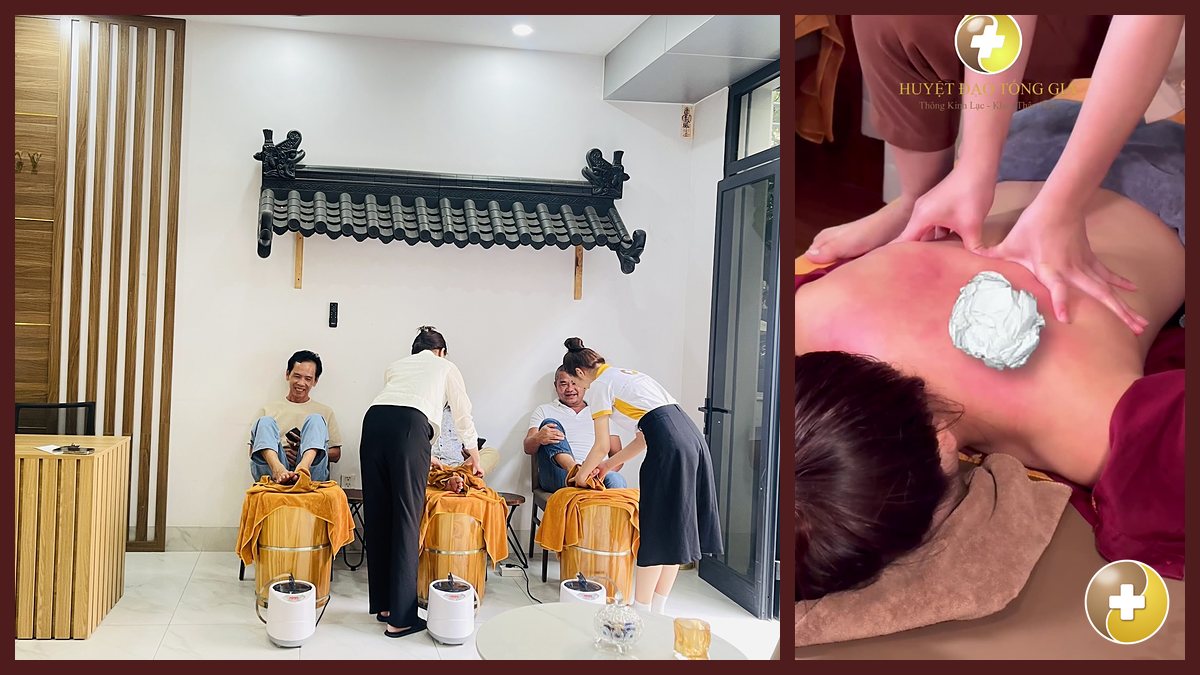
Quick answer: Kidney-related pain is usually felt in the flank on one side, just below the lowest rib, deep or colicky, sometimes spreading to the lower belly, often with fever, burning or bloody urine. A low, central ache that worsens with bending is usually muscular. Blood in the urine or colic: get checked at once. Tong Gia in Districts 12 and 9, HCMC, cares for muscular back pain.
Want Lương Y Tống Văn Huynh’s team to read your spine and posture in person?
Where is kidney back pain felt? Where the kidneys actually sit
Many people assume any back pain means "something is wrong with my kidneys". To judge whether pain could come from the kidneys, start with where they are. The Tong Gia curriculum (Western view of the kidney) describes them as a bean-shaped pair lying behind the abdominal lining, on both sides of the spine, from about T12 to L3; the right kidney sits a little lower because the liver is above it; each is about 10–12 cm long, and behind them lie the diaphragm and the lumbar muscles.
Because of that position, pain from the kidneys or upper urinary tract is usually felt in the flank: either side of the spine just below the last rib, angled towards the back of the ribcage. In Western terms such pain tends to be:
- One-sided rather than across both sides, and higher than the spot people usually rub.
- Deep, hard to pin down with a finger, or colicky, coming in waves and spreading to the front, the lower belly or the groin.
- Little affected by posture: changing position, resting or rubbing does not clearly help.
- Accompanied by urinary or general signs: burning, urgency, blood or cloudiness in the urine; fever, chills, nausea.
Muscle, ligament and spine pain, in contrast, usually sits lower and more central, across the waist or near the sacrum, worse with bending, twisting, long sitting or lifting, and better with movement and warmth. The curriculum says it plainly under common misunderstandings: most back pain comes from muscles, ligaments and the spine; kidney pain is usually in the flank, with fever or urinary changes, and we should never conclude "back pain = kidney disease".
In Ho Chi Minh City this question often comes from office workers after long meetings, drivers and factory staff who drink little water during a shift, people with a family history of stones, and older adults who wake at night to urinate and worry about "weak kidneys".
Common causes: kidney or not?
| Feature | Typical of muscle or spine pain | Typical of kidney or urinary pain (Western view) |
|---|---|---|
| Location | Across the waist, middle of the lower back, near the sacrum | Flank on one side, below the last rib, towards the back |
| Type | Aching, tight, stiff; a tender spot you can press | Deep dull ache or waves of colic; may spread to lower belly or groin |
| With movement | Worse with bending, twisting, sitting; eases with position change | Little link to posture; hurts even lying still |
| Other signs | Morning stiffness, sometimes numbness into the leg | Burning or frequent urination, blood in urine, cloudy urine; fever, nausea; swelling |
| Next step | Light movement, posture correction, muscle-release care | Medical check-up, urine test, ultrasound as advised; no back massage |
The curriculum lists common kidney conditions with their typical picture: kidney stones (colicky flank pain spreading to the lower belly, blood in urine, burning); urinary or kidney infection (burning, urgency, cloudy urine; fever and flank pain when it reaches the kidney); glomerular inflammation (swelling, blood and foam in urine, raised blood pressure). Kidney damage from diabetes or high blood pressure often has no symptoms at first and is found only by tests. In short: not every kidney problem hurts, and not every backache is the kidneys. The flank can also hurt from the diaphragm, tight lumbar muscles, rib–spine joints and, in Western terms, the liver and gallbladder (right side), pancreas, spleen or pelvic organs.
The curriculum also names three habits that tire the kidneys and are common among working people here: drinking too little water (concentrated urine, crystals form more easily, bacteria are flushed less), very salty, high-protein food (the body retains salt and water, blood pressure rises, filters work harder) and holding urine (urine sits long in the bladder, raising the risk of bladder infection).
Signs worth noting
If you worry your back pain is kidney-related, look at your urine too. This colour guide follows the Tong Gia curriculum:
| Colour / sign | Usual meaning |
|---|---|
| Clear, almost colourless | Possibly drinking more than needed |
| Pale yellow, clear | Well hydrated, normal |
| Dark yellow | Dehydrated, drink more |
| Brown like tea | Get checked soon |
| Pink or red | Possible blood, needs a check-up |
| Very foamy, slow to clear, ongoing | Possible protein, get a urine test |
| Cloudy, smelly, burning | Possible urinary infection |
Food such as beetroot or red dragon fruit and some vitamins can change the colour for a while. Usual frequency: about 4–8 times by day and 0–1 at night; getting up twice or more every night for a long time deserves a look for the cause. Also watch for puffy eyelids in the morning, swollen ankles, rapid weight gain, fever, nausea, itchy skin and unexplained tiredness.
When to see a doctor
The curriculum lists signs that should not be handled at home but checked by a doctor. Please see a doctor first, and skip back massage, if you have:
- Blood in the urine (pink, red or cola-coloured): go now.
- Colicky flank pain spreading to the lower belly or groin: go now.
- Fever with flank pain and burning urine.
- Persistently foamy urine; very little urine or being unable to pass urine.
- Swelling of the face or legs; blood pressure that is hard to control.
- Frequent night urination over a long period.
- Lasting fatigue, nausea or itching without clear cause; weight loss or pallor: get checked alongside any wellness care.
- Back pain with chest tightness, shortness of breath or cold sweats: call 115 immediately.
People with high blood pressure, diabetes, those over 60 or with kidney disease in the family should have regular urine and kidney-function tests. One sign alone proves nothing; Western medicine relies on urine tests and creatinine–eGFR. This is a wellness service, not medical care.
The Y Tướng Học view: the Eastern "Kidney" is not the kidney organ
When people say "my back hurts because of my kidneys", they are often using the Eastern idea of the Kidney. In the Tong Gia curriculum, the Eastern Kidney is a functional system linked to vital essence, bones and marrow, water, breathing, ears, hair, teeth, the lower back and knees, and sexual vitality; it belongs to the Water element, pairs with the Bladder, and its emotion is fear. Because "the Kidney governs the bones", reduced Kidney function in the Eastern sense shows as a dull, long-lasting ache on both sides of the back and tired knees, often with a cold back, night urination and ringing ears, which is very different from the one-sided colic and bloody urine of a stone.
The curriculum stresses that "Kidney deficiency" in Eastern medicine (reduced Kidney qi, yin or yang) is not the Western nephrotic syndrome, a glomerular disease with protein loss. Mixing the two only causes needless alarm.
Y Tướng Học says "the signs show outside, the organs lie inside"; Lương Y (master of traditional Vietnamese wellness) Tống Văn Huynh organised this 2,000-year-old knowledge for daily care. The Kidney shows in the ears, hair, bones and lower back; early signals listed are tired knees, a cold back, ringing ears, hair loss and forgetfulness. Thick, pinkish ears suggest strong Kidney qi; thin, soft ear rims point towards Kidney qi or yang deficiency. A round "Viên" face (pure Water type) tends to a cold lower back with soft muscles; a "Do" face, narrow above and wide below, to thick, congested lumbar and hip muscles. These signs describe the Eastern Kidney only and help choose where to read the back; they cannot reveal stones, infection or Western kidney disease. Read more in our Eastern face reading Q&A.
Spine segments and nerve-reflex zones involved
In the Tong Gia curriculum, the lumbar segments L1–L5 relate to digestion, kidneys, urinary and reproductive function and the legs; S1–S5 to elimination and the lower pelvis; for internal organs the curriculum combines D1–D12 with L1–L3.
| Segment / zone | Nerves and function | Common feeling | Related organ (Eastern view) |
|---|---|---|---|
| T12–L3, both sides | Level of the kidneys; diaphragm and lumbar muscles behind them | Tight flank after sitting; deep one-sided pain if urinary trouble | Kidney (Shenshu, Mingmen, Zhishi at L2) |
| D10–D12 | Lower thoracic; digestion | Ache at the upper waist with bloating | Spleen–Stomach |
| L1–L3 | Kidneys, urinary tract | Band across the waist, cold back | Kidney |
| L4–L5 | Legs | Low back pain on bending or lifting; morning stiffness | Kidney (bones), Liver (sinews) |
| S1–S5 | Elimination, lower pelvis | Heavy base of the spine after sitting | Kidney–Bladder |
That is why "where" matters: pain at T12–L3 angled into the flank is kidney level and calls for attention to urinary signs; pain low and central at L4–S1 usually belongs to muscles, discs or joints.
The Tong Gia method when you worry about "kidney back pain"
The method was built by Lương Y Tống Văn Huynh, founder of Tong Gia, over more than 13 years in Vietnamese traditional wellness, face reading and spinal nerve-reflex balancing. With kidney worries, screening always comes first:
- History and screening: pregnancy, kidney conditions, blood pressure, diabetes, bleeding disorders; urine colour, burning, fever. If a warning sign is present, we do not offer a session in place of a check-up.
- Observation: ears, hair, posture, hip balance; noting a Kidney yin or yang direction in Eastern terms, without naming any disease.
- Reading the spine by hand from D10 to S1: skin temperature, muscle layer, vertebral shape, your response, left against right.
- Muscle release and acupressure: along the Bladder meridian; Shenshu, Zhishi, Mingmen; Weizhong for back pain; Taixi and Fuliu at the ankle; pressure builds gradually and stops when the skin over the key point turns slightly moist.
- Home-care advice: water, salt, not holding urine, rubbing the lower back, watching urine colour.
The curriculum is also clear about what massage does not do: it does not "flush" the kidneys, dissolve stones or act directly on kidney tissue. It relaxes the back and improves local circulation; suspected stones need a urology check-up.
A typical session: the guest is often an office worker in their late 30s with an ache on both sides of the waist for a few months, worried about "weak kidneys" after reading online; urine test and ultrasound were normal. The pain grows after long meetings, and he drinks little to avoid bathroom trips. On the spine, both sides of L4–L5 are thick, firm and warm, the right quadratus lumborum is a tight band, and L2 is slightly cool. The practitioner releases the lumbar and buttock muscles, warms Shenshu and Mingmen, and presses Weizhong. The guest notices that the spot he "thought was the kidney" is clearly tender and softens as the work goes on; by the end bending is easier.
Suitable services (single-visit prices, see the price list):
- Back and waist care, 60 min: 550,000 VND (about 21 USD); first visit 399,000 VND (about 15 USD); 90 min: 750,000 VND (about 29 USD) for muscular back pain once warning signs are ruled out.
- Kidney wellness session, 75 min: 750,000 VND (about 29 USD) for a dull, cold, weary back and knees with night urination.
- Herbal compress: 130,000 VND (about 5 USD) as an add-on for a cold, stiff back.
What guests feel: tender but pleasant firm spots along the waist, warmth spreading slowly, often drowsiness near the end; afterwards a lighter back, easier bending, deeper sleep, and peace of mind from understanding the pain. We support and rebalance; we do not promise the pain will vanish. See also our back massage Q&A, a back massage session story and the acupressure Q&A.
Want Lương Y Tống Văn Huynh’s team to read your spine and posture in person?
Self-care at home and prevention
- Drink enough, spread through the day, aiming for pale yellow urine; people with serious heart or kidney conditions follow their medical advice on fluids.
- Eat less salt, under 5 g a day, and avoid very salty, high-protein meals.
- Do not hold urine, even on long rides or shifts; limit alcohol and do not smoke.
- Rub the lower back: warm your palms and rub both sides of the waist 50–100 times; not during colicky pain or fever.
- Stand up every 30–45 minutes, keep the waist away from air-conditioning, and sleep before 11 pm.
Booking
Tong Gia has two branches in Ho Chi Minh City, open daily, with real reviews on Google Maps:
- District 12: 225 Dương Thị Mười, Phường Tân Chánh Hiệp (Tan Chanh Hiep Ward, District 12). Open 8:00–19:00 daily.
- District 9 – Vinhomes Grand Park: Căn T16-21 khu Manhattan, Phường Long Bình, TP. Thủ Đức (unit T16-21, Manhattan zone, Long Binh Ward, Thu Duc City). Open 9:00–20:00 daily.
Call, Zalo or WhatsApp +84 888 264 559, or book online. If you live in or are visiting Ho Chi Minh City, this is a chance to experience a Vietnamese traditional wellness method developed by Lương Y Tống Văn Huynh. When booking, tell us where it hurts, one side or both, any burning, blood in the urine or fever, and whether you have had tests.
Visit us
- Đông Y Huyệt Đạo Tống Gia Quận 12 (District 12)
225 Dương Thị Mười, Phường Tân Chánh Hiệp, Quận 12, HCMC · 8:00–19:00 daily · 0888 264 559 · Directions on Google Maps - Đông Y Huyệt Đạo Tống Gia Quận 9 (Vinhomes Grand Park, District 9)
Căn T16-21 khu Manhattan, Vinhomes Grand Park, Phường Long Bình, TP. Thủ Đức, HCMC · 9:00–20:00 daily · 0888 264 559 · Directions on Google Maps
Want Lương Y Tống Văn Huynh’s team to read your spine and posture in person?
FAQ
Where is kidney back pain felt? Usually in the flank on one side, just below the last rib and towards the back; deep or colicky, sometimes spreading to the lower belly or groin, little affected by posture, often with burning or bloody urine or fever. A low ache across the waist that worsens with bending or sitting is usually muscular.
Is my back pain from my kidneys? Most of the time, no. Most back pain comes from muscles, ligaments and the spine. Think of the kidneys when one-sided flank pain comes with fever, burning or bloody urine or swelling, and get a urine test.
What does lower back pain from the kidneys feel like? Kidney-related pain usually sits higher than the lower back, in the flank. Stones cause waves of pain into the lower belly with blood in the urine; infection brings fever, burning and cloudy urine. Plain lower back ache without these signs is usually muscular.
Is right-sided back pain a kidney problem? It can be, but muscles, the spine, the liver and gallbladder are other possibilities. With fever, blood in urine or colic, get checked at once. Pain that worsens with bending and has a firm tender spot leans towards muscle.
Can massage dissolve kidney stones? No. Massage does not dissolve stones or flush the kidneys. Suspected stones need a urology check-up. Massage only relaxes the back and improves local circulation when the pain is muscular.
Should I get a massage if I think my back pain is from my kidneys? Not during colic, fever or blood in the urine; get checked first. Once tests show the pain is muscular, or it is a dull Eastern-style weary back, gentle back care can soften the muscles and help you sleep.
Author: Lương Y Tống Văn Huynh – founder of Huyệt Đạo Tống Gia, a master of traditional Vietnamese wellness with over 13 years in Eastern wellness care, Y Tướng Học (face reading) and spinal nerve-reflex balancing massage.
Updated: 2026-11-17
Related guides
- Hip and side cramps: six common causes, telling them from deeper pain, and how Tong Gia can help
- Pain in the middle of the back: four types to tell apart, warning signs, and how Tong Gia cares for it in Ho Chi Minh City
- Back pain and kidney failure: the signs that actually matter, the tests to ask for, and safe back care in Ho Chi Minh City
- Where is kidney back pain felt? Location, type of pain, warning signs, and how to tell it apart from a sore back muscle
- Swayback lower back pain: how an over-arched lower back causes aching, when to get checked, and how Tong Gia cares for it in Ho Chi Minh City
- Lower back pain with tired, weak knees: common causes, when to get checked, and how Tong Gia cares for the back and legs in Ho Chi Minh City
This is a wellness service, not medical care.