
Duong sinh wellness spa in Saigon: what it includes and how to choose your session
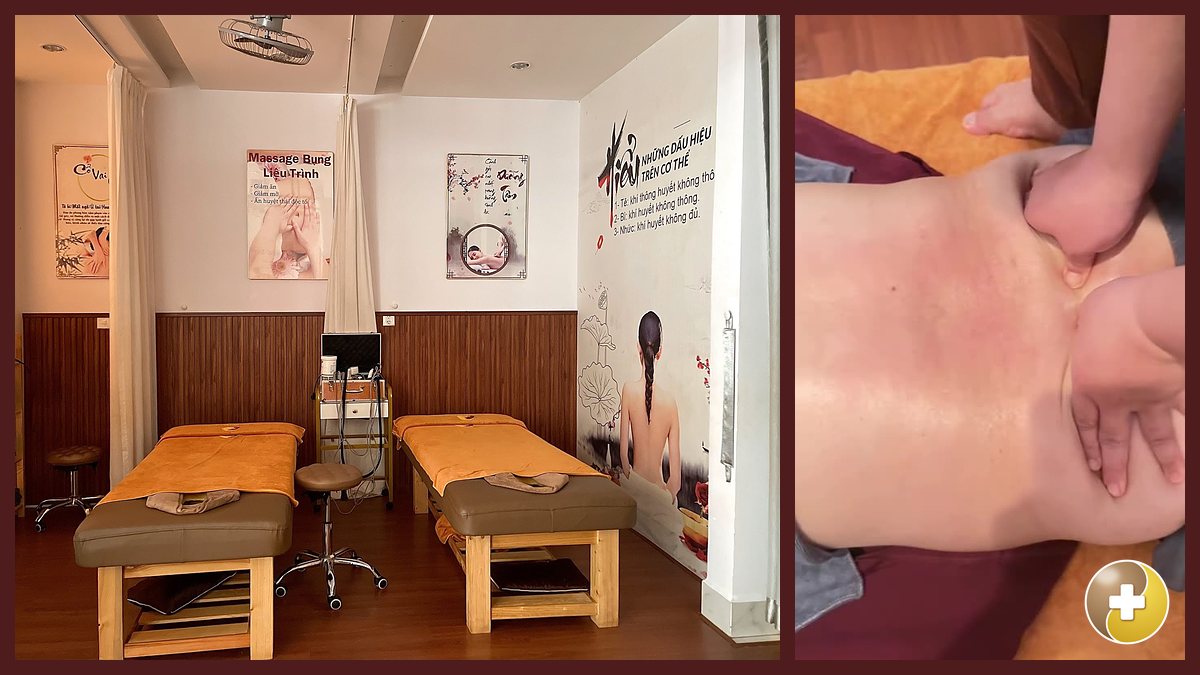
Quick answer: A duong sinh ("nourishing life") spa cares for the body by hand before illness shows up: acupressure, muscle release, herbal steam and compresses to support the five organ systems. At Tong Gia Acupoint Wellness (Huyệt Đạo Tống Gia), Districts 12 and 9, Ho Chi Minh City, every session starts with face and spine reading.
Want Lương Y Tống Văn Huynh’s team to read your spine and posture in person?
What is a duong sinh wellness spa?
Dưỡng sinh literally means "nourishing life". In the Vietnamese tradition you do not wait for pain before looking after yourself; you care for the body while it is still well, so you keep your energy, appetite, sleep and a clear head. A spa dưỡng sinh is therefore different from a quick relaxation massage shop: it does not sell the same package to everyone. It looks at what your body is short of or carrying too much of, then chooses the care that suits you. Typical services are acupressure, muscle release along the spine, organ-focused sessions, herbal steam, herbal compresses, warming cupping and the Vietnamese herbal head wash.
In plain Western terms: a well-run session is ordinary physiology. Slow, steady pressure lets tight muscles let go and brings more blood to soft tissue; the warmth of steam and compresses widens local vessels; even hands, a quiet room and slow breathing help the autonomic nervous system shift from "alert" (sympathetic) to "rest and digest" (parasympathetic). When the parasympathetic side leads, the heart rate slows, digestion works better and sleep comes more easily. That is why many guests leave hungry, drowsy and sleep deeply that night.
| Point | Quick relaxation massage | Duong sinh spa done properly | Medical facility |
|---|---|---|---|
| When you go | When you are tired | Regularly, even without pain, to keep well | When you are ill or notice warning signs |
| Before starting | Pick a length | Face reading, screening questions, spine reading | History, tests, scans |
| Method | Even strokes over the body | Care for the right organ system and spinal area, steam or compress if useful | As prescribed by medical staff |
| Afterwards | Nothing | Home routine, notes for next visit | Follow-up appointment |
In Ho Chi Minh City the people who look for this kind of spa are often remote workers and office staff who sit all day, teachers on their feet, engineers at the Saigon Hi-Tech Park, frequent flyers, retirees who want to keep their back and knees comfortable, and people who had a check-up, found nothing serious, and still feel heavy and sleep lightly. New to Vietnamese methods? Start with traditional Vietnamese massage Q&A.
Why people book one: habits, work, posture and climate
According to the Tong Gia curriculum, part of your constitution is inborn, while daily eating, sleeping and thinking habits either build it up or wear it down. Duong sinh looks after that second part. In a big tropical city, the wear comes from the same things every day:
- Laptop and phone posture: head forward, shoulders up, neck and upper back bracing all day.
- Motorbike traffic: vibration, gripping hands, dust and fumes, a heavy head at night.
- Standing jobs and lifting: lower back and calves loaded; heavy legs and poor sleep.
- Sun outside, air-conditioning inside: muscles contract suddenly, neck and back stiffen.
- Rushed meals, late dinners, iced drinks: in Eastern terms this weakens the Spleen-Stomach; you feel bloated and heavy.
- Late nights and worry: raised shoulders, frequent sighing, a mind that does not switch off.
- Age: after 40 or 50 many people notice tired knees, cold hands and feet, hair loss, forgetfulness, signs Eastern medicine links to the Kidney system.
None of this becomes "an illness" overnight, so a check-up often shows nothing. Yet the body stays stuck in a loop that a weekend off does not break. A duong sinh spa fills that gap: regular care so the body can rebalance, plus honest pointers on which habits keep you tired.
Signs your body is asking for a duong sinh session
- You wake up tired after a full night.
- Neck and upper back stiffen again a few days after every massage.
- Frequent bloating, low appetite, a heavy body without hard work.
- Cold hands, feet or lower back; you love leaning against something warm.
- Sighing often, tightness between the shoulder blades under stress.
- Trouble falling asleep, waking at night with a busy mind.
- Dry skin, a blocked nose when the weather turns, shallow breathing.
- Tired knees, mild ringing in the ears, forgetfulness in middle age.
One sign means little; a pattern suggests a mild imbalance in an organ system or a section of the spine, in Eastern terms. Caring for it at this stage is far gentler than waiting for real pain. If sleep is your main issue, see acupressure for sleep in Saigon.
When to see a doctor
Duong sinh is for keeping well; it never replaces a medical check. See a doctor first, or stop at once, if you have:
- Chest pain or tightness, shortness of breath, cold sweat: call 115 immediately; no massage, no acupressure.
- Sudden facial droop, slurred speech, weakness or numbness on one side: call 115 immediately.
- Fever, an active infection, open wounds or skin disease in the area.
- Pain after a fall or accident; pain down a leg with weakness or bladder or bowel changes.
- Unexplained weight loss, lasting fatigue, pale skin or dizziness like anaemia: get checked at a medical facility in parallel.
- A long-lasting cough, breathlessness or coughing blood.
- Pregnancy: the curriculum avoids Hegu (LI4) and Sanyinjiao (SP6), uses Guanyuan with caution and does not work on the abdomen.
- Heart disease, stents, pacemakers, blood thinners, kidney disease, high blood pressure or diabetes: tell us first; keep following your doctor's instructions and do not stop any prescription.
Before herbal steam, people with low blood pressure, fever or a full stomach should also mention it. This is a wellness service, not medical care.
Y Tướng Học (face reading for wellness): choosing by organ system
The Tong Gia curriculum quotes a principle of Y Tướng Học: "the signs show outside, the organs lie inside". What is strong or weak inside shows up in your face, skin and build. So the right session should not be chosen by a pretty package name but by looking. The five organ systems in Eastern medicine are functional systems, not just anatomy:
- Liver (Can): flow of energy and blood, tendons, emotions, eyes, nails, sleep. Signals: dry tired eyes, irritability, tight neck, cramps.
- Heart (Tâm): blood vessels, mind, sleep, tongue, complexion, sweat; linked with summer. Signals: pale or flushed face, palpitations, poor sleep.
- Spleen-Stomach (Tỳ Vị): digestion, muscles and limbs; linked with late, humid summer. Signals: pale lips, bloating, heaviness.
- Lung (Phế): energy, breath, skin, nose and throat, resistance; linked with dry autumn. Signals: dry skin, blocked nose, shallow breathing.
- Kidney (Thận): essence, bones, ears, hair, teeth, lower back and knees; linked with winter. Signals: tired knees, cold lower back, ringing ears.
The curriculum uses ten face shapes to suggest which back area to check first: a square, full face (Earth type, Spleen-Stomach) points to T11–T12; a long but square face (Metal type, Lung) to T3; wide cheekbones (Liver and Stomach out of harmony) to T7–T9; a broad forehead with a narrow chin to C1–C2 and the low back; a round face (Water type, Kidney) often comes with a cold, soft lower back. This is reference knowledge to guide the hands, never a medical conclusion or a judgment of character. More in Eastern face reading for wellness.
Spine and nerve-reflex areas involved
Tong Gia's duong sinh goes through the spine. According to the curriculum the spine has 33 vertebrae, the spinal cord runs inside, and nerve roots exit between the vertebrae to supply muscles, skin and organs. When an organ system is out of balance, the matching back area often feels warmer or cooler, tight or soft, raised or sunken. The practitioner's hands read four objective signs: skin temperature, the muscle layer, the shape of the vertebrae and your own sensation.
| Spinal section | Nerves and functions | Common signs | Organ system (Eastern view) | Session often chosen |
|---|---|---|---|---|
| Neck C1–C7 | Head, face, neck, arms | Heavy head, stiff neck, tired arms | Liver, Kidney | Head care, neck and shoulder care |
| Upper back T1–T3 | Circulation, breathing | Chest-back tightness, shallow breath | Lung, Heart | Lung or Heart session |
| Mid back T7–T9 | Digestion, liver, gallbladder | Tight bands along the spine, side tension | Liver, Spleen | Liver session |
| T11–T12 | Digestion | Bloating, slow digestion | Spleen-Stomach | Spleen-Stomach session |
| Low back L1–L5, sacrum | Kidneys, urinary tract, legs | Tired low back, heavy legs, cold back | Kidney | Kidney session, herbal compress |
The last column only helps you picture the options; the final choice is made after your practitioner has looked and read your back.
The Tong Gia method: spinal nerve-reflex balancing
Tong Gia was founded by Lương Y Tống Văn Huynh, a master of traditional Vietnamese wellness with over 13 years in Eastern wellness, Y Tướng Học and spinal nerve-reflex balancing. It is a Vietnamese Eastern method he built on the Head and Spine school and the legacy of Lương y Nguyễn Tham Tán and Thầy Công Kim Thắng. The method keeps "three no's": no chemicals or herbs taken by mouth or injection, no needles, no rough force.
What happens in one session
- Observation: face, complexion, posture and breathing.
- Screening: history, conditions, pregnancy; warning signs mean no session and advice to get a medical check first.
- Spine reading by hand: pressing, stroking and rolling to find warm, cool or tight areas.
- Muscle release: pressure builds from one finger to the whole hand, a "comfortable ache".
- Organ-focused acupressure: for example Kidney points such as Shenshu (BL23) and Taixi (KI3), or Spleen points such as Pishu (BL20) and Zusanli (ST36); the practitioner stops when the skin over the key point turns from dry to slightly moist.
- Home routine: a few simple habits, and notes kept to follow up next time.
Choosing by Saigon's real weather
| Weather or situation | Organ system | Curriculum advice | Suggested session |
|---|---|---|---|
| Fierce sun, sticky heat | Heart (summer) | Stay cheerful, avoid harsh sun, drink enough | Heart session, 75 min |
| Long rains, humidity | Spleen (late summer) | Keep dry, eat warm, easy food, worry less | Spleen-Stomach session, 75 min |
| Dry spells, dust | Lung (autumn) | Warm water, keep the throat warm, belly breathing | Lung session, 90 min |
| Cold rain, all-day air-con | Kidney (winter) | Keep back, belly and feet warm, sleep early | Kidney session, 75 min, plus compress |
A typical session
An accountant in her forties came to the District 9 branch on a Saturday afternoon. Nothing hurt in particular, but she felt tired, had cold hands and feet, sat in air-conditioning all day and woke at night. The practitioner noticed a round face, slightly pale skin and a slumped sitting posture. Her low back felt clearly cooler than her upper back and its muscles were soft, while the upper shoulders were tight. The session released the shoulders, worked along both sides of the spine, pressed Kidney points on the back and ankle, rubbed the soles of the feet and finished with a warm herbal compress on the low back. She left with a warm back and a light, sleepy feeling, plus a simple home routine.
Services and prices
- Heart, Kidney, Liver or Spleen-Stomach session, 75 min: 750,000₫ (about US$29); Lung session, 90 min: 900,000₫ (about US$35).
- Herbal compress: 130,000₫ (about US$5).
- Herbal steam: 120,000₫ (about US$4.60). See gua sha and herbal steam in Ho Chi Minh City.
Full list on the prices page; general background on Eastern wellness in Saigon.
How it feels
Many guests are surprised by how carefully they are observed and asked before lying down. Tight spots feel achy, then warm, then they let go; pressure builds slowly, with no cracking or jerking. Breathing slows and many people doze off. Afterwards you usually feel lighter, warmer, clear-headed and hungry, and sleep better; a worked area may feel slightly tender for about a day. Responses vary. Tong Gia helps the body rebalance and relax; it does not promise to end any illness in one visit.
Want Lương Y Tống Văn Huynh’s team to read your spine and posture in person?
Home care and prevention
- Kidney: rub warm palms up and down the low back 50–100 times; rub the soles of the feet 3–5 minutes each at night; soak feet in warm water (about 38–42°C) for 15–20 minutes, testing carefully if you have diabetes; sleep before 11 pm.
- Heart: breathe 4 seconds in, 6 seconds out for 5–10 minutes; press Shenmen (HT7) gently 1–2 minutes before bed; a short 15–30 minute nap.
- Spleen-Stomach: regular meals, a real breakfast, slow chewing, a light dinner 2–3 hours before bed, fewer iced and raw foods, a 10–15 minute walk after eating.
- Lung: 5–10 minutes of belly breathing daily, rub beside the nostrils for 1–2 minutes, wear a mask in dust, keep your throat warm in cold rooms.
- Liver: enough sleep, less alcohol, regular exercise, a calm mind, and a stretch every 45 minutes at the desk.
Book a session
- District 12: 225 Dương Thị Mười, Phường Tân Chánh Hiệp (Tan Chanh Hiep Ward, District 12). Open 8:00–19:00 daily.
- Vinhomes Grand Park, District 9: Căn T16-21 khu Manhattan, Phường Long Bình, TP. Thủ Đức (unit T16-21, Manhattan zone, Long Binh Ward, Thu Duc City). Open 9:00–20:00 daily.
Book online or call, Zalo or WhatsApp +84 888 264 559. Tell your practitioner what your body has been signalling lately and any conditions, so the session fits you. Real reviews are on each branch's Google Maps page. When you are in Ho Chi Minh City, come and try this Vietnamese Eastern method by Lương Y Tống Văn Huynh.
Visit us
- Đông Y Huyệt Đạo Tống Gia Quận 12 (District 12)
225 Dương Thị Mười, Phường Tân Chánh Hiệp, Quận 12, HCMC · 8:00–19:00 daily · 0888 264 559 · Directions on Google Maps - Đông Y Huyệt Đạo Tống Gia Quận 9 (Vinhomes Grand Park, District 9)
Căn T16-21 khu Manhattan, Vinhomes Grand Park, Phường Long Bình, TP. Thủ Đức, HCMC · 9:00–20:00 daily · 0888 264 559 · Directions on Google Maps
Want Lương Y Tống Văn Huynh’s team to read your spine and posture in person?
FAQ
What is a duong sinh wellness spa? A Vietnamese hands-on wellness spa that looks after the body before illness shows: it observes you, reads your spine, then uses acupressure, muscle release, organ-focused care, herbal steam and compresses so you keep your energy and sleep well. It is a wellness service, not medical care.
How is it different from a normal relaxation spa? A relaxation spa usually strokes the whole body evenly. A duong sinh spa reads face and spine first, chooses the organ system and area to work on, explains home habits and stops to advise a medical check if warning signs appear.
How often should I go? There is no single number for everyone. When your body is signalling clearly, sessions are usually closer at first and then spaced out; healthy people keeping well can come less often. Your practitioner suggests a rhythm after reading your back, with no pressure to buy packages.
Does it hurt? Tight areas can feel achy, but pressure builds gradually into a comfortable ache, with no cracking. Say so if it feels too strong. A worked area may feel slightly tender for about a day.
How much does a session cost? Organ-focused sessions (Heart, Kidney, Liver, Spleen-Stomach) are 750,000₫ for 75 minutes, about US$29; the Lung session is 900,000₫ for 90 minutes, about US$35. Herbal steam is 120,000₫ and a herbal compress 130,000₫.
Which branch should I visit? From District 12, Go Vap or Hoc Mon, the District 12 branch at 225 Dương Thị Mười is usually closer (8:00–19:00). From Thu Duc, District 9 or Vinhomes Grand Park, go to unit T16-21 Manhattan (9:00–20:00). Book on +84 888 264 559.
Author: Lương Y Tống Văn Huynh – founder of Huyệt Đạo Tống Gia, a master of traditional Vietnamese wellness with over 13 years in Eastern wellness care, Y Tướng Học (face reading) and spinal nerve-reflex balancing massage.
Updated: 2026-11-16
Related guides
- What does acupressure do? Effects on muscles, nerves and the five organs, and how Tong Gia works in Ho Chi Minh City
- Acupressure in Thu Duc: pressure chosen by reading your spine, at the branch that suits your ward
- Sore after acupressure: is it normal? How to tell ordinary aching from warning signs, why it happens and how to look after yourself after a session in Ho Chi Minh City
- What are gua sha and cupping: two Vietnamese folk warming methods, the cupping points and when to skip them
- Unblocking the meridians (đả thông kinh lạc): what it really means, how a hands-on session works and what you will feel in Ho Chi Minh City
- Herbal compress: what the warmth really does, where it goes and who it suits
This is a wellness service, not medical care.