
Foot soak before bed: why it helps you fall asleep, how to do it properly and who should be careful
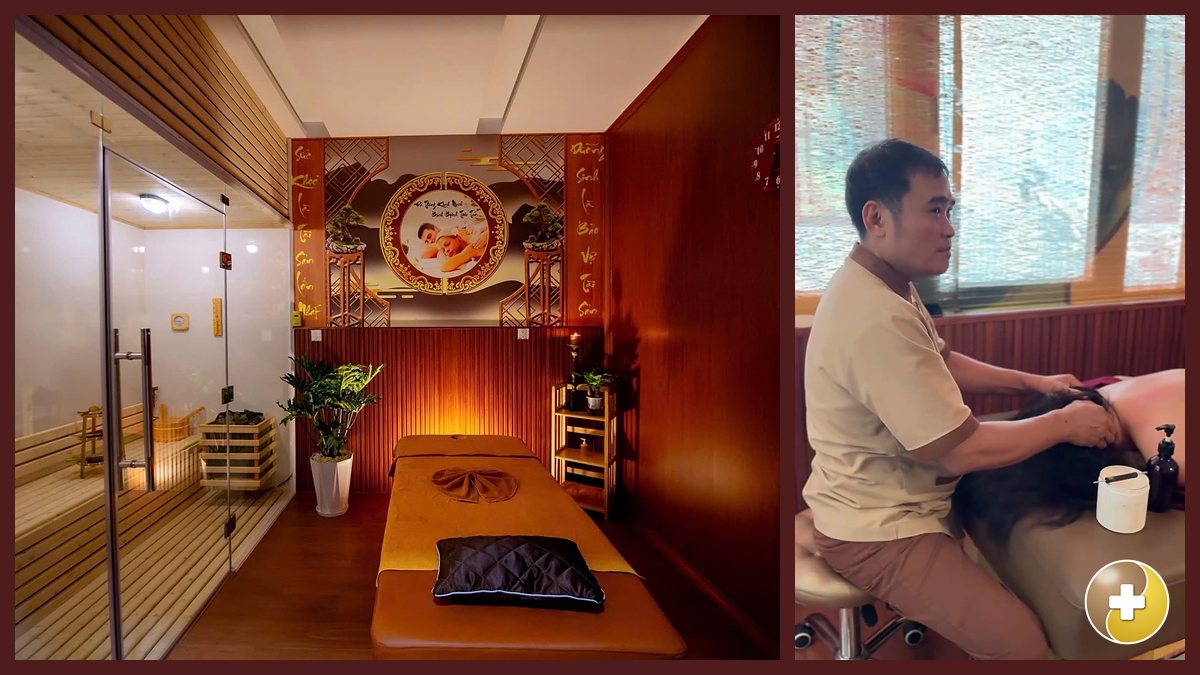
Quick answer: A foot soak before bed in warm water of about 38–42°C for 15–20 minutes warms the feet and calms the nervous system, so many fall asleep more easily; then dry your feet and rub the Yongquan point on the sole. With diabetes, test the water carefully. Tong Gia Acupoint Wellness in Ho Chi Minh City shows you how.
Want Lương Y Tống Văn Huynh’s team to read your spine and posture in person?
What is a bedtime foot soak, and why does it help sleep?
A bedtime foot soak simply means soaking both feet, up to the ankles or mid-calf, in a basin of warm water in the evening, then drying them and going to bed. Many Vietnamese families have done this for generations, sometimes adding a few slices of ginger or a pinch of coarse salt. This article is not about which herbs to add; it is about what an evening foot soak does for sleep, how to do it properly, and when poor sleep needs more than a basin of warm water.
The Western explanation: to fall asleep, the body needs its core temperature to drop slightly. Warm water dilates the blood vessels in the skin of the feet and lower legs; when you lift your feet out and dry them, more heat leaves the body through that skin, core temperature dips a little, and that is one of the body's natural "time to sleep" signals. At the same time, steady warmth on the thousands of nerve endings in the feet helps the nervous system shift from "on" (sympathetic) to "rest" (parasympathetic): breathing slows, calf muscles soften, the mind stops racing. People who get into bed with icy feet often take longer to fall asleep, so warming the feet is an easy step many people skip.
The training manual of Tong Gia Acupoint Wellness (Huyệt Đạo Tống Gia) says a warm foot soak helps you relax, warms the feet and makes sleep easier. It also flags two common exaggerations: "foot soaks detox the kidneys" has no evidence, and "foot soaks lower blood pressure instantly" is overstated. A foot soak is a wellness habit that supports sleep; it does not replace finding the cause of long-lasting insomnia.
In Ho Chi Minh City, expats ask us about this all the time: office workers whose feet freeze under the air-con while their heads feel hot, people on their feet all day, shift workers who need to sleep in the daytime, new mothers, travellers fighting jet lag, and older parents whose feet get cold at night.
Why evenings can be hard to fall asleep, and where a foot soak helps
- Hot head, cold feet: mental work late into the evening, a tense neck, while your feet have sat in cold air-con all day.
- Stress and worry: the sympathetic nervous system is still switched on when you lie down.
- Screens right up to bedtime: phone and laptop until the last minute keep the brain alert.
- Standing or walking a lot: tight calves and heavy legs that still ache when you lie down.
- Late, heavy dinners: the Tong Gia manual advises a light dinner 2–3 hours before bed; a stomach working while the body wants rest invites reflux and poor sleep.
- Afternoon coffee or strong tea, evening alcohol.
- Habitual late nights that push bedtime past midnight.
- Jet lag: see jet lag massage in Saigon.
A foot soak helps most with the first two (hot head and cold feet, stress) and with tired legs; the rest need habit changes alongside, or the soak only takes the edge off.
Signs that a foot soak suits you, and when to be careful
An evening foot soak usually suits people who have:
- Cold hands and feet, feeling cold, a cold lower back at night.
- Trouble falling asleep, tossing and turning, a busy mind after work.
- Tight calves and heavy legs at the end of the day.
Be careful, or ask a medical professional first, if you have:
- Diabetes: always test the water with a thermometer or your elbow, because feet may have reduced feeling and can burn without you noticing.
- Wounds, cracks or fungal infection on the feet or between the toes.
- Marked varicose veins, swelling in one leg, or a leg that is hot, red and swollen.
- Low blood pressure or dizziness when standing: stand up slowly afterwards.
- Hot palms and soles at night: use only comfortably warm water, never hot.
- Pregnancy: comfortably warm water, shorter soaks, and no strong pressing of points on the legs.
When to see a doctor
Poor sleep has many causes that a foot soak cannot fix. Please see a doctor if:
- Insomnia has lasted several weeks, with daytime fatigue, poor focus or problems at work.
- You wake up short of breath, need to sit up or use extra pillows to breathe, cough at night, or your ankles swell more in the evening.
- Chest pain, breathlessness or cold sweats: call 115 (Vietnam emergency) now.
- Loud snoring, a partner notices you stop breathing in your sleep, you wake tired with headaches.
- Getting up to urinate two or more times a night over a long period: the Tong Gia manual says the cause should be looked for.
- Persistent low mood, loss of interest, heavy anxiety or negative thoughts.
- Unexplained weight loss, palpitations, trembling hands, pale skin or anaemia-like tiredness: get checked at a medical facility in parallel.
- Numb feet, loss of feeling, or foot wounds that close slowly if you have diabetes.
This is a wellness service, not medical care. Foot soaks, massage and acupressure only support relaxation and sleep; if you are following medical advice, keep following it.
The Y Tướng Học view: Heart, Kidney and "drawing the fire downward"
According to the Tong Gia manual, the Heart houses the spirit and governs the mind, awareness and sleep; Heart-related insomnia in Eastern terms does not mean heart disease. The Heart belongs to Fire and the Kidney to Water, and the two keep each other in check: Heart fire descends to warm the Kidney, Kidney water rises to cool the Heart. When this breaks down ("Heart and Kidney not communicating"), you get insomnia, palpitations and tired lower back and knees. The Kidney channel begins at Yongquan (KI1) on the sole of the foot; the manual describes Yongquan as the well point of the Kidney channel that "draws fire downward, calms the spirit and eases sleep". That is why Eastern wellness sees warming and rubbing the feet in the evening as a way to let the "fire" in the head settle. The Liver matters too: when Liver qi is stuck, sleep is shallow, broken and full of dreams.
The manual describes two kinds of Kidney weakness that call for different soaks. Kidney yang weakness (feeling cold, cold hands and feet, cold lower back and knees, night urination) is supported by keeping the back, belly and feet warm and by warm foot soaks. Kidney yin weakness (hot palms and soles, afternoon flushes, night sweats, dream-filled sleep) calls for early nights and avoiding late ones; by extension, the water should be only mildly warm and the soak shorter.
The core idea of Y Tướng Học (face reading for wellness) is "the signs show outside, the organs lie inside". The Heart shows in the tongue and complexion: when it is balanced the face is rosy, sleep is deep and the mind clear; signals of imbalance are a pale or flushed face, poor sleep and palpitations. The Kidney shows in the ears, hair, bones and lower back. From the manual:
- Wide forehead, pointed chin (甲): "excess above, deficiency below" — headaches, poor sleep and hot flushes above, tired knees and night urination below. On the back, the top of the neck (C1–C2) runs hot and the lower back tends to be sunken and cool. This face type suits warming the feet and cooling the head and neck.
- Round face (圓): Water type, lower back easily cold; keep the waist and feet warm.
- Long, thin face (目): weaker qi and blood, prone to dizziness; insomnia of the "Heart blood deficiency" kind (pale face and lips, forgetfulness). Needs nourishment, enough sleep and gentle hands; do not soak too long, to avoid light-headedness on standing.
This is a wellness lens for choosing how to care for yourself, not a medical finding and never a judgement.
Spine segments and nerve-reflex zones related to sleep
In Tong Gia's spinal nerve-reflex balancing, the nervous-system group (chronic headaches, long-lasting insomnia, dizziness, nervous exhaustion) is worked by combining the neck C1–C7, the upper back D1–D3 and the sacral area; the manual is clear this is supportive only. The foot soak and sole rub are the "lower" half, and a session on the spine is the "upper" half, of the same goal: helping the nervous system settle.
| Zone | Nerve, function (Western view) | When tense | Nearby points | Related organ |
|---|---|---|---|---|
| C1–C2 (base of skull) | Head, face, skull base | Hot, tense neck; racing mind | Fengchi, occipital area | Liver, Heart |
| C3–C7 | Neck, shoulders, arms | Stiff shoulders, hard to get comfortable | Lower neck, Dingchuan | Liver |
| D1–D5 | Circulation, breathing | Shallow breathing, palpitations, tight chest when anxious | Lung shu (D3), Jueyin shu (D4), Heart shu (D5) | Heart, Lung |
| L1–L3 | Kidney, urinary | Cold lower back, night urination | Kidney shu, Mingmen | Kidney |
| S1–S5 | Pelvis, elimination; parasympathetic | Tired sacrum, hard to let go | Sacral area | Kidney |
| Feet and ankles | Sensory nerve endings, peripheral circulation | Cold feet, tight calves | Yongquan, Taixi, Sanyinjiao | Kidney, Liver, Spleen |
From the manual: Yongquan lies in the hollow in the front third of the sole when you curl your toes; Taixi (KI3) in the hollow between the inner ankle bone and the Achilles tendon; Sanyinjiao (SP6) 3 cun above the inner ankle bone, just behind the shin bone, where the three yin channels meet — not used during pregnancy. The table shows relationships for choosing where to work, not a medical finding.
The Tong Gia method: spinal nerve-reflex balancing for poor sleep
The method was built by Lương Y Tống Văn Huynh, a master of traditional Vietnamese wellness and the founder of Tong Gia, over more than 13 years in Eastern wellness, Y Tướng Học and spinal nerve-reflex balancing. For poor sleepers with cold feet, Tong Gia works top to bottom: cool the head and neck, loosen the upper back, warm the lower back and legs. A session:
- Observation and screening: complexion, tongue, face shape; trouble falling asleep or staying asleep, night urination, palpitations, breathlessness lying down, diabetes, blood pressure, pregnancy. Warning signs mean we suggest a medical check first.
- Reading the spine by hand from neck to sacrum: skin temperature (hot neck, cool lower back?), muscle layer, vertebra shape, left against right.
- Muscle release of the neck, shoulders and upper back in "excited" zones (warm skin, hard muscle). Pressure follows the 5 pressure levels, but poor sleepers usually need a slow, even rhythm and medium pressure.
- Acupressure on the right areas: the base of the skull, Heart shu, Kidney shu; on the feet, Yongquan, Taixi and Sanyinjiao (not in pregnancy). A hot neck is cooled, a cold back and feet are warmed; work stops when the skin at the key point turns from dry to moist.
- Home-care coaching: how to soak, rubbing Yongquan, pressing Shenmen, bedtime.
A typical session: a woman of about 45, a manager at a software company, with a wide forehead and pointed chin, said it took her an hour to fall asleep, she often woke in the night, and her feet were always cold despite Saigon's heat. She had already been checked, with no heart or lung issues. Reading her spine, the top of the neck (C1–C2) was hot and tight; the lower back was cool and slightly sunken; her feet were cold. The practitioner released the neck and shoulders at medium pressure and a slow rhythm, worked the base of the skull and Heart shu, warmed Kidney shu and Mingmen, then massaged both feet and pressed Yongquan and Taixi. She fell asleep mid-session; afterwards she said her head felt light and her feet were warm for the first time in days. She was advised to soak her feet for 15–20 minutes every evening, rub Yongquan, put the phone away early and aim to sleep before 11 pm.
Suitable services (single-session prices, see price list; 1 USD ≈ 26,000 VND):
- Heavy, tired legs care, 60 min: 500.000₫ (about 19 USD) for cold feet, heavy legs and sleep disturbed by tight calves.
- Heart or Kidney wellness care, 75 min: 750.000₫ (about 29 USD) for palpitations and poor sleep (heart) or a cold back, night urination and cold feet (kidney).
- Traditional Eastern massage, 60 min: 450.000₫ (about 17 USD) for stress and whole-body relaxation.
What does it feel like? The neck and upper back feel slightly sore, then lighter; breathing slows. When the practitioner reaches the feet, many guests feel warmth rising into the calves and get drowsy. Afterwards the head feels lighter and the body loose; many guests say they fall asleep faster and sleep more deeply that night. Everyone responds differently; Tong Gia supports and helps restore balance, and does not promise to end insomnia. More in acupressure for sleep in Saigon.
Want Lương Y Tống Văn Huynh’s team to read your spine and posture in person?
How to do a bedtime foot soak properly, plus the habits around it
- Temperature and time, per the Tong Gia manual: water about 38–42°C, 15–20 minutes, before bed. Test with a thermometer or your elbow, not your foot. Top up with warm water as it cools; never pour boiling water into the basin while your feet are in it.
- Timing: not right after a big meal, on an empty stomach or after drinking. Many people find it works well to go to bed about half an hour to an hour after the soak, once they have settled.
- Afterwards: dry between the toes and wear thin socks if your feet run cold. Rub Yongquan as the manual teaches: use your hand to rub the sole, 3–5 minutes each foot. Press Taixi gently 1–2 minutes each side, to a mild ache.
- Press Shenmen (HT7) before sleep: on the wrist crease, little-finger side, 1–2 minutes each side with slow breathing.
- The habits around it: screens off before bed, 10–15 minutes of sitting quietly and breathing slowly, a light dinner 2–3 hours before bed, and sleep before 11 pm (the manual says early sleep nourishes yin and lets the Kidney rest). For a Vietnamese-style evening reset, see traditional Vietnamese massage Q&A or herbal steam in Ho Chi Minh City.
Booking
Two branches in Ho Chi Minh City, open daily; you can read genuine guest reviews on Google Maps from each branch page:
- District 12: 225 Dương Thị Mười, Phường Tân Chánh Hiệp (Tan Chanh Hiep Ward). 8:00–19:00 daily.
- Vinhomes Grand Park, District 9: Căn T16-21 khu Manhattan, Phường Long Bình, TP. Thủ Đức (Unit T16-21, Manhattan zone, Long Binh Ward, Thu Duc City). 9:00–20:00 daily.
Book online or call, Zalo or WhatsApp +84 888 264 559. Tell us whether you struggle to fall asleep or to stay asleep, whether your feet run cold, and about night urination, diabetes, blood pressure or pregnancy; guests who come for sleep often choose a late-afternoon slot. This Vietnamese approach by Lương Y Tống Văn Huynh is worth trying while you live in or visit Ho Chi Minh City.
Visit us
- Đông Y Huyệt Đạo Tống Gia Quận 12 (District 12)
225 Dương Thị Mười, Phường Tân Chánh Hiệp, Quận 12, HCMC · 8:00–19:00 daily · 0888 264 559 · Directions on Google Maps - Đông Y Huyệt Đạo Tống Gia Quận 9 (Vinhomes Grand Park, District 9)
Căn T16-21 khu Manhattan, Vinhomes Grand Park, Phường Long Bình, TP. Thủ Đức, HCMC · 9:00–20:00 daily · 0888 264 559 · Directions on Google Maps
Want Lương Y Tống Văn Huynh’s team to read your spine and posture in person?
FAQ
Does a foot soak before bed help you sleep? For many people, yes. Warm water dilates the vessels in the feet; afterwards the body sheds heat through the skin, core temperature dips slightly and the nervous system calms, so falling asleep is easier. The Tong Gia manual says it relaxes and warms the feet; it does not detox the kidneys or lower blood pressure instantly.
How hot should the water be and how long should I soak? About 38–42°C for 15–20 minutes before bed, per the Tong Gia manual. Test with a thermometer or your elbow; water that is too hot or a soak that is too long can scald or make you light-headed when you stand.
Is it fine to soak my feet every night? For most healthy people a warm nightly soak is a gentle wellness habit. With diabetes, varicose veins, foot wounds or low blood pressure, be careful and ask a medical professional first.
Can people with diabetes do a bedtime foot soak? Yes, if the feet have no wounds, but always test the water with a thermometer or elbow because the feet may have reduced feeling. Dry carefully between the toes and check your feet daily. Numbness or wounds that close slowly need a medical check.
Should I rub any point after soaking? Yes. The Tong Gia manual recommends rubbing the sole (Yongquan) for 3–5 minutes each foot in the evening to draw fire downward and ease sleep; you can add Taixi and Shenmen for 1–2 minutes each with slow breathing.
For insomnia, is a foot soak or an acupressure session better? They work together: the soak is a nightly self-care habit, while a session loosens the neck and upper back and warms the lower back and legs for your body type. Insomnia lasting weeks, or with breathlessness or stopped breathing during sleep, needs a medical check first.
Author: Lương Y Tống Văn Huynh – founder of Huyệt Đạo Tống Gia, a master of traditional Vietnamese wellness with over 13 years in Eastern wellness care, Y Tướng Học (face reading) and spinal nerve-reflex balancing massage.
Updated: 2026-11-16
Related guides
- Better sleep without sleeping pills: 8 natural options and which one suits you
- Burnout exhaustion: understanding work-related depletion and how Vietnamese traditional care can help you rebalance
- Does massage reduce stress? What changes in your body after one session, and when to see a doctor
- Head massage for better sleep: why touching the scalp, temples and neck helps your body drift off
- Stress insomnia: why you are exhausted yet cannot sleep, and what your body needs
- Can't sleep? What to do tonight, over the next two weeks, and when to get checked
This is a wellness service, not medical care.