
Steam detox: the truth about sweat, what steaming really does and how to steam safely
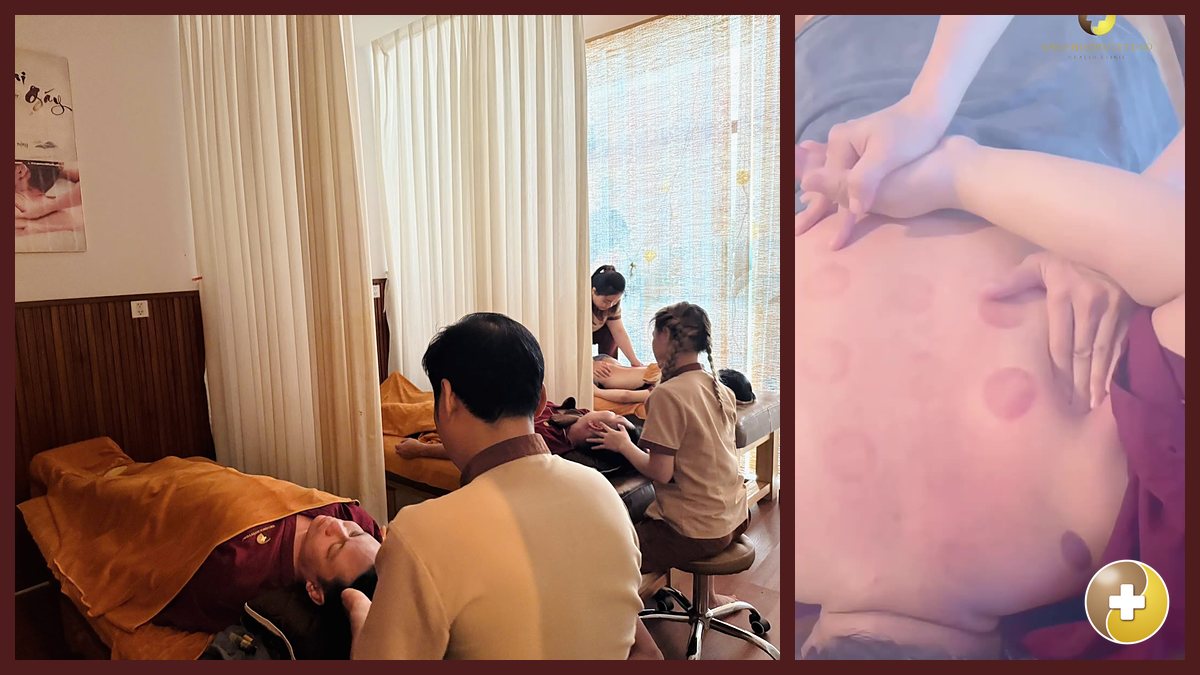
Quick answer: Steaming does not "detox" the way adverts claim: sweat is mostly water and salt, and clearing waste is the job of the liver and kidneys. Steam does warm you, loosen muscles and help you relax and sleep. At Tong Gia Acupoint Wellness in Ho Chi Minh City, herbal steam costs 120,000 VND (about 5 USD).
Want Lương Y Tống Văn Huynh’s team to read your spine and posture in person?
What does "steam detox" mean, and what does physiology say?
"Steam detox" (Vietnamese xông hơi thải độc) is a phrase you will see in spas, on social media and in everyday talk: sit in hot steam or under a herbal steam tent, sweat as much as possible, and the sweat will carry "toxins" out, leaving you lighter, your skin brighter and your liver and kidneys "cleaned". This article is direct: steaming has real benefits, but "detox" in that sense is not what the adverts promise. Knowing this helps you steam more safely and at the right times.
In Western physiology, sweat is mostly water with some salts and tiny amounts of other substances. Its main job is to cool the body, not to remove poisons. Clearing and removing waste is the work of the liver, kidneys, lungs and gut. The Tong Gia training manual states it plainly: the liver metabolises substances, breaks down alcohol and neutralises many toxins before they leave the body, and "the liver keeps doing its clearing work through normal physiology"; massage or warmth does not directly make the liver or kidneys "detox". The manual's appendix also tells practitioners never to promise "detox".
So what does steaming actually do? In the warmth, blood vessels under the skin widen, the heart beats a little faster to send blood to the skin, muscles all over soften and sweat beads everywhere. Many people feel warm from the inside, shoulders and back less stiff, breathing slower, mind calmer and sleep easier that night. After a soaking in the rain or a day under air-con, the stuffy, heavy feeling also fades. Those are real benefits of warmth and relaxation; they do not need the word "detox" to be worth it.
In Ho Chi Minh City, the people asking about steam detox are often women wanting brighter skin, office workers who feel sluggish, people with many business dinners and drinks who want to "flush it out", and older people who grew up steaming over a pot of leaves when the weather turned.
Steam detox: myths and facts
| Common belief | What actually happens | A better way to see it |
|---|---|---|
| More sweat means more toxins out | Sweat is mostly water and salt, for cooling | Heavy sweating means fluid loss; drink to replace it; comfortably warm is enough |
| Steam cleans the liver and kidneys | They clear waste on their own through normal physiology | Steam relaxes and warms; liver and kidneys need sleep, water and less alcohol |
| Steam sobers you up after drinking | Hot steam after alcohol can drop blood pressure and cause fainting and dehydration | Never steam after drinking |
| Weight lost after steaming is fat | It is water lost as sweat, back when you drink | Steam does not replace exercise and sensible eating |
| Herbs in the steam soak into the organs | According to the Tong Gia manual, herbs act mainly locally through the skin | Herbs make the warmth pleasant and the scent calming |
| Foot soaks "detox the kidneys" | The manual lists this as having no evidence | A warm foot soak relaxes, warms the feet and helps sleep |
Common reasons people look for a steam detox
- A day under air-con with almost no sweating: you feel stuffy, hands and feet cold, neck and shoulders stiff, as if the body had "stalled".
- Short sleep, late nights: a dull face, dark circles and a heavy body in the morning are easy to blame on "toxins".
- Rich food, beer and spirits with clients: bloating, tiredness, breakouts and the wish for a quick "flush".
- Traffic smoke and dust: after a rush-hour ride the skin feels grimy and the nose irritated.
- Rain and cold: you want to warm up and sweat a little to feel lighter.
- Detox marketing: many packages and products promise cleansing, making people think the body always needs "washing".
Most of these feelings come from habits: little sleep, long sitting, irregular meals, stress. Steaming helps you relax, but changing those habits is what really counts.
Signs to watch while steaming
- Dizziness, blurred vision, nausea, uncomfortable racing heart: leave the steam at once, lie down somewhere airy, sip warm water.
- Strong thirst, dry lips, little dark urine afterwards: signs of dehydration; drink to replace fluids.
- Feeling drained instead of light: usually too long, too hot, or steaming hungry or short of sleep.
- Strong, sour or burnt-smelling sweat: in Tong Gia's face and body reading this is a sign worth changing diet and sleep for, not "toxins coming out".
- Sweating a lot without heat and disliking wind: the manual links this to weak Lung qi; such people should steam lightly and briefly.
- Red, stinging skin or a rash: possible heat or herb irritation; stop and watch it.
When to see a doctor
Steaming is wellness care for people who are healthy or simply tired, chilled or tense. It does not replace a medical check. Please see a doctor at a medical facility, or ask your medical team before steaming, if you have:
- A heart condition, past chest pain, a stent or pacemaker, or high or low blood pressure that is not stable.
- Pregnancy, high fever, dehydration, diarrhoea or vomiting.
- Lasting fatigue, weight loss, yellow skin or eyes, very pale skin: get checked; do not assume it is just "toxins".
- Boils, rashes, ongoing skin inflammation or itching all over.
- Little urine, swollen legs or a puffy face every morning.
- Alcohol or other substances taken that day: do not steam.
Chest tightness, shortness of breath or cold sweats during or after steaming: call 115 immediately. Fainting, confusion, slurred speech or weakness on one side: call 115. This is a wellness service, not medical care.
Face reading (Y Tướng Học): what skin, sweat and complexion say
Y Tướng Học (face reading for wellness) follows "the signs show outside, the organs sit inside". In the Tong Gia manual, practitioners do not read sweat to guess "toxins"; they look at skin, complexion and sweating to see which organ system needs care and whether steaming suits you:
- The Lung governs skin and pores: it nourishes the skin and guards the body's surface. Weak Lung qi shows as dry skin, uneven pores, frequent colds, sweating easily and disliking wind. Such people suit light, short warmth and staying warm afterwards.
- Sweat is the fluid of the Heart: the manual says sweat comes from blood and body fluids. Too much sweating drains fluids, so overdoing steam can leave you tired and fluttery. People with palpitations, night sweats or hot palms and soles should steam very lightly or not at all.
- "Fragrant flesh": clean, smooth skin with fine pores and a mild scent when sweating; the manual reads this as clear qi and blood with well-working Liver, Kidney and Lung systems.
- When that sign is off: suddenly dull skin, oily sweat with a heavy smell, rashes, pimples; the manual links this to damp-heat of the Liver and Gallbladder or heat in the Spleen and Stomach. The answer is less greasy food and alcohol and earlier nights, not longer steaming.
- Dark patches on the cheeks, a dull complexion, darker lips: the manual adds that dark skin has many causes (sun, age, hormones, poor sleep), does not mean a poisoned liver, and advises against self-buying "liver detox" products.
These are pointers only, not health conclusions and never a judgement.
Spine and nerve-reflex zones involved
In the Tong Gia manual the neck (C1–C7) serves the head, face, neck and arms; the thoracic spine (T1–T12) circulation, breathing and digestion; the lumbar spine (L1–L5) digestion, kidneys and urinary function. Steam warms the whole body, but the "lighter" feeling afterwards comes largely from softened muscles beside the spine and the nervous system shifting to rest. That is why the practitioner reads the spine again after steaming.
| Vertebrae | Nerves and function | What "detox" seekers often feel | Related organ system |
|---|---|---|---|
| C1–C7 | Head, face, neck, arms | Heavy head, stiff neck, dull face after poor sleep | Liver, Heart (mind, sleep) |
| T1–T3 (Lung shu below T3) | Breathing | Shallow breathing, irritated nose after smoke and dust | Lung (skin, sweat, surface defence) |
| T4–T5 (Heart shu below T5) | Circulation | Palpitations, night sweats, poor sleep | Heart |
| T7–T12 | Digestion | Bloating, tiredness after rich food and alcohol, tight mid back | Liver, Spleen and Stomach |
| L1–L5 (Kidney shu below L2) | Kidneys, urinary, legs | Cold, tired lower back, mild leg swelling by evening | Kidney |
The table shows what is "related", not a health verdict. Acupoints do not act directly on the liver or kidneys; in traditional theory they help balance qi and blood and ease discomfort.
The Tong Gia method: herbal steam with spinal nerve-reflex balancing massage
Every session follows the method of Lương Y Tống Văn Huynh, founder of Tong Gia and a master of traditional Vietnamese wellness with over 13 years of practice in Eastern wellness, Y Tướng Học and spinal nerve-reflex balancing. The manual's communication rule is "honest, scientific, safe, respectful", so at Tong Gia steam is described as warmth and relaxation, never as detox.
- Safety questions: heart, blood pressure, pregnancy, fever, alcohol, your last meal, skin. If steam does not suit you, it becomes massage or a local warm compress.
- Observation: complexion, skin, sweating pattern, shoulders, breathing.
- Just enough herbal steam: kept short, shorter on a first visit, with check-ins; an even light sweat is enough.
- Reading the spine by hand: skin temperature, muscle layer, vertebral shape, sensation, left versus right.
- Muscle release and acupressure while the muscles are warm: base of the neck, between the shoulder blades, along the back; Dingchuan, Lung shu and Kidney shu as the hands find.
- Home advice: drink, keep warm, sleep early: the habits that really help the liver and kidneys.
Services and prices
- Herbal steam: 120,000 VND (about 5 USD).
- Traditional Eastern massage: 60 minutes 450,000 VND (about 17 USD), 90 minutes 550,000 VND (about 21 USD).
- Full-body care, 120 minutes: 950,000 VND (about 37 USD). See our 120-minute full-body massage Q&A.
Full list on the price page; more in our gua sha and herbal steam Q&A and the herbal steam experience guide.
A typical session
One afternoon at the District 12 branch, a businesswoman with frequent evening dinners asked for a "steam detox" because her skin looked dull, her body heavy and her mornings tired. The practitioner checked first: no fever, stable blood pressure, not pregnant, no alcohol that day, a light meal two hours earlier. Her complexion was a little dark with patches on the cheeks. The practitioner explained that steam warms and relaxes but does not clean the liver, and that dull skin has many causes worth checking if it lasts. She steamed until an even light sweat, dried off and drank warm water. On the spine, the mid-back muscles around T7–T9 were a tight band and the base of the neck was stiff; after muscle release and acupressure on Dingchuan and Lung shu, the lower back was warmed by hand. She left with advice to sleep before 11 pm, cut down on alcohol and greasy food, and drink enough water.
What guests usually feel
During steam: gradual warmth, slower breathing, sweat starting at the forehead and neck, a pleasant herbal scent. During massage: shoulders and back soften faster than without steam. Afterwards: lighter, a little sleepy, thirsty; many sleep deeply that night. That lightness is relaxation and warmth. Everyone differs, and Tong Gia does not promise a "clean-out" or an end to tiredness after one visit.
Want Lương Y Tống Văn Huynh’s team to read your spine and posture in person?
Self-care at home and prevention
- Drink enough: the Tong Gia manual's rule is pale yellow urine; drink more after steam or heavy sweating.
- Sleep before 11 pm: in Eastern theory early sleep lets the organs rest; in Western terms sleep is when the body restores itself.
- Less alcohol and greasy food, avoid smoke and dust, and do not self-buy "liver detox" products or herbs of unknown origin.
- A warm foot soak instead of a "foot detox": 15–20 minutes at about 38–42°C before bed. Travellers can also read our jet lag massage Q&A.
- Move enough to sweat naturally: brisk walking, cycling or gentle exercise about 30 minutes a day.
How to book
Tong Gia Acupoint Wellness (Huyệt Đạo Tống Gia) has two branches in Ho Chi Minh City, open every day, with real customer reviews on Google Maps:
- District 12: 225 Dương Thị Mười, Phường Tân Chánh Hiệp (Tan Chanh Hiep Ward, District 12). Open 8:00–19:00 daily.
- District 9 – Vinhomes Grand Park: Căn T16-21 khu Manhattan, Phường Long Bình, TP. Thủ Đức (unit T16-21, Manhattan zone, Long Binh Ward, Thu Duc City). Open 9:00–20:00 daily.
Call, Zalo or WhatsApp +84 888 264 559, or book online. Say whether you want steam alone or with massage, and mention heart issues, unstable blood pressure or pregnancy. When you are in Ho Chi Minh City, it is a gentle way to try a Vietnamese Eastern wellness method built by Lương Y Tống Văn Huynh.
Visit us
- Đông Y Huyệt Đạo Tống Gia Quận 12 (District 12)
225 Dương Thị Mười, Phường Tân Chánh Hiệp, Quận 12, HCMC · 8:00–19:00 daily · 0888 264 559 · Directions on Google Maps - Đông Y Huyệt Đạo Tống Gia Quận 9 (Vinhomes Grand Park, District 9)
Căn T16-21 khu Manhattan, Vinhomes Grand Park, Phường Long Bình, TP. Thủ Đức, HCMC · 9:00–20:00 daily · 0888 264 559 · Directions on Google Maps
Want Lương Y Tống Văn Huynh’s team to read your spine and posture in person?
FAQ
Does steam detox really work? Not as advertised. Sweat is mostly water and salt for cooling; the liver, kidneys, lungs and gut clear waste through normal physiology. Steaming does have real benefits: warmth, looser muscles, relaxation and easier sleep.
Is more sweat during steaming better? No. Heavy sweating means fluid loss and can make you dizzy, tired or fluttery. An even light sweat is enough; then dry off and drink warm water.
Can steam help me sober up after drinking? Please do not try it. Hot steam after alcohol can drop blood pressure and cause fainting and dehydration. The liver processes alcohol; rest, drink water and skip the steam.
Does strong-smelling sweat mean I have many toxins? Not really. Sweat smell depends on diet, skin bacteria and hormones. In Tong Gia face and body reading, oily, heavy-smelling sweat suggests cutting greasy food and alcohol and sleeping earlier; an unusual smell that lasts is worth a medical check.
Does steaming clear the skin or acne? Warmth opens the pores and washing afterwards leaves skin feeling clean for a while. Lasting acne or skin inflammation has many causes and needs a skin specialist rather than longer steaming.
Do detox foot soaks work? The Tong Gia manual lists "foot soaks to detox the kidneys" as having no evidence. A warm foot soak for 15–20 minutes before bed warms the feet, relaxes you and helps sleep, which is value enough.
Author: Lương Y Tống Văn Huynh – founder of Huyệt Đạo Tống Gia, a master of traditional Vietnamese wellness with over 13 years in Eastern wellness care, Y Tướng Học (face reading) and spinal nerve-reflex balancing massage.
Updated: 2026-11-16
Related guides
- What does acupressure do? Effects on muscles, nerves and the five organs, and how Tong Gia works in Ho Chi Minh City
- Acupressure in Thu Duc: pressure chosen by reading your spine, at the branch that suits your ward
- Sore after acupressure: is it normal? How to tell ordinary aching from warning signs, why it happens and how to look after yourself after a session in Ho Chi Minh City
- What are gua sha and cupping: two Vietnamese folk warming methods, the cupping points and when to skip them
- Unblocking the meridians (đả thông kinh lạc): what it really means, how a hands-on session works and what you will feel in Ho Chi Minh City
- Herbal compress: what the warmth really does, where it goes and who it suits
This is a wellness service, not medical care.