
Neck and shoulder muscle release: softening each muscle group, reading the neck and how you feel afterwards
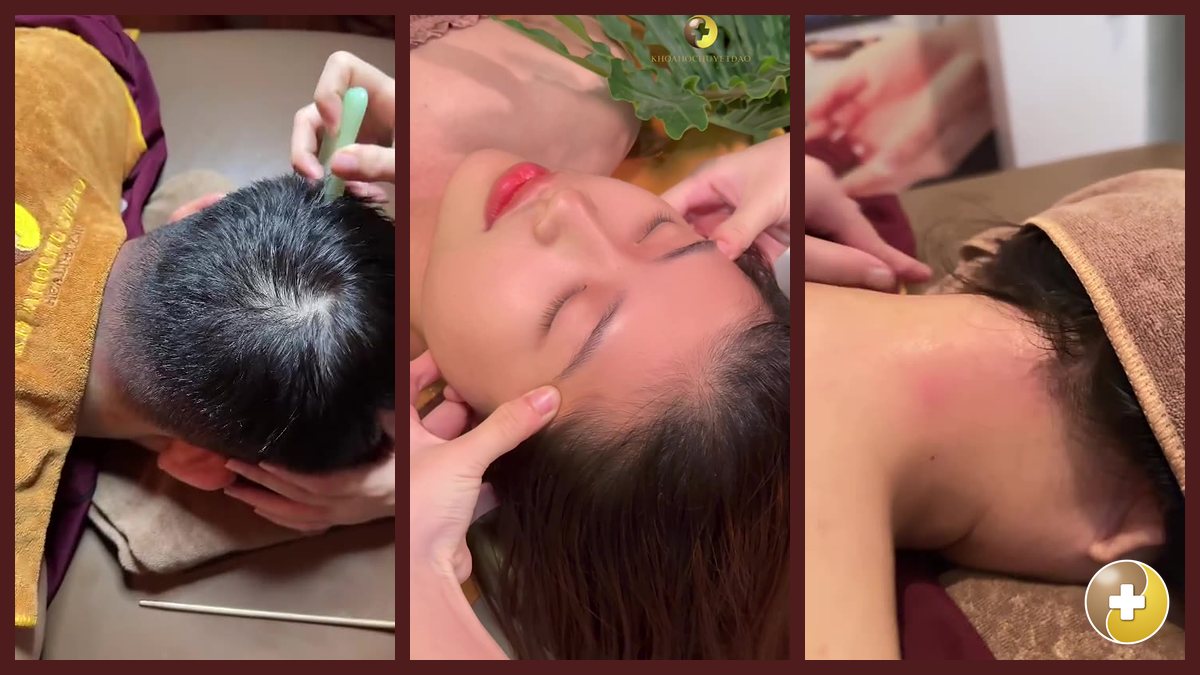
Quick answer: Neck and shoulder muscle release uses slow strokes along the fibres, sustained pressure on tight knots and gentle stretching to soften a contracted trapezius, levator scapulae and suboccipitals, so the neck turns more freely and the shoulders feel lighter. Tong Gia in District 12 and District 9, Ho Chi Minh City, reads the neck before starting.
Want Lương Y Tống Văn Huynh’s team to read your spine and posture in person?
What is neck and shoulder muscle release?
Neck and shoulder muscle release is a hands-on technique that uses the thumbs, the heel of the hand and the forearm to work slowly and progressively deeper into tight muscle blocks of the neck, the back of the head, the top of the shoulders and the upper back, so they soften and return to a normal length. Acupressure works point by point (Phong Trì, Kiên Tỉnh, Thiên Tông…); muscle release works along whole muscles and muscle chains: find the one that is contracted, feel where it attaches, then soften the whole band. The two complement each other, and at Tong Gia Acupoint Wellness (Huyệt Đạo Tống Gia) they are usually combined in one session.
In Western terms, a muscle held in one position for hours gets less blood flow, waste products build up, and the fibres form tight knots that feel like a pea or a cord and refer pain elsewhere when pressed. The fascia around the muscle also sticks, so the neck turns less and the shoulders feel like they carry a backpack. Muscle release helps separate the layers, warms the tissue and improves circulation so the muscle can lengthen and contract normally again.
Six muscle groups commonly worked
| Muscle | Where | Often tight in | Pressure |
|---|---|---|---|
| Upper trapezius | From the neck down to the top of the shoulder | Office workers, stressed people | Medium to deep |
| Levator scapulae | Under the trapezius, from the upper neck to the top corner of the shoulder blade | Phone and laptop users | Medium, after the trapezius softens |
| Suboccipitals | Just under the skull at the back | Screen users with a forward head | Medium, directed upward |
| Sternocleidomastoid | Front sides of the neck, from behind the ear to the breastbone | People who twist to look back, high pillows | Light only, near large vessels |
| Scalenes | Deeper on the sides of the neck | Shallow breathers, heavy carrying | Light |
| Rhomboids | Between the spine and the inner edge of the shoulder blade | Slouched sitting, long drives | Medium to deep |
In Ho Chi Minh City we see this most in office and tech workers in District 12, Gò Vấp and the Hi-Tech Park, scooter riders with helmets all day, nail and sewing workers bent over their hands, gym-goers who train shoulders hard and stretch little, and travellers after long flights.
Common reasons the neck and shoulders tighten
- Forward head over screens: the head weighs about 4.5–5 kg; every centimetre forward adds load on the trapezius and levator scapulae.
- Shoulders lifted by stress: a protective reflex that keeps the upper trapezius working all day.
- Air-conditioning on the neck: muscles contract to hold heat; by afternoon the neck is stiff.
- Carrying a bag on one shoulder: that side braces for hours and slowly rises.
- The wrong pillow or sleeping position.
- Shoulder training without stretching: muscles thicken but shorten.
- Long flights: hours of sitting with the head dropping forward. See massage for jet lag in Saigon.
From the Eastern side, the Tong Gia training manual says the Liver governs the sinews: they are nourished by Liver blood, and when it is weak, muscles cramp and stiffen. The Liver also governs smooth flow: long pressure and anger make it hard to relax, and the shoulders are where many people "hold" stress. The Gallbladder meridian runs along the head down to the shoulders and is described as helping with discomfort of the head, neck and shoulders. These are functional ideas, not a statement that your liver is ill.
Signs that often come with it
- A hard knot on top of the shoulder or at the upper shoulder blade that sends pain to the neck or arm.
- Turning the head is harder on one side.
- One shoulder sits higher; bag straps slip off one side.
- A heavy head and ache at the back of the head by afternoon; tired eyes.
- Brief, light tingling in the hand in a bad posture that goes away when you move.
- Shallow breathing, pain between the shoulder blades.
When to see a doctor
Muscle release suits tightness from posture and stress. See a doctor first, and skip the session, if you have:
- Numbness or tingling in the arm that lasts and gets worse, a weak grip, dropping things.
- Neck pain after a fall, a blow or a traffic accident.
- Neck pain with fever, a severe headache, dizziness or vomiting.
- Facial droop, slurred speech, weakness on one side: call 115 immediately.
- Chest pain, shortness of breath, cold sweat, pain spreading to the left shoulder or jaw: call 115 immediately; this is not a shoulder muscle problem.
- Night pain that does not ease with rest, with weight loss or long fatigue: get checked at a medical facility in parallel.
- A known neck disc problem or severe osteoporosis: ask your medical provider first and tell the technician.
This is a wellness service, not medical care. Tong Gia does not crack or jerk the neck.
Y Tướng Học: what your build says about how the neck tightens
Y Tướng Học (face reading for wellness) holds that what is inside shows outside. According to the Tong Gia manual, looking and touching first tells the technician which layer is tight and how deep to go:
- Firm muscles that feel hard as wood: stagnant qi and constrained Liver qi; high mental pressure creates chronic deep spasm, especially in the trapezius and the long back muscles, with a risk of fibrous bands if deep muscle release comes too late.
- High, bony cheekbones with little padding: Liver fire rising easily; because the Liver governs sinews, the trapezius and back muscles are often tangled and tight, prone to cramps.
- Flat back of the head: weaker Kidney qi, often with deep spasm at the skull base affecting C1–C3.
- Forehead with many crossing lines: long pressure tightening the forehead, scalp and shoulder-lifting muscles.
These are hints for choosing area and pressure, never a verdict on health or character.
Vertebrae and reflex zones involved
According to the Tong Gia manual, C1–C7 relate to the head, face, neck and arms. For the muscle, bone and joint group, including neck and shoulder aches and tingling arms, the manual combines C5–C7 with L1–L5 and S1–S5. Nerve roots leave the spine between the vertebrae, so long-standing tight neck muscles can make this area uncomfortable, with tired or briefly tingling arms.
| Vertebrae / area | Nerve role | Common feeling | Related organ (Eastern view) |
|---|---|---|---|
| C1–C3 | Head, face, suboccipitals | Heavy head, ache at the back of the head | Liver, Kidney |
| C4–C5 | Neck, top of the shoulder | Stiff neck, heavy shoulders | Liver (sinews) |
| C5–C7 | Shoulder, arm, hand | Tired arm, brief finger tingling | Liver, Spleen (limbs) |
| T1–T3 | Upper back, breathing | Pain between the shoulder blades | Lung, Heart |
| L1–L5, sacrum | Lower back (paired in the manual) | Lower back fatigue alongside the neck | Kidney |
The Tong Gia method: spinal nerve-reflex balancing massage
Muscle release at Tong Gia is part of the spinal nerve-reflex balancing method developed by Lương Y (master of traditional Vietnamese wellness) Tống Văn Huynh, over 13 years in traditional Vietnamese wellness and Y Tướng Học. It is a Vietnamese Eastern approach you can experience while in Ho Chi Minh City: no needles, no rough force, no neck cracking. A typical session:
- Observation: head position, shoulder level, posture, muscle quality; questions about work, sleep position and any arm tingling.
- Reading the spine by hand: skin temperature, the muscle layer (lumpy, hard, slack or fibrous), vertebra shape and tender points from C1 to T3, comparing left and right.
- Release from surface to depth: long strokes along the trapezius from neck to shoulder; once the top layer softens, the levator scapulae and rhomboids underneath. The manual uses pushing and rotating for thick, hard tissue and a cross-fibre "plucking" for fibrous bands. The sternocleidomastoid and scalenes get light work only.
- Acupressure in the right zones: Phong Trì, Kiên Tỉnh, Thiên Tông; pressure creates a "pleasant ache" wave and is released. Following the manual, work on a point stops once the skin there turns from dry to slightly moist.
- Gentle stretch and home care: a slow, small head tilt, never a jerk; two or three stretches for home.
A typical session: a programmer in his thirties comes to the District 9 branch after work with a heavy right shoulder and a neck that catches when turning right. The right shoulder sits higher, the head is slightly forward, the right trapezius is hard with two knots at the upper shoulder blade. About 40 minutes go to softening the trapezius and levator scapulae before Phong Trì and Kiên Tỉnh. Holding a knot sends a pressure behind his ear, then it "lets go"; by the end he turns his head further. He feels mild soreness the next day, gone by the second. Everyone responds differently.
| Service | Time | Price |
|---|---|---|
| Neck and shoulder care | 60 min | 550,000 VND (about 21 USD); first visit 399,000 VND (about 15 USD) |
| Neck and shoulder care | 90 min | 750,000 VND (about 29 USD) |
| Cold-dispelling cupping (add-on) | 30 min | 85,000 VND (about 3 USD) |
Related reading: neck and shoulder massage in Saigon, neck and shoulder massage questions, acupressure massage in District 12, and what is muscle release.
Want Lương Y Tống Văn Huynh’s team to read your spine and posture in person?
Home care and prevention
- Trapezius stretch, 2 minutes each side: sit tall, hold the chair edge with your left hand, tilt the head slowly to the right until a light pull, breathe evenly.
- Chin tucks, 10 times an hour: draw the chin straight back, hold 3 seconds.
- Warm compress on the neck for 15 minutes in the evening for long-standing stiffness; in the first 48 hours after an injury, use cold and get checked if pain is strong.
- Screen at eye level, switch bag shoulders, keep cold air off the neck.
- 4–6 breathing: in for 4 seconds, out for 6, as the Tong Gia manual suggests; the shoulders drop on the long out-breath.
Book a session
- District 12: 225 Dương Thị Mười, Tân Chánh Hiệp Ward (District 12), open 8:00–19:00 daily.
- District 9: Unit T16-21, Manhattan zone, Vinhomes Grand Park, Long Bình Ward, Thủ Đức City (District 9), open 9:00–20:00 daily.
Call, Zalo or WhatsApp +84 888 264 559, or use the booking page. Please mention arm tingling or any past neck injury.
Visit us
- Đông Y Huyệt Đạo Tống Gia Quận 12 (District 12)
225 Dương Thị Mười, Phường Tân Chánh Hiệp, Quận 12, HCMC · 8:00–19:00 daily · 0888 264 559 · Directions on Google Maps - Đông Y Huyệt Đạo Tống Gia Quận 9 (Vinhomes Grand Park, District 9)
Căn T16-21 khu Manhattan, Vinhomes Grand Park, Phường Long Bình, TP. Thủ Đức, HCMC · 9:00–20:00 daily · 0888 264 559 · Directions on Google Maps
Want Lương Y Tống Văn Huynh’s team to read your spine and posture in person?
FAQ
Does neck and shoulder muscle release hurt? You feel pressure and a dull ache on the knots, but the right level is a "pleasant ache", not pain that makes you hold your breath. The technician works from surface to depth and checks in often; say so if it is too much.
How often should I get neck and shoulder muscle release? While the neck is very stiff, many guests come once a week for 3–4 weeks, then every 2–4 weeks to maintain. It depends on your build and work; changing your sitting posture and stretching at home matter just as much.
Which acupressure points help tired shoulders? Phong Trì at the back of the neck, Kiên Tỉnh on top of the shoulder and Thiên Tông on the shoulder blade, 1–2 minutes each. At Tong Gia these come after the muscles are softened.
My shoulders are sore after a massage. Is that okay? Mild soreness for 1–2 days after deep release is common; a warm compress and enough water help. If pain grows, arm tingling increases or fever appears, get checked at a medical facility and tell us.
Can muscle release help hand tingling from a stiff neck? If the tingling is light, brief and goes away when you move, releasing the neck and shoulders can help you relax. Lasting, worsening tingling or a weak grip needs a medical check first.
How much is neck and shoulder muscle release at Tong Gia? Neck and shoulder care is 550,000 VND (about 21 USD) for 60 minutes, first visit 399,000 VND (about 15 USD); 90 minutes is 750,000 VND (about 29 USD).
Author: Lương Y Tống Văn Huynh – founder of Huyệt Đạo Tống Gia, a master of traditional Vietnamese wellness with over 13 years in Eastern wellness care, Y Tướng Học (face reading) and spinal nerve-reflex balancing massage.
Updated: 2026-11-16
Related guides
- Lump on the back of the neck: muscle knot, lymph node or cyst, and when to get it checked
- What causes a stiff neck? Seven common groups, one side or both, and when to get help
- Common health issues for IT workers: what developers often feel and how to look after it
- Pain in both shoulder blades: six common causes, the warning signs, and how Tong Gia can help
- Wrist pain after giving birth: causes, warning signs and gentle care in Ho Chi Minh City
- Shoulder pain from carrying heavy loads: six common causes, the warning signs, and how Tong Gia can help
This is a wellness service, not medical care.