
Relaxing body massage: how the body lets go, what one session includes and which length to choose
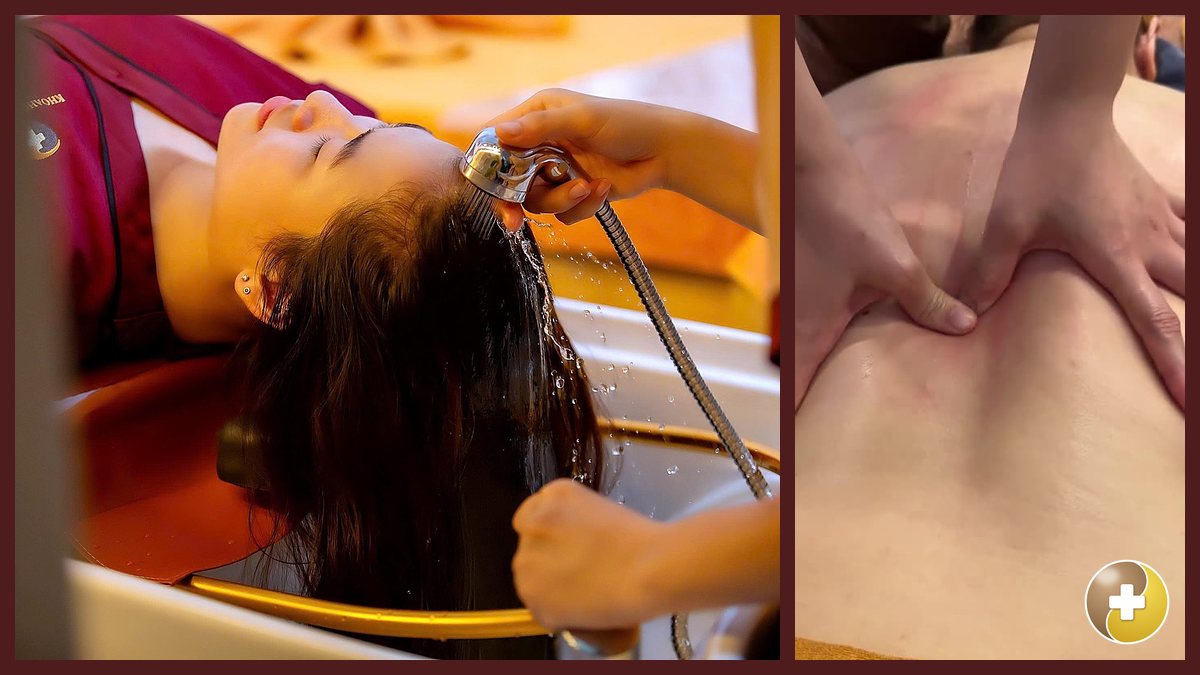
Quick answer: A relaxing body massage is a full-body session with smooth, even pressure from the neck down the back, arms and legs, so muscles soften, breathing slows and sleep comes easier. At Tong Gia Acupoint Wellness in Ho Chi Minh City, 60 minutes is 450,000 VND (about 17 USD) and 120 minutes is 950,000 VND (about 37 USD).
Want Lương Y Tống Văn Huynh’s team to read your spine and posture in person?
What is a relaxing body massage, and how does the body let go?
A relaxing body massage is a full-body session whose main goal is rest for the whole person. The hands travel from the back of the neck and shoulders down the back and lower back, then over the arms and legs, with smooth, even, rhythmic pressure. Unlike a session that chases one painful spot, it does not try to dig into every knot; it softens whole sheets of muscle so the body can shift into rest on its own. Many people think "relaxing" means anything that feels nice. In practice, to really let go, the hands have to know where you are bracing, where you are cold, and how much pressure is enough before the muscle starts to resist.
From a Western point of view, rhythmic pressure on skin and muscle stimulates sensory receptors that report to the spinal cord and brain. Gently stretched muscle relaxes, more blood reaches the tissue, the skin warms and the heavy, tired feeling fades. When the pressure is slow and even, the autonomic nervous system moves toward its parasympathetic branch: the heart rate slows, breathing deepens, the gut settles, and the mind stops racing. That is why so many guests fall asleep halfway through. Tong Gia's training material says massage relaxes muscle, improves circulation in soft tissue, eases tension and supports the body's own recovery, and it stresses that massage is for care, relaxation and support, never a substitute for a medical check.
In Ho Chi Minh City the people who book a relaxing body massage include expats after a long week at the laptop, engineers on shift patterns, teachers who stand all day, digital nomads living on a different time zone, parents carrying toddlers, older visitors who want better sleep, and travellers recovering from a long flight. If your tiredness started with a flight, read jet lag massage in Saigon. If you are deciding how long to book, see 60, 90 or 120 minutes.
Relaxing body massage or body massage with acupressure?
Both can last 60 minutes. A relaxing session favours long strokes, gentle kneading and squeezing so the whole body softens, with only light pressure on a few calming points. A body massage with acupressure spends more time finding tight bands beside the spine and pressing deeper, holding longer on each point. At Tong Gia both start with observation and a hand reading of the spine; what differs is the level of pressure and the time spent on each point. Mild tiredness, poor sleep or the need to unwind after work suits the relaxing option; long-standing stiff areas suit a session with more acupressure, such as the acupressure massage.
Why the body struggles to relax on its own
A good night's sleep or a lazy Sunday should be enough to recover. Yet many people rest and still feel tired, because their muscles have learned to brace:
- Sitting in one position: head forward toward the screen, shoulders lifted; the muscles along the spine hold you up all day and harden into a sheet.
- Standing or walking a lot: heavy calves, burning soles, a tired lower back by late afternoon.
- Ongoing stress: bracing the shoulders, clenching the jaw without noticing; shallow sleep leaves muscles no time to recover.
- Air conditioning and afternoon rain: a chilled neck and back tighten; many people ache all over when the weather turns.
- Too little movement: muscles rarely move through their full range, so they stiffen and circulation slows.
- Late nights and phones in bed: the brain never switches to rest mode, so the body stays "on duty".
Eastern medicine explains muscle tiredness through organ functions. In Tong Gia's material, the Liver governs the sinews: it nourishes tendons and ligaments; a strong Liver means supple sinews and flexible joints, a weak one means cramps, stiffness and less flexibility. The Liver stores blood: at rest blood returns to the Liver to be replenished, during activity the Liver sends it out to muscles and sinews, so a person who never truly rests leaves the sinews under-nourished. The Spleen governs the flesh and limbs: a weak Spleen shows as tired limbs and slack muscle. Long-standing anger or pressure makes Liver qi stagnate, so it becomes hard to relax. These are functional ideas from traditional medicine; they do not mean your liver or spleen is diseased.
Signs your body needs a relaxing body massage
- Tired on waking: you slept enough hours but feel heavy and need a long stretch to wake up.
- Stiff neck and shoulders: turning your head pulls, and your shoulders creep up without you noticing.
- A back like a plank: a hot band between the shoulder blades, a tired mid back when sitting, a cool lower back.
- Heavy limbs: tight calves, night cramps, tired forearms.
- Light sleep: slow to fall asleep, restless, waking in the night.
- Mood: short-tempered, poor focus, wanting to lie still yet never feeling rested.
If poor sleep is the main issue, read acupressure for sleep in Saigon.
When to see a doctor
A relaxing body massage is wellness care for people who are healthy or simply tired and tense. If you have any of the following, please see a doctor at a medical facility first, and do not use massage in place of a medical check:
- Back pain running down a leg with numbness, weakness or bladder changes; pain at night that rest does not ease.
- Neck pain with arm numbness or weakness, strong dizziness, blurred vision, slurred speech or facial drooping.
- A swollen, hot, red joint or calf, especially on one side.
- Fever, chills and whole-body aches like a heavy flu.
- Long-lasting fatigue, unexplained weight loss, pale skin or palpitations: get checked at a medical facility in parallel, not only massage.
- A recent injury, fall, fracture or surgery; pregnancy; blood thinners or easy bruising; inflamed skin on the area to be massaged.
Chest pain, shortness of breath or cold sweats: call 115 immediately; no massage, no acupressure. This is a wellness service, not medical care.
Face reading (Y Tướng Học): what muscle and skin tell us about how to relax you
Y Tướng Học (face reading for wellness) has a saying: "the signs show outside, the organs lie inside". Two people can book the same relaxing massage, yet someone whose muscles feel like wood needs a different session from someone whose muscles feel soft and cool. In Tong Gia's material, before touching you the practitioner looks at your build and skin tone and feels the quality of the flesh to choose pressure and rhythm:
- Flesh soft as cotton, warm, springing back at once: a healthy sign of ample Spleen qi and sinews that are not in spasm. A light relaxing session keeps you in this state.
- Firm flesh that feels hard as wood: leaning toward qi and blood stagnation and Liver qi constraint; mental pressure creates deep spasm in the trapezius and the muscles beside the spine. This needs slow, thorough softening and extra time on the back.
- Soft, slack, cool flesh that stays dented when pressed: described as Spleen–Stomach cold and weak yang; you feel the cold, your hands and feet are often chilly, you bloat easily. Light pressure, warmth, and perhaps a herbal steam suit you.
- More bone than flesh, thin, prominent cheekbones: Liver–Kidney yin deficiency, dry fluids; sinews tighten and joints tire early. Thin skin calls for moderate pressure and a slow pace.
- Very pale or sallow skin, pale lips: Heart–Spleen deficiency, with light-headedness, breathlessness, palpitations and poor sleep. The session favours gentle work on the upper back and neck.
These signs only guide pressure and where to start. They are not a health verdict and are never used to judge anyone.
Spine and nerve-reflex zones involved
In Tong Gia's material, the 33 vertebrae are grouped by the areas they serve: the neck (C1–C7) serves the head, face, neck and arms; the thoracic spine (T1–T12) relates to circulation, breathing and digestion; the lumbar spine (L1–L5) relates to digestion, kidneys, urinary and reproductive organs and the legs; the sacrum and coccyx (S1–S5) relate to elimination and the lower pelvis. The spinal cord runs inside the spinal canal and nerve roots exit through the gaps between vertebrae. The material calls the spine the axis of the autonomic nervous system, the part that keeps heartbeat, breathing and digestion running automatically. That is why a well-done relaxing massage spends real time on the strips of muscle beside the spine: when they soften, the whole body can rest.
| Zone (vertebrae) | Nerves and function | Signs you have not let go | Related organ | Light points often used |
|---|---|---|---|---|
| C1–C7 (neck) | Head, face, neck, arms | Stiff neck, heavy head, tired arms | Liver (governs sinews) | Back of neck, Baihui (GV20) |
| T1–T5 (upper back) | Breathing, circulation; Feishu below T3, Xinshu below T5 | Tight band between shoulder blades, shallow breath, poor sleep | Lung, Heart | BL13, BL15 |
| T9–T12 (mid back) | Digestion | Tight mid back, heaviness, poor appetite | Liver, Spleen–Stomach | BL18, BL20 |
| L1–L5 (lower back) | Kidneys, urinary tract, legs; Shenshu level with L2 | Tired, cool lower back | Kidney | BL23 |
| S1–S5 and legs | Elimination, lower limbs | Heavy calves, cramps, burning soles | Kidney, Liver, Spleen | Zusanli (ST36), Yongquan (KI1) |
The table lists related zones to guide the hands, not a verdict on your health. Acupoints do not act directly on internal organs; in traditional theory, working them helps balance qi and blood and ease discomfort.
The Tong Gia method: spinal nerve-reflex balancing massage
At Tong Gia Acupoint Wellness (Huyệt Đạo Tống Gia), a relaxing body massage still follows the spinal nerve-reflex balancing method developed by Lương Y (master of traditional Vietnamese wellness) Tống Văn Huynh; the difference is softer pressure and a slower rhythm. Lương Y Tống Văn Huynh founded Tong Gia and has over 13 years in Eastern wellness, Y Tướng Học and spinal nerve-reflex balancing. The method grew from the head-and-spine legacy of Lương y Nguyễn Tham Tán and Master Công Kim Thắng, and follows three "no" rules: nothing to swallow or inject, no needles, no rough force.
- Questions and screening: blood pressure, pregnancy, injuries, blood thinners, easy bruising, recent sleep, where you feel tired. Warning signs mean no session and advice to see a doctor.
- Observation: posture, shoulder height, complexion, skin and muscle quality.
- Reading the spine by hand: pressing, gliding and rolling from neck to tailbone to read skin temperature, the muscle layer, the shape of each vertebra and sensation; left is compared with right, top with bottom.
- Full-body massage with soft pressure: neck, shoulders, back and lower back, then arms and legs; pressure rises from one finger to the whole palm and never goes past what feels pleasant. A vibration technique creates a relaxing wave for nervous exhaustion.
- Light pressure on a few calming points: Xinshu (BL15) on the upper back, Shenmen (HT7) at the wrist, Baihui (GV20) on the crown, Yongquan (KI1) on the sole, depending on the person.
- Calming strokes and home advice: light strokes along the back, a final temperature check, warm water and keeping warm.
Three principles keep a relaxing session from tiring you out: focus on warm, tight zones and do not work hard on cool, slack ones; stop when the skin over the main point turns from dry to slightly moist; cool what is hot and warm what is cold. More background is in traditional Vietnamese massage.
Suitable services and prices
- Eastern massage, 60 minutes: 450,000 VND (about 17 USD); 90 minutes 550,000 VND (about 21 USD). A compact full-body unwind after work.
- Full-body care, 120 minutes: 950,000 VND (about 37 USD). For long-standing tiredness, a slow, thorough session from neck to feet with time to rest; see the 120-minute full-body massage.
- Herbal steam: 120,000 VND (about 5 USD), added when your hands and feet are often cold or your muscles feel slack. In Tong Gia's material, herbs act mainly locally through the skin, keeping you warm and adding to the sense of relaxation.
Full prices are on the price list.
What a typical relaxing session looks like
A Saturday afternoon at the District 12 branch. The guest is an office worker from the Quang Trung software park area who sits at a computer all week, sleeps in at the weekend and still feels drained, with cold hands and feet. The practitioner checks first: not pregnant, normal blood pressure, no easy bruising. Her left shoulder sits slightly higher and her complexion is a little pale; her calves feel soft and cool while the upper back is tight. On the spine, the neck and T1–T5 are warmer and the lower back is cooler than normal. The practitioner chooses 90 minutes: slow softening of the neck, shoulders and upper back, light vibration along the spine, warming strokes over the lower back without deep pressure, calf work, a sole rub over Yongquan, and light pressure on Xinshu and Baihui. She leaves with two tips: keep her feet warm under the office air conditioning and rub her soles before bed.
What guests usually feel
For the first 15 minutes many people are still thinking about work; by the time the hands reach the back, breathing slows by itself, and most doze off during the leg work. Afterwards the body feels warm, the shoulders sit lower, the neck turns easily, the head feels clear, and sleep is deeper that night. A few people feel mild muscle soreness for a day, like after light exercise. Everyone responds differently; Tong Gia does not promise that tiredness disappears after one visit, only that muscles soften and the body rebalances.
Want Lương Y Tống Văn Huynh’s team to read your spine and posture in person?
Self-care at home to keep the relaxed feeling
- 4–6 breathing: in through the nose for 4 seconds, out slowly for 6 seconds, 5–10 minutes before bed.
- Rub Yongquan in the evening: rub the sole of each foot with your palm for 3–5 minutes; the material describes this point as drawing heat downward and calming the mind.
- Warm the lower back: rub your palms together until warm, place them on either side of the lower back and rub up and down 50–100 times.
- Change position every 45–60 minutes: stand, roll your shoulders, stretch, walk a few steps; soak your feet in warm water at night (check the temperature carefully if you have diabetes).
- Stay warm and keep a regular bedtime: angle the air-conditioning vent away from your back and keep the phone away from the bed.
How to book
Tong Gia Acupoint Wellness has two branches in Ho Chi Minh City, open every day, with real customer reviews on Google Maps:
- District 12: 225 Dương Thị Mười, Phường Tân Chánh Hiệp (Tan Chanh Hiep Ward, District 12). Open 8:00–19:00 daily.
- District 9 – Vinhomes Grand Park: Căn T16-21 khu Manhattan, Phường Long Bình, TP. Thủ Đức (unit T16-21, Manhattan zone, Long Binh Ward, Thu Duc City). Open 9:00–20:00 daily.
Call, Zalo or WhatsApp +84 888 264 559, or book online. Say you want a relaxing body massage, choose 60, 90 or 120 minutes, mention whether you would like a herbal steam, and tell us about pregnancy, easy bruising, a recent injury or a heart condition. Visiting Ho Chi Minh City? It is a calm way to try a Vietnamese traditional method developed by Lương Y Tống Văn Huynh.
Visit us
- Đông Y Huyệt Đạo Tống Gia Quận 12 (District 12)
225 Dương Thị Mười, Phường Tân Chánh Hiệp, Quận 12, HCMC · 8:00–19:00 daily · 0888 264 559 · Directions on Google Maps - Đông Y Huyệt Đạo Tống Gia Quận 9 (Vinhomes Grand Park, District 9)
Căn T16-21 khu Manhattan, Vinhomes Grand Park, Phường Long Bình, TP. Thủ Đức, HCMC · 9:00–20:00 daily · 0888 264 559 · Directions on Google Maps
Want Lương Y Tống Văn Huynh’s team to read your spine and posture in person?
FAQ
What is a relaxing body massage, and is it the same as a spa massage? It is a full-body massage with smooth, even pressure so the whole body can rest. At Tong Gia the session still begins with observation and a hand reading of the spine to find where you brace and where you are cold, so pressure and rhythm are chosen for you.
What does a relaxing body massage do? It helps muscles soften, brings more blood to tired tissue, slows breathing and shifts the nervous system toward rest, so you feel lighter and sleep more easily. It is not a substitute for a medical check if pain lasts, limbs go numb or weak, or you lose weight without reason.
Should I book 60, 90 or 120 minutes? For mild tiredness after a work week, 60 minutes at 450,000 VND (about 17 USD) is enough. For slower work on the back and legs, 90 minutes at 550,000 VND. For long-standing fatigue and real rest from neck to feet, the 120-minute full-body care at 950,000 VND.
Does a relaxing body massage hurt? Usually not. Tight spots may feel a little achy at first and then ease. The practitioner builds pressure from light to moderate based on your feedback; if anything feels sharp or uncomfortable, say so and the pressure or area will change.
What should I do after a body massage to stay relaxed? Drink warm water, keep your back and feet warm and avoid a cold shower straight away. Go to bed early that night, keep your phone away from the bed, do a few minutes of 4–6 breathing and rub your soles before sleep.
Can I have a relaxing body massage while pregnant? Please tell us when you book. In Tong Gia material some points, such as Hegu (LI4) and Sanyinjiao (SP6), are not used during pregnancy, and strong pressure is avoided. If you are unsure, ask the professional following your pregnancy first.
Author: Lương Y Tống Văn Huynh – founder of Huyệt Đạo Tống Gia, a master of traditional Vietnamese wellness with over 13 years in Eastern wellness care, Y Tướng Học (face reading) and spinal nerve-reflex balancing massage.
Updated: 2026-11-16
Related guides
- What does acupressure do? Effects on muscles, nerves and the five organs, and how Tong Gia works in Ho Chi Minh City
- Acupressure in Thu Duc: pressure chosen by reading your spine, at the branch that suits your ward
- Sore after acupressure: is it normal? How to tell ordinary aching from warning signs, why it happens and how to look after yourself after a session in Ho Chi Minh City
- What are gua sha and cupping: two Vietnamese folk warming methods, the cupping points and when to skip them
- Unblocking the meridians (đả thông kinh lạc): what it really means, how a hands-on session works and what you will feel in Ho Chi Minh City
- Herbal compress: what the warmth really does, where it goes and who it suits
This is a wellness service, not medical care.