
Jet lag and sleep after flying to Vietnam: why you wake at 3am in Saigon, and how to reset in the first days
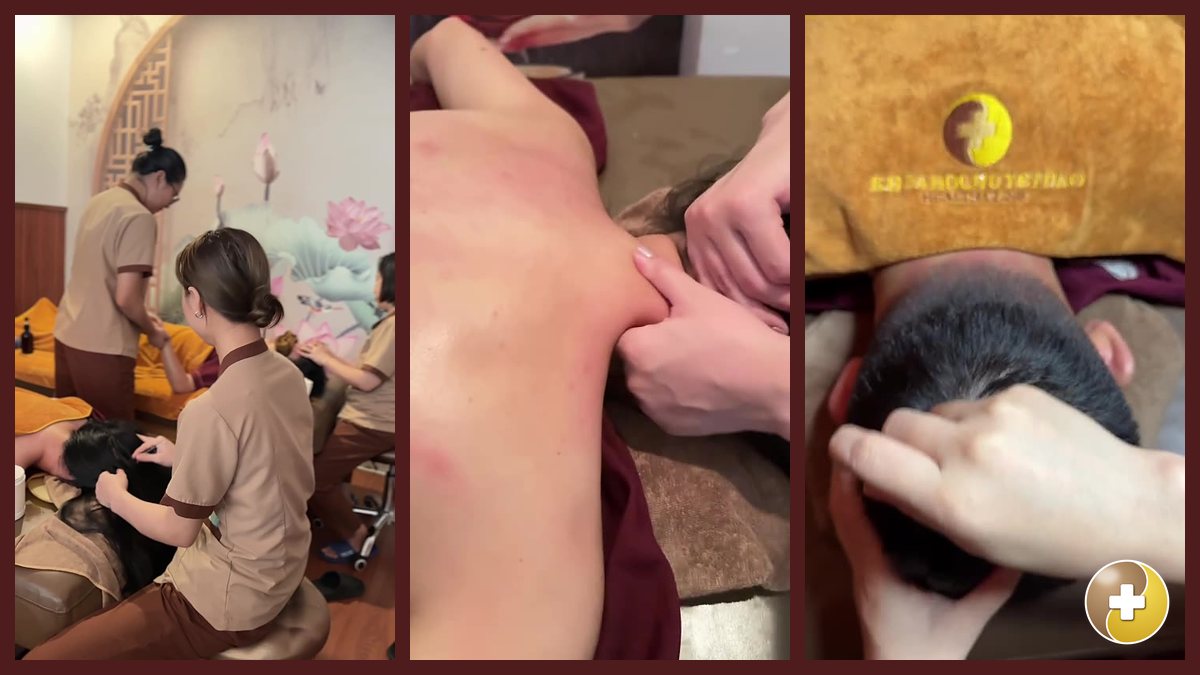
Quick answer: Jet lag insomnia means your body clock still runs on the time zone you left: you crash in the afternoon and wake at night. Morning light, short naps and light dinners help you adjust within days. Tong Gia Acupoint Wellness in Districts 12 and 9, Ho Chi Minh City, releases the neck and upper back to help you unwind.
Want Lương Y Tống Văn Huynh’s team to read your spine and posture in person?
What jet lag insomnia is, in Western terms, and who gets it
Jet lag is a mismatch between your internal clock and the clock on the wall. In Western medical terms it is a circadian rhythm disorder caused by crossing several time zones quickly. Nothing is "broken"; your body is simply out of phase with Ho Chi Minh City.
A small cluster of cells in the hypothalamus, the suprachiasmatic nucleus, acts as the conductor of your day–night rhythm. It reads light through the retina. When it gets dark, it lets the pineal gland release melatonin, your core temperature drops and you feel sleepy. Towards morning the adrenal glands raise cortisol so you wake up alert. Hunger, digestion, urine output, body temperature and blood pressure all follow the same clock. Fly across 6 to 15 time zones in a day and the light outside changes at once, but the inner clock shifts only gradually. A common rule of thumb is about one day of adjustment for each hour of time difference, faster for some people and slower for others.
The scene is familiar every Tết season in Saigon. The flight lands at Tân Sơn Nhất around midnight or before dawn, the family is waiting, and there is food and catching up until sunrise. The next afternoon, around 3 or 4pm, you can barely keep your eyes open. At 10pm you are wide awake; at 2 or 3am you are staring at the ceiling, listening to motorbikes outside. Morning comes with a heavy head and no appetite, while the calendar is already full of relatives, flower markets and New Year preparations.
- Việt kiều and travellers from the US and Canada: 12 to 15 hours of difference, night and day almost reversed; many need a full week or more.
- From Europe and Russia: Saigon is 4 to 7 hours ahead, so you struggle to fall asleep at night and to get up in the morning.
- From Australia: a smaller gap, with Saigon a few hours behind, so you tend to wake far too early and fade by late afternoon.
- Older adults, light sleepers and worriers adjust more slowly.
- Short trips of one or two weeks: by the time you adjust, it is time to fly back.
Jet lag usually comes with a stiff back, stiff neck and heavy legs after 12 to 20 hours in an aircraft seat. The full picture of the trip is in our main guide, spine care after a long-haul flight; this article focuses on sleep and the body clock.
Common causes: why the first nights back are so hard
The size and direction of the gap depend on where you flew from. Figures below use northern-winter time; they can shift by an hour when daylight saving applies:
| Flying in from | Difference with Ho Chi Minh City | Typical first days | What helps |
|---|---|---|---|
| US West Coast, Vancouver | Saigon about 15 hours ahead | Afternoon crash, awake from 1–2am, hungry at night | Morning light, short nap, no long afternoon sleep |
| US East Coast, Toronto | About 12 hours | Day and night almost reversed | Eat and sleep on Vietnam time from the plane onwards |
| Western Europe (France, Germany, UK) | Saigon 6–7 hours ahead | Hard to fall asleep before midnight, late waking | Early morning light, dim lights and screens at night |
| Russia (Moscow) | Saigon about 4 hours ahead | Wide awake until 1am, tired mornings | Get up on time anyway, walk in the morning |
| Australia (Sydney, Melbourne) | Saigon 3–4 hours behind | Sleepy early, awake at 4am | Afternoon light, evening walk, slightly later dinner |
On top of the time difference, typical holiday habits keep the clock from settling:
- Light at the wrong time: sleeping on the plane on home time, then spending the day in a dark air-conditioned room and scrolling your phone late at night. Light is the strongest signal for the body clock; the wrong timing pushes it the wrong way.
- Three-hour afternoon naps that feel great but remove the "sleep pressure" you need at bedtime.
- Iced coffee and strong tea in the afternoon to stay awake; the effect lasts well into the night.
- Year-end parties and beer: alcohol helps you drop off, but the second half of the night becomes light and broken, with a dry mouth and trips to the bathroom.
- Late, heavy meals: bánh chưng, braised pork, fried food. Our Tết food guide is here: bloating after Tết feasting.
- Climate switch: from a cold, dry winter to humid Saigon heat; a hot bedroom, or air conditioning blowing straight at you, makes it harder for the body to cool down for sleep.
- Emotions and noise: excitement at seeing family, unfinished work back home, a strange bed, a shared room, a busy street before Tết.
- Aches from the flight: a stiff neck from dozing upright, a tired back and heavy legs make it hard to get comfortable. See stiff neck after a long flight.
Signs worth noting
- Heavy daytime sleepiness, often in the early afternoon, which is the middle of the night back home.
- Trouble falling asleep, or waking at 2–4am and being unable to drift off again.
- Foggy head, poor focus, forgetfulness and slower reactions; take extra care in Saigon traffic.
- Digestion off rhythm: hungry at night, no appetite at breakfast, bloating, constipation or loose stools for a few days.
- Night-time urination, irritability, restlessness and a mildly racing heart.
- Stiff neck, tense shoulders, dry red eyes and general muscle soreness.
These should ease a little every day. If they get worse or last longer than a normal adjustment period, read the next section. If you also struggle with sleep when you are not travelling, see frequent insomnia: common causes.
When to see a doctor
Please see a doctor at a medical facility, rather than relying on massage or sleep tips, if you notice any of the following:
- Chest pain or tightness, shortness of breath or cold sweats, especially in the days after a long flight: call 115 immediately.
- One swollen, painful, warm or red calf after the flight: get checked straight away and do not massage the leg. More in swollen legs after a long flight.
- Facial droop, slurred speech, weakness or numbness on one side, sudden confusion: call 115 immediately.
- A fast or irregular heartbeat, dizziness or near-fainting when lying down or standing up.
- Insomnia lasting more than 2–3 weeks after arrival despite regular hours, or insomnia that started before the trip.
- Loud snoring or pauses in breathing during sleep, morning headaches, or falling asleep while talking or driving.
- Low mood or anxiety that does not lift, or dark thoughts: reach out to a health professional early.
- Lasting fatigue, pale skin or unexplained weight loss: do not blame it all on jet lag; get checked alongside any wellness care.
- If you use insulin or take prescriptions at fixed times, including blood thinners, ask your pharmacist or see a doctor about shifting the timing to the new time zone.
Do not start sleep aids, including melatonin, without asking a pharmacist or health professional first, particularly if you are older or have a chronic condition. This is a wellness service, not medical care. If you already follow a plan from a medical facility, Tong Gia only offers supportive care alongside it.
The Y Tướng Học view: which organs, and how it shows on the face
In Vietnamese traditional thinking, sleep is not only a matter of the brain. According to the Tong Gia curriculum, the Heart (Tâm) houses the spirit: it governs mind, awareness, thinking and sleep, and when it weakens you see poor sleep, vivid dreams and forgetfulness. This "Heart" is a functional system, not the physical heart; the curriculum states plainly that sleeplessness linked to Tâm does not mean heart disease.
The Liver (Can) stores blood: at rest, blood returns to the Liver to be replenished. Jet lag makes you awake when you should rest, so this rhythm is reversed. The Liver also keeps qi flowing; when that is disturbed you get bloating, chest tightness, irritability and poor sleep. Three organ pairs often appear together: Heart–Kidney out of balance (sleeplessness, palpitations, tired back and knees), Heart–Spleen strained by worry (palpitations, poor sleep, poor appetite), and Liver fire stirring Heart fire (restlessness, short temper, trouble sleeping).
Y Tướng Học (face reading for wellness) rests on one line: "the signs show outside, the organs lie inside." Its roots go back more than 2,000 years, and Lương Y (traditional healer) Tống Văn Huynh, founder of Tong Gia Acupoint Wellness (Huyệt Đạo Tống Gia), has systematised it for personal care. For a jet-lagged guest, Tong Gia practitioners look at:
- Complexion: the Heart shows on the face; a pale, dull or flushed face by late afternoon suggests the Heart is tired.
- Tongue: a red tip often goes with restlessness and poor sleep; a puffy tongue with teeth marks points to the Spleen holding water.
- Eyes and brows: the Liver opens into the eyes; dry, burning eyes at night are a signal to rest. Red eyes can simply come from lack of sleep, so no conclusions are drawn from them alone.
- Night sweats and warm palms and soles, linked to Heart yin in traditional terms; thin, dull ears and a cold lower back, linked to the Kidneys.
- Face shape: the Giáp (甲) face, wide forehead and pointed chin, tends to be "full above, empty below", with headaches and poor sleep, and a hot, tense upper neck at C1–C2; the long, thin Mục (目) face needs enough sleep and a gentle touch.
This is a wellness way of deciding where to start and how firm to be, never a medical conclusion.
Spine segments and nerve-reflex zones involved
The Tong Gia curriculum on spinal nerve-reflex balancing describes 33 vertebrae: the neck (C1–C7) serves the head, face, neck and arms; the thoracic spine (D1–D12) serves circulation, breathing and digestion; the lumbar spine (L1–L5) serves digestion, kidneys, urinary and reproductive organs and the legs. In Western anatomy, the sympathetic "alert" system leaves the spinal cord from about T1 to L2 and runs in a chain beside the spine, while the parasympathetic "rest and digest" system comes from the brainstem (the vagus nerve) and the sacrum. With jet lag, the alert system switches on at the wrong hour, and tight muscles along the spine and neck help keep you wired.
| Spine segment | Nerves / function (Western anatomy) | Jet lag signs | Organ (traditional) | Outer signs (Y Tướng Học) |
|---|---|---|---|---|
| C1–C3, base of skull | Suboccipital muscles; the superior cervical ganglion sends fibres to the pineal gland, which releases melatonin | Stiff neck from dozing upright, heavy head, slow to fall asleep | Liver (tendons) – Kidney | Giáp face; hot, tense upper neck; crowded forehead lines |
| C4–C7, shoulders | Nerves to shoulders and arms; phrenic nerve (C3–C5) drives the diaphragm | Tense shoulders, shallow breathing, restless tossing | Liver; Lung | Uneven shoulders, frequent sighing |
| D1–D5, upper back | Sympathetic fibres to heart and lungs | Racing heart in bed, hard to relax | Heart (Xin Shu below D5, Jue Yin Shu below D4) | Pale or flushed face, red tongue tip, night sweats |
| D7–D9 | Sympathetic fibres to liver and stomach | Irritable, bloated after odd-hour meals, broken sleep | Liver (Gan Shu below D9) | Knitted brows, dry eyes |
| L1–L2 | Kidneys; adrenal glands on top of the kidneys release cortisol on a daily rhythm | Night urination, tired back, sluggish mornings | Kidney (Shen Shu below L2) | Thin, dull ears; cold lower back |
The table shows "related" zones for choosing where to work, nothing more. The body clock lives in the brain, not the spine; hands cannot replace light and routine, but they can help tight areas let go so the body shifts more easily into rest.
The Tong Gia method: spinal nerve-reflex balancing massage
The method was built by Lương Y Tống Văn Huynh over more than 13 years in Vietnamese traditional wellness, Y Tướng Học and spinal nerve-reflex balancing: read the face to understand the organs, read the spine by hand to find the zone, then care for each segment and function. For jet lag, the aim is to help rebalance the neck, upper back and the Heart and Liver functions so you can unwind on Vietnam time. A session:
- Questions and observation: where you flew from, flight length, landing time, when you slept and woke these past nights, coffee and alcohol, any chronic condition, blood pressure, pregnancy or blood thinners; then complexion, tongue, eyes, ears and shoulder line.
- Reading the spine by hand: skin temperature, muscle padding, vertebra shape and your own sensation, from C1 down to L2, comparing left and right. "Active" zones are warmer, tighter and more tender; with jet lag they are often the base of the skull and D4–D5.
- Muscle release: suboccipitals, sides of the neck, shoulder blades and the long muscles beside the spine, using 5 pressure levels from one finger up to full body weight. Jet-lagged guests usually need only light to medium pressure.
- Acupressure on the right points: gentle work on Xin Shu and Jue Yin Shu on the back, Nei Guan and Shen Men at the wrist (1–2 minutes each side), Tai Chong on the foot for tension, San Yin Jiao for fatigue (never in pregnancy), warming Shen Shu for a cold lower back, and finishing at Bai Hui on the crown to calm the mind.
- Home guidance: a light schedule, nap timing, Shen Men and slow 4–6 breathing before bed, based on where you flew from.
When to come: day one or two after landing, late afternoon or early evening (around 5–7pm), so you get past the afternoon slump without napping, then go home for a light dinner, a warm shower and bed on Vietnam time.
A typical session: the guest is often a Việt kiều in their fifties, two nights after flying in from the US West Coast, waking at 1–2am, crashing in the afternoon, neck stiff from sleeping upright. The practitioner sees a dull complexion, red eyes, a red tongue tip and a higher right shoulder. The upper neck feels hot and rope-like; the left side at D4–D5 is thick and tender; the area around L2 is cool. The practitioner releases neck and shoulders at whole-hand pressure, works Xin Shu and Jue Yin Shu, warms the lower back, presses Nei Guan and Shen Men, and finishes at Bai Hui. Halfway through, the guest's breathing slows and they doze off. Advice at the end: light dinner, lights off at 10pm, sun at 7–8am, no nap longer than 30 minutes.
How it feels: tight spots feel a pleasant ache that eases; the curriculum calls this creating a "sensation wave" so the body adjusts itself. Guests often share that the neck feels lighter, the head clearer, the body warm and sleepy on the table, and that falling asleep that night is easier. Some still wake at night for a few more days, because the body clock needs time. Tong Gia supports the body and helps it rebalance; it does not promise perfect sleep after one session. For more on our dedicated service, see jet lag massage, guests' questions in jet lag massage in Saigon: Q&A and a session story in jet lag massage in Saigon: experience.
Suitable services (per session, full list on the price list):
- Head care, 60 minutes: 750.000 VND (about US$29). Head, base of skull, neck and shoulders; for a heavy head and trouble falling asleep.
- Heart (Tâm) wellness care, 75 minutes: 750.000 VND (about US$29). Slow breathing, upper back and wrist points, Bai Hui; for restlessness, palpitations and broken sleep.
- Full-body care, 120 minutes: 950.000 VND (about US$37). Head to feet; for a 15–20 hour journey with jet lag, aches and heavy legs.
If you have any sign from "When to see a doctor", especially one swollen painful calf, chest pain or breathlessness, the practitioner will not proceed and will ask you to get checked first.
Want Lương Y Tống Văn Huynh’s team to read your spine and posture in person?
Self-care at home and prevention
- Start before you fly: two or three days ahead, move bedtime and meals about an hour a day towards Vietnam time. On board, set your watch to Saigon time, eat and sleep by it, drink water, and go easy on alcohol and coffee.
- Light at the right time: from the Americas, Europe or Russia, get 20–30 minutes of morning sun and a walk; from Australia, seek afternoon light. Dim the lights in the evening and put screens away an hour before bed.
- Short naps only: the Tong Gia curriculum suggests a 15–30 minute nap; traditionally 11am–1pm is the Heart meridian's hour. When the 3pm slump hits, stand up, walk and splash cool water on your face.
- Light dinner 2–3 hours before bed, fewer fried dishes and less beer at night, coffee in the morning only.
- Wind down: a warm foot soak for 10–15 minutes (people with diabetes should test the water carefully), slow 4–6 breathing for 5–10 minutes, and gentle pressure on Shen Men at the wrist crease, 1–2 minutes each side. Our guide acupressure for sleep in Saigon shows more. Keep the room dark and pleasantly cool, with no air conditioning blowing on your neck.
When you fly home at the end of the holiday, reverse the plan for your destination.
Booking
Tong Gia has two branches in Ho Chi Minh City, open every day, with genuine guest reviews on Google Maps:
- District 12: 225 Dương Thị Mười, Phường Tân Chánh Hiệp (Tan Chanh Hiep ward, District 12), 8:00–19:00 daily.
- District 9 – Vinhomes Grand Park: Căn T16-21 khu Manhattan, Phường Long Bình, TP. Thủ Đức (unit T16-21, Manhattan zone, Long Binh ward, Thu Duc City), 9:00–20:00 daily.
Call, Zalo or WhatsApp +84 888 264 559, or book online. You can message before your flight to hold a late-afternoon slot for your first days, or family in Saigon can book for you. Book early around Tết. Tell us where you are flying from, your landing date and how you are sleeping. This is a Vietnamese traditional wellness method, and a good way to experience it while you are in Ho Chi Minh City.
Visit us
- Đông Y Huyệt Đạo Tống Gia Quận 12 (District 12)
225 Dương Thị Mười, Phường Tân Chánh Hiệp, Quận 12, HCMC · 8:00–19:00 daily · 0888 264 559 · Directions on Google Maps - Đông Y Huyệt Đạo Tống Gia Quận 9 (Vinhomes Grand Park, District 9)
Căn T16-21 khu Manhattan, Vinhomes Grand Park, Phường Long Bình, TP. Thủ Đức, HCMC · 9:00–20:00 daily · 0888 264 559 · Directions on Google Maps
Want Lương Y Tống Văn Huynh’s team to read your spine and posture in person?
What guests say on Google Maps
“I had tired eyes and tired neck and shoulders… my eyes felt less strained and I slept better… and there was a herbal foot soak, very comfortable.” (translated from a Vietnamese review)
— Thanh H., Google Maps review · District 12 branch · 12/2025 · See on Google Maps
“A quiet space with a pleasant herbal scent – truly relaxing for both mind and body.” (translated from a Vietnamese review)
— Việt C., Google Maps review · Vinhomes Grand Park branch (District 9) · 2025 · See on Google Maps
Quoted from public reviews, shortened where marked (…). Experiences vary from person to person; reviews are not a substitute for seeing a doctor when something feels wrong.
Related guides for your trip
FAQ
How long does jet lag sleep trouble last after flying to Vietnam? A common rule of thumb is about one day per hour of time difference, so 4–7 days from Europe or Russia and often more than a week from North America. Morning light, short naps, light dinners and a fixed bedtime speed it up. If you still cannot sleep after 2–3 weeks, see a doctor.
Why do I wake up at 3am after flying into Saigon? For travellers from the Americas or Europe, 3am in Ho Chi Minh City is daytime on the old clock, so the body switches on, sometimes with hunger or a need to urinate. Keep the room dark, breathe slowly, avoid your phone and still get up on time. If it comes with chest pain, palpitations or breathlessness, get checked.
Which acupressure point helps me fall asleep with jet lag? The Tong Gia curriculum suggests Shen Men at the wrist crease on the little-finger side, 1–2 minutes each side with slow 4–6 breathing before bed, and Nei Guan, two finger-widths above the wrist crease, for restlessness. Press lightly. Points support relaxation; light and routine do most of the resetting.
Does massage help with jet lag, and when should I book? Massage cannot move your body clock, but releasing a tight neck and upper back helps the body shift into rest. Book day one or two after landing, late afternoon or early evening, then have a light dinner and sleep on Vietnam time. Tong Gia is in District 12 and District 9; call +84 888 264 559.
Is it okay to nap in the afternoon after a long-haul flight? Keep it to 15–30 minutes, ideally before about 3pm. A three-hour afternoon sleep removes the sleep pressure you need at night and keeps the cycle of wakeful nights going. When the slump hits, walk, get some light and splash cool water on your face instead.
Should I take melatonin for jet lag in Vietnam? Ask a pharmacist or see a doctor first, especially if you are older, pregnant or have a chronic condition or regular prescriptions. Many people adjust with timed light, short naps and steady meal and bedtimes. Tong Gia offers wellness care only, not medical care.
Author: Lương Y Tống Văn Huynh – founder of Huyệt Đạo Tống Gia, a master of traditional Vietnamese wellness with over 13 years in Eastern wellness care, Y Tướng Học (face reading) and spinal nerve-reflex balancing massage.
Updated: 2026-11-15
Related guides
- Jet lag and sleep after flying to Vietnam: why you wake at 3am in Saigon, and how to reset in the first days
- Insomnia in women: why sleep breaks before periods, after birth and in perimenopause, and how gentle acupressure care works in Ho Chi Minh City
- Frequent insomnia in Ho Chi Minh City: seven common causes, the warning signs, and how Tong Gia can help
- Midlife insomnia (ages 40–55): why your mind races in bed, and how Tong Gia works with it in Ho Chi Minh City
This is a wellness service, not medical care.