
Spine care after a long-haul flight: neck, mid-back and lower back for Viet Kieu flying home for Tet 2027
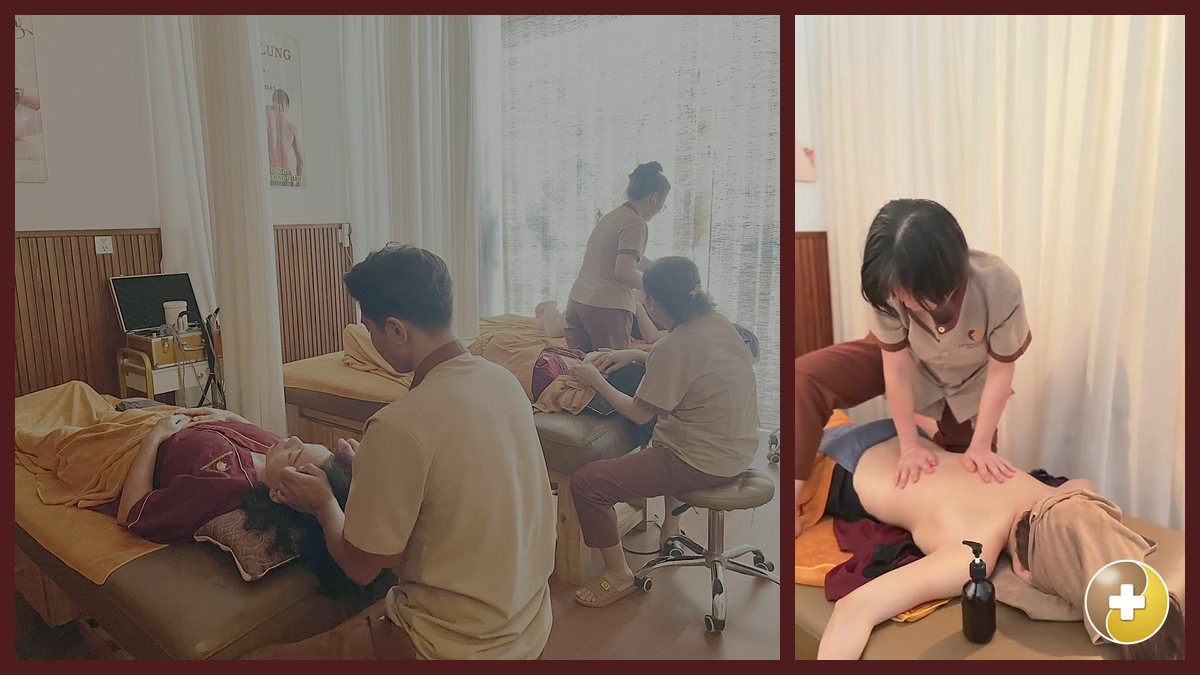
Quick answer: Spine care after a long-haul flight means helping the neck, back and lower back relax after 12–20 hours in a seat: walk, drink water, sleep on Vietnam time, keep warm. Tong Gia Acupoint Wellness (Huyệt Đạo Tống Gia) in District 12 and Vinhomes Grand Park, Ho Chi Minh City, reads the spine by hand and applies acupressure.
Want Lương Y Tống Văn Huynh’s team to read your spine and posture in person?
What spine care after a long-haul flight means, and why Tet travellers need it
Flying home to Ho Chi Minh City for Tet from the US, Canada, Europe or Australia usually means 12–20 hours in a seat, plus layovers. You stand up at Tan Son Nhat and your lower back feels like a plank, your neck hurts on one side from sleeping slumped, and the area between your shoulder blades aches. Then the real trip begins: hauling suitcases full of gifts, lifting nieces and nephews, a long car ride to the family hometown, helping clean the house, sitting on floor mats for the New Year meals.
In Western anatomy the adult spine has 7 cervical (neck) vertebrae, 12 thoracic (upper and mid-back) vertebrae, 5 lumbar (lower back) vertebrae, then the sacrum and the tailbone. Discs between the vertebrae absorb load and let the spine bend; the long erector muscles and ligaments on both sides hold it upright. The spinal cord runs inside the spinal canal and nerve roots exit between the vertebrae to the head, arms, chest, abdomen and legs. Sitting still for many hours keeps the discs and back muscles loaded in one position. The hip flexors shorten, the glutes switch off, and the back muscles brace to hold you up. When you finally stand, they have not let go yet, so you feel stiff and bending forward is hard.
Spine care after a long-haul flight is simply the set of things that help your neck, back, lower back and the nerves around the spine relax and get moving again: walking, water, sleeping on Vietnam time, keeping warm, and hands-on work in the right areas. It is common among:
- Overseas Vietnamese (Viet Kieu) flying home for Tet, especially in economy, on overnight flights with connections.
- Office workers abroad whose backs were already tired from desk work.
- Middle-aged and older family members whose spines show normal age-related wear.
- Anyone carrying heavy luggage and gifts for the whole extended family.
- International visitors on a wellness trip who want their body to properly "land" in Saigon.
This is the main guide in Tong Gia Acupoint Wellness (Huyệt Đạo Tống Gia)'s series for Tet 2027 travellers. Each related issue has its own article, linked below. If you are visiting Vietnam for the first time in years, see also our Viet Kieu wellness visit Q&A.
Common causes of a stiff neck and back after flying
- Narrow seats and long hours bent at the hips: the seatback rarely supports the lower back, so you slide forward and round your spine; the upper back curves more and the head drifts forward.
- Sleeping with the head dropped to one side: the side neck muscles and the small muscles under the skull are stretched for hours. Read more in stiff neck after a long flight.
- Not enough walking: the calf muscles act as a pump returning blood to the heart. When you sit still, the legs feel heavy, the ankles swell and the lower back tires too. See swollen legs after a long flight.
- Dry cabin air and too little water: many people drink less to avoid the bathroom, and choose coffee or wine to sleep. Dehydrated muscles cramp and tighten more easily.
- Jet lag: sleep is when muscles and the nervous system recover. A few broken nights keep the back on guard. See jet lag and sleep after flying to Vietnam.
- Heavy bags: lifting a suitcase into the overhead bin or off the belt while twisting is a classic way to strain the lower back, especially after hours of sitting.
- A sudden climate change: from cold, dry winter to hot, humid Saigon, then straight into air-conditioning or in front of a fan after a shower.
- A packed Tet schedule: long drives, sitting on the floor, late nights, rich food and beer. A full stomach makes the mid-back feel heavy too: see bloating after Tet feasting.
Travelling with older parents? Their muscles and joints are less elastic, so read neck and shoulder massage for elderly parents before booking them in.
Related signs to watch after the flight
- Stiff neck, pain turning the head, ache at the back of the skull: upper neck (C1–C3) strained by sleeping upright.
- Heavy shoulders, mild tingling in the arm or fingers: lower neck (C4–C7), where nerves go to the arms.
- Ache between the shoulder blades, tight chest, shallow breathing: upper and mid-back rounded for hours.
- Stiff lower back in the morning, hard to bend over the sink: lumbar spine and shortened hip flexors.
- Buttock pain, mild tingling down the back of the thigh: lower lumbar and sacral area.
- Heavy legs, mild ankle swelling on both sides; poor sleep; headache (see headache when flying); bloating; an itchy, oily scalp after a few humid days (see itchy scalp in Vietnam's humid climate).
In the Tong Gia course material there is a simple idea: the pain shows in one place, but its source is often somewhere else. A sore lower back may really be about how you sat, slept and lived for the whole journey.
When to see a doctor
Most post-flight stiffness eases with walking, sleep and relaxed muscles. With any of the following, please see a doctor at a medical facility and do not rely on massage:
- Shortness of breath, chest pain or tightness, cold sweats or fainting after the flight: call 115 (Vietnam emergency) right away.
- One calf swollen, painful, warm or red: this can be a sign of a deep vein clot, get checked now and do not have your legs massaged.
- Back pain with weakness or numbness in one or both legs, or a foot that drags.
- Numbness around the buttocks, groin or genitals, or new bladder or bowel problems.
- Back pain with fever, unexplained weight loss, lasting fatigue, or pain that gets worse at night at rest.
- Pain after a fall or a knock while handling luggage; sudden back pain if you have osteoporosis.
- A sudden severe headache, slurred speech, a drooping face or weakness on one side: call 115.
- Pregnancy or recent surgery: ask your own care team before any massage.
Weight loss, ongoing tiredness or pale skin should be checked at a medical facility alongside any wellness care. This is a wellness service, not medical care.
The Y Tướng Học view: what a tired spine says about Kidney, Liver and Spleen
Y Tướng Học (face reading for wellness) is a tradition over 2,000 years old built on one line: the signs show outside, the organs lie inside. Lương Y (traditional healer) Tống Văn Huynh systematised it so practitioners can read the body before they touch it. In Eastern wellness, three organ systems matter most for a spine after a long flight:
- Kidney governs the bones. In this tradition the Kidney is a functional system tied to bones, marrow, water, ears, hair, the lower back and knees, and it corresponds to winter. Coming from a cold country with a cold lower back, tired knees, blocked ears after landing and dry hair are signals to keep the lower back warm. The Kidney also governs water, so drinking too little on board matters. Thick, rosy ears suggest a strong root; thin, dull ears suggest the lower back needs care.
- Liver governs the sinews. The Liver nourishes tendons and ligaments; when it is strained, muscles tighten and cramp. Hours of bracing plus little sleep show up as tight shoulders, dry eyes and irritability. Frown lines between the brows and shoulders hard as wood mean pressure has built up for a while.
- Spleen governs the flesh and limbs. Odd meal times on the plane and heavy Tet food overload it: the body feels heavy, limbs sluggish, back muscles soft. Pale lips and a puffy tongue with teeth marks are the outward signs.
Y Tướng Học also sees the bridge of the nose as "a small picture of the spine": a crooked nose bridge often goes with a spinal axis that is off, which is why the practitioner then reads the spine by hand. Face shape suggests which part of the back to check first (for example, a square face points to D11–D12). This is observation for wellness care, not fortune telling and not a judgement about illness.
Vertebrae and nerve-reflex areas involved
Following Tong Gia's spinal nerve-reflex balancing material, the neck (C1–C7) relates to the head, face, neck and arms; the thoracic spine (D1–D12, also written T1–T12) to circulation, breathing and digestion; the lumbar spine (L1–L5) to digestion, kidneys, urinary and reproductive function and the legs; the sacral area (S1–S5) to elimination and the pelvis.
| Vertebrae | Nerves / function (Western anatomy) | What shows up after flying | Organ (Eastern wellness) | Outer sign (Y Tướng Học) |
|---|---|---|---|---|
| C1–C3 | Muscles under the skull, upper neck nerve roots | Stiff neck from sleeping upright, ache to the crown | Kidney (ears, back of skull), Liver (sinews) | Thin, dull ears; flat back of the head; red, dry eyes |
| C4–C7 | Nerve roots to shoulders, arms, hands | Heavy shoulders, tingling arms | Liver governs sinews | Shoulders hard as wood, frown lines at the brows |
| D1–D3 | Upper intercostal nerves; Lung point below D3 | Tight chest, shallow breathing when hunched | Lung | Dry skin, dry or blocked nose |
| D4–D9 | Intercostal nerves; Heart point (D5), Liver points | Ache between the shoulder blades | Heart, Liver | Dull complexion, lines between the brows |
| D10–D12 | Nerves to the upper abdomen and digestion; Spleen (D11), Stomach (D12) points | Bloating, heavy mid-back after plane and Tet meals | Spleen–Stomach | Pale lips, puffy tongue with teeth marks |
| L1–L5 | Nerve roots to the lower abdomen and legs; the sciatic nerve starts from L4 down; Kidney point below L2 | Stiff lower back on standing, heavy legs | Kidney governs bones | Crooked nose bridge, cold lower back, dry hair |
| S1–S5, tailbone | Pelvic nerves, elimination, back of the thigh | Sore buttocks and tailbone from long sitting | Kidney–Bladder | Soft, cool flesh over the lower back and buttocks |
The table lists related areas for the practitioner to read by hand; it is not a statement of cause. For more on the mid-back, see mid-back pain from sitting.
The Tong Gia method: spinal nerve-reflex balancing massage
Every session follows the method developed by Lương Y Tống Văn Huynh, founder of Tong Gia, with over 13 years in Vietnamese traditional wellness, Y Tướng Học and spinal nerve-reflex balancing. The aim is to help rebalance each spinal area and support the related organ functions, by hand, with relaxation throughout.
- Questions and observation: flight length, number of legs, sleep, heavy lifting, any one-sided leg swelling, blood pressure, existing conditions; then complexion, ears, nose bridge, neck and shoulder posture.
- Reading the spine by hand: four things are checked: skin temperature, the muscle layer, the shape of each vertebra (raised, sunken, shifted) and tender spots, comparing left with right from C1 to the sacrum.
- Muscle release: under the skull, neck, upper shoulders, the long back muscles, lower back and glutes, building pressure gradually from one finger up to whole-body weight, always asking how it feels.
- Acupressure in the right areas: Phong Trì at the neck; Lung and Heart points in the upper back; Spleen and Stomach points mid-back; Kidney point, Mệnh Môn and Chí Thất in the lower back; Ủy Trung behind the knee ("for back pain, look to Ủy Trung").
- Self-care guidance: simple stretches, how to sit on a long drive, how to lift a suitcase.
A typical session after a flight: most guests come on day two or three, after one night's sleep. The practitioner notices one shoulder higher and the head forward, feels a warmer neck and hard muscles either side of the lower back, works from the neck down, then finishes lightly on the feet and calves only if there is no one-sided swelling or pain.
Sessions that fit (full price list):
- Neck–shoulder / back–waist care, 60 min: 550,000 VND (about 21 USD); first visit 399,000 VND (about 15 USD); 90 min: 750,000 VND (about 29 USD). Focus on the neck, shoulders, back and lower back.
- Full-body care, 120 min: 950,000 VND (about 37 USD). Head to feet, for the day after a long-haul flight when everything aches and sleep is off.
- Warming cupping, 30 min: 85,000 VND (about 3 USD). An add-on for a cold, heavy back after winter abroad.
Guests often say they felt pleasant tender spots at the neck and lower back, and many fall asleep during the session. Afterwards most find the neck turns more easily and standing up is less of an effort, and they sleep more deeply that night; some feel a little sore for a day first. Everyone responds differently, and Tong Gia does not promise the pain will be gone after one visit.
Want Lương Y Tống Văn Huynh’s team to read your spine and posture in person?
Self-care across the whole Tet trip
| Stage | What to do | Read next |
|---|---|---|
| Before you fly | Sleep well, pick an aisle seat, split heavy bags, pack a neck pillow | Jet lag and sleep |
| On board | Walk every 1–2 hours, circle the ankles, small cushion behind the lower back, sip water | Swollen legs |
| Arrival day | Easy walk, morning sun, warm shower, sleep on Vietnam time | Stiff neck, jet lag massage |
| Tet days | Chairs with backrests instead of long floor sitting, moderate food and drink, gentle hair washing | Bloating, itchy scalp |
| Three free days in the city | Spread sessions and rest | 3-day wellness trip in Thu Duc |
- Warm the lower back: rub your palms until warm, place them either side of the lower back and rub up and down 50–100 times before bed.
- Belly breathing: in through the nose for about 4 seconds, out slowly for about 6, for 5–10 minutes a day.
- A 15–20 minute morning walk to move the back and reset your body clock.
- Keep the neck and lower back out of direct fans and air-conditioning; dry your hair before lying down.
- Lift with your knees, keep the bag close and never lift and twist at the same time.
How to book in Ho Chi Minh City
- District 12 branch: 225 Dương Thị Mười, Phường Tân Chánh Hiệp (Tan Chanh Hiep Ward, District 12). Daily 8:00–19:00.
- Vinhomes Grand Park branch: Căn T16-21 khu Manhattan, Vinhomes Grand Park, Phường Long Bình, TP. Thủ Đức (Unit T16-21, The Manhattan, Thu Duc City, formerly District 9). Daily 9:00–20:00.
WhatsApp or Zalo +84 888 264 559 (0888 264 559 inside Vietnam), or book online. You can message before you fly to hold a time for the whole family, and read genuine guest reviews on each branch's Google Maps listing. More on our back work: back massage in Saigon Q&A; for families, see our page for overseas Vietnamese.
Visit us
- Đông Y Huyệt Đạo Tống Gia Quận 12 (District 12)
225 Dương Thị Mười, Phường Tân Chánh Hiệp, Quận 12, HCMC · 8:00–19:00 daily · 0888 264 559 · Directions on Google Maps - Đông Y Huyệt Đạo Tống Gia Quận 9 (Vinhomes Grand Park, District 9)
Căn T16-21 khu Manhattan, Vinhomes Grand Park, Phường Long Bình, TP. Thủ Đức, HCMC · 9:00–20:00 daily · 0888 264 559 · Directions on Google Maps
Want Lương Y Tống Văn Huynh’s team to read your spine and posture in person?
What guests say on Google Maps
“I came to Khoa Học Huyệt Đạo hoping to find knowledgeable staff who could help me recover after a lot of travelling and intense exercise… The facilities were very clean, which made the whole experience even more comfortable… I am from Canada, and the level of body knowledge and care I received here goes far beyond anything I have experienced back home.”
— Theresa B., Google Maps review · District 12 branch · 2025 · See on Google Maps
“The technician had firm, careful hands with a deep, steady pressure. I had the neck and shoulders plus the Spleen–Stomach care and felt much lighter afterwards, my shoulders less tired… A pretty solid experience during my trip back to Vin to visit family.” (translated from a Vietnamese review)
— Phạm L., Google Maps review · Vinhomes Grand Park branch (District 9) · 09/2026 · See on Google Maps
“I came in with very bad back pain – turning my motorbike around was so hard it brought me to tears. After one session my back had settled again.” (translated from a Vietnamese review)
— Trang T., Google Maps review · District 12 branch · 2024 · See on Google Maps
Quoted from public reviews, shortened where marked (…). Experiences vary from person to person; reviews are not a substitute for seeing a doctor when something feels wrong.
Related guides for your trip
FAQ
What does spine care after a long-haul flight involve? It starts on board: walk every 1–2 hours, sip water and put a small cushion behind your lower back. After landing, walk gently, sleep on Vietnam time and keep your neck and lower back warm. If you are still stiff after a night's sleep, Tong Gia in District 12 or Vinhomes Grand Park can release the muscles and apply acupressure in the right areas.
Is back pain after a long flight something to worry about? Usually it comes from sitting in one position for hours, with tight back muscles and shortened hip flexors, plus dehydration, sleeping upright and lifting bags. It tends to ease within a few days of walking and sleeping well. Back pain with leg weakness, bladder or bowel changes, fever, shortness of breath or chest pain needs a medical facility right away.
How long does lower back stiffness from flying last? Many people feel better within 2–3 days once they walk, sleep on local time and keep the lower back warm. Desk workers and older travellers may take longer. If it is no better after about a week, or keeps getting worse, have it checked at a medical facility.
Should I get a massage straight after landing? Rest, drink water and sleep one night first, then book for day two or three. Before starting, a Tong Gia practitioner asks about your flight and checks for one-sided calf swelling or pain; if anything looks unusual, they will ask you to get checked first and will not go ahead.
Does massage help a stiff back after flying? Massage helps the muscles around the spine relax, supports circulation and makes sleep easier, so many people feel lighter afterwards. At Tong Gia the spine is read by hand before muscle release and acupressure. It is wellness care and does not replace a medical check when warning signs appear.
Can I book before I fly to Vietnam? Yes. Message WhatsApp or Zalo +84 888 264 559 with your arrival date and how many people are coming, or book online. The District 12 branch opens 8:00–19:00 and the Vinhomes Grand Park branch 9:00–20:00 every day; Tet dates fill up, so booking early helps.
Author: Lương Y Tống Văn Huynh – founder of Huyệt Đạo Tống Gia, a master of traditional Vietnamese wellness with over 13 years in Eastern wellness care, Y Tướng Học (face reading) and spinal nerve-reflex balancing massage.
Updated: 2026-11-15
Related guides
- Back pain exercises at home: six gentle lower-back moves, how to breathe, when to stop, and when Tong Gia can help in Ho Chi Minh City
- How to give a back massage at home: setup, 5 steps in 10–15 minutes, what to avoid and who should skip it
- Spine care after a long-haul flight: neck, mid-back and lower back for Viet Kieu flying home for Tet 2027
- Herbal warm compress: how a mugwort, ginger and sea salt pouch differs from dry heat, and how to use one safely at home in Ho Chi Minh City
- Lower back pain: what causes it, when to see a doctor, and how Tong Gia supports the lower back in Ho Chi Minh City
- Upper back pain: what causes it, which signs need a doctor, and how Tong Gia supports the upper back in Ho Chi Minh City
This is a wellness service, not medical care.