
Therapeutic-style massage for men: why necks and backs tire, and how Tong Gia helps
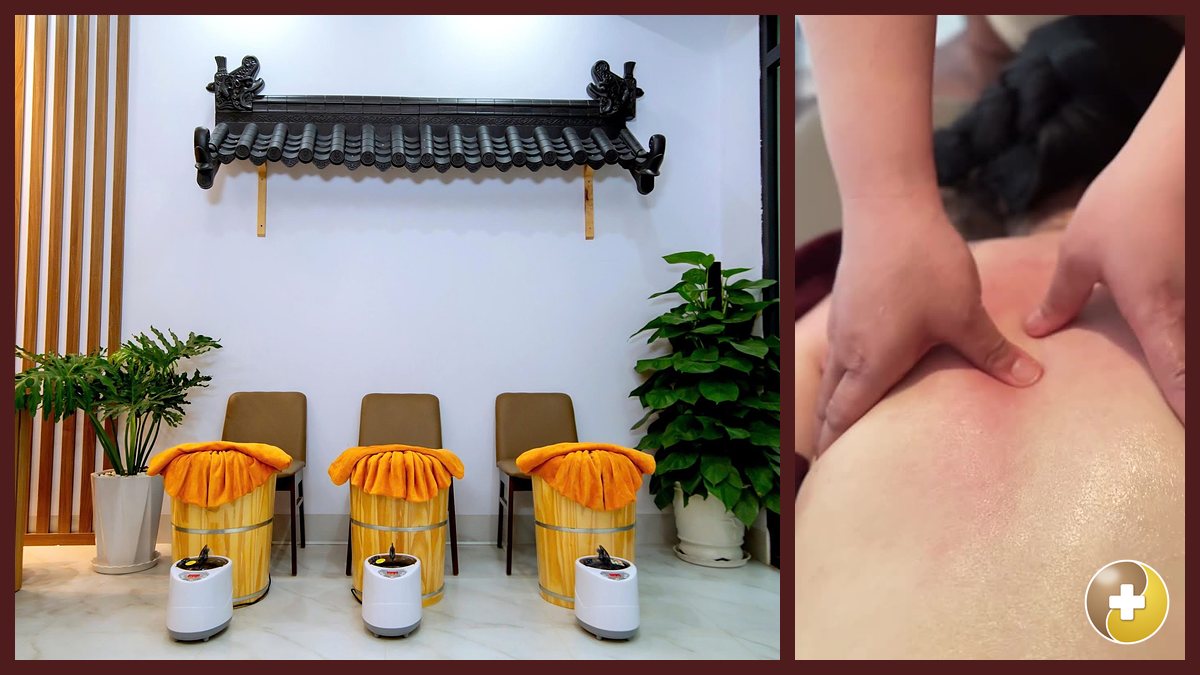
Quick answer: Therapeutic-style massage for men is hands-on wellness care for the zones men tire most: neck, shoulder blades and lower back, often with poor sleep. At Tong Gia Acupoint Wellness in District 12 and District 9, Ho Chi Minh City, practitioners read your face and spine by hand before releasing muscle and pressing points.
Want Lương Y Tống Văn Huynh’s team to read your spine and posture in person?
What is therapeutic-style massage for men?
Therapeutic-style massage for men is a hands-on wellness session built around the way a man's body tends to get tired: targeted work on muscle, tendon, fascia and the nerve-reflex zones along the spine, to soften areas that have locked up, improve circulation in the soft tissue and help the body rebalance. "For men" is not just about who is on the table. It is about the zones men in Ho Chi Minh City bring in again and again: a stiff neck and shoulder blades from riding a motorbike or sitting at a desk, a tight lower back from lifting or long hours in a chair, heavy calves from standing, and a head that rarely switches off.
In Western terms, muscle held tense for weeks usually comes with three things: poorer blood supply, so metabolic waste builds up and you feel tired; fascia that tightens, so muscle layers no longer glide; and a nervous system that "gets used to" keeping the muscle on guard. Men often carry thicker muscle and tend to push through, coming in only when they can no longer turn the head fully. When the right spot is pressed deeply and long enough, the stretch sensors in muscle and tendon signal the spinal cord and the muscle lets go; steady, warm hands also switch on more of the parasympathetic "rest" system. The Tong Gia training says it plainly: massage helps muscles relax, improves soft-tissue circulation, reduces stress and supports the body's natural recovery. It does not "detox" you and it does not replace medical care.
In Eastern wellness, the spine is the axis of health. The Tong Gia training notes that the Bladder meridian runs along both sides of the spine and carries the back points of the organs, such as Phế du (BL13, 肺俞, Lung), Tâm du (BL15, 心俞, Heart), Can du (BL18, 肝俞, Liver), Tỳ du (BL20, 脾俞, Spleen) and Thận du (BL23, 肾俞, Kidney). At Tong Gia Acupoint Wellness (Huyệt Đạo Tống Gia) the method is called spinal nerve-reflex balancing massage. It is a Vietnamese traditional wellness method developed by Lương Y (master of traditional Vietnamese wellness) Tống Văn Huynh over more than 13 years of practice. It is discreet, professional, purely wellness-focused and not medical care. If you are visiting or living in Ho Chi Minh City, it is a good way to experience Vietnamese Eastern wellness in a grounded, practical form.
A line Tong Gia often shares with male guests: people look for good feng shui for their home and their desk, but the feng shui you carry everywhere is your own health. A clear face, bright eyes and a steady posture go with you into every meeting. This kind of massage is one way to protect that "capital" before the body starts complaining.
Common reasons men get stiff necks, shoulders and backs
Most of what men bring to Tong Gia does not come from one injury but from the same habits repeated every day.
| Habit or job | What happens in the body | Zone that gets tired |
|---|---|---|
| Riding a motorbike or driving for hours | The neck stays fixed, both arms grip the handlebars, road vibration travels to the lower back | Neck, shoulder blades, lower back |
| Laptop and phone work | The head drifts forward and the neck muscles hold it up all day | Back of the neck, between the shoulder blades |
| Lifting, bending at work | The long back muscles carry heavy load and lock into thick bands | Lower back, hips, glutes |
| Late nights, drinking, irregular meals | Shallow sleep, muscles never fully recover; in Eastern terms the Liver and Spleen-Stomach work harder | Neck and shoulders, mid-back, heavy body |
| Long-term work stress | The "fight" side of the nervous system stays switched on | Raised shoulders, clenched jaw, tense head |
| Air conditioning, cold showers at night | Muscle tightens in the cold and circulation slows | Neck, cold and tired lower back |
From the Eastern view in the Tong Gia training, these patterns often relate to a few functions: the Kidney governs the bones (when weak, the lower back and knees tire easily), the Liver governs the sinews (tight tendons, cramps, less flexibility), the Liver keeps energy flowing (when blocked, irritability and poor sleep), and the Heart houses the mind and sleep. These are functional ideas from traditional medicine, not a sign that an organ is diseased. For a back-focused session, see back massage in Saigon: questions answered.
Signs worth noticing
- The same spot aches every afternoon: back of the neck, between the shoulder blades, lower back.
- You can feel hard knots or rope-like bands; pressing them sends discomfort elsewhere.
- You cannot turn your head fully, or bending to tie your shoes feels stuck.
- Headaches at the base of the skull in the late afternoon, tired eyes with a stiff neck.
- Light sleep, waking at night, still tired in the morning.
- Cold lower back or feet, tired knees, ringing ears when exhausted.
- Short temper, hard to relax, shoulders tense even when sitting still.
Most of these come from muscle, posture and daily rhythm. One sign alone says nothing definite about any organ. If you have numbness, weakness or electric-shock pain, read the next section first.
When to see a doctor
This massage does not replace a medical check. Please see a doctor at a medical facility first, before any massage, if you have:
- Numbness or weakness in the arms or legs, dropping things, unsteady walking.
- Pain shooting like electricity down a leg or arm.
- Back pain with changes in bladder or bowel control, or numbness around the groin.
- Blood in the urine, foamy urine that lasts, swelling of the face or legs, colicky flank pain, or fever with flank pain.
- A swollen, hot, red area; pain after a fall or traffic accident; a possible fracture.
- A sudden severe headache, or a stiff neck with fever and vomiting.
- Long-lasting fatigue, unexplained weight loss or pale skin: get checked at a medical facility alongside any wellness care.
- Chest tightness, shortness of breath, cold sweats, pain spreading to the left arm or jaw, a drooping face or weakness on one side: call 115 immediately.
Tell us beforehand if you have heart disease, a stent or pacemaker, high blood pressure, diabetes, kidney disease or take blood thinners, so the practitioner works lightly and avoids certain zones. This is a wellness service, not medical care.
The face-reading view: Kidney, Liver and Heart in a man's features
Y Tướng Học (face reading for wellness) has a core idea: the signs show outside, the organs lie inside. In the Tong Gia training, the goal is to read the face and posture to find where balance is lost, then confirm it by touch along the spine. It is observation for wellness, not fortune-telling and never a judgement. For men, three organs come up most: the Kidney (root strength, stamina, lower back), the Liver (decisiveness, temper, neck and shoulders) and the Heart (presence, sleep).
- Kidney: shows in the ears, hair and bones. Thick, rosy ears, healthy hair and a steady back suggest a strong root; thin dull ears, early hair loss and a cold, tired lower back suggest the Kidney needs support and the lower back needs warmth.
- Liver: shows in the eyes and sinews. Dry tired eyes, a frown between the brows, tense cheekbones and a guarded neck suggest Liver energy is stuck.
- Heart: shows in the complexion and tongue. A rosy face and deep sleep suggest enough Heart energy; a pale or flushed face and restless sleep mean the mind needs rest.
| Face shape | How it looks | Constitution | What to care for | Back zone checked |
|---|---|---|---|---|
| Điền (田) | Square, full | Earth, Spleen-Stomach | Regular meals, release the mid-back | D11–D12 |
| Phong (風) | Wide forehead, strong jaw | Wind-Wood, Liver | Calm emotions, even out tension left and right | Uneven muscle tension |
| Vương (王) | Bony, high cheekbones | Bone type, dry fire | Keep moist, release deep tendons, stop bracing | Shifted vertebrae, fibrous muscle |
| Viên (圓) | Round, soft | Water, Kidney | Keep the lower back warm, move gently every day | Cold lower back, soft muscle |
Every face type has its own strengths: the Điền type is calm and steady, the Vương type carries a lot, the Phong type has great drive. Learn more on Eastern face reading for wellness in Vietnam.
Vertebrae and nerve-reflex zones involved
The Tong Gia training divides the 33 vertebrae into four regions: neck C1–C7 (head, face, neck, arms), upper and mid-back D1–D12 (circulation, breathing, digestion), lower back L1–L5 (digestion, kidneys, urinary and reproductive function, legs) and sacrum S1–S5 (elimination and the pelvic floor). Nerve roots leave the spinal cord between the vertebrae, which is where the practitioner's fingertips read.
| Vertebrae | Nerves and function | Common in men | Organ in Eastern view |
|---|---|---|---|
| C1–C3 | Base of skull, head | Headache at the back of the head, poor focus | Kidney, Liver |
| C5–C7, D1 | Nerve roots to shoulders and arms | Stiff neck, sore shoulder blades, tired arms from riding | Liver (sinews) |
| D4–D5 | Chest and heart zone (BL14, BL15) | Light sleep, palpitations under stress | Heart |
| D7–D9 | Ribs, liver and gallbladder zone (BL18 at D9) | Irritability, tight mid-back after drinking | Liver |
| D11–D12 | Digestion (BL20, BL21) | Bloating, heavy body, thick mid-back | Spleen-Stomach |
| L1–L3 | Kidneys, urinary (BL23 and Mệnh môn GV4 at L2) | Cold tired lower back, less stamina, waking to urinate | Kidney |
| L4–L5, S1–S5 | Legs, pelvis | Low back and glute ache, heavy legs | Kidney, Liver |
This table explains why the practitioner reads the whole back, not just the sore spot. It is not a tool for labelling yourself with any condition.
The Tong Gia method: spinal nerve-reflex balancing massage for men
The method keeps three "no's": no chemicals or herbs swallowed or injected, no needles, no rough force. Many men assume harder is better, but pressure rises through 5 pressure levels, from one fingertip to full body weight, only where it is needed and as you respond. A session goes like this:
- Observe: face, complexion, posture, shoulder and hip alignment; questions about work, sleep and health history.
- Read the spine by hand: skin temperature, muscle layer, vertebra shape and points of sensation, comparing left and right.
- Muscle release: pushing and rotating for thick, locked muscle; plucking across fibrous bands; vibration for an exhausted body.
- Acupressure in the right zone: for example Thận du (BL23), Mệnh môn (GV4) and Chí thất (BL52) for a cold, tired lower back; Can du (BL18) for stress-driven neck tension. Work stops once the skin over the key point turns from dry to slightly moist.
- Home care advice: a few stretches and posture tips that fit your job.
| Service | Length | Price (VND, approx. USD) |
|---|---|---|
| Neck-shoulder or lower-back care | 60 / 90 min | 550,000 (≈ $21), first visit 399,000 (≈ $15) / 750,000 (≈ $29) |
| Kidney wellness care | 75 min | 750,000 (≈ $29) |
| Full-body care | 120 min | 950,000 (≈ $37) |
A typical session: a delivery rider in his forties came to the District 12 branch late one afternoon with a stiff neck, a tired lower back and broken sleep. The practitioner noticed uneven shoulders, a frown and a lower back cooler than the upper back. Reading the spine found thick, tender muscle at C5–C7 and on both sides of L2. He had mentioned when booking that he wanted care for both the neck and the lower back, so the session focused on releasing the neck and shoulders, pressing BL18, BL23 and GV4, then calming waves along the back. He left saying his neck turned more easily and his back felt warm and sleepy. During the session you may feel a "good ache" at key points; afterwards many guests feel warmth and lightness; mild soreness for a day or two is normal. Results vary and nothing is promised after one visit. Compare options in 120-minute full-body massage: questions answered and neck and shoulder massage in Saigon.
Want Lương Y Tống Văn Huynh’s team to read your spine and posture in person?
Self-care at home and prevention
- Change position every 45 minutes: stand, roll the shoulders back 10 times, stretch. Riders should take short breaks on long trips.
- Keep the lower back and feet warm: no fan or AC blowing on the back; soak the feet in warm water for 15 minutes at night.
- Lift with your knees: bend the knees, keep the back straight, hold the load close.
- Sleep before 11 pm and drink less alcohol: drink enough water, eat less salt, do not hold your urine.
- Move daily: 20–30 minutes of walking, and stretch your thighs and calves after sport.
Book a session
Tong Gia has two branches in Ho Chi Minh City, open every day:
- District 12: 225 Dương Thị Mười, Phường Tân Chánh Hiệp (Tan Chanh Hiep ward, District 12). Daily 8:00–19:00.
- District 9, Vinhomes Grand Park: Căn T16-21 khu Manhattan, Phường Long Bình, TP. Thủ Đức (unit T16-21, Manhattan zone, Long Binh ward, Thu Duc City). Daily 9:00–20:00.
Call, Zalo or WhatsApp +84 888 264 559, or book online. Mention your tired zones, your work and any health conditions. You can read real guest reviews on each branch's Google Maps profile before you come.
Visit us
- Đông Y Huyệt Đạo Tống Gia Quận 12 (District 12)
225 Dương Thị Mười, Phường Tân Chánh Hiệp, Quận 12, HCMC · 8:00–19:00 daily · 0888 264 559 · Directions on Google Maps - Đông Y Huyệt Đạo Tống Gia Quận 9 (Vinhomes Grand Park, District 9)
Căn T16-21 khu Manhattan, Vinhomes Grand Park, Phường Long Bình, TP. Thủ Đức, HCMC · 9:00–20:00 daily · 0888 264 559 · Directions on Google Maps
Want Lương Y Tống Văn Huynh’s team to read your spine and posture in person?
FAQ
What is therapeutic-style massage for men, and how is it different from a relaxing massage? It is hands-on wellness care with a clear target on muscle, tendon and the nerve-reflex zones along the spine, focused on the zones men tire most. Unlike a simple relaxing massage, it starts with face reading and reading the spine by hand. It is not medical care.
I ride a motorbike every day in Saigon and my lower back aches. Is massage a good idea? If the ache comes from riding, sitting or lifting and there is no numbness, weakness, shooting pain, bladder change or fever, this massage can help the lower back muscles soften and warm up. With any of those warning signs, get checked at a medical facility first.
I feel tired all the time. Can massage help? Massage relaxes muscle and reduces stress, and many guests sleep more deeply afterwards. Long-lasting fatigue with weight loss, pale skin or frequent night urination should be checked at a medical facility at the same time.
How often should men come for this kind of massage? There is no single number. The practitioner suggests a rhythm after reading your spine, based on your job, how locked the muscle is and how you feel after the first visit. Fixing posture, warmth and sleep matters more than frequency.
Is the pressure very strong? Only as strong as needed. Pressure rises through 5 pressure levels, from one fingertip to full body weight, only in the zones that need it and as you respond. Tell the practitioner any time it is too much.
How much does a session cost? Neck-shoulder or lower-back care is 550,000 VND (≈ $21) for 60 minutes, 399,000 VND (≈ $15) on the first visit, 750,000 VND (≈ $29) for 90 minutes; Kidney wellness care 75 minutes 750,000 VND; full-body care 120 minutes 950,000 VND (≈ $37).
Author: Lương Y Tống Văn Huynh – founder of Huyệt Đạo Tống Gia, a master of traditional Vietnamese wellness with over 13 years in Eastern wellness care, Y Tướng Học (face reading) and spinal nerve-reflex balancing massage.
Updated: 2026-11-16
Related guides
- What does acupressure do? Effects on muscles, nerves and the five organs, and how Tong Gia works in Ho Chi Minh City
- Acupressure in Thu Duc: pressure chosen by reading your spine, at the branch that suits your ward
- Sore after acupressure: is it normal? How to tell ordinary aching from warning signs, why it happens and how to look after yourself after a session in Ho Chi Minh City
- What are gua sha and cupping: two Vietnamese folk warming methods, the cupping points and when to skip them
- Unblocking the meridians (đả thông kinh lạc): what it really means, how a hands-on session works and what you will feel in Ho Chi Minh City
- Herbal compress: what the warmth really does, where it goes and who it suits
This is a wellness service, not medical care.