
Tired legs from sitting: why legs feel heavy at a desk, when to get checked, and how Tong Gia can help
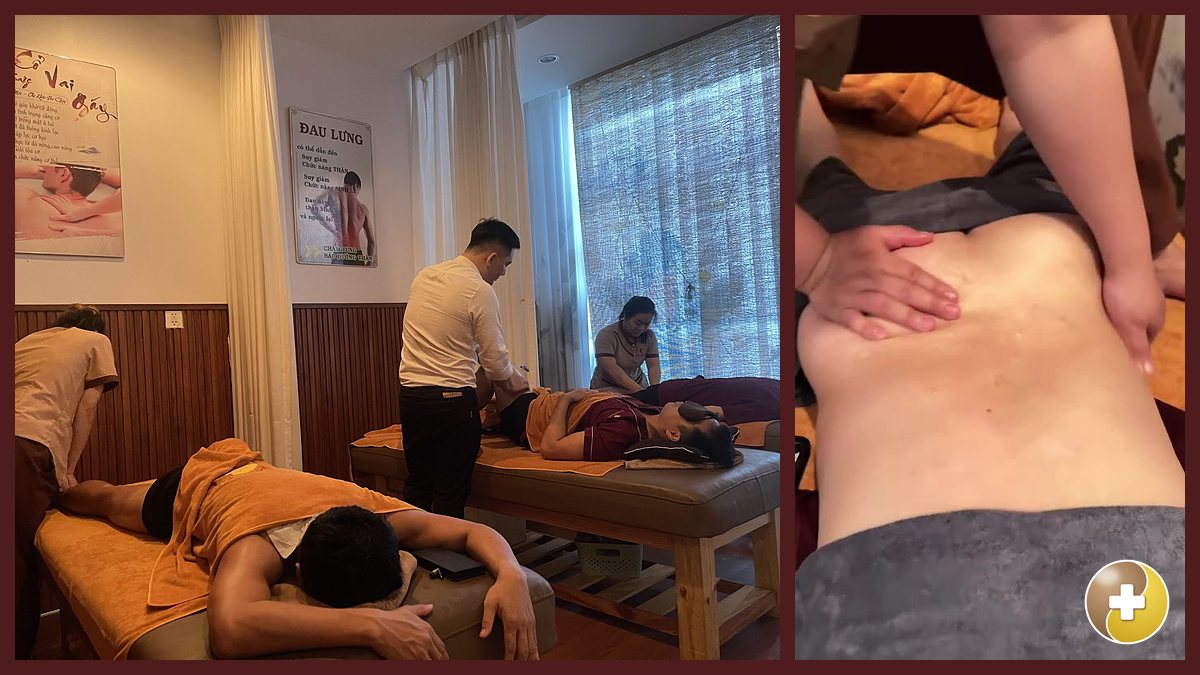
Quick answer: Legs tire from sitting mainly because the calf pump is idle so blood pools, muscles stay in one position, the seat edge presses the thighs and the lower back carries the load. One swollen, warm calf after a long trip needs a doctor at once. Tong Gia Acupoint Wellness (Huyệt Đạo Tống Gia) in District 12 and Vinhomes Grand Park, Ho Chi Minh City, cares for tired legs by hand.
Want Lương Y Tống Văn Huynh’s team to read your spine and posture in person?
Why do legs get tired from sitting?
Tired legs from sitting means heavy, drained, tight or restless legs that you keep stretching and bending after hours at a desk, in a car, in class or on a plane. It sounds odd, since sitting is supposed to be rest. In Western medical terms, three things happen at once when you sit for long.
First, the calf pump stops. Blood from the legs has to climb back to the heart against gravity. Each step contracts the calf, squeezes the deep veins and pushes blood upwards, while valves stop it flowing back. Sit still for a few hours and the calf barely contracts, so blood and fluid pool in the lower legs and ankles, and the legs feel heavier and tighter as the afternoon goes on.
Second, muscles are held in one position too long. The hip flexors shorten, the hamstrings tighten and the glutes effectively switch off. A hard seat edge presses on the back of the thigh, crossed legs press on the outside of the knee, legs tucked under you bend the knees and hips deeply; vessels and nerves are squeezed, and the legs tingle, go numb or ache.
Third, the lower back carries the load. Long sitting, especially slumped, loads the discs and muscles of the lumbar–sacral area. The lower lumbar and sacral nerve roots run the leg muscles, so when the back is tense the legs tire too.
This is a symptom, not the name of a condition. Most of the time it comes from posture and too little movement, and getting up helps. But long sitting is also a classic setting for a deep vein clot, and lasting leg fatigue can come with varicose veins or a compressed nerve root. In Ho Chi Minh City, Tong Gia often sees it in office staff, software engineers at Quang Trung Software Park and the Saigon Hi-Tech Park, accountants at year-end, ride-hailing and coach drivers, tailors, students before exams and travellers just off long-haul flights.
Common causes: habits, work, posture and environment
These groups follow Western medicine and are here to help you recognise your own pattern, not to label it.
- Hours without standing up. Meetings, coding, accounts from morning to lunch, lunch at the desk, then more of the same. The longer the unbroken sitting, the more blood pools; many only notice when they stand to go home.
- A chair and desk that do not fit. A seat too high leaves the feet dangling and the edge digging into the thighs; too low puts the knees above the hips; no footrest means tiptoeing all day; a low desk makes you slump and loads the lower back.
- Crossed legs or sitting cross-legged on the chair. Crossing presses on the nerve that wraps around the outside of the knee; tucking the legs bends knees and hips deeply. The result is numbness and wobbly first steps.
- Long drives and flights. Cramped seats, little movement, cold air-conditioning and drinking less to avoid the toilet. This is the group that most needs to watch for clot warning signs.
- Little water, cold air, tight clothes. Cold offices narrow the leg vessels; little water and lots of coffee; tight jeans or socks that squeeze the ankle or below the knee hinder return flow.
- Little activity after work, weight and life stage. Sitting all day and then on the sofa all evening; extra weight; pregnancy; middle age; a family history of varicose veins.
| What you feel | Often linked to (Western view) | Tip |
|---|---|---|
| Heavy, tight lower legs by afternoon, better after walking | Pooling, idle calf pump | Stand hourly, heel raises |
| Pins and needles when standing up | Pressed nerves and vessels | Uncross legs, adjust seat edge |
| Ache at the back of the thigh and knee | Tight hamstrings, seat edge | Lower the seat, stretch |
| Ache spreading from lower back or buttock | Lumbar–sacral load | Care for the back, use a backrest |
| Swollen ankles, visible veins | Varicose veins | Raise legs, vein check |
| One calf swollen, warm, painful after a long trip | Possible clot | See a doctor now |
Other signs to watch
- Ankle swelling with sock marks by evening, better in the morning.
- Blue, twisting veins on the calf, itchy or burning legs.
- Pins and needles in the feet or outer shin when you stand.
- Lower back, buttock or tailbone pain when sitting.
- Restless legs at night that only settle when you move them.
- One leg clearly more swollen than the other, painful or warm.
- Breathlessness lying down, both legs swollen, rapid weight gain.
- Cold, pale legs, or calf pain that stops you after a short walk.
A simple test: for one week set a timer to stand up every hour and compare how your legs feel at the end of each day. A clear improvement suggests sitting is the main cause; no change or worsening is a reason to get checked.
When to see a doctor
Please see a doctor, and do not rely on massage alone, if:
- One calf is swollen, painful, warm or red after a long flight, a long drive or time in bed: get checked at once, as it may be a clot, and do not have it massaged. With chest pain, breathlessness, cold sweats or coughing blood, call 115 (Vietnam's emergency number) straight away.
- Both legs are swollen with breathlessness on effort or lying down, fast weight gain and tiredness: the Tong Gia curriculum lists these as heart warning signs; swollen legs and face with little urine can also involve the kidneys.
- Large bulging veins, heavy itchy legs, darkened shin skin or a sore that is slow to close.
- Numbness with leg weakness, tripping, bladder changes or numbness around the back passage.
- Cold, pale legs and calf pain that stops you after a short walk.
- Tired legs with ongoing fatigue, weight loss, thirst or frequent urination.
- Pregnancy, hormone medication or a past clot.
This is a wellness service, not medical care.
The Y Tướng Học view: the Spleen and dampness, Liver blood, the Kidney
Y Tướng Học (face and body reading for wellness) holds that what is inside shows outside. In the Tong Gia curriculum, heavy, tired legs after sitting connect with:
- The Spleen, which governs muscle, the limbs and the movement of fluids: when weak, arms and legs feel tired and weak, muscles slack and you do not want to move; when fluids are moved poorly there is puffiness and heaviness. The Spleen likes dryness and dislikes damp. Sitting all day, a rushed lunch at the desk, drowsiness after eating and heavy legs by afternoon form a very familiar picture.
- Liver blood: at rest blood returns to the Liver; in movement the Liver sends it to muscles and sinews. Legs that do not move for hours are poorly nourished and tighten or cramp easily.
- The Kidney, which governs the bones: reduced function shows as an aching lower back and weak knees; Kidney yang deficiency as a cold back and knees, cold limbs and mild swelling. A cold office all day makes the back and legs colder still.
What you can see yourself: healthy flesh is soft, warm and springy; when this sign is off, the calf is slack and cool and a fingertip dent fills slowly, which the curriculum calls fluid and damp stagnation, with heavy limbs and a puffy face on waking. A square, full face (the "Điền" shape) belongs to the Earth type, with digestion at its root, prone to damp, bloating and swelling, and the back often tight across D11–D12. A pale lip or a puffy, tooth-marked tongue points to the Spleen; thin ear rims and a cool lower back to the Kidney. These are cues for care, not labels. See face reading for wellness.
Spine segments and nerve-reflex areas involved
In the Tong Gia curriculum, L1–L5 serve digestion, kidneys, urinary and reproductive organs and the legs; S1–S5 serve elimination and the pelvic floor. The muscle–bone–joint group combines C5–C7, L1–L5 and S1–S5; the internal organ group D1–D12 and L1–L3. Desk workers are usually tight at both ends: the neck from screens and the lumbar–sacral area from sitting.
| Segment / area | Nerves / function | Typical signs | Organ system |
|---|---|---|---|
| D11–D12 (Spleen, Stomach shu) | Digestion, making qi and blood | Heavy legs, drowsy after meals, bloating | Spleen |
| L1–L2 (Kidney shu, Mingmen) | Kidneys, urinary tract, lumbar muscles | Cold tired back, mild swelling, night urination | Kidney |
| L2–L4 | Hip flexors, front of thigh (Western view) | Tired front thighs, stiff hips on standing | Liver, Kidney |
| L4–L5 | Outer shin, top of foot (Western view) | Numb outer shin, tired ankles | Liver |
| L5–S2 | Sciatic nerve: back of thigh, calf (Western view) | Tired hamstrings, heavy calves, numbness when sitting | Liver, Kidney |
How Tong Gia works: spinal nerve-reflex balancing massage
The method was built by Lương Y Tống Văn Huynh, a master of traditional Vietnamese wellness and founder of Tong Gia Acupoint Wellness, over more than 13 years of practice. A session for tired legs from sitting:
- Observe and ask: hours sitting per day, the chair, crossed legs, recent travel, swelling, visible veins, numbness, weakness, breathlessness, pregnancy, and whether you have had a check. A swollen, warm calf is not worked on. Then face, lips, tongue and ears are read and the calf is gently pressed.
- Read the spine by hand: skin temperature, muscle layer, vertebral shape and your sensations, comparing upper with lower and left with right.
- Find the key zone: usually D11–D12, L1–L2 and the lumbar–sacral area; only "excited" zones are worked directly.
- Release the muscles: back, lower back, buttocks, hip flexors, hamstrings, back of the knee and calves, with long strokes upward in the direction of blood return. Hard muscles are worked slowly and deeper; slack, cool ones gently. Bulging veins are never pressed directly.
- Press the right acupoints: Spleen and Stomach shu; Kidney shu and Mingmen; Weizhong at the knee crease; Yinlingquan, which the curriculum lists for strengthening the Spleen, draining damp and reducing puffiness; Zusanli; Sanyinjiao (never in pregnancy); Taixi; Yongquan on the sole.
- Stop at the right moment: when the skin over the key point turns from dry to slightly moist; at once if anything feels wrong.
- Home guidance: a two-minute desk routine, chair set-up and raising the legs in the evening.
Suitable services (same price at both branches; see prices):
- Tired, heavy legs care, 60 minutes: 500,000 VND (about 19 USD). Thighs, knees, calves and feet.
- Lower back care, 60 minutes: 550,000 VND (about 21 USD); first visit 399,000 VND (about 15 USD). When tired legs come with lower back or buttock pain from sitting.
- Spleen and stomach wellness care, 75 minutes: 750,000 VND (about 29 USD). When heavy legs come with bloating, drowsiness after meals and a heavy body.
Tech workers can read massage for Hi-Tech Park workers in Thu Duc and body massage near Quang Trung Software Park; leg care is on the foot and leg massage page.
A typical session
This is a composite of many sessions, not one guest's story. A woman of about 45, chief accountant in District 12, sits almost without a break from 8 a.m. to 8 p.m. during year-end closing and eats lunch at her desk. Every afternoon both legs feel heavy, her ankles swell with sock marks, and at night her legs are restless. She has had a vein ultrasound, which found nothing abnormal, and was told to move more and raise her legs. The practitioner notes a square, full face, pale lips, a puffy tongue with tooth marks and drowsiness after lunch; her calves are soft, cool and slow to refill when pressed. On the spine, D11–D12 is tight across a broad area and L5–S1 is cooler than above. The session releases the back with Spleen, Stomach and Kidney shu, then the buttocks, hip flexors and hamstrings, strokes the legs upward from ankle to knee, and presses Weizhong, Yinlingquan, Zusanli and Taixi, finishing with Yongquan. By the end her legs feel light and warm and the ankles less tight. She is advised to set an hourly timer, use a small footrest, walk for a few minutes after lunch and raise her legs in the evening.
What guests feel during and after
The tender spots are usually the buttocks, hamstrings and calves; many desk workers are surprised how tight their hip flexors are. As these release, the legs feel warm and light and standing up is easy. Many sleep better and wake with lighter legs; some pass a little more urine after the session. Everyone is different. Tong Gia helps the related muscles and spinal areas regain balance and does not promise the heaviness will stay away if the sitting habit does not change. Frequent flyers may like our jet lag massage Q&A.
Want Lương Y Tống Văn Huynh’s team to read your spine and posture in person?
Home care and prevention
- Stand up every 45–60 minutes: set a phone timer; fetch water, take calls standing, hold short meetings on your feet.
- A two-minute desk routine: 20 ankle pumps seated, 10 ankle circles each way, 15–20 heel raises standing, and a 20-second stretch for the front of the hip and the back of the thigh on each side.
- Set up your seat: feet flat, knees level with or slightly below the hips, no seat edge digging into the thighs, a footrest if needed, a backrest, and no long leg-crossing.
- Drink and stay warm: sip water through the day and cut back on coffee; in a cold office wear socks or put a light blanket over your legs; avoid tight jeans and socks.
- Rest the legs properly in the evening: lie with the legs above heart level for 15–20 minutes and take a short walk after dinner; on long flights walk the aisle when allowed. More in our traditional Vietnamese massage Q&A.
Book a session
- District 12: 225 Dương Thị Mười, Phường Tân Chánh Hiệp (Tan Chanh Hiep Ward, District 12). Open 8:00–19:00 daily.
- Vinhomes Grand Park, District 9: Căn T16-21 khu Manhattan, Phường Long Bình, TP. Thủ Đức (Unit T16-21, Manhattan zone, Long Binh Ward, Thu Duc City). Open 9:00–20:00 daily.
Book online or call, Zalo or WhatsApp +84 888 264 559. Tell us how many hours you sit, where the legs feel tired, any swelling, visible veins or numbness, whether you have had a check, and any pregnancy. Real guest reviews are on each branch's Google Maps page. Living in or visiting Ho Chi Minh City? Come and try a Vietnamese Eastern wellness method built by Lương Y Tống Văn Huynh.
Visit us
- Đông Y Huyệt Đạo Tống Gia Quận 12 (District 12)
225 Dương Thị Mười, Phường Tân Chánh Hiệp, Quận 12, HCMC · 8:00–19:00 daily · 0888 264 559 · Directions on Google Maps - Đông Y Huyệt Đạo Tống Gia Quận 9 (Vinhomes Grand Park, District 9)
Căn T16-21 khu Manhattan, Vinhomes Grand Park, Phường Long Bình, TP. Thủ Đức, HCMC · 9:00–20:00 daily · 0888 264 559 · Directions on Google Maps
Want Lương Y Tống Văn Huynh’s team to read your spine and posture in person?
FAQ
Why do my legs feel tired from sitting all day? Mainly because the calf pump is idle so blood pools in the legs, muscles are held in one position for hours, the seat edge or crossed legs press on vessels and nerves, and the lower back carries the load. Getting up and walking usually helps quickly.
Is leg fatigue from sitting dangerous? Usually not, but get checked at once if one calf becomes swollen, warm and painful, especially after a long flight or drive. Both legs swelling with breathlessness, or numbness with weakness, also need a medical check.
What helps numb legs after sitting? Stand, walk, pump and circle your ankles for a few minutes; stop crossing your legs and adjust the seat so its edge does not press the thighs. Frequent numbness, weakness or back pain running down the leg is worth checking for a nerve root problem.
Can long sitting cause pelvic or hip pain too? Yes. Long sitting tightens the glutes, the sacroiliac joint and the lumbar–sacral area, which also connect to the nerves of the legs, so pelvic ache and tired legs often come together. Use a backrest and stand hourly; persistent pain or pain when walking deserves a check.
What exercises help office workers' tired legs? Ankle pumps and circles seated, heel raises standing, and short stretches for the hip flexors and hamstrings every hour. Add a footrest, steady drinking, socks in cold offices and 15–20 minutes with the legs raised in the evening.
Should I get a massage for tired legs from sitting? Releasing the buttocks, thighs and calves with upward strokes and acupressure helps legs feel lighter and warmer, and many people sleep better. No massage on a swollen, warm calf. For lasting relief the sitting habit still needs to change.
Author: Lương Y Tống Văn Huynh – founder of Huyệt Đạo Tống Gia, a master of traditional Vietnamese wellness with over 13 years in Eastern wellness care, Y Tướng Học (face reading) and spinal nerve-reflex balancing massage.
Updated: 2026-11-17
Related guides
- Cramp while swimming: six steps in the water, common causes, and how Tong Gia can help
- Calf pain: seven common causes, warning signs, and how Tong Gia can help
- Calf pain after running: seven common causes, warning signs, and how Tong Gia can help
- Knee pain from standing all day: why standing jobs strain the knees and how to look after them
- Knee pain in older adults: common causes, when to get checked and safe wellness care
- Tired legs from varicose veins: why legs feel heavy, when to get checked, and how Tong Gia cares for them safely
This is a wellness service, not medical care.