
Can you have a massage during postpartum confinement in Vietnam? What to ask first and which areas to avoid
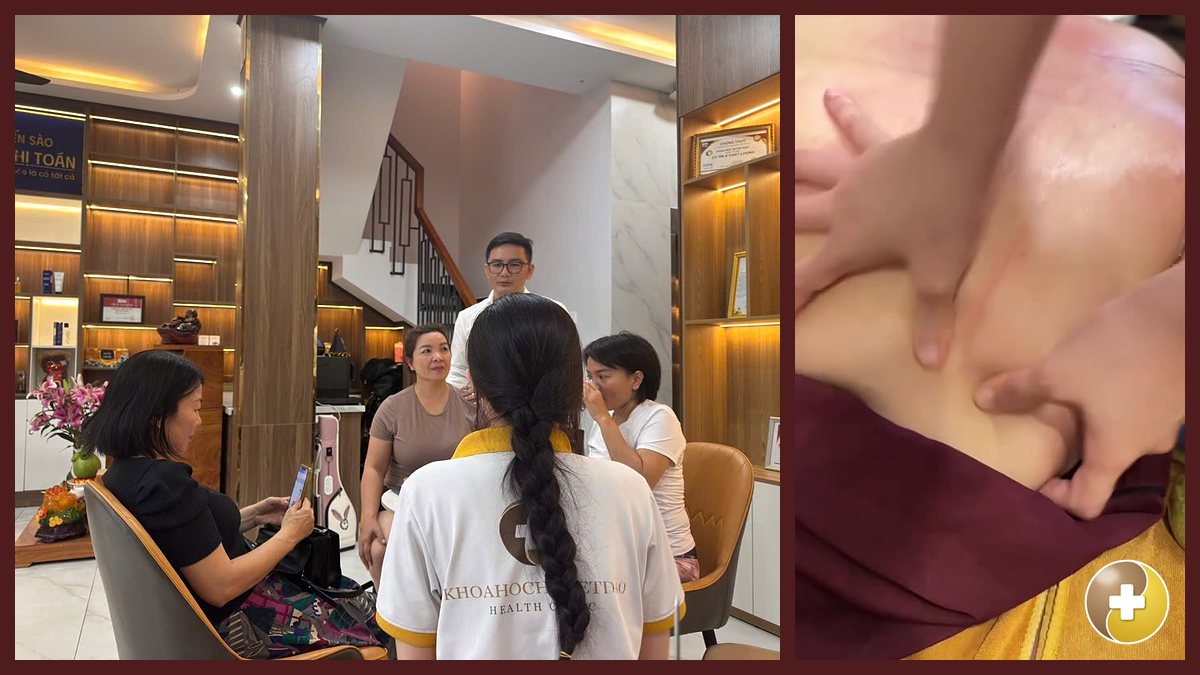
Quick answer: Only consider massage once the provider following your postpartum recovery says it is fine, especially after a C-section. Expect no belly or scar work and no lying face-down; just gentle neck, upper back and leg care. For Huyệt Đạo Tống Gia in District 12 and Vinhomes Grand Park, Ho Chi Minh City, ask reception before booking.
Want Lương Y Tống Văn Huynh’s team to read your spine and posture in person?
Can you have a massage during postpartum confinement in Vietnam?
Many Vietnamese mothers who give birth in San Jose, Houston, Sydney, Melbourne, Toronto, Paris, Berlin, Tokyo or Seoul fly home to Vietnam for ở cữ, the traditional month or so of postpartum confinement, so that parents and grandparents can help with the newborn. International mothers living in Ho Chi Minh City go through the same weeks with less family around. Either way, after nights of feeding and rocking, and perhaps a long-haul flight with a tiny baby, the neck is stiff, the upper back aches and the legs feel heavy. Someone suggests a massage, and the question becomes: can you have a massage during postpartum confinement in Vietnam?
Huyệt Đạo Tống Gia answers this plainly: the mother's safety comes before any relaxation. Whether a gentle session is appropriate yet, and how long to wait after the birth, is a question to ask your doctor, midwife or nurse following your postpartum recovery, particularly after a caesarean. Only they know how your uterus is contracting back, how the scar or stitches are closing, what your bleeding looks like, and whether your blood pressure and blood count are in a good range. This article does not set a waiting time for them, and no massage practitioner, however experienced, can replace that advice.
From a Western medical point of view, the weeks after birth are when the body reverses pregnancy: the uterus shrinks, postpartum bleeding (lochia) continues for several weeks, hormones shift quickly, ligaments around the pelvis and lower back are still loose, and the abdominal muscles that stretched for months need time to come back together. Blood also clots more easily than usual for a while after birth, so the risk of deep vein thrombosis in the legs stays raised in the early weeks, and is higher again after a C-section or after sitting still on a long flight. Add breastfeeding and carrying the baby for hours a day, and the neck, shoulders and upper back are working almost constantly.
So the short answer is: possibly, but only once your postnatal provider agrees, your recovery is on track, and the session respects clear safety limits: no work on the abdomen, no touching the C-section scar or stitches, no lying face-down on the belly or on breasts full of milk, and only light massage of the neck, shoulders, upper back and calves. Whether Tống Gia offers a dedicated postpartum service, and whether a branch accepts guests during confinement and at what stage, is for reception to answer; this article does not answer for them. If your back is still tired from the flight, see our pillar guide on spine care after a long-haul flight.
Why a flight home for confinement wears new mothers out
The postpartum weeks are meant for rest. A trip to Vietnam piles several extra loads on top:
- A long flight with a newborn: Taipei, Seoul or Tokyo are a few hours away, Sydney and Melbourne usually around 8–9 hours, while Europe, Canada or the US can take from 15 to more than 20 hours including connections in Taipei, Hong Kong, Doha or Dubai. Mothers hold the baby for most of the journey, rarely stand up and nap sitting upright. Blood returns from the legs more slowly, ankles swell and calves tighten, at a time when blood already clots more readily.
- Feeding and carrying: at every feed the head bends down towards the baby, both shoulders roll forward and the upper back rounds. Carrying the baby on one hip loads one side of the lower back. Repeat that eight or ten times a day and the nape, the trapezius and the area between the shoulder blades stiffen fast.
- Broken sleep and jet lag: a newborn wakes every few hours, and the time difference adds 5 to 15 hours depending on where you flew from. Long-term sleep loss makes the head heavy, the mood fragile and muscles slow to let go.
- Climate change and confinement customs: from northern winter to the humid heat of Saigon. Many families keep traditional rules: no draughts, windows closed, long sleeves, a hat and socks for the mother, fewer showers and hair washes. In Ho Chi Minh City heat, a closed room and several layers can mean heavy sweating, dehydration and restless sleep. How warm to stay and how to keep clean is something to agree with your provider and your family; this article does not replace their advice.
- Confinement food: salty braised dishes, few vegetables, and not much water for fear of a "cold stomach". Salt holds fluid, while too little fibre and water leads to constipation, and a breastfeeding mother needs to drink enough.
- Lower back and tailbone: with loose ligaments and abdominal muscles that have not closed up, the lower back does extra work. Feeding in bed without back support, bending over the cot and carrying the nappy bag all add load. Tailbone pain after a vaginal birth is also common; our article on postpartum back pain explains more.
- Emotional ups and downs: fast hormonal change, little sleep, distance from a partner or the other side of the family, and a house full of advice. Feeling tearful in the first days is common, but if low mood lasts, tell your provider.
That is why mothers in confinement often feel far more drained after the trip. Because the body is still sensitive, the first answer to tiredness is sleeping when the baby sleeps, eating and drinking enough, letting family hold the baby, and keeping your postnatal check-ups. Massage is an extra, once it is allowed.
Signs worth watching
During confinement, you and your family can note these, with the date and time, to mention at your next check-up:
- Stiff neck and shoulders, aching between the shoulder blades after feeds or long spells of carrying.
- Wrist pain or tingling, pain at the base of the thumb from lifting and supporting the baby's head.
- Lower back ache or tailbone pain when sitting long or bending over the cot.
- Swelling of both ankles in the evening after the flight, easing with feet up and rest.
- Night-time calf cramps, more common in the heat when you drink too little.
- A heavy head, tiredness, dizziness on standing, and trouble sleeping even when exhausted.
- Constipation and bloating with few vegetables and little water.
Most of these are common after birth. But if anything changes from your usual pattern, for example swelling in one leg only, a severe headache, a fever, or bleeding that becomes heavy again, read the next section carefully; that is not the moment for a massage.
When to see a doctor, and when not to have a massage
Tống Gia's training curriculum starts every session with a history and safety screen: pregnancy, recent abdominal surgery, clotting problems, heart disease, high blood pressure, anticoagulant prescriptions. It also calls for extra caution around a fresh surgical scar, and when there is a warning sign the session does not go ahead and the guest is advised to get checked. If you are in confinement in Vietnam, please see a doctor straight away, rather than book a massage, if you have:
- Heavy bleeding: soaking a pad in about an hour or less, passing large clots, or bleeding that had settled turning heavy and bright red again.
- Fever, chills, foul-smelling discharge or lower abdominal pain that keeps increasing.
- A C-section scar or stitches that are swollen, red, hot, oozing, bleeding or opening.
- One calf that is swollen, warm, red or painful: do not massage it; this can be deep vein thrombosis and needs checking immediately.
- Sudden breathlessness, chest pain, pain on deep breathing, coughing blood, fainting or a racing heart: call emergency services on 115 in Vietnam.
- Severe headache, blurred vision, flashing lights, sudden swelling of the face and hands, or a seizure: blood pressure can rise even after the birth, so seek care at once.
- A red, hot, painful area of the breast with fever.
- Burning or blood when passing urine, or being unable to pass urine, or severe abdominal pain.
- Low mood or anxiety that does not lift, feeling disconnected from the baby, being unable to sleep even when the baby sleeps, or thoughts of harming yourself or the baby: tell your family now and get urgent help, calling 115 if needed.
Also postpone any massage and ask your provider first if you have just had a C-section, had complications at birth, lost a lot of blood or were told you are anaemic, had pre-eclampsia, take anticoagulants, have marked varicose veins, or are simply exhausted after the flight. The flight itself is the same: before booking, ask the provider following you and your baby whether you are both ready to fly, and ask the airline about its rules and documents for newborns. This article does not state any airline's policy.
This is a wellness service, not medical care. Huyệt Đạo Tống Gia does not read ultrasound reports, lab results, X-rays or MRI scans, does not draw up a postnatal care plan, and never suggests changing a prescription. Questions about your scar, your bleeding, your milk or your baby's health belong with your provider, not a massage practitioner.
The Y Tướng Học view: Spleen, Liver, Kidney, Heart and the postpartum complexion
Y Tướng Học, the Vietnamese art of reading the body's outer signs, rests on one line: "the signs show outside, the organs sit inside". Lương Y Tống Văn Huynh, founder of Huyệt Đạo Tống Gia, organised this method for observation before each session. With a new mother, observation is only for seeing where she is tired and when not to work yet; it is never used to name a disease or to replace a provider's opinion. According to the Tống Gia curriculum, four organ systems in the Eastern sense come up most often at this time:
- Spleen, the root of what we build after birth: it turns food into nourishment, produces qi and blood, governs the muscles and limbs, keeps blood in the vessels, and shows at the mouth and lips. The curriculum says the Heart governs blood while the Spleen produces and holds it. Spleen qi weakness tends to show as pale, dry lips, heavy and listless limbs, poor appetite and bloating, with a tendency to swell when fluids are not moved. New mothers eating irregularly and sleeping little often show these traits.
- Liver, which stores blood and governs the tendons: it keeps qi flowing, stores blood, nourishes the sinews and is linked to emotions and the menstrual cycle. Liver blood weakness brings blurred vision, dizziness, dry eyes, brittle nails and cramps. Moods that swing in a crowded house are also part of the Liver needing ease.
- Kidney, the root we are born with: it stores essence, the base of growth, development and reproduction; it governs bones and shows at the ears and hair. Kidney weakness tends to show as thin, soft ear rims, a flat bone behind the ear, a cold and tired lower back, tired knees and sensitivity to cold. After birth, back and knee fatigue also has a clear Western explanation: loose ligaments, unclosed abdominal muscles and a lot of carrying.
- Heart, which governs blood and houses the mind: Heart blood weakness is described as palpitations, being easily startled, poor sleep, vivid dreams, a pale face and lips, and dizziness.
To be clear: after birth, a pale face, lips and nails with tiredness, dizziness or a fast heartbeat can point to anaemia in Western terms, especially after heavy blood loss. The right step is to get checked, not to read the face and manage alone. That is why observation at Tống Gia always comes with questions: how long ago was the birth, vaginal or caesarean, have you had your check-up, did your provider give any specific instructions.
Spine segments and nerve-reflex zones involved
Tống Gia's curriculum on massage that balances the spinal nerve-reflex system describes 33 vertebrae: the cervical C1–C7 serve the head, face, neck and arms; the thoracic D1–D12 (T1–T12) serve circulation, breathing and digestion; the lumbar L1–L5 serve digestion, kidneys, urinary and reproductive organs and the legs; the sacrum and coccyx S1–S5 serve elimination and the pelvic floor. Nerve roots leave through the gaps between vertebrae, which is where the fingers read. The table shows areas that tend to tire in mothers in confinement after a flight, with the safety limit for each. It is for understanding the body, not for naming a condition:
| Segment / area | Nerves / function (anatomy) | Common after birth | Related organ | Outer signs (Y Tướng Học) |
|---|---|---|---|---|
| C1–C3, base of skull | Upper cervical roots; small suboccipital muscles holding the head | Heavy head, tight nape, poor sleep from night feeds | Liver, Kidney | Tight nape, frowning brows, dry eyes; light work possible once allowed |
| C4–C7, shoulders | Lower cervical roots, brachial plexus; trapezius, shoulder, arm | Stiff shoulders, wrist tingling, tired arms from carrying | Liver (tendons) | Knotted trapezius, brittle nails. Main area for gentle care |
| D1–D5 (T1–T5) | Upper thoracic nerves; heart and lung zone, muscles between the shoulder blades | Ache between the shoulder blades, rounded upper back after feeds, mild palpitations with sleep loss | Heart, Lung | Pale face and lips, dull eyes. Light work sitting supported or side-lying |
| D6–D12 (T6–T12) | Mid and lower thoracic nerves; stomach, liver, gallbladder, kidney zone | Bloating, poor appetite, mid-back ache | Spleen–Stomach, Liver | Dry pale lips, listless limbs; only light strokes beside the spine, no deep pressure |
| L1–L5, lower back | Lumbar roots; urinary, reproductive, legs | Lower back ache, pain bending over the cot or carrying on one hip | Kidney | Thin ear rims, flat mastoid, cold tired waist. After birth: no firm pressure, only with your provider's agreement |
| S1–S5, sacrum and tailbone | Sacral roots; elimination, pelvic floor | Tailbone and pelvic joint pain when sitting | Kidney | Cold, hollow lower back. After birth: this area is left alone; strong pain needs a check |
Beyond the spine, the curriculum sets general limits: no rubbing or pressing the abdomen in pregnancy, caution with a fresh surgical scar, and no work during acute abdominal pain. For new mothers, Tống Gia does not aim to "press points for the uterus" or "flatten the tummy", and this article does not suggest any acupressure point to press yourself during confinement. If allowed, the session only eases tired muscles of the neck, shoulders, upper back and legs.
If it is allowed: what a gentle Tống Gia session looks like
This is a Vietnamese traditional wellness method developed by Lương Y Tống Văn Huynh over more than 13 years of practice in Eastern wellness care, Y Tướng Học and massage that balances the spinal nerve-reflex system. For a new mother, the goal is simply a less tired neck, upper back and legs and a calmer body. Once reception confirms the branch can book you and your provider has agreed to light care, a session is adapted like this:
- Tell and ask first: let reception and the practitioner know how long ago you gave birth, whether it was vaginal or a C-section, whether you have had your check-up, any special instructions, any current prescriptions, and whether you have any sign from the section above. Any warning sign means no session and advice to get checked.
- Observation in the Y Tướng Học way: complexion, lips, eyes, nails, how you walk and how you sit down and stand up; this is to find where you are tired and when to stop.
- A safe position: no lying face-down. Sitting supported or lying on your side with pillows, so the belly and scar are not pressed and full breasts are not squeezed.
- Reading the neck and upper back by hand, lightly: palm contact and light strokes to feel tight muscle, comparing left and right (the principle of Symmetry). The curriculum has five levels of pressure, from one finger, the whole hand, a bent arm and a straight arm up to whole-body strength; for new mothers only the light levels are used. No abdominal work, no scar contact, no deep lower-back pressure, no cracking or twisting of the neck or back.
- Gentle release of the neck, shoulders, arms and calves: softening the nape, trapezius and the arms that do the carrying; on the legs, very light upward strokes, avoiding visible varicose veins. If one leg is swollen, the legs are skipped. No essential oils, warming balms or hot packs without asking your provider.
- Finishing and self-care tips: sit up slowly, drink water and rest a few minutes; the practitioner shows how to place pillows when feeding, how to stretch the neck after a feed, and goes over the warning signs again.
Three services you can ask reception about, once allowed (full list on our price list; exchange rate for reference only, about 26,000 VND to 1 USD, 17,000 VND to 1 AUD, 19,000 VND to 1 CAD and 30,000 VND to 1 EUR; payment is in VND):
| Service | Time | Price | Approx. | Suits |
|---|---|---|---|---|
| Neck and shoulder care | 60 min | 550,000 VND (first visit 399,000 VND) | ~21 USD / ~32 AUD / ~29 CAD / ~18 EUR (first visit ~15 USD / ~23 AUD / ~21 CAD / ~13 EUR) | Tight nape and shoulders from feeding and carrying; done sitting supported or side-lying |
| Hair wash with neck and shoulder massage | 60 min | 250,000 VND | ~10 USD / ~15 AUD / ~13 CAD / ~8 EUR | Relaxing the head and nape once your provider and family are comfortable with hair washing; after a C-section, ask reception about the lying position |
| Care for heavy, tired legs | 60 min | 500,000 VND | ~19 USD / ~29 AUD / ~26 CAD / ~17 EUR | Heavy legs evenly on both sides after the flight; very light pressure; not when one leg is swollen and painful |
This article does not suggest steam, cupping, hot herbal compresses or long full-body sessions during confinement. Sixty minutes of light work in a comfortable position is enough; say when anything feels too much and the practitioner will ease off or stop. If you are breastfeeding, feeding or expressing before the session makes the breasts more comfortable.
How a session usually goes. In a new mother who has just flown in, practitioners often find a tight nape, hard trapezius on both sides, a more tired carrying arm, a knotted spot between the shoulder blades and heavy calves. After hearing how long ago and how the birth went, what the provider said, and checking the warning signs, the practitioner seats you supported or has you lie on your side with pillows, softens the nape and shoulders first with one finger and then the whole hand, strokes the arms and wrists lightly, then the calves towards the heart. There is no contact with the belly, no deep lower-back pressure and no neck cracking.
What you may feel. During the session many people notice the shoulders warming, breathing slowing and the arms feeling lighter. Afterwards it varies: some manage a deeper sleep between two feeds, others feel only slightly less tight. That is relaxation; Tống Gia supports and helps rebalance, does not promise that pain will go, and your postnatal check-ups continue as planned.
From the airport. From Tân Sơn Nhất Airport, the District 12 branch (225 Dương Thị Mười, Phường Tân Chánh Hiệp) lies to the north of the city and is a relatively short drive; the Vinhomes Grand Park branch (Căn T16-21 khu Manhattan, Phường Long Bình, TP. Thủ Đức) is to the east, across the city, so it takes longer depending on traffic. After flying with a baby, do not go straight from the airport to a massage; go home, feed, rest with your feet up and catch up on sleep first. More in massage near Tân Sơn Nhất Airport.
Want Lương Y Tống Văn Huynh’s team to read your spine and posture in person?
A suggested plan for the trip and daily self-care
This plan assumes a mother who is recovering well and whose provider has cleared her to fly home with the baby for confinement. Everyone is different; your provider's advice for you and your baby always comes first, and the table does not name any week from which massage is "fine".
| When | What to do | Tống Gia session (suggestion, if allowed) |
|---|---|---|
| Before booking flights | Ask your provider whether you and the baby are ready to fly; ask the airline about newborn rules and documents; carry your discharge papers and postnatal records | Not yet |
| A week before flying | Book an aisle seat or a bassinet seat if offered; ask about compression stockings and moving on board; find a place for postnatal and baby check-ups near home in Ho Chi Minh City | Message reception on Zalo/WhatsApp first and mention confinement |
| Flight day | Stand and walk every 1–2 hours when someone can hold the baby, circle your ankles when seated, drink steadily, wear loose clothes that make feeding easy | – |
| First days home | Sleep when the baby sleeps, let family hold the baby and run the house, eat regular meals, drink enough, keep the room reasonably airy | Not yet – the body is still tired |
| Confinement weeks | Attend check-ups as scheduled; feed with back support and a pillow under your arm; walk gently indoors when you feel up to it | Do not book until your provider agrees |
| Once your provider agrees | No warning signs; scar or stitches reported as fine | Neck and shoulder care, 60 min, first visit 399,000 VND, if reception confirms; family looks after the baby |
| 2–3 days before flying back | Early nights, light packing, let family carry the suitcases and baby bag | One gentle neck session, not right before the flight |
Simple daily habits: feed sitting with your back supported and pillows bringing the baby up to breast height, rather than bending down to the baby, and switch sides between feeds; after a feed, sit tall, draw the shoulder blades gently back, hold a few seconds and release, then tilt the head slowly to each side, stopping if pain increases; put your feet up for 15–20 minutes a few times a day after the flight; drink steadily, especially when feeding in the heat, and add vegetables and soups while easing off very salty dishes; breathe slowly, in for 4 seconds and out for 6, for 5–10 minutes once the baby is asleep; and do not rub your belly, bind it very tightly or press points from word-of-mouth routines without asking your provider. If you came home while still pregnant and gave birth here, the pre-birth precautions are in massage during pregnancy on a trip home for Tết; puffy ankles are covered in swollen legs after a long flight.
Booking from abroad, and asking reception first
You can message us before you fly via Zalo or WhatsApp on +84 888 264 559 (0888 264 559 inside Vietnam), or see our booking page. If you are in confinement, please ask reception before choosing a time: whether Tống Gia offers a dedicated postpartum service, whether a branch takes guests in confinement and at what stage, and whether a family member can sit with the baby, are all for reception to answer. When you message, include your landing date and time, how long ago you gave birth, vaginal or C-section, whether your provider has agreed to light care, where you feel tight (nape, shoulders, arms, legs) and which branch you prefer. Step-by-step details are in booking a massage in Saigon from abroad.
- District 12 branch: 225 Dương Thị Mười, Phường Tân Chánh Hiệp (Tân Chánh Hiệp Ward). Open 8:00–19:00 daily. Closer to Tân Sơn Nhất Airport.
- District 9 – Vinhomes Grand Park branch: Căn T16-21 khu Manhattan, Phường Long Bình, TP. Thủ Đức (Unit T16-21, Manhattan zone, Long Bình Ward, Thủ Đức City). Open 9:00–20:00 daily.
Both branches have genuine reviews on Google Maps. Family members doing night shifts with the baby, a grandmother or a partner, can also book a neck session for themselves while you rest at home. Coming home for confinement is a time for the whole family to gather around a new baby; safety for the mother first, relaxation second, and those first weeks can feel lighter.
Visit us
- Đông Y Huyệt Đạo Tống Gia Quận 12 (District 12)
225 Dương Thị Mười, Phường Tân Chánh Hiệp, Quận 12, HCMC · 8:00–19:00 daily · 0888 264 559 · Directions on Google Maps - Đông Y Huyệt Đạo Tống Gia Quận 9 (Vinhomes Grand Park, District 9)
Căn T16-21 khu Manhattan, Vinhomes Grand Park, Phường Long Bình, TP. Thủ Đức, HCMC · 9:00–20:00 daily · 0888 264 559 · Directions on Google Maps
Map of our two branches
Want Lương Y Tống Văn Huynh’s team to read your spine and posture in person?
What guests say on Google Maps
“A clean centre with comfortable furniture – very good for relaxing and taking care of yourself.” (translated from a Vietnamese review)
— Danh V., Google Maps review · District 12 branch · 2025 · See on Google Maps
“Friendly, warm staff who always help carefully with whatever guests ask for.” (translated from a Vietnamese review)
— Công Đ., Google Maps review · District 12 branch · 2025 · See on Google Maps
Quoted from public reviews, shortened where marked (…). Experiences vary from person to person; reviews are not a substitute for seeing a doctor when something feels wrong.
Related guides for your trip
FAQ
Can I have a massage during postpartum confinement in Vietnam? Only once the provider following your recovery agrees and you are recovering well. The session must be light: no belly work, no touching the C-section scar, no lying face-down, only the neck, shoulders, upper back and legs. Whether Tống Gia books guests in confinement is for reception to confirm, so please ask first.
I had a C-section in Melbourne and came to Saigon for confinement. How long until I can have a massage? Your postnatal provider decides the timing based on your scar, bleeding, blood pressure and blood count; this article does not set a number of weeks. Once allowed, care is limited to the neck and upper back, sitting supported or side-lying, with no contact with the belly or scar.
Is a neck and shoulder massage okay while breastfeeding? Feeding stiffens the neck and the area between the shoulder blades quickly. With your provider's agreement, light neck and shoulder work while sitting supported or lying on your side is a reasonable choice. Feed or express beforehand, avoid lying face-down on full breasts, and skip essential oils unless your provider says they are fine.
My lower back and tailbone hurt after giving birth. Should I get acupressure? Do not press points yourself or let anyone push hard on the lower back or tailbone during confinement. If pain is strong, worsening or comes with fever or leg weakness, get checked. Once your provider agrees, Tống Gia only works lightly on the back muscles and leaves the tailbone area alone.
Does Huyệt Đạo Tống Gia have a postpartum massage package? Our public price list does not include a dedicated postpartum package. Message +84 888 264 559 on Zalo or WhatsApp and reception will tell you whether a branch accepts guests in confinement and at what stage; when it does, it is usually light neck and shoulder or leg care.
We flew from Toronto with our one-month-old and my legs are swollen. Can I get a leg massage? If only one calf is swollen, warm, red or painful, do not massage it and get checked at once, since clot risk is higher after birth and after a long flight. If both ankles are puffy and settle with your feet up, rest, drink well, elevate your legs and ask your provider before booking leg care.
Author: Lương Y Tống Văn Huynh – founder of Huyệt Đạo Tống Gia, a master of traditional Vietnamese wellness with over 13 years in Eastern wellness care, Y Tướng Học (face reading) and spinal nerve-reflex balancing massage.
Updated: 2026-11-17
Related guides
- Should you get a massage with a cold or fever? When to postpone and when a gentle session is fine
- Can you get a massage during your period? Which areas are fine and which to skip on a trip to Vietnam
- Booking a massage for a group during Tet: how to plan sessions for family, relatives and friends in Saigon
- Booking a massage together as a couple in Ho Chi Minh City: same time slot, a different focus for each person
- Vietnamese cupping vs cupping abroad: the marks, who should skip it, and how a Tong Gia session works
- Health check in Vietnam, then a massage: how to plan the week if you fly in from the US, Australia or Canada
This is a wellness service, not medical care.