
How to book a massage in Saigon from abroad: a guide for Viet Kieu in Taiwan, Korea and Japan
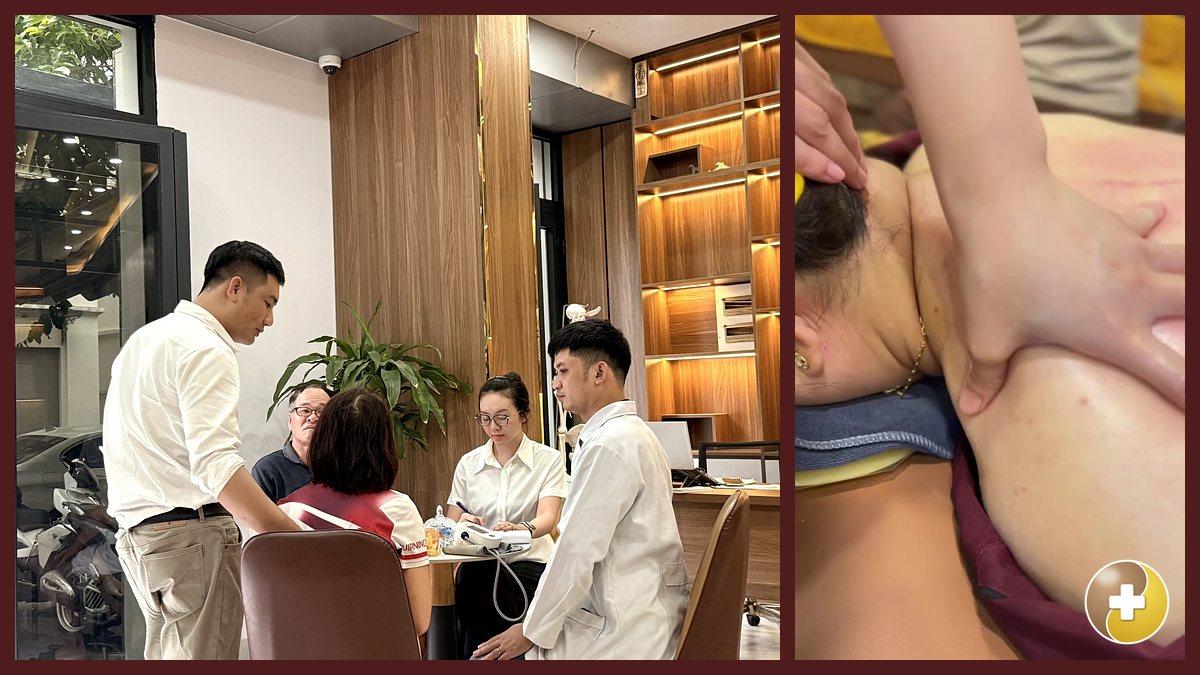
Quick answer: To book a massage in Saigon from abroad, message Tong Gia Acupoint Wellness on Zalo or WhatsApp at +84 888 264 559 with your landing time at Tân Sơn Nhất, sore spots and branch: District 12 or Vinhomes Grand Park, Ho Chi Minh City. Taiwan is 1 hour ahead of Vietnam; Korea and Japan 2 hours.
Want Lương Y Tống Văn Huynh’s team to read your spine and posture in person?
Why book a massage in Saigon from abroad before you fly
If you work in a factory in Taichung, Taoyuan or Kaohsiung, in Ansan or Gimhae in Korea, or in Osaka, Aichi or Saitama in Japan, your home leave is probably short: seven to ten days, often around Tết. A direct flight to Tân Sơn Nhất takes only a few hours, much shorter than the trip from the US or Europe, but the tiredness you carry home has built up all year: standing shifts at a machine, lifting boxes, peak-season overtime, and a cold winter in Seoul or Tokyo or a damp chilly one in Taipei. Students spend the day at a desk and the evening on their feet in a restaurant or convenience store. Once you land in Saigon, the calendar fills up at once: grandparents, weddings, death anniversaries, Tết shopping, helping your parents clean the house.
The same is true for international visitors flying long-haul into Ho Chi Minh City. You arrive with a stiff neck and heavy legs, and the last thing you want is to spend an afternoon searching for a place, comparing prices and waiting. Booking before you fly solves that.
In Western medical terms, the tiredness many workers and students bring home belongs to the group of work-related musculoskeletal disorders. When a muscle repeats the same movement all day, or holds one posture too long, local blood flow drops, metabolic waste builds up and muscle fibres tighten into hard, tender bands that can refer pain elsewhere. The usual spots are the neck and shoulders, the area between the shoulder blades, the lower back, the forearms and the calves. Add a few hours folded in an aircraft seat, a heavy suitcase of gifts and the jump from cold, dry air to Saigon's humid heat, and the body tends to complain in the first days.
Booking from abroad does three things: it secures a time slot during the busy days before Tết, it lets the practitioner know your work, sore areas and health conditions in advance, and it puts the session on the day your body actually needs it rather than on the last day of your trip. For the bigger picture of what a flight does to your back, read our main guide, spine care after a long-haul flight.
Common causes: why workers and students come home tired
- Standing shifts on a production line: hours on a hard floor keep the calves and lower back muscles working nonstop; night shifts flip the sleep cycle so the body never fully recovers between shifts.
- Lifting and bending on building sites, farms, warehouses and workshops: the lumbar discs take repeated load, and the quadratus lumborum and glutes tighten until the back feels like a plank in the morning.
- Repetitive hand work: electronics assembly, food processing, sewing, elderly care work. The trapezius and forearm muscles stay tense, and the shoulder on your dominant side is often higher and harder.
- Study and screens: the head drifts forward and the muscles at the back of the neck brace all day; evening part-time jobs mean short sleep and rushed meals.
- Cold winters: in Korea and Japan you hunch your shoulders against dry cold; in Taiwan, damp monsoon winds blow straight onto the neck and back.
- The flight and the luggage: hours folded in a seat, sleeping slumped, then lifting boxes off the belt. See stiff neck after a long flight.
- The climate switch: cold and dry to hot and humid, heavy sweating, air conditioning blowing on your neck and waist.
- A packed short leave: long motorbike rides between relatives, traffic before Tết, late nights and many meals.
The time difference between Taiwan, Korea or Japan and Vietnam is only one to two hours, so jet lag is mild compared with flying in from America (our guide to the US–Vietnam time difference and jet lag covers that case). Still, many people keep waking at their work-time hour, and with a busy Tết schedule the first nights are often light and broken.
Signs worth noting before you send your booking message
Take a minute to check which of these you have, and include them in your message so the session can be planned more precisely:
- A stiff neck that catches when you turn, a higher, harder shoulder on your working side.
- An ache between the shoulder blades, a feeling that your chest is "tied", frequent stretching.
- A stiff lower back in the morning, tightness when you bend to tie your shoes.
- Tight calves, heavy legs, mild swelling at both ankles in the evening after shifts or flights (see swollen legs after a long flight).
- Mild tingling in the fingertips on waking, tired forearms.
- A heavy head, tired eyes, trouble falling asleep even when exhausted.
- Bloating, low appetite, a heavy body after festive food.
- Dry skin and a dry nose after winter, then heavy sweating in Saigon.
What matters is whether these ease with rest. Work and travel fatigue usually settles with enough sleep, gentle movement and muscle release in the right places. If they get worse, or any sign below appears, get checked before you book.
When to see a doctor first
Please see a doctor at a medical facility, either where you work or as soon as you land, and skip massage or acupressure if you have:
- Chest pain or tightness, shortness of breath, cold sweats, pain spreading to the neck, jaw or left arm: call 115 in Vietnam immediately.
- A drooping mouth, slurred speech, numbness or weakness on one side, sudden blurred vision: call 115 immediately.
- Swelling in one leg only, a painful, tight, warm or red calf after a flight or days of little movement: this may be a deep vein clot. Get checked straight away and do not have the leg massaged. With breathlessness or chest pain, call 115.
- Back pain with numbness running down a leg, leg weakness or trouble controlling bladder or bowels.
- A recent workplace accident, fall or blow to the back, neck or shoulder.
- Pain that gets worse at night, with fever, unexplained weight loss or pale skin: get checked alongside any wellness care.
- Hand numbness that keeps getting worse, dropping things, wasting of the hand muscles.
- Existing conditions such as heart disease, blood pressure or blood sugar problems, pregnancy, recent surgery or blood thinners: ask your doctor before booking and mention it in your message.
This is a wellness service, not medical care. Tong Gia does not read X-rays, MRI scans or lab results and does not draw up care plans in place of a medical facility. If a medical facility in Taiwan, Korea or Japan has already advised you to avoid an area, say so in your message so the practitioner works around it.
The Y Tướng Học view: how working far from home shows on the outside
Y Tướng Học, the Vietnamese art of face and body reading for wellness, has a core saying: "the signs show outside, the organs lie inside." Its roots go back more than 2,000 years, and Lương Y (master of traditional Vietnamese wellness) Tống Văn Huynh has organised it into a practical way to plan care for each person at Tong Gia Acupoint Wellness (Huyệt Đạo Tống Gia). It is observation for wellness, not fortune-telling and not a statement that something is wrong. According to the Tong Gia curriculum, five organ systems tend to speak up in people doing heavy work or intense study far from home:
- Liver: governs the sinews, opens into the eyes and links to emotions. Repeating one hand movement all shift, screen work and swallowed frustration leave tight tendons, a stiff neck, dry eyes and a short fuse. Signs: knitted brows, a crease between them, shoulders hard as wood; a "Thân" (申) face often holds tension at D7–D9.
- Kidney: the body's root, governing the bones and opening into the ears; the lower back is its home. Lifting, long standing, night shifts and cold winters bring a cool lower back, weak knees, night urination and ringing ears. Signs: thin, dull ears, dry hair; a round "Viên" (圓) face often has a cool, soft lower back; a "Giáp" (甲) face tends to run warm at C1–C2 and cool and hollow low in the back.
- Spleen–Stomach: governs the muscles and limbs and the transformation of food. Rushed meals between tasks, cold food, late suppers after part-time work and worry about money sent home bring heavy limbs, sluggishness and bloating. Signs: pale lips, a puffy tongue with tooth marks; a square "Điền" (田) face often shows a broad tight band at D11–D12.
- Heart: governs circulation, opens into the tongue and relates to sleep and spirit. Rotating shifts, homesickness and light sleep bring palpitations and trouble falling asleep. Signs: a pale or flushed complexion, eyes that lack spark.
- Lung: governs qi and the skin and opens into the nose. Dry cold, heated closed rooms, then air conditioning and humidity bring dry skin, a blocked nose and shallow breathing. Signs: dry skin, a dry red nose; a "Đồng" (同) face often shows tightness around D3.
The curriculum also says: "Pain shows up in one place, but its source is often somewhere else." A sore shoulder from assembly work may involve the whole neck and upper back bracing to compensate, or broken sleep unsettling the Liver and Heart. That is why the practitioner reads the face to understand the organs, then reads the spine by hand to find the zone. In your booking message you only need to describe your work and sore areas; the observation happens in person.
Spine segments and nerve-reflex zones involved
In the Tong Gia curriculum on spinal nerve-reflex balancing, the spine has 33 vertebrae: 7 cervical (C1–C7) serving the head, face, neck and arms; 12 thoracic (D1–D12) linked to circulation, breathing and digestion; 5 lumbar (L1–L5) linked to digestion, kidneys, urinary and reproductive function and the legs; and the sacrum and coccyx linked to elimination and the pelvis. Nerve roots leave through the gaps between vertebrae, exactly where the practitioner's fingers search.
| Segment | Nerves and function (Western anatomy) | Typical feeling | Organ system | Outward sign (Y Tướng Học) |
|---|---|---|---|---|
| C1–C2, base of the skull | Upper cervical roots; small muscles holding the head | Heavy head, tired neck from screens or sleeping slumped on the plane | Liver, Heart, Kidney | "Giáp" face; knitted brows; dull eyes |
| C3–C7 | Cervical and brachial plexus; neck, shoulders, arms, hands | Stiff neck, sore working-side shoulder, fingertip tingling after assembly shifts | Liver (sinews) | Uneven shoulders, rock-hard shoulder muscles |
| D1–D4 (D3: Lung point) | Upper thoracic nerves; heart and lung area, muscles between the shoulder blades | Ache between the shoulder blades, shallow breathing, dry nose after winter | Lung, Heart | "Đồng" face; dry skin, dry red nose |
| D7–D9 | Mid-thoracic nerves; liver, gallbladder, stomach area | Tight ribs, burping, discomfort after rushed meals | Liver–Spleen–Stomach | "Thân" face; crease between the brows |
| D11–D12 (Spleen and Stomach points) | Lower thoracic nerves; upper digestion | Bloating, heavy limbs, sleepiness after eating | Spleen–Stomach | "Điền" face; pale lips; puffy tongue |
| L1–L3 (Shenshu, Mingmen at L2) | Upper lumbar roots; kidneys, urinary tract, hip flexors | Band of ache at the waist after standing shifts, cool lower back | Kidney | Thin, dull ears; "Viên" face |
| L4–S1 | Roots forming the sciatic nerve; buttocks and legs | Stiff low back from lifting, tight calves, heavy legs | Kidney–Liver; Bladder meridian | "Do" or "Viên" face: thick or soft waist and hips |
The table shows related zones for planning care, not a way to name a condition. The final word belongs to the hands: skin temperature, muscle padding, vertebra shape and your own response.
How Tong Gia helps rebalance: the session, services, prices and getting there from the airport
The method was built by Lương Y Tống Văn Huynh, founder of Tong Gia, over more than 13 years in Vietnamese traditional wellness, face reading and spinal nerve-reflex balancing. It is a wellness massage that helps rebalance each spinal zone and the related organ function and supports the body's own adjustment; it does not replace a medical check-up. Each session has five steps:
- Observation and questions, matched against what you sent in advance: work, shifts, sore spots, landing date, health conditions; then face, lips, ears and posture.
- Reading the spine by hand from C1 to S1: skin temperature, muscle padding, vertebra shape and your response, comparing left and right.
- Muscle release of the back of the neck, trapezius, long back muscles, quadratus lumborum, glutes and calves, with pressure building through five levels and focused on the warm, tight "active" zones.
- Acupressure chosen for you: the back of the neck for a heavy head, around D3 for an ache between the shoulder blades, Shenshu and Mingmen for a cool lower back after standing shifts. Warm skin is cooled, cool skin is warmed; work stops when the skin at the key point turns from dry to slightly moist.
- Home-care advice: how to stand through a shift with less back strain, warming the lower back, forearm stretches, sleep during your leave.
For most visitors from Taiwan, Korea, Japan or further away, these services cover what you need. Prices are in VND; US dollar figures use a reference rate of about 26,000 VND per US$1, and payment is in VND:
| Service | Length | Price (VND) | ≈ US$ (reference) | Good for |
|---|---|---|---|---|
| Neck–shoulder or back–waist care | 60 min | 550,000 (first visit 399,000) | ≈ $21 (first visit ≈ $15) | Assembly workers, students at screens, lifters with a sore lower back |
| Neck–shoulder or back–waist care | 90 min | 750,000 | ≈ $29 | Neck, upper back and lower back all tight; one thorough main session |
| Heavy, tired legs care | 60 min | 500,000 | ≈ $19 | Long standing shifts, tight calves, heavy legs after flying |
| Vietnamese head spa with neck–shoulder massage | 60 min | 250,000 | ≈ $10 | Arrival day: gentle, a clean scalp and a looser neck |
The full list is on the price page, and first-time guests can read about the 60-minute first-visit neck and shoulder session. If one leg is swollen or your calf hurts after flying, Tong Gia will not work on the leg and will ask you to get checked first.
From Tân Sơn Nhất airport: the District 12 branch (225 Dương Thị Mười, Phường Tân Chánh Hiệp) lies north of the airport and is usually the shorter drive, convenient if your family lives in Go Vap, District 12 or Hoc Mon, or if you want a session soon after landing. The Vinhomes Grand Park branch (Căn T16-21 khu Manhattan, Phường Long Bình, TP. Thủ Đức) is in the east of the city and takes longer by car; it suits you if you are staying in Thu Duc or District 9. Driving time depends heavily on the hour, and the days before Tết and the evening rush are often congested, so leave a generous gap between landing and your appointment. If you plan to come straight from the airport with luggage, ask before booking whether there is room to keep it; our article on massage near Tân Sơn Nhất airport covers that situation.
A typical session: the guest assembles electronics, is home for eight days, and wrote in advance: "right shoulder and between the shoulder blades ache, fingertips tingle at night". The practitioner sees the right shoulder sitting higher, slightly knitted brows and pale lips. On the spine, C5–C7 on the right is warm and hard, the muscle around D3 is thick and L2 feels a little cool. The neck, trapezius and right shoulder blade are released first, pressure building to the whole hand, the forearm is stretched, then the lower back is warmed with acupressure at the base of the skull, around D3 and at Shenshu. The guest leaves with a forearm stretch for work breaks and a lower-back warming routine for bedtime.
How it may feel: sore-but-pleasant pressure on the tight points, which the curriculum calls "creating a wave of sensation" so the body can adjust; the back often warms up. Afterwards the neck may turn more freely, the shoulders feel less bound and sleep may come more easily; some people feel mild muscle soreness the next day. Every body responds differently, and Tong Gia supports and helps rebalance rather than promising that a year of fatigue disappears in one session.
Want Lương Y Tống Văn Huynh’s team to read your spine and posture in person?
A suggested plan for a 7–10 day leave, and self-care
| Day | What to do | Tong Gia session (if booked) |
|---|---|---|
| Day 1 (arrival) | Drink enough water, eat light, take a slow walk, sleep early on Vietnam time | If you land early and still have energy: head spa with neck massage, 60 min (250,000 VND) |
| Days 2–3 | Visit grandparents and close relatives; avoid long rides | Main session: neck–shoulder or back–waist care, 60 min (550,000 VND, first visit 399,000) or 90 min (750,000 VND) |
| Days 4–6 | Tết, family events; short naps, freshly cooked food | Rest and home care |
| Days 7–8 | Shopping, packing early | For long-shift workers: heavy legs care, 60 min (500,000 VND) |
| Day before flying out | Sleep enough, no late night, pack gently | Optional light neck session for a more comfortable flight |
- Warm the lower back: rub your palms until hot, place them on both sides of the lower back and rub up and down 50–100 times before bed.
- Stretch the forearms: arm straight, palm up, gently pull the fingers back for 20–30 seconds, then palm down; repeat a few times a day.
- Legs up for 15 minutes in the evening after a day on your feet, plus 20 ankle pumps.
- Keep air conditioning off your neck and waist, and dry your hair before lying down.
- Sleep on Vietnam time from the first night and keep naps under 30 minutes. The curriculum's advice: "do not wait for pain before caring for yourself".
Booking from abroad: what to send, when to message, which branch
All you need is Zalo or WhatsApp. Message or call +84 888 264 559 (0888 264 559 inside Vietnam), or use the online booking page. Include four things:
- Your landing date and time at Tân Sơn Nhất (Vietnam time) and your departure date.
- Your sore areas and your work (standing shifts, lifting, assembly, care work, study), plus any health conditions.
- Your preferred branch: District 12 or Vinhomes Grand Park, depending on where you are staying.
- Preferred days and times and how many people (many guests book for their parents too).
Example: "Hello Tong Gia, I work in Taichung and land at Tân Sơn Nhất at 14:00 on 4 February, flying back on 12 February. Right shoulder and lower back are sore from night shifts. I'd like a 90-minute neck–shoulder session at District 12 on the afternoon of 6 or 7 February, plus 60 minutes for my mother."
| Where you are | Difference from Vietnam (Tết season) | District 12 hours (8:00–19:00 VN) | Vinhomes Grand Park hours (9:00–20:00 VN) |
|---|---|---|---|
| Taiwan (Taipei, Taichung, Kaohsiung) | 1 hour ahead | 9:00–20:00 Taiwan time | 10:00–21:00 Taiwan time |
| Korea (Seoul, Busan, Ansan) and Japan (Tokyo, Osaka, Nagoya) | 2 hours ahead | 10:00–21:00 local time | 11:00–22:00 local time |
| Sydney, Melbourne (summer time) | 4 hours ahead | 12:00–23:00 local time | 13:00–24:00 local time |
| London (winter) | 7 hours behind | 1:00–12:00 local time | 2:00–13:00 local time |
| New York (winter) | 12 hours behind | 20:00–7:00 the previous evening | 21:00–8:00 the previous evening |
Messaging during opening hours (Vietnam time) makes scheduling easier, and always write appointment times in Vietnam time. If your flight changes, message again early so a new slot can be arranged if one is free. Planning a longer stay? See our Viet Kieu wellness visit Q&A and the overseas Vietnamese page.
Tong Gia has two branches in Ho Chi Minh City, open every day, with real guest reviews on Google Maps:
- District 12: 225 Dương Thị Mười, Phường Tân Chánh Hiệp (Tan Chanh Hiep Ward, District 12). Open 8:00–19:00 daily.
- District 9 – Vinhomes Grand Park: Căn T16-21 khu Manhattan, Phường Long Bình, TP. Thủ Đức (unit T16-21, Manhattan zone, Long Binh Ward, Thu Duc City). Open 9:00–20:00 daily.
Whether you are coming home on leave or visiting Ho Chi Minh City for the first time, this is a chance to experience a Vietnamese traditional wellness method built by Lương Y Tống Văn Huynh, booked in one message before you take off.
Visit us
- Đông Y Huyệt Đạo Tống Gia Quận 12 (District 12)
225 Dương Thị Mười, Phường Tân Chánh Hiệp, Quận 12, HCMC · 8:00–19:00 daily · 0888 264 559 · Directions on Google Maps - Đông Y Huyệt Đạo Tống Gia Quận 9 (Vinhomes Grand Park, District 9)
Căn T16-21 khu Manhattan, Vinhomes Grand Park, Phường Long Bình, TP. Thủ Đức, HCMC · 9:00–20:00 daily · 0888 264 559 · Directions on Google Maps
Map of our two branches
Want Lương Y Tống Văn Huynh’s team to read your spine and posture in person?
What guests say on Google Maps
“Three of my sons-in-law who live in Vietnam and I – four of us – came for a massage. Good service, very thorough.” (translated from a Korean review)
— 이용우 (Lee Y.), Google Maps review · District 12 branch · 2023 · See on Google Maps
“Worth trying. No upselling, quiet and relaxing.” (translated from a Vietnamese review)
— Harley P., Google Maps review · Vinhomes Grand Park branch (District 9) · 2025 · See on Google Maps
“It was amazing experience. I felt so good after session”
— Ivan K., Google Maps review · Vinhomes Grand Park branch (District 9) · 10/2026 · See on Google Maps
Quoted from public reviews, shortened where marked (…). Experiences vary from person to person; reviews are not a substitute for seeing a doctor when something feels wrong.
Related guides for your trip
- Massage chair at home vs hands-on massage: an honest comparison for long-haul visitors in Saigon
- Fatigue from cleanroom suits on long shifts: heat, heavy shoulders and back, dry skin in chip plants
- Acupressure points for sleep on rotating shifts: which points to press, how to press safely, and sleep habits
FAQ
How do I book a massage in Saigon from abroad? Message Tong Gia on Zalo or WhatsApp at +84 888 264 559, or use the online booking page. Send your landing date and time at Tân Sơn Nhất, departure date, sore areas, type of work, any health conditions, your branch (District 12 or Vinhomes Grand Park) and preferred times in Vietnam time.
I work in Taichung. What time should I message so the branch is open? Taiwan is 1 hour ahead of Vietnam. The District 12 branch opens 8:00–19:00 Vietnam time, which is 9:00–20:00 in Taiwan; Vinhomes Grand Park opens 9:00–20:00, which is 10:00–21:00 in Taiwan. Messaging in those hours makes scheduling easier.
How do I call 0888 264 559 from Korea or Japan? Dial +84 888 264 559, dropping the leading zero. Messaging the same number on Zalo or WhatsApp is usually easier. Korea and Japan are 2 hours ahead of Vietnam, so write your appointment time in Vietnam time to avoid confusion.
Is there a massage near Tan Son Nhat airport I can go to after landing? The District 12 branch lies north of the airport and is usually the shorter drive; Vinhomes Grand Park is further east. Leave plenty of time for traffic, especially before Tết, and choose something gentle on arrival day, such as the 60-minute head spa with neck massage (250,000 VND, about US$10).
How much is a neck and shoulder massage, and can I pay in dollars? Neck–shoulder or back–waist care is 550,000 VND for 60 minutes (399,000 for a first visit) and 750,000 VND for 90 minutes; heavy legs care is 500,000 VND. US dollar figures are a reference only (about 26,000 VND per US$1); payment is in VND.
Can I book a session for my parents in Saigon while I am overseas? Yes. Send their names, ages, sore areas, any health conditions and the nearest branch. If they have heart disease, blood pressure issues or take blood thinners, ask a doctor first and mention it so the practitioner can adjust the pressure.
What if my flight is delayed? Message +84 888 264 559 on Zalo or WhatsApp as early as you can with your new landing time in Vietnam time. Tong Gia will look for another slot if one is free; in the busy days before Tết, early notice makes rescheduling easier.
Author: Lương Y Tống Văn Huynh – founder of Huyệt Đạo Tống Gia, a master of traditional Vietnamese wellness with over 13 years in Eastern wellness care, Y Tướng Học (face reading) and spinal nerve-reflex balancing massage.
Updated: 2026-11-15
Related guides
- How to book a massage in Saigon from abroad: a guide for Viet Kieu in Taiwan, Korea and Japan
- A 7-day wellness plan for a Tết visit to Saigon: from Canadian winter to Ho Chi Minh City heat
- Massage near Tan Son Nhat Airport: how to loosen up after a long flight from the US East Coast
- Retiring in Vietnam from the US: a regular wellness routine for joints, back and sleep in Thu Duc
This is a wellness service, not medical care.