
Health check in Vietnam, then a massage: how to plan the week if you fly in from the US, Australia or Canada
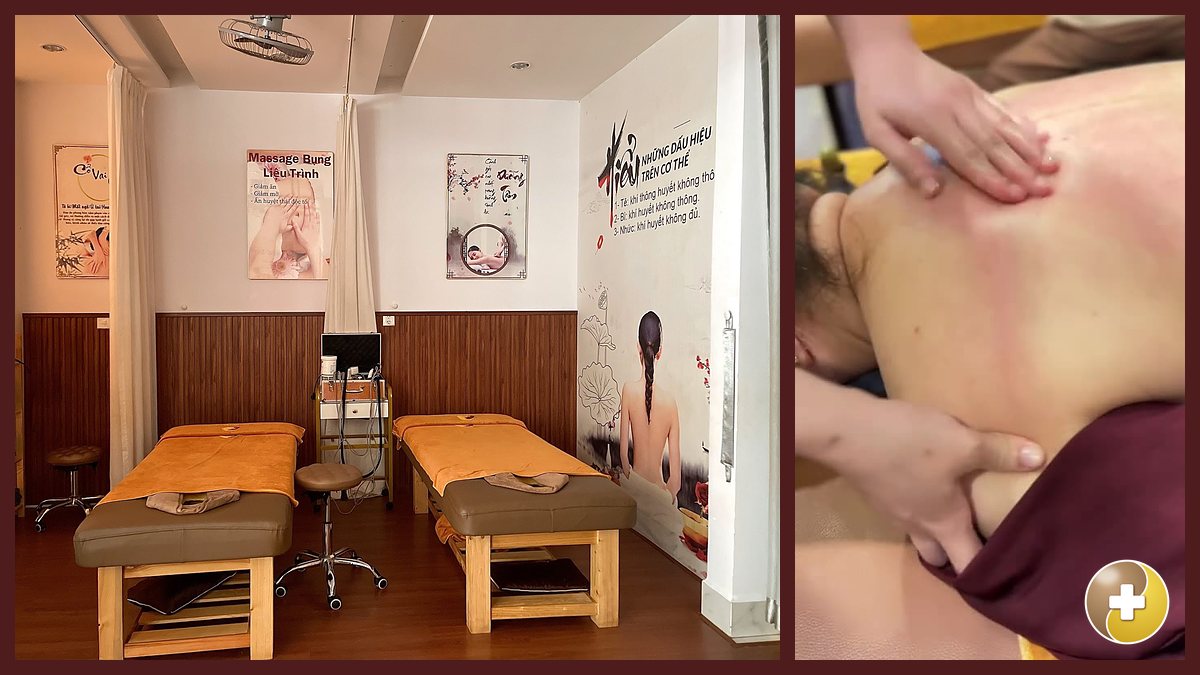
Quick answer: Do the health check first and the massage later. Use days 1–2 for fasting blood tests, ultrasound, endoscopy and scans, rest for the whole day after any sedation, and book bodywork from day 3. Huyệt Đạo Tống Gia in District 12 and Vinhomes Grand Park, Ho Chi Minh City, takes bookings on WhatsApp +84 888 264 559.
Want Lương Y Tống Văn Huynh’s team to read your spine and posture in person?
A health check and a massage on the same trip: why the order matters
Many Vietnamese families in San Jose, Houston, Sydney, Melbourne, Toronto or Calgary use a trip to Ho Chi Minh City to book a full health check. Appointments are quick, results come back within days, relatives can take you, and elderly parents can be checked at the same time. International visitors on long-haul routes do the same. In that same week, almost everyone also wants a massage to loosen the back after the flight. The question is which comes first, and how far apart.
Think about how you arrive. From North America the route usually connects through Taipei, Seoul, Tokyo or Hong Kong, often 18 to more than 24 hours door to door. Between November and March it is winter there, and Tan Son Nhat Airport greets you with dry-season heat of 32–34°C. The time difference is large: California is 15 hours behind Vietnam in winter, Houston 13, Toronto 12. From Sydney or Melbourne there are direct flights of about 8–9 hours, but during the Australian summer you are 4 hours ahead of Vietnam, so you still wake early and fade early.
A standard health check usually includes fasting blood tests (8–12 hours without food, as the facility instructs) for blood sugar, lipids, liver and kidney function, a urine test, blood pressure, an ECG, an abdominal ultrasound and a chest X-ray. Larger packages add a gastroscopy or colonoscopy under sedation, a CT or an MRI. Each step puts its own load on the body: fasting lowers blood sugar, heat plus restricted drinking leaves you short of fluid, lying still on a scanner table stiffens the neck and lower back, and sedation slows your reflexes for hours.
So the short answer is check first, bodywork after. Your results then reflect your normal state, not the hours after deep pressure work or a sweaty herbal steam. And if something needs follow-up, you know before you book, so you can tell the practitioner or postpone as the facility advises. For how a long flight loads the spine, see the main guide spine care after a long-haul flight; if your trip falls over Tết, see the 7-day wellness plan for a Tết visit.
Why a health-check week is more tiring than it sounds
None of the tests is hard on its own. Stacked into a short trip, small loads add up:
- Jet lag: you are up at 5–6 a.m. for a fasting blood draw while your body still thinks it is the middle of the night. How to shift your sleep is covered in US–Vietnam time difference and jet lag.
- Fasting: no food from the evening before, then a wait for your turn. People with blood-sugar conditions may feel shaky, sweaty or light-headed.
- Too little fluid: heat and sweat, plus drinking limits before some tests. Bowel preparation for a colonoscopy costs extra water and salts.
- Long stillness: waiting-room chairs, the ultrasound couch and the CT or MRI table all hold you in one position for many minutes.
- Sedation: after a sedated endoscopy you stay drowsy and slow for hours, which is why facilities ask that someone takes you home and that you do not drive.
- Waiting for results: the night before results, many people sleep badly. The Tong Gia manual notes that heavy worry strains the Heart and Spleen: poor appetite, poor sleep, palpitations, forgetfulness.
- Catch-up eating: straight after the blood draw it is phở, broken rice and iced coffee all at once, on an empty stomach.
- Overbooked days: tests in the morning, relatives in the afternoon, strong massage at night. That rarely leaves you lighter.
Signs worth noting during the check-up days
Most of these are common after a day of tests, especially straight after a long flight. Note them so you can tell the facility or the practitioner:
- Light-headedness, shaky hands, sweating after a long fast; better once you eat.
- A bruise or soreness at the blood-draw site in the elbow crease.
- Bloating, belching, wind after endoscopy, because air is pumped in during the procedure.
- A mildly sore throat or hoarse voice after a gastroscopy.
- Drowsiness and slow reactions for some hours after sedation.
- A stiff neck and tired lower back after lying still for scans or sitting in waiting areas.
- Thirst, fatigue, little urine after bowel prep or a fasting day in the heat.
- Restless sleep and a racing heart the night before results.
What matters is whether these ease within 24–48 hours. If they get worse, or you notice anything in the next section, contact the facility first and skip massage.
When to see a doctor, and when not to have a massage yet
Please see a doctor promptly, or contact the facility that did your tests, and do not have any massage or acupressure if you notice:
- Chest pain or tightness, breathlessness, cold sweats, pain spreading to the neck, jaw or left arm: call 115, Vietnam's emergency number.
- Sudden breathlessness or chest pain on breathing in in the days after the flight, or one calf that is swollen, warm, red and painful: possible clot. Get checked at once and do not have the legs massaged.
- Severe abdominal pain, a hard belly, fever or vomiting after endoscopy; heavy bleeding from the bowel, black stools, vomiting blood.
- Fainting or near fainting, or still being confused many hours after sedation.
- Rash, itching, swollen lips or breathing trouble after contrast dye for a CT or MRI: tell the facility at once or call 115.
- A large, hot, red swelling at the blood-draw site, or numbness or weakness in that hand.
- A drooping face, slurred speech, weakness on one side, sudden loss of vision: call 115.
There are also times simply to wait: the whole day after sedation (rest at home with someone nearby); after a polyp removal or biopsy (follow the number of days the facility gives you, and no abdominal massage); and just before a blood test (no strong pressure work and no steam, because sweating dehydrates you and hard muscle work can temporarily shift some blood values; ask the facility if unsure). If you live with heart disease, high blood pressure or diabetes, or take blood thinners, also read massage with high blood pressure and foot soaks and foot massage with diabetes.
If a result comes back abnormal, follow the facility's advice: a repeat test, a specialist, a follow-up date. The Tong Gia manual itself says a single sign is never enough to conclude that an organ is weak, and that people with high blood pressure or diabetes, people over 60, and those with kidney disease in the family should have urine and kidney-function tests regularly. That is the job of a medical facility. This is a wellness service, not medical care. Tong Gia does not interpret lab results, X-ray, CT or MRI images, does not draw up plans in place of a medical facility and does not recommend any particular hospital. When booking, just tell us what the facility asked you to avoid.
The Y Tướng Học view: which organs a check-up week strains
Y Tướng Học (traditional Vietnamese face and body reading for wellness) rests on one saying: "the signs show outside, the organs sit inside." Lương Y Tống Văn Huynh, founder of Huyệt Đạo Tống Gia, systematised this way of observing for wellness care. It is an observation tool, never a substitute for lab tests. According to the Tong Gia manual, four organ systems tend to speak up during a week of flying and testing:
- Spleen and Stomach: the Stomach is the "sea of food and drink"; the Spleen turns it into nourishment, governs the muscles and limbs, and shows in the lips. Fasting, air from endoscopy, then heavy catch-up meals and iced drinks weigh on it: bloating, belching, drowsiness after meals, heavy limbs. Signs: pale lips; a swollen tongue with tooth marks; people with a square "Điền" (田) face often carry a broad tight patch at D11–D12. More in bloating after feasting.
- Liver: the manual links the liver's role in regulating blood sugar and storing glycogen to the Liver's "smooth flow" function working with the Spleen and Stomach. When it lags you tire easily when hungry and your sugar drops quickly. The Liver also governs the sinews and mood, so worry and tense sitting tighten the shoulders and dry the eyes. Signs: knitted brows, a crease between the eyebrows, wooden-hard shoulders; "Thân" (申) faces often tighten at D7–D9.
- Heart: the Heart governs the blood vessels and houses the spirit, including sleep. Worry strains both Heart and Spleen. Signs: a pale face, dull eyes, a red tongue tip.
- Kidney: in the manual, the kidneys are the body's filter and fluid-and-salt balance station, and they also make glucose during fasting. The lower back is the Kidney's seat; long scans, dehydration and cold air-con leave it tired and cool. The manual also cautions that back pain is often muscular or spinal rather than renal. Signs: thin, dull ears; "Giáp" (甲) faces are "full above, empty below", with a hot upper neck and a cool, hollow lower back.
The manual puts it this way: "Pain shows in one place, but its source is often somewhere else." A stiff neck after a check-up may come from a whole day of fasting and lying still. So the practitioner reads the face to find the organ, and reads the spine by hand to find the zone.
Spine segments and nerve-reflex zones involved
According to Tong Gia's spinal nerve-reflex balancing manual, the spine has 33 vertebrae: C1–C7 serve the head, face, neck and arms; D1–D12 relate to circulation, breathing and digestion; L1–L5 to digestion, kidneys, urinary and reproductive organs and the legs; S1–S5 to elimination and the pelvis. Nerve roots leave between the vertebrae, which is where the practitioner's fingers search. After a week of flying and tests, these zones are often hot, tight or cool and hollow:
| Vertebrae | Nerves / function (anatomy) | What you may feel | Organ | Outer sign (Y Tướng Học) |
|---|---|---|---|---|
| C1–C2, base of skull | Upper cervical roots; small muscles that hold the head | Heavy head, light-headed when fasting, stiff neck after the scanner | Liver, Kidney | Giáp face; hot nape; knitted brows |
| C3–C7 | Cervical and brachial plexus; neck, shoulders, arms | Shoulders tight with worry, sore arm on the blood-draw side | Liver (sinews) | Uneven shoulders, hard trapezius |
| D1–D4 | Upper thoracic nerves; heart, lungs, between the shoulder blades | Racing heart before results, shallow breathing | Heart, Lung | Pale face, dull eyes, red tongue tip |
| D7–D9 | Mid-thoracic nerves; liver, gallbladder, stomach area | Tight under the ribs, tired when hungry, irritable | Liver – Spleen/Stomach | Thân face; crease between brows |
| D11–D12 | Lower thoracic nerves; upper digestive tract | Bloating after endoscopy or catch-up meals | Spleen/Stomach | Điền face; pale lips; tooth-marked tongue |
| L1–L3 | Upper lumbar roots; kidneys, urinary tract, hip flexors | Tired waist after scans, cool lower back | Kidney | Thin, dull ears; cool, hollow lower back |
| L4–S1 | Roots of the sciatic nerve; buttocks, legs | Heavy legs, numb buttocks from long waits | Kidney – Liver | Viên or Do face: thick or slack hip muscles |
| S1–S5 | Elimination, pelvis | Heavy lower belly, tired after bowel prep | Kidney – Bladder, Spleen | Slumped sitting posture, dull complexion |
The table shows links used to choose where to work. It is not used to name any condition and does not replace any test result.
How Tong Gia helps rebalance after the tests: session steps, services and prices
The spinal nerve-reflex balancing massage method was developed by Lương Y Tống Văn Huynh from over 13 years of practice in Vietnamese traditional wellness, Y Tướng Học and spinal nerve-reflex balancing. After a health check, the aim is to help rebalance the spinal zones tightened by the flight and the waiting, and to support digestion after fasting and catch-up meals, never to replace anything the facility told you. Every session follows five steps:
- Observe and ask: where you flew from, how many nights you have slept here, which tests you had, whether there was sedation, which arm was used for blood, what the facility asked you to avoid, any long-term conditions; then a look at complexion, lips, ears and posture.
- Read the spine by hand from C1 to S1: skin temperature, muscle padding, vertebra shape and your own sensations, left against right, upper against lower.
- Release the muscles of the neck, trapezius, spinal erectors, lower back and glutes, building pressure gradually and working only where skin is hot and muscle tight. The blood-draw elbow is avoided; after endoscopy there is no firm abdominal work.
- Acupressure on the right zone: the nape for a heavy head, Spleen and Stomach points on the back for bloating, Kidney points for a tired lower back. Hot skin is cooled, cool skin warmed, and work on a point stops when the skin turns from dry to slightly moist.
- Self-care advice: sleep timing, fluids, how to eat again after fasting, and two points to press at home.
These three services suit a check-up week; most people need two of them. Prices are in VND; approximate conversions at 1 USD ≈ 26,000 VND, 1 AUD ≈ 17,000 VND, 1 CAD ≈ 19,000 VND (reference rate only, payment in VND):
| Service | Length | Price | Approx. | Good for |
|---|---|---|---|---|
| Herbal hair wash with neck and shoulder massage | 60 min | 250,000 VND | ≈ 10 USD / 15 AUD / 13 CAD | Late afternoon on a test day without sedation; light pressure |
| Neck-shoulder or lower-back care | 60 / 90 min | 550,000 VND (first visit 399,000) / 750,000 VND | ≈ 21 USD (first visit ≈ 15 USD) / ≈ 29 USD | Day 3 onward; whole-spine reading, release of zones compressed by sitting and lying |
| Spleen–Stomach wellness session | 75 min | 750,000 VND | ≈ 29 USD / 44 AUD / 39 CAD | Once you eat normally again; after polyp removal or biopsy, wait the days the facility gives |
Other services are on the price list. Parents who come along can book the same slot with lighter pressure; see taking elderly parents back to Vietnam.
From Tan Son Nhat Airport: the District 12 branch (225 Dương Thị Mười, Phường Tân Chánh Hiệp, District 12) is closer to the airport, roughly half an hour or more by car depending on traffic. The Vinhomes Grand Park branch (Căn T16-21 khu Manhattan, Phường Long Bình, TP. Thủ Đức, the former District 9) is further and takes longer at rush hour, but suits anyone staying in Thu Duc. Landing day is not a day for tests or strong massage; if you want to stop in on arrival, read massage near Tan Son Nhat Airport.
What a day-3 session usually looks like: the guest has slept three nights here and finished tests two days earlier, with a small bruise in the left elbow crease. The practitioner asks about the tests and any instructions, notices slightly pale lips, sunken eyes and a higher left shoulder. Reading the spine, C1–C2 is hot and tight, D11–D12 has a firm patch, and the lower back around L2 is cool and slightly hollow. The practitioner releases the neck and shoulder blades, keeps clear of the left elbow, warms the lower back and presses the back points for the Spleen, Stomach and Kidney with moderate pressure, ending on the shoulders and the right arm.
How it feels: tight spots feel tender but pleasant; the manual calls this "creating a wave of sensation" so the body can readjust. The back usually warms and many guests doze off near the end. Afterwards the neck may turn more easily, the belly feels lighter and sleep comes sooner; mild muscle tiredness the next day is normal. Everyone responds differently, and Tong Gia makes no promise about any test result.
Want Lương Y Tống Văn Huynh’s team to read your spine and posture in person?
A suggested one-week plan and daily self-care
| Day | Tests | For your body | Tong Gia session |
|---|---|---|---|
| Day 0 (landing) | None | Sip water, eat lightly, warm shower, stay up until local bedtime | None |
| Day 1 | Fasting bloods, urine, ultrasound, X-ray, ECG | Bring a snack for right after the draw; wear loose sleeves; short nap | If no sedation and you feel fine: hair wash with neck massage, 60 min, light |
| Day 2 | Sedated endoscopy or CT/MRI, if in your package | Someone takes you and brings you back; no driving; soft food; rest all day | None |
| Day 3 | Results and consultation | If anything needs follow-up, do that first | Neck-shoulder or lower-back care, 60 min (first visit 399,000 VND) or 90 min |
| Days 4–5 | Follow-up if booked | Family visits, morning sun, gentle evening walks | Rest, or a short session if the back is still tight |
| Day 6 | None | Normal eating, fewer iced drinks | Spleen–Stomach session, 75 min, if the facility set no limits |
| Day 7 | Pack copies of your results | Early night, enough water before flying | No strong session right before the flight |
- Drink steadily before and after the fasting day, within what the facility allows.
- Eat back in gradually: soft, warm food first; nothing fried, spicy or iced straight after endoscopy.
- Press Zusanli (below the knee, outside the shin) 1–2 minutes each side after breakfast, and Shenmen (wrist crease, little-finger side) before bed. See self-acupressure at home.
- Warm compress on a bruise from the next day; no firm rubbing on it.
- The manual's advice: "don't wait for pain; care begins when the signs first appear."
Booking from abroad
Huyệt Đạo Tống Gia has two branches in Ho Chi Minh City, open every day, with genuine guest reviews on Google Maps:
- District 12: 225 Dương Thị Mười, Phường Tân Chánh Hiệp. Open 8:00–19:00 daily. Closer to the airport.
- Vinhomes Grand Park: Căn T16-21 khu Manhattan, Phường Long Bình, TP. Thủ Đức. Open 9:00–20:00 daily. Handy for Thu Duc and the Saigon Hi-Tech Park.
Message Zalo or WhatsApp +84 888 264 559 or use the online booking form. Please include your landing date and time, the planned test days and whether there is sedation, where you feel tired (neck, back, belly, legs), which branch you prefer, who is coming and any long-term conditions. A message sent in the evening in California arrives around midday in Saigon; from Sydney it is almost the same day. You can book before you fly and move the slot if your test dates change; see booking a massage in Saigon from abroad.
Visit us
- Đông Y Huyệt Đạo Tống Gia Quận 12 (District 12)
225 Dương Thị Mười, Phường Tân Chánh Hiệp, Quận 12, HCMC · 8:00–19:00 daily · 0888 264 559 · Directions on Google Maps - Đông Y Huyệt Đạo Tống Gia Quận 9 (Vinhomes Grand Park, District 9)
Căn T16-21 khu Manhattan, Vinhomes Grand Park, Phường Long Bình, TP. Thủ Đức, HCMC · 9:00–20:00 daily · 0888 264 559 · Directions on Google Maps
Map of our two branches
Want Lương Y Tống Văn Huynh’s team to read your spine and posture in person?
What guests say on Google Maps
“Wonderful service… great for golfers in District 9 to drop in and loosen up.” (translated from a Vietnamese review)
— Tâm N., Google Maps review · Vinhomes Grand Park branch (District 9) · 2024 · See on Google Maps
“A beautiful, quiet space and wonderful service. I will keep coming.” (translated from a Vietnamese review)
— Hằng C., Google Maps review · Vinhomes Grand Park branch (District 9) · 2025 · See on Google Maps
Quoted from public reviews, shortened where marked (…). Experiences vary from person to person; reviews are not a substitute for seeing a doctor when something feels wrong.
Related guides for your trip
FAQ
Should I get a massage before or after a health check in Vietnam? After. Use days 1–2 for fasting blood tests, ultrasound, endoscopy and scans, rest the whole day after sedation, and book bodywork from day 3 once you have results and are eating normally. Avoid strong pressure work and herbal steam right before a blood test.
How long after a sedated endoscopy can I have a massage? Rest for the whole day of the procedure with someone nearby and do not drive. From the next day, if you are alert, eating normally and have no abdominal pain, neck and back work is usually fine. After a polyp removal or biopsy, wait the days the facility gives you and skip abdominal massage.
I fly in from San Jose for a check-up. Can I book a massage on day 1? Landing day is for rest, since California is 15 hours behind in winter. Day 1 is for tests. If there is no sedation and you feel fine, a light 60-minute hair wash with neck and shoulder massage (250,000 VND, about 10 USD) late that afternoon is reasonable.
Can Tong Gia look at my abnormal lab results? No. This is a wellness service, not medical care. Tong Gia does not interpret lab results or X-ray, CT or MRI images. Follow your facility's advice, and when booking simply tell us what you were asked to avoid so pressure and zones can be adjusted.
My parents from Melbourne are doing a health check too. Can we book together? Yes, the same time slot at one branch works well. Older guests get lighter pressure, and the practitioner asks about conditions and blood thinners first. Parents with heart disease, high blood pressure or osteoporosis should check with their healthcare provider and mention it when messaging +84 888 264 559.
How much does the care side of a check-up week cost? Usually two or three sessions: hair wash with neck massage 250,000 VND, neck-shoulder or lower-back care 399,000 VND for a first visit, Spleen–Stomach session 750,000 VND. About 1,399,000 VND in total, roughly 54 USD, 82 AUD or 74 CAD (reference rate, payment in VND).
Author: Lương Y Tống Văn Huynh – founder of Huyệt Đạo Tống Gia, a master of traditional Vietnamese wellness with over 13 years in Eastern wellness care, Y Tướng Học (face reading) and spinal nerve-reflex balancing massage.
Updated: 2026-11-17
Related guides
- Should you get a massage with a cold or fever? When to postpone and when a gentle session is fine
- Can you get a massage during your period? Which areas are fine and which to skip on a trip to Vietnam
- Booking a massage for a group during Tet: how to plan sessions for family, relatives and friends in Saigon
- Booking a massage together as a couple in Ho Chi Minh City: same time slot, a different focus for each person
- Vietnamese cupping vs cupping abroad: the marks, who should skip it, and how a Tong Gia session works
- Health check in Vietnam, then a massage: how to plan the week if you fly in from the US, Australia or Canada
This is a wellness service, not medical care.