
Booking a massage for a group during Tet: how to plan sessions for family, relatives and friends in Saigon
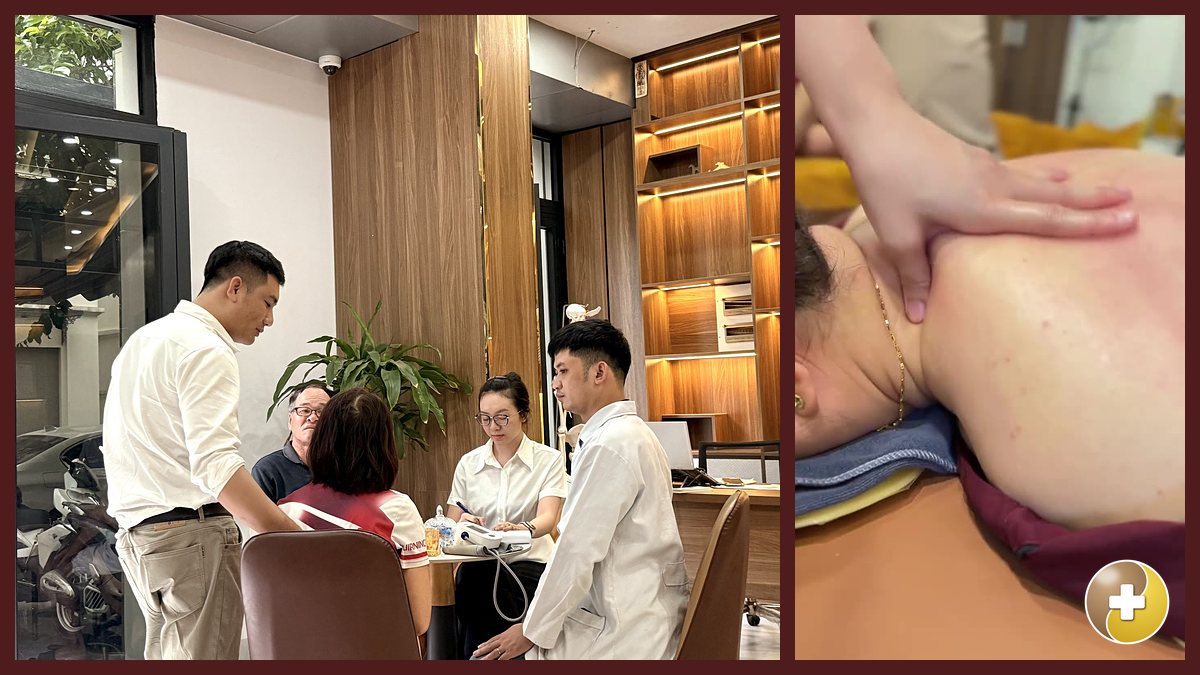
Quick answer: To book a massage for a group during Tet at Tong Gia Acupoint Wellness in Ho Chi Minh City, message Zalo or WhatsApp +84 888 264 559 as early as you can with the number of people, ages, sore spots and branch (District 12 or Vinhomes Grand Park). Groups of 4–8 are usually split into back-to-back sessions, grandparents first. Prices follow the standard price list; ask reception about Tet opening days.
Want Lương Y Tống Văn Huynh’s team to read your spine and posture in person?
Why a whole family feels worn out at the same time during Tet
Tet, the Lunar New Year, is the one time many overseas Vietnamese families end up under the same roof. Some fly in from San Jose, Houston or Orange County, others from Sydney or Melbourne, Toronto or Montréal, Paris or Berlin; some come from factory jobs in Taichung, Ansan or Osaka. Friends from abroad often tag along for their first Tet in Vietnam. In North America and Europe it is the middle of winter, often well below freezing; in Australia it is high summer. A flight to Tân Sơn Nhất from the US West Coast or Europe usually takes well over a dozen hours, plus a connection in Taipei, Seoul, Tokyo, Singapore or Doha. Then comes Saigon's humid heat above 30°C and a packed Tet schedule: cleaning the house, cooking for the ancestors' altar, flower markets, family visits, long drives to hometowns. By the third or fourth day of the new year almost everyone in the house has something that aches: grandparents with stiff lower backs and sore knees, parents who stood in the kitchen all day, the cousin who drove six hours, the young ones still fighting jet lag.
In Western terms, most of this is postural and overuse muscle fatigue. When a muscle group holds one position for too long (sitting on a plane, sitting in a car, standing at a stove) or repeats one movement (lifting, bending, scrubbing), local blood flow drops, metabolic waste builds up and fibres tighten into tender bands. Older bodies have weaker muscles, worn cartilage and slower circulation in the legs, so the same Tet week leaves grandparents sore for longer than their grandchildren. Add short nights, rich food, too little water and a sudden climate change, and the body sends louder signals.
That is why many families like to book one massage outing together: it eases tired bodies and gives everyone an hour of quiet after the rush. The catch is that a bigger group needs more planning: how early to book, how to split the sessions, who gets which service, who needs a lighter touch, who has a health condition to work around. This guide is for Viet Kieu, international friends travelling with them, and relatives in Ho Chi Minh City arranging a booking for 4–8 people. For the bigger picture on your back after flying, read our core guide spine care after a long-haul flight.
Common causes: why the whole group gets tired over Tet
Each person carries a different share of the holiday load, so each one gets tired in a different way. The main causes are:
- Long flights and connections: many hours folded in a seat, sleeping upright, little walking, little water. The neck locks up, the lower back stiffens, calves feel tight and ankles swell slightly by evening.
- Jet lag: travellers from the US and Canada are 12–15 hours off Vietnam time, from Europe 6–7 hours, so the first nights are restless and the days sluggish. Those from Taiwan, Korea or Japan are only 1–2 hours off but often arrive already tired from a year of shift work.
- Cooking the Tet feast: wrapping rice cakes, braising pork, pickling vegetables, standing for hours on tiled floors and bending over low counters keeps the lower back and calves working nonstop.
- Cleaning and carrying: polishing the altar, moving apricot-blossom pots, hauling boxes of gifts, repeated bending and lifting.
- Long car rides: drives to the Mekong Delta or central provinces, traffic jams at the city gates; the driver tenses the shoulders, the passengers sit cramped. Our article on back pain from long car rides to hometowns during Tet covers this in detail.
- Back-to-back family visits: hard wooden chairs, sitting on floor mats, several meals a day, late nights catching up. See also exhausted after Tet family visits.
- Climate and air conditioning: from dry cold to humid heat, lots of sweating, then cold air blowing straight onto the neck and waist indoors.
- Holiday food: sticky rice cakes, braised pork, fried dishes, beer and rice wine, few vegetables, late dinners, leading to bloating and heavy, shallow sleep.
Groups with grandparents need extra care. Older relatives often sleep less in a crowded house, forget to drink water, sit in one spot for hours receiving guests and hide their tiredness so the family can enjoy itself. That is the reason to put them in the first session and choose a gentle service for them.
Signs worth noting before you book for the group
Whoever is making the booking should quickly ask each person which of these they have and write it down. With that list, the practitioners can match service, length and pressure to each person:
- Stiff neck, tight shoulders, turning the head feels blocked on one side, common after a flight or a day of driving.
- Ache between the shoulder blades, a "tight band" feeling when breathing, the urge to stretch.
- Stiff lower back on waking, hard to bend, a dull ache across the waist after standing in the kitchen.
- Tight calves and heavy legs, mild ankle swelling on both sides by evening (explained in swollen legs after a long flight).
- Sore knees, trouble with stairs, common in grandparents.
- Heavy head, tired eyes, hard to fall asleep despite exhaustion, broken sleep from jet lag.
- Bloating and poor appetite after days of feasting.
- Cold hands and feet in those just back from snow, or the opposite: flushing and heavy sweating.
Holiday fatigue usually eases with enough sleep, gentle movement and the right muscle work. If someone's symptoms are getting worse, or match anything in the next section, that person should see a doctor first and skip the group massage.
When to see a doctor first
In a group, it is easy for one person to "just come along". Some signs are not ordinary fatigue. If anyone has one of the following, they should see a doctor or go to a medical facility before any massage or acupressure:
- Chest pain or tightness, shortness of breath, cold sweats, pain spreading to the neck, jaw or left arm: call 115 (Vietnam's emergency number) immediately.
- Facial drooping, slurred speech, numbness or weakness on one side, sudden blurred vision: call 115 immediately.
- Swelling in one leg, a calf that is painful, tight, warm or red after a long flight or hours in a car: this can be a sign of deep vein thrombosis and needs urgent medical attention; the legs must not be massaged. With breathlessness or chest pain, call 115.
- Back pain with numbness running down a leg, leg weakness, or trouble controlling bladder or bowels.
- A recent fall or knock to the back, neck or hip while cleaning or travelling.
- Fever, severe stomach pain or vomiting after holiday meals.
- Pain that worsens at night, unexplained weight loss, or looking pale and anaemic: get checked at a medical facility, not only cared for from the outside.
- Existing conditions such as heart disease, high blood pressure, diabetes, pregnancy, recent surgery or blood thinners: ask your doctor first and mention it when booking. Our pieces on massage with high blood pressure and massage during pregnancy on a trip home for Tet cover two situations that often come up in family groups.
This is a wellness service, not medical care. Tong Gia does not read X-rays, MRI scans or lab results and does not draw up care plans in place of a medical facility. If someone in the group has been told to avoid an area, say so briefly in the booking message so the practitioner works around it.
The Y Tướng Học view: each family member tires a different organ system
Y Tướng Học, the Vietnamese art of face and body reading for wellness, rests on one saying: "the signs show outside, the organs lie inside." Its roots go back more than 2,000 years, and Lương Y (master of traditional Vietnamese wellness) Tống Văn Huynh has organised it into a practical way to plan care for each person at Tong Gia Acupoint Wellness (Huyệt Đạo Tống Gia). It is observation for wellness, not fortune-telling and not a statement that something is wrong. According to the Tong Gia curriculum, in a family group at Tet each person tends to "speak" through a different system:
- Kidney – grandparents and older relatives: in Eastern wellness the Kidney is the root of constitution, governs the bones, opens into the ears, and the lower back is its "home". Age, long sitting and coming from a cold country bring a weak lower back, sore knees, night-time urination and ringing ears. Outer signs: thin, dull ears; dry hair that falls easily; people with a round (Viên) face often have a cold, soft lower back; the Giáp face is "full above, empty below": a warm upper neck at C1–C2, a hollow, cool lower back.
- Spleen–Stomach – the cooks and the big eaters: governs muscle and limbs and the digestion of food and fluids. Rushed meals, rich food and the stress of preparing the feast bring heavy limbs, sluggishness and bloating. Outer signs: pale lips, a puffy tongue with tooth marks; square (Điền) faces often show a broad tight patch at D11–D12.
- Liver – the drivers and organisers: governs the sinews, opens into the eyes, linked to emotions. Hours at the wheel, strained eyes and juggling every errand bring tight tendons, a stiff neck, dry eyes and irritability. Outer signs: a furrowed brow, a crease between the eyebrows, shoulder muscle hard as wood; the Thân face often tightens at D7–D9.
- Heart – the jet-lagged and the night owls: governs blood vessels, linked to sleep and spirit. Jet lag and late-night chats bring palpitations and trouble falling asleep. Outer signs: a pale or flushed face, eyes without spark.
- Lung – those arriving from winter: governs qi and the skin, opens into the nose. Months of indoor heating followed by air conditioning and humidity bring dry skin, a blocked nose and shallow breathing. Outer signs: dry skin, a dry red nose; the Đồng face often has tightness and a raised segment around D3 (the Lung point).
The Tong Gia curriculum says: "Pain shows in one place, but its source is often somewhere else." Two relatives may both say "my back hurts", yet one is tired from standing at the stove and the other from age and weakened Kidney energy. So even in a group, each person is observed individually: the practitioner reads the face to understand the organs, and reads the spine by hand to find the area, before deciding where to start. When you book, simply list each person's sore spots; the face reading happens in person.
Spine segments and nerve-reflex zones involved
According to Tong Gia's spinal nerve-reflex balancing curriculum, the spine has 33 vertebrae: 7 cervical (C1–C7) serving the head, face, neck and arms; 12 thoracic (D1–D12, also written T1–T12) linked to circulation, breathing and digestion; 5 lumbar (L1–L5) linked to digestion, kidneys, urinary and reproductive organs and the legs; and the sacrum and coccyx, linked to elimination and the pelvis. Nerve roots leave between the vertebrae, which is where the practitioner's fingers search when reading the spine. In family groups at Tet these zones are often tight, warm or hollow and cool:
| Segment | Nerves and function (Western anatomy) | Typical Tet complaint | Organ system | Outer signs (Y Tướng Học) |
|---|---|---|---|---|
| C1–C2, base of skull | Upper cervical roots; suboccipital muscles holding the head | Heavy head, sore neck after flying or dozing in the car | Liver, Heart, Kidney | Giáp face; furrowed brow; dull eyes |
| C3–C7 | Cervical and brachial plexus; neck, shoulders, arms, hands | Stiff neck and shoulders in long-distance drivers and suitcase carriers | Liver (sinews) | Hard shoulder muscle, uneven shoulders, pale nails |
| D1–D4 (D3: Lung point) | Upper thoracic nerves; heart, lungs, muscles between the shoulder blades | Ache between the shoulder blades, shallow breathing, dry nose after winter | Lung, Heart | Đồng face; dry skin, dry red nose |
| D7–D9 | Mid-thoracic nerves; liver, gallbladder, stomach | Fullness under the ribs, belching after oily feasts | Liver – Spleen–Stomach | Thân face; crease between the brows |
| D11–D12 | Lower thoracic nerves; upper digestive area | Bloating, heavy limbs, drowsiness after meals | Spleen–Stomach | Điền face; pale lips; puffy tongue |
| L1–L3 (Kidney point, Mingmen level with L2) | Upper lumbar roots; kidneys, urinary tract, hip flexors | Aching waist, cold lower back, night-time urination in grandparents | Kidney | Thin, dull ears; Viên face |
| L4–S1 | Roots forming the sciatic nerve; buttocks, thighs, calves | Stiff low back from cooking and lifting; tight calves, heavy legs after flying | Kidney – Liver; Bladder meridian | Do and Viên faces: thick or soft muscle at the waist and hips |
The table shows "links" for choosing where to work, not conclusions about illness. In the Tong Gia curriculum the face type points to which back zone to check first: Điền to D11–D12, Đồng to D3, Thân to D7–D9, Giáp to C1–C2 and the low back, Do and Viên to the waist and hips. After that, the hands decide: skin temperature, the muscle layer, the shape of each segment and the person's own sensations.
How Tong Gia helps rebalance: the session, services, prices and getting there from the airport
The method was built by Lương Y Tống Văn Huynh, founder of Tong Gia Acupoint Wellness, from over 13 years of practice in Vietnamese traditional wellness, Y Tướng Học and spinal nerve-reflex balancing. It is a Vietnamese Eastern wellness massage that helps rebalance each spinal zone and the related organ function and supports the body's own regulation; it does not replace seeing a doctor. Even in a group, everyone gets an individual session in five steps:
- Observe and ask: check the details sent when booking (age, sore spots, health conditions, landing date), then look at complexion, lips, ears and posture.
- Read the spine by hand: palm, stroke, press and roll from C1 to S1 to read skin temperature, the muscle layer, the shape of each segment and the person's sensations, comparing left with right and top with bottom.
- Release the muscles: neck, trapezius, spinal erectors, quadratus lumborum, glutes and calves, with pressure building through five levels (one finger, whole hand, bent arm, straight arm, body weight). For grandparents the practitioner stays at the lighter levels and checks in more often.
- Press the right points: the neck for a heavy head after flying, around D3 for the ache between the shoulder blades, the Kidney point and Mingmen for a grandparent's cold lower back. Warm skin is cooled, cool skin is warmed; work on a key point stops when the skin turns from dry to slightly moist.
- Self-care tips: one or two things that suit each person, such as warming the lower back, raising the legs, or a sleep schedule for the holiday.
Which service for whom? Most family groups need only the three services below. Prices are per person, from the standard price list; this article does not list any separate group rate, and for any offers, please ask reception when you book. USD is an approximate reference rate (1 USD ≈ 26,000 VND); payment is in VND:
| Service | Length | Price (VND) | ≈ USD (reference) | Good for |
|---|---|---|---|---|
| Neck-shoulder / lower-back care | 60 min | 550,000 (price list: first visit 399,000) | ≈ $21 (first visit ≈ $15) | Grandparents with a sore back who need a moderate session; drivers with a stiff neck |
| Neck-shoulder / lower-back care | 90 min | 750,000 | ≈ $29 | The cooks and cleaners, sore from neck to lower back |
| Heavy, tired legs care | 60 min | 500,000 | ≈ $19 | Those who stood in the kitchen or just flew long-haul with tight calves |
| Hair wash with neck-shoulder massage | 60 min | 250,000 | ≈ $10 | Younger, less tired members, or anyone just landed who wants something light |
How the first-visit price applies when a whole group comes for the first time is something to confirm with reception. If anyone has one-sided leg swelling or calf pain after the flight, Tong Gia will not work on the legs and will advise seeing a doctor first.
An example layout for a group of six (for illustration only, not a fixed schedule): a morning first session for the grandparents, 60 minutes of neck-shoulder / lower-back care each with light pressure; a follow-on session for the parents who cooked, 90 minutes of lower-back care or 60 minutes of leg care; a last session for two young adults, 60-minute hair wash with neck-shoulder massage. The grandparents finish first and can go home to rest instead of waiting for everyone. How many people can be seen at once depends on the branch and the day; reception will tell you when arranging it.
Getting there from Tân Sơn Nhất airport: the District 12 branch (225 Dương Thị Mười, Tân Chánh Hiệp Ward) is north of the airport and usually a shorter drive, handy for families staying in Gò Vấp, District 12 or Hóc Môn. The Vinhomes Grand Park branch (Unit T16-21, Manhattan area, Long Bình Ward, Thủ Đức City) is on the east side and takes longer by car, convenient for families in Thủ Đức or District 9. A big group can split between the two branches if relatives live at opposite ends of the city. Traffic is heavy in the days before Tet and at rush hour, so leave plenty of time between landing and the appointment. Our guide to massage near Tân Sơn Nhất airport covers going straight from the airport.
What might each person feel? On tight spots, a "good ache" that the Tong Gia curriculum calls creating a sensation wave so the body can adjust itself; the back usually warms up. Afterwards the neck may turn more easily, shoulders feel less bound, legs lighter and sleep come more easily; some people feel slightly sore the next day, as after light exercise. Grandparents usually enjoy a slow rhythm and moderate pressure. Everyone is different, depending on constitution, age and how tired they are; Tong Gia supports and helps rebalance, and does not promise that all aches will be gone after one session.
Want Lương Y Tống Văn Huynh’s team to read your spine and posture in person?
A suggested Tet plan for the group, and self-care
Every family's Tet calendar is full, so a big group needs to pick its shared day carefully. Adjust this outline to your own plans:
| When | What to do | Suggested care for the group |
|---|---|---|
| Before flying (abroad) | Settle the list of people, ages, sore spots, health conditions, nearest branch | Message the group booking; ask reception about Tet opening days |
| Landing day | Drink enough water, eat light, walk slowly, sleep early on Vietnam time | Anyone with energy: 60-minute hair wash with neck-shoulder massage; do not book the whole group today |
| Days before Tet | Cleaning, cooking, markets; share tasks, take breaks | The cooks and cleaners can go first for a lower-back session if time allows |
| Days 1–3 of the new year | Offerings, visiting grandparents and relatives | Usually busy at home; if you want to go, check with reception, as Tet hours may differ |
| After the first days of the year | Fewer visitors, more free time | The shared group outing: grandparents first, parents next, young adults last |
| A few days before flying back | Sleep enough, pack calmly | Optional: a light neck-shoulder or leg session for a more comfortable flight |
A detailed one-person plan is in a 7-day wellness plan for a Tet visit to Saigon; if elderly parents are travelling with you from abroad, also read taking elderly parents back to Vietnam and neck and shoulder massage for elderly parents. Simple self-care for the whole family over the holiday:
- Warm the lower back: rub your palms until hot, place them on both sides of the lower back and rub up and down 50–100 times until warm, before bed; good for grandparents.
- Raise the legs for 15 minutes in the evening after a day in the kitchen or at the market; flex and point the ankles 20 times.
- Get up and walk every hour while hosting guests or on long drives; stop for breaks on the way to the hometown.
- Drink water steadily, add vegetables, cut back on fried food and alcohol; avoid a very full stomach right before bed.
- Keep air conditioning off the neck and waist; dry your hair before lying down. As the Tong Gia curriculum puts it, "don't wait for pain to start caring: care as soon as the signs appear."
Booking for a group from abroad: what to send, how early, which branch
The person booking can be abroad or already in Saigon; all you need is Zalo or WhatsApp. Message +84 888 264 559 (0888 264 559 inside Vietnam), or use the online booking page. For a large group, message as soon as the family has agreed on a day; the earlier, the easier it is to arrange, because branches are busier than usual around Tet. Include:
- Number of people and each person's age (note grandparents and any young children coming along; ask reception whether any service suits children).
- Each person's sore spots and preferred service, plus health conditions (blood pressure, heart, blood sugar, pregnancy, recent surgery).
- Landing date and time at Tân Sơn Nhất (Vietnam time) for those flying in, and departure dates.
- Preferred branch: District 12 or Vinhomes Grand Park, or a split between both.
- Preferred time window and who should go first.
A short example: "Hello Tong Gia, we are 6 people including grandparents aged 78 and 74; grandma has high blood pressure. I'm flying from Houston and land at Tân Sơn Nhất on the 23rd of the last lunar month. We'd like the morning of day 5 of Tet at District 12: grandparents first, 60 minutes neck-shoulder with light pressure; parents 90 minutes lower back; two of us 60-minute hair wash with massage. Which days are you open over Tet, and are there any offers?" Step-by-step tips for booking from overseas are in how to book a massage in Saigon from abroad; to picture a family outing in Thủ Đức, see a family weekend massage at Vinhomes, District 9.
Tong Gia Acupoint Wellness has two branches in Ho Chi Minh City, open every day, with genuine customer reviews on Google Maps. Opening days and hours over Tet may differ from normal, so please check with reception:
- District 12 branch: 225 Dương Thị Mười, Phường Tân Chánh Hiệp (Tân Chánh Hiệp Ward). Open 8:00–19:00 daily.
- Vinhomes Grand Park branch, District 9: Căn T16-21 khu Manhattan, Phường Long Bình, TP. Thủ Đức (Unit T16-21, Manhattan area, Long Bình Ward, Thủ Đức City). Open 9:00–20:00 daily.
Always write appointment times in Vietnam time, since group members may be in different time zones. If someone changes flights or drops out, message early so the sessions can be rearranged if space allows. One clear message is enough to give the whole family a shared, restful hour before everyone flies home in different directions.
Visit us
- Đông Y Huyệt Đạo Tống Gia Quận 12 (District 12)
225 Dương Thị Mười, Phường Tân Chánh Hiệp, Quận 12, HCMC · 8:00–19:00 daily · 0888 264 559 · Directions on Google Maps - Đông Y Huyệt Đạo Tống Gia Quận 9 (Vinhomes Grand Park, District 9)
Căn T16-21 khu Manhattan, Vinhomes Grand Park, Phường Long Bình, TP. Thủ Đức, HCMC · 9:00–20:00 daily · 0888 264 559 · Directions on Google Maps
Map of our two branches
Want Lương Y Tống Văn Huynh’s team to read your spine and posture in person?
What guests say on Google Maps
“My first visit – the service was good and the staff were warm.” (translated from a Vietnamese review)
— Hiền P., Google Maps review · District 12 branch · 2024 · See on Google Maps
“A very good place. Very caring. I felt so light when I left.” (translated from a Vietnamese review)
— Hồng P., Google Maps review · District 12 branch · 2023 · See on Google Maps
Quoted from public reviews, shortened where marked (…). Experiences vary from person to person; reviews are not a substitute for seeing a doctor when something feels wrong.
Related guides for your trip
FAQ
How do I book a massage for a group during Tet in Saigon? Message Tong Gia Acupoint Wellness on Zalo or WhatsApp at +84 888 264 559, or use the online booking page. Send the number of people, ages, each person's sore spots and health conditions, your branch (District 12 or Vinhomes Grand Park) and preferred times in Vietnam time. Larger groups are usually split into sessions.
How far ahead should a group of 6–8 book? Message as soon as the family has agreed on a day; the earlier, the easier, because branches are busier than usual around Tet. How many people can be seen at once depends on the branch and the day, and reception will explain how the sessions are split.
Is there a group discount? Prices are per person from the standard price list, for example neck-shoulder / lower-back care 60 minutes 550,000 VND (≈ $21) and 90 minutes 750,000 VND (≈ $29). For any offers and how they apply to a group, ask reception when you book.
Is Tong Gia open during Tet? Normally the District 12 branch opens 8:00–19:00 and the Vinhomes Grand Park branch 9:00–20:00, every day. Tet opening days and hours may differ, so message +84 888 264 559 and check with reception before fixing the group's date.
Our family is coming from San Jose and Toronto with elderly grandparents. Should they join? Yes, put them in the first session with 60 minutes of neck-shoulder / lower-back care at light pressure, so they finish first and can rest. If they have heart disease, high blood pressure or take blood thinners, ask a doctor first and mention it when booking.
We just landed from Sydney. Can the whole group go on day one? On landing day choose something light, such as the 60-minute hair wash with neck-shoulder massage, and keep the group outing for a few days later. Anyone with one-sided leg swelling, calf pain, breathlessness or chest pain after the flight should see a doctor first.
Author: Lương Y Tống Văn Huynh – founder of Huyệt Đạo Tống Gia, a master of traditional Vietnamese wellness with over 13 years in Eastern wellness care, Y Tướng Học (face reading) and spinal nerve-reflex balancing massage.
Updated: 2026-11-17
Related guides
- Booking a massage for a group during Tet: how to plan sessions for family, relatives and friends in Saigon
- Booking a massage together as a couple in Ho Chi Minh City: same time slot, a different focus for each person
- Vietnamese cupping vs cupping abroad: the marks, who should skip it, and how a Tong Gia session works
- Massage with osteoporosis: is it safe on a trip to Vietnam, what pressure is right and what to avoid
- Is a strong massage better? How to choose the right pressure, how to ask for it, and when to keep it gentle
- Massage after slipping on ice: is it safe, what has to wait, and when to get checked first
This is a wellness service, not medical care.