
Vietnamese cupping vs cupping abroad: the marks, who should skip it, and how a Tong Gia session works
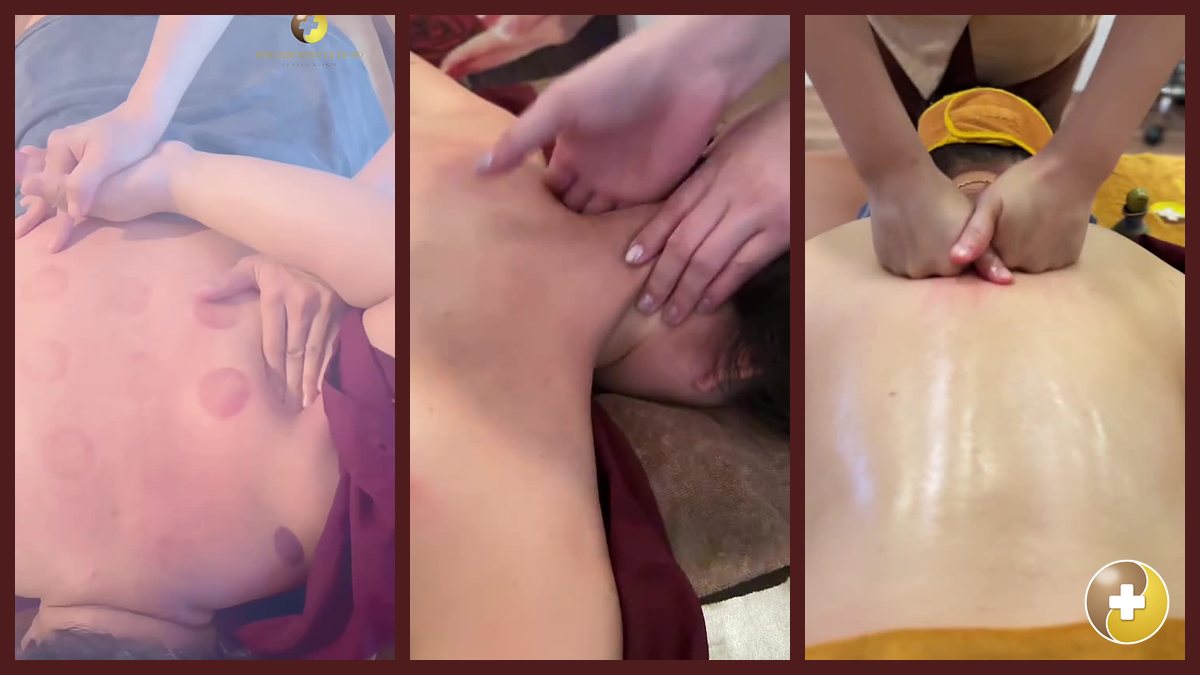
Quick answer: Abroad, cupping is often a stand-alone add-on placed where you point. At Tong Gia Acupoint Wellness in Ho Chi Minh City (District 12, Vinhomes Grand Park), 30-minute cold-dispelling cupping sits inside a session that starts with face reading and reading the spine by hand, so cups go only where they suit.
Want Lương Y Tống Văn Huynh’s team to read your spine and posture in person?
Vietnamese cupping vs cupping abroad: the short answer
If you grew up in Los Angeles, Houston, Sydney, Melbourne or London, you probably first saw cupping marks on a screen rather than on your grandmother's back: the round purple circles on an Olympic swimmer in 2016, a celebrity's spa selfie, a "cupping corner" with silicone cups at the gym or at a sports massage studio. Maybe you tried it there. Maybe your partner did, loved the warmth and hated the marks. Then you fly to Ho Chi Minh City to see family, your mum says "go and get giác hơi, you'll feel lighter", and the obvious question comes up: how is Vietnamese cupping different from the cupping I had abroad? Is it the same thing, does it hurt, and how long will the marks last?
The short answer: the tool is the same idea. In both cases a cup creates suction on the skin. The difference is where cupping sits in the session. In many spas and gyms abroad, cupping is a stand-alone add-on: you point to the sore spot, a few cups go on for several minutes, or one cup is glided over oiled skin, and that is it. At Tong Gia Acupoint Wellness (Huyệt Đạo Tống Gia) in Ho Chi Minh City, cupping appears on the price list as giác hơi bài hàn, "cold-dispelling cupping", 30 minutes, and it is placed inside a session with a clear order: face and posture observation (Y Tướng Học), reading the spine by hand, releasing the muscles, and only then choosing whether and where to cup. One person gets cups on the lower back, another only on the shoulders, and some are told that today is not a cupping day.
From a Western anatomy point of view, cupping is negative pressure. Instead of pressing tissue down like massage, the cup lifts the skin and the layer beneath it, stretching the superficial fascia and the muscle underneath. That pull stimulates sensory receptors in the skin and draws blood to the area, so it feels warm and the muscle tends to let go. When the suction is strong enough, some of the tiny capillaries under the skin break and a little blood leaks into the surrounding tissue. That is the round mark, from pink to deep purple. It looks like a bruise, without any impact. It is not "toxins being pulled out", whatever some spa leaflets say. It is a sign of small vessels under the skin, and it fades as the body reabsorbs it.
This guide is written for second-generation Viet Kieu in the US, Australia and the UK, for partners and friends who have tried cupping abroad, and for long-haul travellers landing in Saigon. It covers a side-by-side comparison, what the marks are and how long they last, who should not have cupping, what a session at Tong Gia looks like, prices, and how to book from overseas. If your back took a beating on the flight, start with our main guide on spine care after a long-haul flight.
Side by side: cupping at spas and gyms abroad vs Vietnamese cupping at Tong Gia
This table describes common practice. Every venue and practitioner differs, so use it as a list of questions to ask before you book, not a ranking.
| Feature | Cupping at many spas and gyms abroad | Vietnamese cupping at Tong Gia |
|---|---|---|
| How the session starts | You point to the sore spot and lie down; cups go on | Questions about your flight and health, face and posture observation, then reading the spine by hand |
| How the area is chosen | Where it hurts, or the muscle groups athletes use | By what the hands find along the spine: cool skin, slack muscle, large tight muscle bands; unsuitable areas are skipped |
| Place in the session | Usually a separate service, 10–30 minutes | Cold-dispelling cupping, 30 minutes, after spine reading and muscle release, usually added to a massage or a regional care session |
| How the marks are explained | Some places call it "detox" | Blood from tiny capillaries under the skin; mark colour is never used to judge your health |
| Cutting the skin | Wet cupping (hijama) involves small cuts and is offered in some places in the UK and Australia | No cutting, no needles |
| Aftercare advice | Often minimal | Keep warm, avoid air conditioning blowing on the area, wait a few hours before a warm shower, no repeat cupping on the same spot until the old marks fade |
| What it is called | Cupping, dry cupping, gliding cupping | Giác hơi; "bài hàn" means pushing the cold out of the body, the way Vietnamese families describe it |
Something that surprises many non-Vietnamese partners: in Vietnam, cupping and gua sha (cạo gió) have long been home remedies for comfort. Grandparents and parents did it for the kids after getting caught in the rain, sleeping in a draught or catching a chill. That is why the words "bài hàn" stick to cupping in everyday Vietnamese. Tong Gia keeps the name, but places the technique inside a method with clear rules. For a wider comparison of Asian bodywork, read Vietnamese vs Thai massage, and if this is your first massage in Vietnam, see first massage in Vietnam: what to know. Our service page on cupping, gua sha and herbal steam lists the related options.
Common causes: why visitors from the US, Australia and the UK want cupping in Saigon
People rarely book cupping just for fun. Usually the body has a reason, and for visitors from the US, Australia and the UK several reasons stack up:
- The flight: roughly 8–9 hours non-stop from Sydney or Melbourne; around 12–13 hours non-stop from London, longer with a connection; from the US, about 16 hours non-stop from San Francisco, while from Los Angeles, Houston or Seattle you usually connect through Taipei, Seoul or Tokyo, often more than 20 hours door to door. Hours with your hips bent leave the lower back, glutes and spinal muscles stiff, and sleeping slumped locks up the neck.
- A sudden change of season: November in the US and UK is cold, with shoulders hunched inside a coat; in Australia it is turning to summer. Saigon in late November is at the tail of the rainy season moving into the dry season, hot and humid above 30°C with the odd afternoon downpour, and you walk in and out of air conditioning all day.
- Rain and air-con draughts: sleeping with the air conditioner blowing on your back, riding a motorbike taxi into an afternoon storm. The result is a cold, achy back and a heavy head, exactly what Vietnamese parents call "catching the cold".
- Jet lag: Vietnam is 7 hours ahead of London in winter, 15 hours ahead of Los Angeles, 13 ahead of Houston, and 4 hours behind Sydney and Melbourne during Australian daylight saving. Broken sleep means muscles never fully rest. See the US–Vietnam time difference and jet lag.
- A short, packed visit: weddings, death anniversaries, visiting relatives, long car rides to the home province, irregular meals and more beer than usual.
- Curiosity: the second generation wants to try what their parents always talked about, and foreign partners want to compare it with gym cupping.
Cupping is not the answer to every kind of soreness. A cold lower back with slack muscle often suits it. A neck stiff from sleeping upright may only need muscle release and acupressure. Swelling in one leg after the flight is never a cupping or massage case; it needs medical attention, as explained below.
What the purple marks are, how long they last, and signs to watch
This is what people who have had cupping abroad ask most. In general terms, not as a judgement on anyone's health:
- Marks appear as soon as the cup comes off, from light pink to red to deep purple, depending on suction strength, how long the cup stays, the area, muscle thickness and your own skin. With the same suction, thin or older skin usually colours more.
- They usually fade over a few days to about one or two weeks; less active people and thinner skin can take longer. Like a bruise, they turn from purple to brown and pale yellow before disappearing.
- They are not "toxins": the colour does not measure anything poisonous inside you. Vietnamese folk belief "reads" the colour, saying darker means more cold in the body; Tong Gia does not use mark colour to judge health. What the practitioner cares about is what the hands find before cupping: skin temperature, the muscle layer and the shape of the vertebrae.
- No repeat cupping on the same area until the old marks have fully faded. See how often you can do cupping.
Normal after-feelings include a warm, lighter back, mild tenderness where the cups were, sleepiness, and for some people easier breathing. Report back, or get checked if it is severe, if you notice blistering or weeping skin, pain that keeps rising after a day or two instead of settling, itching or a rash that spreads, marks that are still there after about two weeks, bruises appearing where no cups were placed, or dizziness and faintness during or after the session. Before you come, it also helps to note down whether your back feels cold, your neck stiff, the area between the shoulder blades tight, your head heavy, hands and feet cold, your stomach bloated, and how many nights you have slept badly. Those notes help the practitioner choose the right zone. More on the after-feel in what cupping does.
When to see a doctor, and who should not have cupping
If any of the following applies, please get medical care first. Skip cupping and massage for now:
- Chest pain or pressure, shortness of breath, cold sweats, pain spreading to the neck, jaw or left arm: call 115 (Vietnam's emergency number) straight away.
- A drooping mouth, slurred speech, numbness or weakness on one side, sudden loss of vision: call 115 straight away.
- Swelling in one leg only, a calf that is painful, tight, warm or red after a long flight: this can be a deep vein clot. Get it checked immediately, and never have cupping or massage on that leg; if there is also breathlessness or chest pain, call 115. More in swollen legs after a long flight.
- High fever and shivering, feeling drained: get checked, and never have cupping while feverish.
- Back pain with numbness running down the leg, leg weakness, or trouble controlling your bladder or bowels.
- Bruises appearing on their own, bleeding gums, nosebleeds that are hard to stop: have your clotting checked at a medical facility alongside any wellness care.
- An old cupping mark that blisters, swells, turns red or oozes, especially with a fever.
Who should not have cupping, or should ask their own medical team first: anyone pregnant; people with a bleeding disorder or on blood thinners; broken, sunburnt or inflamed skin in the area (if you have just come from an Australian beach summer, check your back), eczema or psoriasis flare-ups; varicose veins in the area; very frail people and older adults with thin skin; poorly controlled diabetes where skin is slow to recover; anyone who has just had surgery; young children. Do not have cupping when very hungry, right after a heavy meal, or after drinking alcohol. The full list is in who should not do cupping.
This is a wellness service, not medical care. Tong Gia does not read X-rays, MRI scans or lab results to draw conclusions, and does not plan care in place of a hospital. If your own GP or care team at home has told you to avoid an area, or you take blood thinners, say so when you book so the practitioner avoids that area, and keep following the advice you already have.
The Y Tướng Học view: why a cold, slack lower back is often matched with cupping
Y Tướng Học, a face and body reading tradition with roots going back more than 2,000 years, was systematised by Lương Y (master of traditional Vietnamese wellness) Tống Văn Huynh and applied at Tong Gia to tailor care to each person. The core idea is "the signs show outside, the organs lie inside": how the internal organ systems are doing shows up in shape, colour and complexion. It is observation for wellness care, not fortune telling, and not a verdict on any illness. According to the Tong Gia curriculum, cupping, herbal steam and foot soaks are usually linked with two organ systems in Đông y (Vietnamese Eastern wellness), Thận (Kidney) and Tỳ (Spleen), and the typical sign is "slack, cool flesh and a cold lower back". In more detail:
- Thận (Kidney): governs the bones, and the lower back is where it "lives". The curriculum describes people whose water energy is weak as having a lower back that easily takes on cold, cool skin there, slack lumbar muscles and a dull, nagging ache. Signs: thin, soft ear rims, dislike of cold, cold hands and feet, tired knees. When the back is read, the round (Viên) face type, and the lower back of the Giáp face type, often show cool skin and slack muscle. This is the kind of back most often considered for cold-dispelling cupping.
- Tỳ Vị (Spleen–Stomach): governs the flesh and the limbs. Irregular meals, iced drinks and late dinners on a family visit leave you heavy, with tired arms and legs. Signs: pale lips, a puffy tongue with teeth marks; the square (Điền) face type tends to have a thick back muscle layer that tightens in large bands around D11–D12.
- Phế (Lung): governs the skin and body hair and spreads the protective energy, the body's outer "gatekeeper". According to the curriculum, the Đồng face type tends to fall ill from wind and cold, with the upper back stiffening or a raised vertebra around D3 (Phế du). People arriving from a London or New York winter and then sleeping under air conditioning often feel this area lock up.
- Can (Liver): governs the sinews. Months hunched in a coat plus work stress leave shoulders hard as wood and brows knitted. Here muscle release comes first, and cupping only if it suits.
Observing first lets the practitioner tell a "cold, slack" back apart from a "thick, tight" one. The Tong Gia curriculum notes that vibration is used to create a relaxing wave for soft, thick bodies and tired nerves, while pushing and rotating are used to free bodies that are thick, tight and immobile. Cupping is just one tool among these, not a fixed step in every session. To learn more about the observation side, see face reading for wellness.
Vertebrae and nerve-reflex zones linked to cupping areas
According to Tong Gia's spinal nerve-reflex curriculum, the spine has 33 vertebrae: 7 cervical (C1–C7) serving the head, face, neck and arms; 12 thoracic (D1–D12, written T1–T12 in English anatomy) linked with circulation, breathing and digestion; 5 lumbar (L1–L5) linked with digestion, kidneys, urinary and reproductive organs and the legs; and the sacrum and coccyx linked with elimination and the pelvis. Spinal nerve roots leave through the gaps between vertebrae. Two bands of spinal erector muscles run alongside, which is also where the Bladder meridian runs with the "shu" points of each organ. That is why cups on the back sit on these muscle bands and never on bony points. In people who have just flown in, these zones are often cool, slack or tight:
| Vertebrae | Nerves and function (Western anatomy) | Common feelings | Organ system (Đông y) | Outer signs (Y Tướng Học) |
|---|---|---|---|---|
| C7–D1 (around the Đại chùy point) | Lower cervical and upper thoracic roots; brachial plexus; upper trapezius | Stiff nape, heavy shoulders, "catching a draught" under air-con, sore arms from dragging luggage | Lung, Liver | Shoulders hard as wood; knitted brows |
| D3 (Phế du) | Upper thoracic nerves; heart and lung area, muscles between the shoulder blades | Tightness between the shoulder blades, shallow breathing after hours in the seat | Lung | Đồng face type; dry skin |
| D7–D9 | Mid thoracic nerves; liver, gallbladder, stomach area | Tight under the ribs, burping with irregular meals | Liver – Spleen–Stomach | Thân face type; a crease between the brows |
| D11–D12 (Tỳ du, Vị du) | Lower thoracic nerves; upper abdominal digestion | Bloating, heaviness, tired limbs | Spleen–Stomach | Điền face type; pale lips, puffy tongue |
| L1–L3 (Thận du; Mệnh môn level with L2) | Upper lumbar roots; kidneys, urinary tract, lumbar muscles | Cold lower back, dull ache, tired waist after sitting for hours | Kidney | Thin ear rims; Viên face type; cool skin, slack muscle |
| L4–S1 | Roots forming the sciatic nerve; buttocks, thighs, lower legs | Stiff lower back, tired glutes, heavy calves | Kidney – Liver; Bladder meridian | Do and Viên face types: thick or slack muscle at the waist and hips |
The table only shows what is "linked", to choose where to work. It is never used to name an illness. Under the Tong Gia curriculum, the practitioner focuses on "excited" zones (warm skin, tight muscle, rising tenderness) and does not press directly on "inhibited" ones; the temperature principle is "cool what is hot, warm what is cold"; and the dosing principle is to stop when the skin over the key point turns from dry to slightly moist. For cupping, this means a cold, slack lower back is usually warmed and cupped, a hot, red area is cooled with other techniques, and any area that does not suit is simply left alone.
Want Lương Y Tống Văn Huynh’s team to read your spine and posture in person?
How Tong Gia helps rebalance: a session with cupping, services, prices and getting there from the airport
Tong Gia's method is spinal nerve-reflex balancing massage, developed by Lương Y Tống Văn Huynh, founder of Tong Gia Acupoint Wellness, over more than 13 years of work in Vietnamese Đông y wellness and Y Tướng Học. A session that includes cold-dispelling cupping usually runs in five steps, aiming to help rebalance each spinal zone and the related organ function, and to support the body's own regulation:
- Questions and observation: flight dates and route, where you had cupping before and how long the marks lasted, existing conditions, blood thinners, pregnancy; then complexion, lips, ears and shoulder line are observed.
- Reading the spine by hand: the soft fingertip pads (the curriculum calls this Cảm thủ, "feeling hands") lay, stroke, press and roll from C1 down to the sacrum to read four signs: skin temperature, the muscle layer, the shape of each vertebra and how you feel; left and right are compared under the symmetry principle.
- Muscle release: the neck, trapezius, spinal erectors and lumbar muscles are softened; pressure follows five levels from one finger up to whole-body weight and stays at "tender but pleasant".
- Cold-dispelling cupping on the chosen zones: usually areas of cool skin, slack muscle or large muscle bands on the back and shoulders, avoiding damaged skin, varicose veins and bony points. If your body is not suited to cupping that day, the practitioner will say so and use something else, such as warming strokes or acupressure.
- Acupressure, warmth and self-care advice: points at the nape, around D3 and at Thận du – Mệnh môn depending on the person; advice to stay out of draughts, wait a few hours before a warm shower and not to cup the same area again until the marks fade.
The curriculum sets out the school's "three no's": no needles, nothing to swallow or inject, and no rough force. So there is no skin-cutting hijama-style cupping at Tong Gia, and no cranking the suction until you have to grit your teeth.
Three services suit people who want to try Vietnamese cupping. Prices are in VND; the USD and AUD figures are approximate, at a reference rate only (1 USD ≈ 26,000 VND, 1 AUD ≈ 17,000 VND), and payment is in VND:
| Service | Length | Price (VND) | ≈ USD / AUD (reference) | Suits |
|---|---|---|---|---|
| Cold-dispelling cupping (Giác hơi bài hàn) | 30 min | 85,000 | ≈ 3.3 USD / ≈ 5 AUD | A cold, achy back after rain or air-con; added to a massage or regional care session |
| Neck–shoulder / lower back care | 60 min | 550,000 (first visit 399,000) | ≈ 21 USD / ≈ 32 AUD (first visit ≈ 15 USD / ≈ 23 AUD) | A stiff neck or tired lower back after a long-haul flight |
| Đông y massage (Eastern wellness massage) | 60 min | 450,000 | ≈ 17 USD / ≈ 26 AUD | Mild all-over tiredness, a first taste of Vietnamese massage |
Example: a first-time guest choosing lower back care for 60 minutes (399,000) plus cold-dispelling cupping for 30 minutes (85,000) pays 484,000 VND, about 19 USD or 28 AUD at the reference rate. All other services are on the price list.
Getting there from Tân Sơn Nhất airport: the District 12 branch (225 Dương Thị Mười, Tân Chánh Hiệp ward) is north of the airport and usually the shorter ride, handy if you are staying in Gò Vấp, District 12 or Hóc Môn, or want to drop in soon after landing. The Vinhomes Grand Park branch (Unit T16-21, Manhattan zone, Long Bình ward, Thủ Đức City) is on the east side of the city, a longer ride, convenient if you are staying in Thủ Đức or District 9. Travel time depends heavily on the hour and rush-hour traffic is common, so leave plenty of margin. Our guide to massage near Tân Sơn Nhất airport covers going straight from arrivals; for cupping, it is wiser to wait until the next day, once you have slept and rehydrated.
What a typical session looks like for someone who has had gym cupping in Australia: the practitioner first asks where the cups went last time and how long the marks lasted, then notices thin ear rims and slightly cool hands despite the heat. Reading the spine, the skin around L2–L3 is cool and the muscle slack, and the right shoulder is tighter than the left. The shoulders and spinal erectors are released first, then the cups go on both sides of the lower back, with only light cupping on the shoulder. The session ends with acupressure on the nape and Thận du, and a reminder not to let the air conditioner blow on the back that night.
What you may feel during and after. As the cup draws, the skin pulls up, tender but not sharp, and the area slowly warms. The Tong Gia curriculum calls the pleasant tenderness at tight spots "creating a sensation wave" that helps the body regulate itself. People used to gym cupping usually notice the session is slower here: more time reading the back and releasing muscle, fewer cups, placed where they fit. Afterwards your back may feel lighter and warmer and sleep may come more easily; the round marks appear and gradually fade. Everyone responds differently depending on constitution, age and how much tiredness has built up. Tong Gia only supports and helps rebalance; nobody can promise all soreness will be gone after one session.
A suggested plan for your visit, and self-care after cupping
Do not have cupping on the day you land, and do not pack several sessions into one week. This is a suggestion for a 2–3 week visit; adjust to your energy and family schedule:
| When | What to do | Tong Gia session (if booked) |
|---|---|---|
| Arrival day | Drink enough water, eat light, walk slowly, sleep on local time; check for swelling in one leg | Rest; if you still have energy, a gentle 60-minute Đông y massage (450,000), no cupping yet |
| Days 2–4 | Early morning sun, keep air-con off your back, fewer iced drinks | Main session: neck–shoulder / lower back care 60 min (550,000, first visit 399,000) plus cold-dispelling cupping 30 min (85,000) if it suits |
| Days 5–10 | Marks fade; keep your back warm, walk gently | No cupping on the same area; a light massage if you are still sore |
| Weeks 2–3 | Keep regular sleep, go easy on alcohol at family parties | Once the old marks are fully gone, another cupping session if your body still suits it |
| 3–5 days before flying home | Sleep well, pack early, avoid heavy lifting | Light massage only; if you are heading back to an Australian summer of beaches and backless tops, book cupping early in the trip so the marks have time to fade |
For the trip home, see preparing your body before a long-haul flight. After cupping, look after yourself like this:
- Keep the area warm on the first day: cover your back and keep fans and air-con off it.
- Wait a few hours before showering, then shower warm and quick and dry off straight away; no cold showers and no hot sauna right after. Details in can you shower after cupping.
- Drink warm water, eat a light meal and skip alcohol that evening.
- Warm your lower back each night: rub your palms until warm, place them on both sides of the lower back and rub up and down 50–100 times, as the Tong Gia curriculum suggests for the Thận du area.
- Keep the marks out of harsh sun, do not scrub them, and do not re-cup at home with cups bought online while the old marks are still visible.
Booking from overseas: what to send, when to message, which branch
You can book for yourself, your parents or your partner before you leave the US, Australia or the UK. Message Zalo or WhatsApp on +84 888 264 559 (0888 264 559 inside Vietnam), or use the online booking page. Please include:
- Landing date and time at Tân Sơn Nhất (Vietnam time) and your departure date.
- Where you are sore, any existing conditions, and whether you take blood thinners or are pregnant.
- Your cupping history: have you had it, where, how long the marks lasted, and whether you want cupping or massage only.
- Preferred branch: District 12 or Vinhomes Grand Park, plus the date and time you would like (Vietnam time) and how many people are coming.
Time difference for messaging during opening hours: during Australian daylight saving, Sydney and Melbourne are 4 hours ahead of Vietnam, so the District 12 branch, open 8:00–19:00 Vietnam time, is open 12:00–23:00 Sydney time, and Vinhomes Grand Park, open 9:00–20:00, is open 13:00–24:00 Sydney time. London in winter is 7 hours behind Vietnam: District 12 matches 1:00–12:00 and Vinhomes Grand Park 2:00–13:00 London time. Los Angeles is 15 hours behind, so 8:00 in Saigon is 17:00 the previous day in LA; Houston is 13 hours behind. Always write your appointment time in Vietnam time. A step-by-step guide is in booking a massage in Saigon from abroad.
Tong Gia Acupoint Wellness has two branches in Ho Chi Minh City, open every day, with genuine guest reviews on Google Maps:
- District 12 branch: 225 Dương Thị Mười, Tân Chánh Hiệp ward. Open 8:00–19:00 daily.
- Vinhomes Grand Park branch, District 9: Unit T16-21, Manhattan zone, Long Bình ward, Thủ Đức City. Open 9:00–20:00 daily.
This is a Vietnamese Đông y wellness method built by Lương Y Tống Văn Huynh, and you are welcome to try it while you are in Ho Chi Minh City. If your partner does not speak Vietnamese, come along to the first session to explain where they are sore and what their last cupping was like. For second-generation Viet Kieu, one well-timed cupping session is also a way to understand why grandparents care so much about "keeping your back warm", and to see that family habit placed inside a method with observation, spine reading and clear limits.
Visit us
- Đông Y Huyệt Đạo Tống Gia Quận 12 (District 12)
225 Dương Thị Mười, Phường Tân Chánh Hiệp, Quận 12, HCMC · 8:00–19:00 daily · 0888 264 559 · Directions on Google Maps - Đông Y Huyệt Đạo Tống Gia Quận 9 (Vinhomes Grand Park, District 9)
Căn T16-21 khu Manhattan, Vinhomes Grand Park, Phường Long Bình, TP. Thủ Đức, HCMC · 9:00–20:00 daily · 0888 264 559 · Directions on Google Maps
Map of our two branches
Want Lương Y Tống Văn Huynh’s team to read your spine and posture in person?
What guests say on Google Maps
“They look after guests attentively and warmly; I will come back often.” (translated from a Vietnamese review)
— Thông P., Google Maps review · District 12 branch · 08/2026 · See on Google Maps
“The team here are lovely, attentive and thoughtful; a cosy space and good skills.” (translated from a Vietnamese review)
— Phi H., Google Maps review · District 12 branch · 2025 · See on Google Maps
Quoted from public reviews, shortened where marked (…). Experiences vary from person to person; reviews are not a substitute for seeing a doctor when something feels wrong.
Related guides for your trip
- Getting a massage in Saigon without speaking Vietnamese: phrases, messaging ahead and a Tong Gia session
- Massage while breastfeeding: what nursing mothers flying to Vietnam for Tet should know about neck care
- Massage with rheumatoid arthritis: what to avoid in a flare and how to care for stiff hands in Saigon
FAQ
How is Vietnamese cupping different from cupping abroad? Both use a cup to create suction on the skin. At many spas and gyms abroad, cupping is a stand-alone add-on placed where you point. At Tong Gia Acupoint Wellness in Ho Chi Minh City, the 30-minute cold-dispelling cupping sits inside a session with face reading, spine reading by hand and muscle release first. No skin cutting, no needles.
How long do cupping marks last, and are they toxins? The round marks are blood from tiny capillaries under the skin that broke under suction, much like a bruise. They are not toxins. They usually fade over a few days to about one or two weeks, depending on suction, the area and your skin. Do not cup the same area again until they fade, and get checked if they blister or ooze.
I had cupping at a gym in Sydney. Will it feel different in Saigon? Usually, yes. A Tong Gia session is slower: questions, observation, spine reading and muscle release come first, so there are fewer cups, placed on cool, slack or tight zones the hands find. Expect a pulling sensation, mild tenderness and warmth. Tell the practitioner where your Sydney session placed the cups and how long the marks lasted.
Does cupping hurt? As the cup draws, the skin pulls up and feels tender, but it should not be sharp. Following the Tong Gia curriculum, the school avoids rough force, so suction is adjusted to the area and to what you can comfortably take. Say so straight away if it is too much; people with thin skin and older guests get lighter cupping.
Who should not have cupping? Anyone pregnant, people with bleeding disorders or on blood thinners, broken, sunburnt or inflamed skin, varicose veins in the area, fever, recent surgery, very frail people and young children. If one leg is swollen or a calf is painful after your flight, get it checked straight away and skip cupping and leg massage.
Can I shower, go to the beach or fly after cupping? Wait a few hours, then take a quick warm shower, dry off and stay out of cold draughts. Keep the marks out of strong sun. If you are flying back to Melbourne or London and do not want visible marks, book cupping early in your trip so they can fade; in the last few days before departure, light massage is the better fit.
How do I book cupping in Saigon for a friend from Los Angeles, and what does it cost? Message Zalo or WhatsApp +84 888 264 559 with landing time, sore areas, cupping history, blood thinners if any, and the branch you prefer. Cold-dispelling cupping is 85,000 VND for 30 minutes (≈ 3.3 USD); neck–shoulder or lower back care is 550,000 VND for 60 minutes, 399,000 on the first visit. Conversions are reference only; payment is in VND.
Author: Lương Y Tống Văn Huynh – founder of Huyệt Đạo Tống Gia, a master of traditional Vietnamese wellness with over 13 years in Eastern wellness care, Y Tướng Học (face reading) and spinal nerve-reflex balancing massage.
Updated: 2026-11-17
Related guides
- Booking a massage for a group during Tet: how to plan sessions for family, relatives and friends in Saigon
- Booking a massage together as a couple in Ho Chi Minh City: same time slot, a different focus for each person
- Vietnamese cupping vs cupping abroad: the marks, who should skip it, and how a Tong Gia session works
- Massage with osteoporosis: is it safe on a trip to Vietnam, what pressure is right and what to avoid
- Is a strong massage better? How to choose the right pressure, how to ask for it, and when to keep it gentle
- Massage after slipping on ice: is it safe, what has to wait, and when to get checked first
This is a wellness service, not medical care.