
Back pain in elderly parents: what to do, in the right order
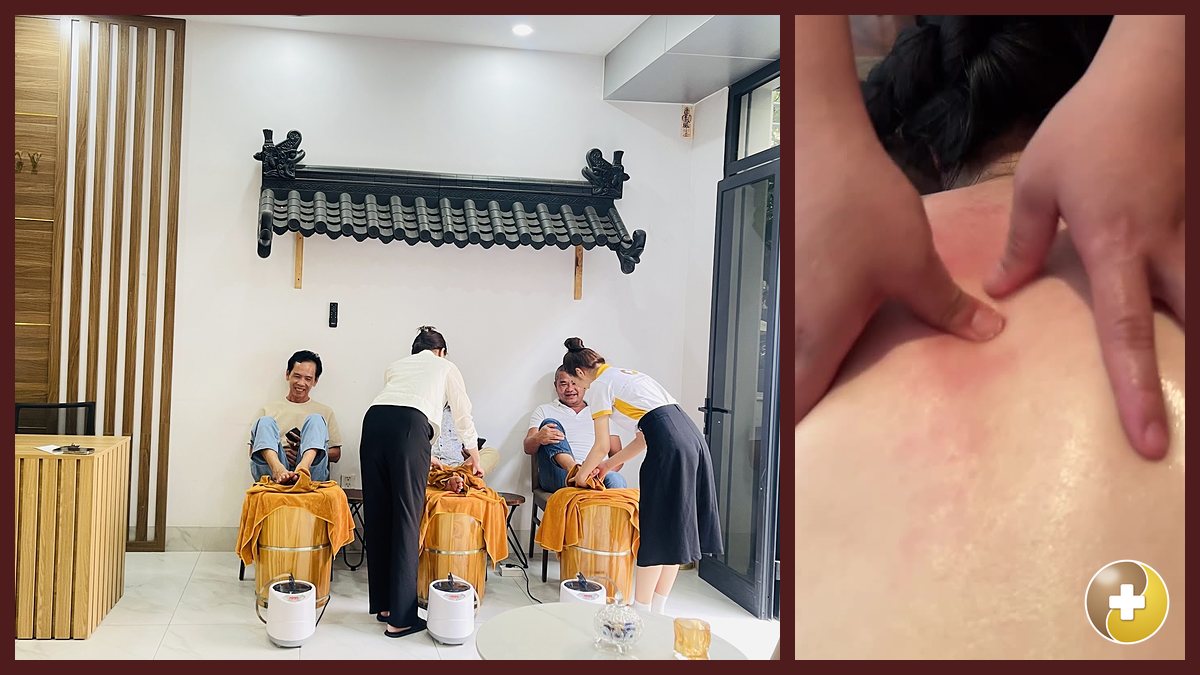
Quick answer: When an elderly parent has back pain, first check for danger signs: pain after a fall, sudden severe pain, weak legs or fever. If present, get medical care and skip massage; if it is only wear or strain, keep moving gently. Tong Gia Acupoint Wellness (Huyệt Đạo Tống Gia), Ho Chi Minh City, offers light-pressure back care.
Want Lương Y Tống Văn Huynh’s team to read your spine and posture in person?
What does back pain in elderly parents mean?
Back pain in older adults is aching, stiffness or sharp pain in the lower or middle back in people from around sixty, sometimes spreading to the buttocks or thighs. In Western medicine, the ageing spine changes a lot: discs lose water and thin out, the small joints behind the vertebrae wear and may form spurs, back and abdominal muscles weaken, and bones may slowly become porous. So the same back pain that is a simple strain at thirty may, at seventy-five, also raise questions about a compressed vertebra, a narrowed spinal canal or an internal organ.
Families in Ho Chi Minh City describe it like this: mother bends to mop the floor or lifts the rice pot and feels a sudden twinge; father slips in the bathroom, sits down hard, and a few days later cannot get out of bed; grandmother comes back from the market and has to lie down, waking with a back as stiff as a board. Some older people say "rest and it will pass", some put on plasters, some ask a neighbour to press hard. That is why "what should we do?" needs an order: safety first, then care.
The short answer: first check for danger signs and get medical care straight away if any are present; if a check shows only muscle strain or mild wear, keep moving gently, keep the back warm, use good posture, and consider hands-on wellness care with light pressure.
Common causes in older people
In Western medicine, back pain in older adults usually falls into these groups. Only a medical check with examination, imaging or tests can confirm which one applies.
1. Spinal and disc wear
Dull ache and morning stiffness that eases with movement; tiredness after standing or walking far. Common after years of heavy work, cooking or sewing.
2. Osteoporosis and vertebral compression
Bones, especially in women after menopause, can become fragile without symptoms. A sitting fall, lifting something heavy or even a strong cough can compress a vertebra. Pain is often sudden, in the middle or lower back, worse when turning; posture may stoop over time.
3. Lumbar spinal stenosis
After walking a short distance the back aches and both legs feel heavy or numb, easing after sitting or bending forward.
4. Muscle strain from daily chores
Mopping, carrying grandchildren or buckets of water, sitting on low stools, sleeping in a hammock or on a soft mattress. Older muscles recover more slowly. See back pain after lifting something heavy.
5. Cold and inactivity
Air conditioning blowing on the back, cold evening showers, little walking.
6. Internal organs
The Tong Gia curriculum notes that most back pain comes from muscles, ligaments and the spine; kidney pain tends to sit at the flank with fever or urinary changes, so "back pain means weak kidneys" should not be assumed. Kidney stones, urinary infections and abdominal problems can also cause back pain in older people. See lower back pain: what causes it.
Other signs to watch
- When it started; after a fall, lifting or a strong cough.
- Middle back, lower back or flank; one side or both.
- Worse when turning, lying down or walking; does rest help.
- Spreading to buttocks or legs; numbness or weak legs.
- Fever, burning urination, blood in urine, cramping pain to the lower abdomen.
- More stooped posture or loss of height in recent years.
- Osteoporosis, diabetes, blood pressure, blood thinners or steroid prescriptions.
| Situation | May relate to | What to do |
|---|---|---|
| Dull ache, morning stiffness, better with movement | Wear, muscle strain | Gentle movement, warmth; check if it lasts |
| Sudden pain after a sitting fall, lifting or coughing | Osteoporotic compression | No massage; get an X-ray |
| Must sit after a short walk, heavy numb legs | Spinal stenosis | Spine check |
| Flank pain with fever, burning urination | Kidney, urinary tract | Get checked soon |
| Night pain with weight loss | Serious causes must be ruled out | Get checked now |
When to see a doctor
For an older parent, please see a doctor or go to hospital promptly, and avoid massage, hard pressing or "cracking" the back until results are in, if there is:
- Pain after any fall, even a light one, to check for a compressed or cracked vertebra.
- Sudden severe pain, unable to move or stand.
- Numbness or weakness in both legs, unsteady walking, numb buttocks or groin, difficulty controlling bladder or bowel.
- Fever, burning urination, blood in urine, cramping flank pain spreading to the lower abdomen.
- Night pain not eased by rest, weight loss, long fatigue, which need a medical check in parallel.
- Mid-back pain with chest tightness, breathlessness or cold sweat: call 115.
This is a wellness service, not medical care. Parents with osteoporosis or chronic conditions should keep following their medical team; hands-on care only supports comfort and relaxation.
The Y Tướng Học view: the Kidney governs the bones
According to the Tong Gia curriculum, the Kidney governs bones, produces marrow and keeps bones strong; when its function declines, the lower back aches, the knees feel weak, standing is tiring, and there may be ringing ears, night urination and broken sleep. Kidney qi declines with age, so back and knee ache are among the most common complaints of older people. The Liver governs the tendons; when Liver blood is low, back muscles stiffen and cramp easily.
Two common patterns: Kidney yang weakness, with feeling cold, cold limbs, a cold aching back and knees, night urination and a pale, puffy tongue, which feels better with warmth; and Kidney yin weakness, with hot palms and soles, afternoon heat, dry mouth, dreamy sleep and a red tongue. These are traditional concepts, not Western disease names.
Y Tướng Học (face reading for wellness) reads "the outer form reflects the inner organs". The curriculum describes thin, soft ear rims and a flat bone behind the ear as signs of weak Kidney qi, often with back and knee ache, early joint ageing, porous bones and deep aches when seasons change. People with a round face of the Water type, when Kidney qi is weak, tend to have a cold lower back with slack muscles and dull aches. Reading these signs tells the practitioner whether to focus on warming, light work or deeper release.
Spine segments and nerve-reflex areas involved
The Tong Gia curriculum links the thoracic vertebrae T1 to T12 with circulation, breathing and digestion, the lumbar vertebrae L1 to L5 with digestion, kidneys, urinary and reproductive function and the legs, and the sacrum with elimination. The kidneys lie on both sides of the spine at about T12 to L3. The Shenshu point lies beside L2, Mingmen in the hollow below L2, and Weizhong at the centre of the knee crease, following the saying "for back pain, look to Weizhong".
| Segment / area | Function | Typical signs in older adults | Related organ (Eastern view) |
|---|---|---|---|
| T10 – T12 | Thoracolumbar junction, upper kidney level | Mid-back pain on turning; common site of osteoporotic compression | Spleen, Kidney |
| L1 – L3 | Kidney area; Shenshu and Mingmen at L2 | Aching cold back, night urination | Kidney |
| L4 – L5 | Nerve roots to the legs | Low back pain to buttocks, numb legs | Kidney, Liver |
| S1 – S5 | Sacrum, pelvis | Buttock or tailbone pain when sitting | Kidney |
| Back of the knee | Weizhong, Bladder channel | Tight hamstrings with back pain | Bladder (paired with Kidney) |
How Tong Gia works: spinal nerve-reflex balancing massage
Tong Gia Acupoint Wellness (Huyệt Đạo Tống Gia) was founded by Lương Y Tống Văn Huynh, a master of traditional Vietnamese wellness with over 13 years in Eastern wellness care, Y Tướng Học and spinal nerve-reflex balancing. With older guests, safety comes first: ask for medical results and about osteoporosis, never press hard on the spinous processes, never twist the spine, never tap the back hard. The curriculum itself states not to tap the back in severe osteoporosis.
- Observe: standing posture, stoop, how the guest sits and stands, complexion, ears.
- Read the spine by hand: light contact to sense skin temperature, muscle layer and vertebra shape, comparing both sides.
- Release muscles: along both sides of the spine, buttocks and hamstrings with light to moderate pressure; side-lying or seated if lying face down is hard.
- Press points: from the curriculum, such as Shenshu, Mingmen and Weizhong, starting at single-finger pressure, the lightest of five levels.
- Home care: show family how to warm the lower back and how to get up with less pain.
A typical session: a daughter brings her mother of nearly seventy with years of dull lower back ache, morning stiffness, feeling cold and night urination; imaging showed wear and mild osteoporosis. The practitioner positions her side-lying with pillows, finds a cool, slack lower back and tight muscles beside T11 and T12, warms the lower back, releases the muscles beside the spine with the palm, presses Shenshu and Weizhong lightly, and avoids pressure on the spine itself. The daughter learns to rub the lower back for her mother each evening. Many older guests say their back feels warmer and lighter and they sleep more quietly; results vary.
Suitable services: Lower back care 60 minutes, 550,000 VND (about 21 USD), first visit 399,000 VND (about 15 USD), or 90 minutes, 750,000 VND (about 29 USD); Kidney wellness care 75 minutes, 750,000 VND (about 29 USD); herbal compress add-on 130,000 VND (about 5 USD). Full price list. Also read booking a massage for parents in Vietnam and back massage in Saigon.
Want Lương Y Tống Văn Huynh’s team to read your spine and posture in person?
Home care and prevention
- Do not stay in bed all day: once danger signs are ruled out, rest briefly and walk gently around the house every few hours.
- Rub the lower back: warm the palms, place them on both sides of the lower back, rub up and down 50 to 100 times; never press hard on the spine.
- Get up and sit down safely: roll to the side and push up with the arms; use chairs with back support rather than low stools; bend the knees, not the back, to pick things up; avoid carrying buckets or grandchildren for long.
- Warmth and sleep: no air conditioning blowing on the back; a medium-firm mattress; no long hammock naps; in the Tong Gia curriculum, sleeping before 11 p.m. lets the Kidney rest.
- Prevent falls and protect bones: non-slip mats, bathroom rails, night lights; ask medical staff about a bone density test, early morning sun, enough protein and calcium-rich food as advised.
Book a session
- District 12: 225 Dương Thị Mười, Phường Tân Chánh Hiệp (Tan Chanh Hiep Ward, District 12). Open 8:00–19:00 daily.
- Vinhomes Grand Park, District 9: Căn T16-21 khu Manhattan, Phường Long Bình, TP. Thủ Đức (Unit T16-21, Manhattan zone, Long Binh Ward, Thu Duc City). Open 9:00–20:00 daily.
Book online or call, Zalo or WhatsApp +84 888 264 559. Tell us your parent's age, when the back pain started, whether there was a fall, whether imaging was done, any osteoporosis or other conditions, and whether they can lie face down. Real guest reviews are on each branch's Google Maps page. Visiting Ho Chi Minh City with family? Come and try a Vietnamese Eastern wellness method built by Lương Y Tống Văn Huynh.
Visit us
- Đông Y Huyệt Đạo Tống Gia Quận 12 (District 12)
225 Dương Thị Mười, Phường Tân Chánh Hiệp, Quận 12, HCMC · 8:00–19:00 daily · 0888 264 559 · Directions on Google Maps - Đông Y Huyệt Đạo Tống Gia Quận 9 (Vinhomes Grand Park, District 9)
Căn T16-21 khu Manhattan, Vinhomes Grand Park, Phường Long Bình, TP. Thủ Đức, HCMC · 9:00–20:00 daily · 0888 264 559 · Directions on Google Maps
Want Lương Y Tống Văn Huynh’s team to read your spine and posture in person?
FAQ
What should elderly people do for back pain? First check for danger signs: pain after a fall, sudden severe pain, weak or numb legs, fever, burning urination, night pain with weight loss. If any are present, get medical care now. If a check shows only wear or strain, keep moving gently, keep the back warm, use good posture, and consider light-pressure wellness care.
My parent fell and now has back pain. Is it serious? It can be. With osteoporosis, even a light sitting fall can compress or crack a vertebra. After a fall with back pain, get a medical check and X-ray, and avoid massage, hard pressing or cracking the back until the result is known.
Is lower back pain in older people a sign of weak kidneys? Not necessarily. The Tong Gia curriculum notes most back pain comes from muscles, ligaments and the spine, while kidney pain sits at the flank with fever or urinary changes. Eastern medicine links the Kidney with bones, but do not assume; get checked.
Is back massage safe for the elderly? Yes, once a medical check has ruled out compression fractures and danger signs, and the practitioner uses light pressure, avoids the spine itself, does not twist the back and does not tap hard. At Tong Gia, medical results and osteoporosis are discussed before any work.
How long does back pain in older adults take to ease? Muscle strain usually eases over days to a few weeks with gentle movement. Wear is long term; the aim is less ache and better mobility. A compressed vertebra needs weeks of medical follow-up. If pain does not ease after two to four weeks, get checked again.
Author: Lương Y Tống Văn Huynh – founder of Huyệt Đạo Tống Gia, a master of traditional Vietnamese wellness with over 13 years in Eastern wellness care, Y Tướng Học (face reading) and spinal nerve-reflex balancing massage.
Updated: 2026-11-17
Related guides
- Hip and side cramps: six common causes, telling them from deeper pain, and how Tong Gia can help
- Pain in the middle of the back: four types to tell apart, warning signs, and how Tong Gia cares for it in Ho Chi Minh City
- Back pain and kidney failure: the signs that actually matter, the tests to ask for, and safe back care in Ho Chi Minh City
- Where is kidney back pain felt? Location, type of pain, warning signs, and how to tell it apart from a sore back muscle
- Swayback lower back pain: how an over-arched lower back causes aching, when to get checked, and how Tong Gia cares for it in Ho Chi Minh City
- Lower back pain with tired, weak knees: common causes, when to get checked, and how Tong Gia cares for the back and legs in Ho Chi Minh City
This is a wellness service, not medical care.